Why Do Puppies Bite So Much? Understanding Normal Puppy Behavior
Your puppy seems sweet one moment, then suddenly grabs your fingers, shoelaces, or sleeves with those tiny needle-sharp teeth. If you’re wondering, “Why do puppies bite so much?”, you’re asking one of the most common questions new dog owners have.
The good news is that frequent biting is usually a normal part of puppy development. Puppies explore the world with their mouths, play with littermate-style behaviors, relieve teething discomfort, and learn how much pressure is appropriate when using their teeth. With patience, positive training, and consistency, most puppies gradually become much gentler.
Instead of focusing only on stopping the biting, it helps to understand why it’s happening. Once you know the cause, choosing the right solution becomes much easier.
Table of Contents
- Why do puppies bite so much?
- Is puppy biting normal?
- Puppy biting age timeline
- The six most common puppy biting reasons
- Play biting vs aggressive behavior
- How puppies learn bite inhibition
- When should you worry?
- Practical examples
- Common mistakes owners make
- Frequently asked questions
Why Do Puppies Bite So Much?
Quick Answer (Featured Snippet)
Why do puppies bite so much? Puppies bite because they explore with their mouths, play with people and other dogs, ease teething discomfort, and learn bite inhibition. This behavior is usually a normal stage of development and becomes less frequent as puppies mature and receive consistent, positive training.
Several factors often happen at the same time, including:
- Curiosity
- Teething
- Play
- Learning bite inhibition
- Excitement
- Seeking attention
- Overtiredness
Understanding which reason applies to your puppy makes training much more effective.
Is Puppy Biting Normal?
Yes.
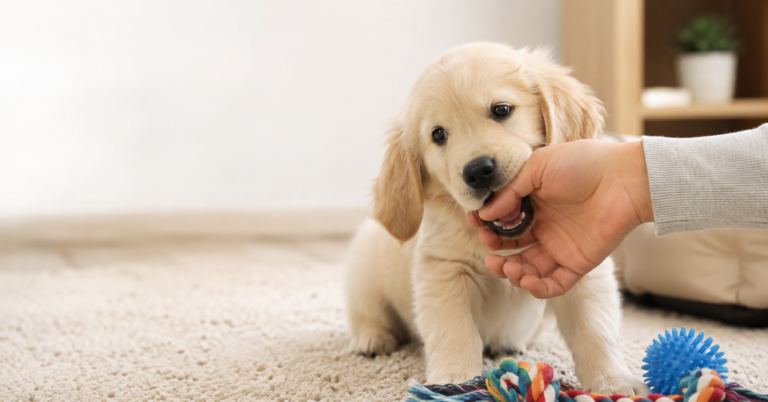
Healthy puppies naturally mouth, chew, and nip during their first several months of life. Dogs don’t have hands, so they use their mouths to investigate new objects, textures, and experiences.
This explains why puppies may chew:
- Fingers
- Clothing
- Shoes
- Furniture
- Blankets
- Toys
The American Kennel Club explains that puppy mouthing is a normal developmental behavior and should be guided—not punished—through bite inhibition and positive reinforcement.
A puppy that briefly nips during play is very different from a dog showing fear-based aggression.
Puppy Biting Age Timeline
One of the biggest concerns owners have is knowing when biting is most common.
The timeline below provides a general guide.
| Puppy Age | What You Can Expect |
|---|---|
| 8–12 weeks | Exploring everything with the mouth, playful nipping, learning social skills |
| 3–4 months | Baby teeth begin falling out, chewing increases noticeably |
| 4–6 months | Peak teething stage, strongest urge to chew and mouth objects |
| 6–8 months | Adult teeth are mostly in, better bite control with consistent training |
Every puppy develops at a slightly different pace, but this timeline matches the typical stages of puppy teething and behavioral development.
The 6 Most Common Puppy Biting Reasons
1. Puppies Explore With Their Mouths
Human babies reach for objects with their hands.
Puppies investigate the world with their mouths.
Everything becomes something to:
- Smell
- Taste
- Carry
- Chew
- Examine
That includes:
- Shoes
- Hands
- Socks
- Toys
- Garden sticks
- Blankets
This curiosity is completely normal.
Real-Life Example
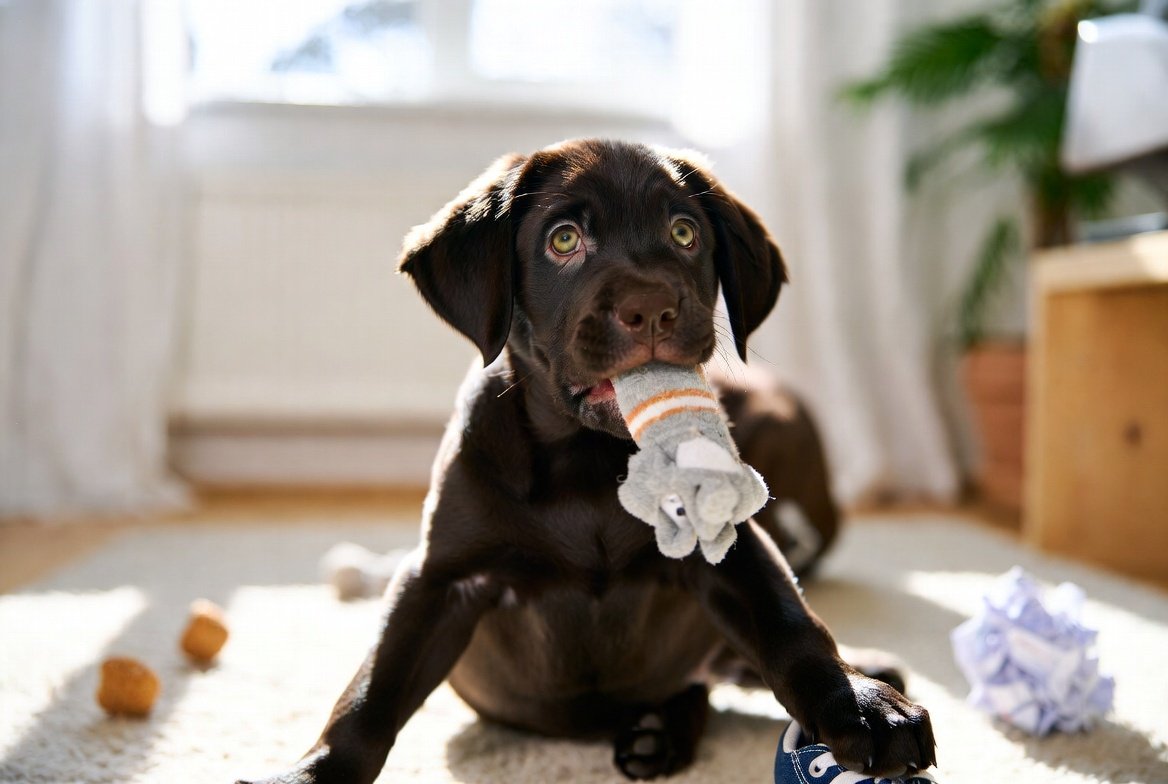
A nine-week-old Labrador walks into the kitchen and immediately grabs a towel lying on the floor.
The puppy isn’t being stubborn.
They’re simply investigating something new using the most sensitive tool they have—their mouth.
2. Puppy Teething Makes Chewing Feel Good
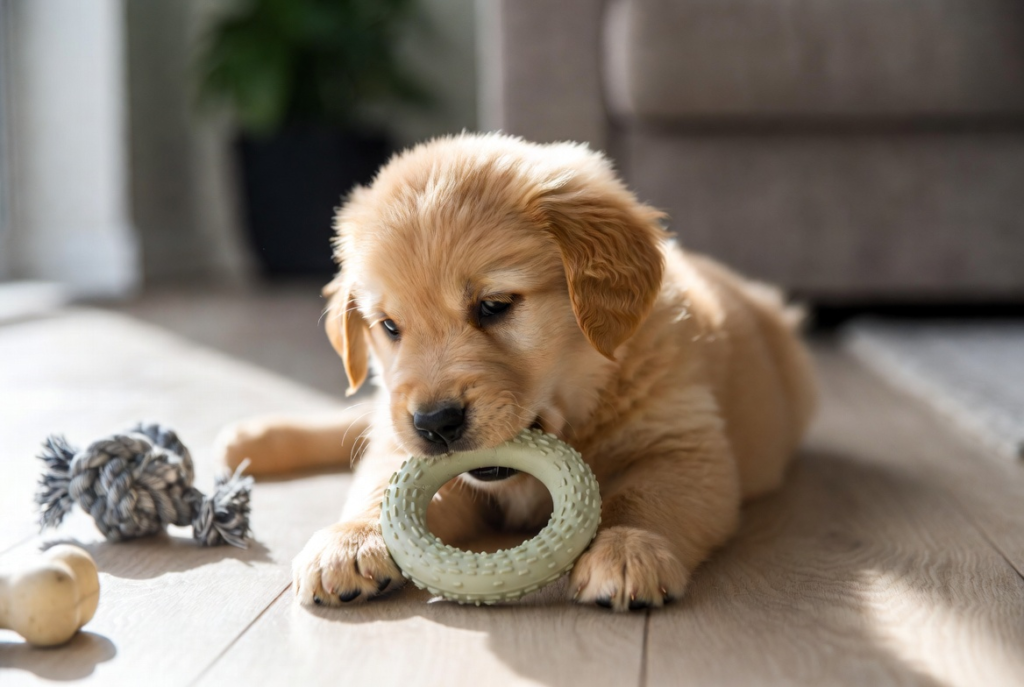
One of the biggest puppy biting reasons is teething.
As baby teeth loosen and adult teeth begin replacing them, puppies naturally look for things to chew.
Common puppy teething symptoms include:
- Increased chewing
- Biting hands more often
- Chewing furniture
- Carrying objects around
- Swollen gums
- Looking for cold or textured chew toys
Puppies normally have 28 baby teeth, which are gradually replaced by 42 permanent adult teeth during the teething process.
Practical Tip
Instead of stopping chewing altogether, redirect your puppy toward safe chew toys designed for teething puppies.
This satisfies the natural urge to chew while protecting your furniture and hands.
3. Play Is Part of Learning
If you’ve ever watched a litter of puppies together, you’ll notice plenty of:
- Wrestling
- Chasing
- Pouncing
- Rolling
- Gentle biting
This isn’t bad behavior.
It’s how puppies practice communication, coordination, and social skills.
When they move into your home, they naturally continue using those same play behaviors with people until they learn different rules.
4. Puppies Need to Learn Bite Inhibition
One of the most important lessons every puppy learns is bite inhibition.
This means controlling how hard they bite.
If one puppy bites another too hard, the playmate usually yelps and stops playing.
The lesson becomes simple:
Hard bites stop the fun.
Owners continue teaching this same lesson through calm, consistent interactions after the puppy comes home.
5. Excitement Can Lead to More Biting
Many owners notice that biting becomes worse when their puppy is:
- Very excited
- Greeting visitors
- Playing energetic games
- Running around before bedtime
This doesn’t automatically mean aggression.
Excited puppies often lose a little self-control, just like young children sometimes do.
Real-Life Scenario
A 15-week-old Border Collie spends the afternoon meeting guests and playing in the yard.
Later that evening, the puppy suddenly begins grabbing everyone’s sleeves during play.
The puppy doesn’t need another game.
Instead, a quiet break, a chew toy, or a nap helps the puppy settle.
Many trainers casually refer to this evening burst of energy as the puppy witching hour, when overtired puppies often become especially mouthy.
6. Puppies Sometimes Bite for Attention
Puppies quickly learn what gets a reaction.
If biting causes people to:
- Laugh
- Chase them
- Wave their hands
- Talk excitedly
- Start another game
the puppy may repeat the behavior because it successfully gained attention.
They aren’t trying to misbehave.
They’re simply repeating something that worked before.
Play Biting vs Aggressive Biting
One of the biggest concerns for new owners is knowing whether their puppy is simply playing or showing signs of aggression.
Most puppies use their mouths during play. True aggression is much less common and is usually accompanied by different body language.
| Normal Play Biting | Possible Aggressive Behavior |
|---|---|
| Loose, wiggly body | Stiff or frozen posture |
| Relaxed wagging tail | Tail held high and rigid or tightly tucked |
| Soft, blinking eyes | Hard, fixed stare |
| Ears relaxed | Ears pinned back or sharply forward |
| Play bows before chasing | No play bow, moves directly into confrontation |
| Gentle growling during play may stop quickly | Deep, continuous growling or snarling |
| Pauses during play | Continues escalating without breaks |
| Easily redirected with a toy | Ignores toys and redirection |
| Returns to normal quickly | Remains tense after the interaction |
| Mouth usually open and relaxed | Lips pulled back with visible tension |
If your puppy consistently displays stiff body language, fear, guarding behavior, or bites that cause repeated injuries, consult your veterinarian or a qualified dog trainer for an assessment.
How to Calm a Biting Puppy
Understanding why do puppies bite so much makes training easier because you can respond to the cause instead of simply reacting to the behavior.
1. Redirect to an Appropriate Chew Toy
When your puppy grabs your fingers or clothes, calmly offer a chew toy instead.
Over time your puppy learns:
- Hands are for gentle interaction.
- Toys are for chewing.
The American Kennel Club recommends redirecting puppies toward appropriate chew toys instead of allowing them to continue mouthing people.
2. End the Game After Painful Bites
If your puppy bites too hard:
- Stop moving.
- End play for a few seconds.
- Turn away calmly.
- Resume play only after your puppy settles.
Your puppy gradually learns that gentle play continues while rough biting makes the fun stop.
3. Reward Calm Choices
Many owners only react when their puppy bites.
Instead, reward your puppy for:
- Sitting politely
- Chewing their own toy
- Greeting people calmly
- Relaxing beside you
- Playing gently
Positive reinforcement encourages those behaviors to happen more often.
4. Teach Basic Commands Early
Simple training commands give your puppy something appropriate to do instead of biting.
Start with:
- Sit
- Leave It
- Touch
- Drop It
For example, if your puppy starts grabbing your sleeves, ask for a “Sit” before rewarding with praise or a toy.
This redirects their attention without punishment and builds better impulse control over time.
Why Does Puppy Biting Get Worse at Night?
Many owners notice that biting becomes much worse during the evening.
This period is often called the puppy witching hour.
Common signs include:
- Zooming around the house
- Chasing feet
- Biting sleeves
- Barking during play
- Ignoring familiar cues
Often the puppy isn’t asking for more exercise.
They’re simply tired, overstimulated, or struggling to settle.
Real-Life Example
A 15-week-old Labrador spends the afternoon meeting visitors and playing outside.
By early evening the puppy begins grabbing everyone’s sleeves.
Instead of another game, the owner offers a stuffed chew toy in a quiet room.
Within minutes, the puppy relaxes and falls asleep.
Many puppies become noticeably mouthier when they’re overtired.
Common Mistakes That Make Puppy Biting Worse
- Playing rough games with hands
- Pulling your hands away quickly
- Rewarding biting with attention
- Being inconsistent with household rules
- Expecting improvement overnight
- Using punishment instead of redirection
The ASPCA advises against harsh physical punishment for normal puppy mouthing because it can increase fear or make behavior problems worse.
Puppy Biting Checklist
Use this quick checklist every day.
✅ Keep chew toys nearby
✅ Redirect biting immediately
✅ Reward gentle behavior
✅ Practice “Sit” and “Leave It”
✅ Give enough naps
✅ Avoid rough hand games
✅ Stay consistent
✅ Keep training sessions short
Trainer Insight
Instead of asking:
“How do I stop my puppy from biting?”
Ask:
“What do I want my puppy to do instead?”
Teaching a puppy to grab a toy, settle on a mat, or respond to “Sit” creates habits that naturally replace unwanted biting.
Veterinary Advice
Teething, chewing, and playful mouthing are normal parts of puppy development.
However, schedule a veterinary visit if your puppy shows:
- Difficulty eating
- Broken teeth
- Mouth swelling
- Severe pain
- Sudden personality changes
- Fear-based biting
These signs deserve professional evaluation.
Myth vs Fact
| Myth | Fact |
|---|---|
| Puppies bite because they want to dominate people. | Most puppy biting is caused by play, curiosity, teething, and learning. |
| Teething is the only reason puppies bite. | Teething is only one of several common causes. |
| Puppies naturally stop biting without training. | Maturity helps, but training teaches self-control. |
| Punishment is the fastest solution. | Positive reinforcement and redirection are widely recommended. |
Frequently Asked Questions
Why does my puppy bite more at night?
Many puppies become more mouthy in the evening because they’re overtired or overstimulated after a busy day.
Why does my puppy bite my feet?
Moving feet often trigger a puppy’s natural instinct to chase and play. Redirecting them to a toy usually works better than chasing them away.
Which breeds bite more as puppies?
Working and herding breeds, such as Labrador Retrievers, Golden Retrievers, Border Collies, Australian Shepherds, and German Shepherds, can be naturally more mouth-oriented during puppyhood. Individual personality and training matter more than breed alone.
Is puppy play aggression normal?
Most playful nipping is normal. True aggression is less common and usually includes stiff posture, fearful body language, or guarding behavior.
At what age do puppies bite the most?
Many puppies are most mouthy between 3 and 6 months, when teething and active play overlap.
Can teething make puppies bite more?
Yes. Chewing helps relieve discomfort while adult teeth replace baby teeth.
Conclusion
If you’ve been asking why do puppies bite so much, remember that the behavior is usually a normal stage of puppy development rather than a sign of aggression.
Puppies bite to explore, play, relieve teething discomfort, and learn bite inhibition. By providing appropriate chew toys, teaching simple commands, rewarding gentle behavior, and staying consistent, you’ll help your puppy develop good habits that last well into adulthood.