

Spay vs Neuter: What’s the Difference? (Complete 2026 Guide)
Spay vs neuter: understand the difference, costs, recovery, health benefits and best timing for dogs and cats in this complete 2026 guide.
Spay vs Neuter: The Quick Answer
The spay vs neuter difference comes down to sex: spaying is the sterilisation surgery for female pets — the ovaries and uterus are removed through an abdominal incision — while neutering removes the testicles of male pets through a small external incision. Both end reproduction permanently, but spaying is the more involved surgery: it takes longer, costs more, and needs a longer recovery.
Spay vs Neuter: Side-by-Side Comparison
| Aspect | Spay (female) | Neuter (male) |
|---|---|---|
| Applies to | Females only | Males only |
| Organs removed | Ovaries + uterus | Testicles |
| Incision | Abdominal (midline) | Small, near the scrotum |
| Surgery type | Major abdominal surgery | Minor external surgery |
| Surgery time | 30–90 minutes | Under 20 minutes |
| Recovery | 10–14 days | 3–5 days |
| Relative cost | Higher | Lower |
Which Is Riskier or More Painful?
Spaying is the bigger operation: it is major abdominal surgery, takes 30–90 minutes, and typically involves more post-operative pain and a longer period of restricted activity. Neutering is a minor external procedure, usually finished in under 20 minutes, and most pets feel like themselves again within a couple of days. That said, internal healing continues for weeks after either surgery — the real difference is how strictly activity must be limited, not the healing itself. Serious complications are uncommon with either surgery when performed by a qualified vet.
What Is Spaying?
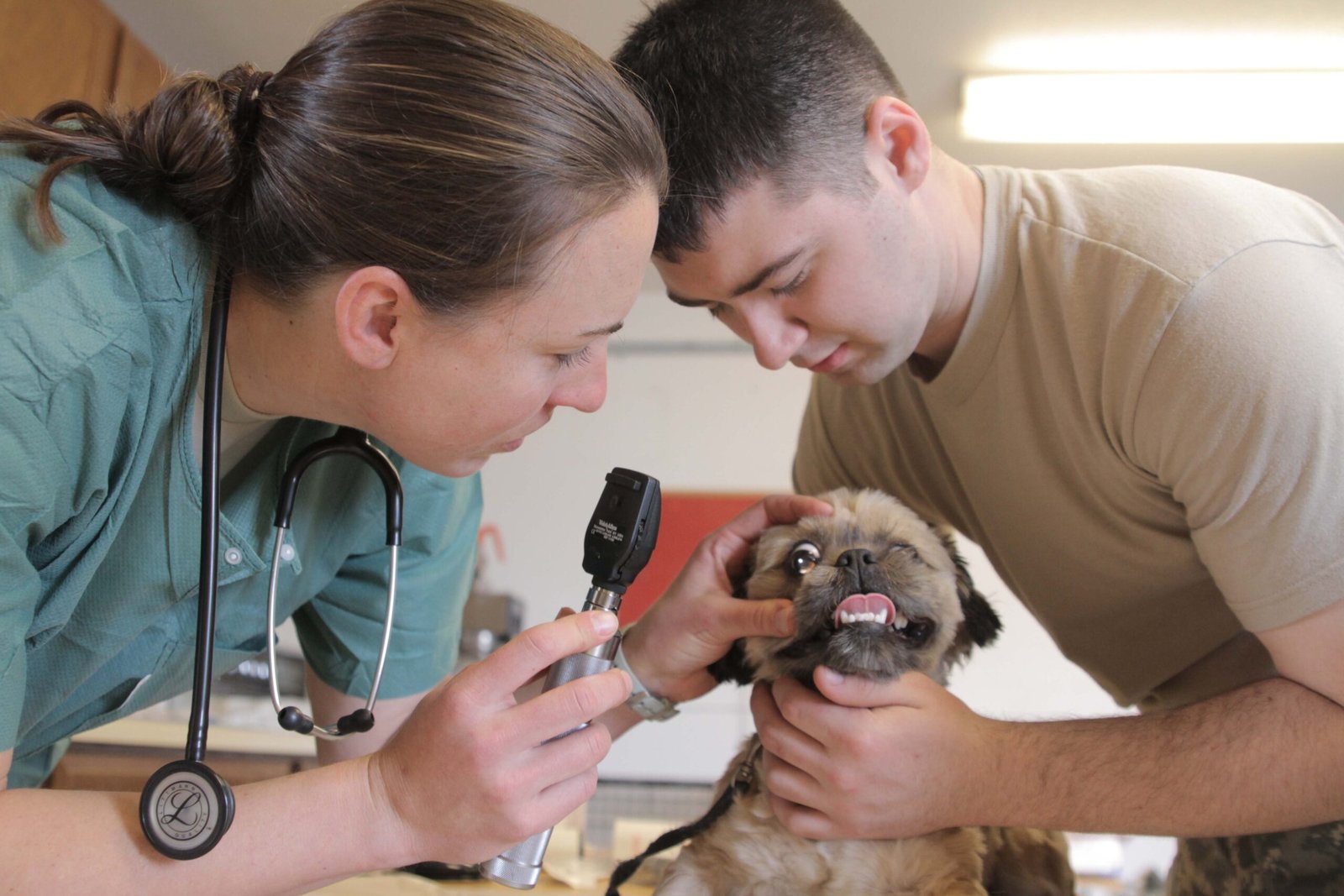
Spaying (ovariohysterectomy) is the surgical sterilisation of a female animal. Under general anaesthesia, the vet makes an abdominal incision, removes the ovaries, fallopian tubes, and uterus, then closes the abdomen in layers. Once spayed, a female cannot go into heat, cannot become pregnant, and no longer produces reproductive hormones from those organs.
A variant called ovariectomy — removing only the ovaries — is standard in many European countries and is the technique used in laparoscopic (keyhole) spays. Evidence reviews find no meaningful difference in outcomes for healthy animals.
What Is Neutering?
Neutering (orchiectomy, also called castration) is the surgical sterilisation of a male animal. Under general anaesthesia, the vet removes both testicles through a small incision — in front of the scrotum in dogs, or directly on the scrotum in cats (cat incisions are often left open to heal without stitches). After neutering, the male can no longer produce sperm or testosterone from the testes.
Note: “neutering” is sometimes used loosely to mean sterilisation of either sex, but in veterinary practice it refers specifically to the male procedure. “Sterilisation” is the umbrella term.
How Much Does It Cost?
Spaying typically costs more than neutering because it’s a longer, more complex surgery. Typical US ranges:
- Cat neuter: $50–$150
- Cat spay: $100–$300
- Dog neuter: $75–$250
- Dog spay: $150–$500
Extra costs can include bloodwork, the pre-surgery exam, pain medication, and an e-collar. Low-cost options exist: vouchers (from around $10), nonprofit clinics (around $45), SPCA programmes (around $75), mobile clinics, and veterinary schools. UK 2026 ranges: dog spay £250–£500+, dog castration £180–£350+, cat spay £120–£200+, cat castration £80–£140+.
Consider the cost-benefit: a one-time spay versus emergency pyometra surgery costing thousands, or cancer treatment later in life.
Recovery: What to Expect

The first 48 hours
The first evening is usually the groggiest. Your pet may be drowsy, wobbly, or uninterested in food for 12–24 hours after anaesthesia — this is normal. Once they are alert, offer a small amount of water, then a light meal (about half their normal portion) a few hours later; skip a full dinner if they are still very sleepy. Some cats also drool mildly as the anaesthesia wears off — our guide to cat drooling explains what’s normal and when to call the vet.
Keep the e-collar (cone) on at all times, including overnight and during naps — most pets learn to eat and sleep with it within a day, and removing it “just for a bit” is when most incision-licking damage happens. Set up a quiet, warm recovery spot on the floor (no jumping onto sofas or beds), and take dogs outside on a short lead for toilet breaks only.
Call your vet promptly if you notice the incision opening or oozing more than a few drops of blood, rapidly increasing swelling, pale gums, repeated vomiting, laboured breathing, or if your pet still refuses all food and water after 24 hours.
After spaying (10–14 days)
- More initial discomfort; strict rest — no jumping, stairs, or rough play
- Monitor the abdominal incision daily for swelling, redness, or discharge
- Internal healing continues for 4–6 weeks
- Most pets return to normal activity within the restriction period
After neutering (3–5 days)
- Faster bounce-back; still needs pain medication as prescribed
- Check the incision site for swelling or discharge
- Keep the e-collar on as directed to prevent licking
Red flags after either surgery: incision opening up, heavy bleeding or discharge, extreme lethargy, refusal to eat beyond 24 hours, vomiting, or difficulty urinating — contact your vet immediately.
Health Benefits
For females (spaying)
- Eliminates pyometra — a life-threatening uterine infection that around 23% of intact female dogs develop before age 10
- Eliminates ovarian and uterine cancer risk
- Sharply reduces mammary tumour risk when done early — classic data puts the relative risk at roughly 0.5% of an intact dog’s risk if spayed before the first heat, 8% after one heat and 26% after two (though a 2025 review notes this evidence is weaker than long believed; spaying before 2.5 years still appears protective)
- Cats: spaying before 6 months reduces mammary cancer risk by around 91% (cat mammary tumours are ~90% malignant)
For males (neutering)
- Eliminates testicular cancer
- Prevents and treats prostate enlargement (BPH) — affects ~80% of intact males over 5; the prostate shrinks ~80% within 90 days of castration
- Longer lifespan: a study of 40,000+ canine death records found sterilisation was linked to 13.8% longer life expectancy in males and 26.3% in females
Honest nuance: neutering does not protect against prostate cancer — one large population study found neutered males had about 2.8 times the odds of prostate cancer and 3.6 times the odds of bladder cancer, though both are uncommon. Discuss your individual pet’s risk profile with your vet.
Behavioural Effects: Myth vs Reality
Neutering most reliably reduces hormone-driven behaviours:
- Roaming, urine marking and mounting — improved by at least half in 60% or more of dogs, and by 90% or more in 25–40% of dogs.
- Aggression, including inter-male fighting — improved by at least half in fewer than a third of dogs.
One honest caveat from the research: outcomes for fear and anxiety are mixed — a 2025 review concluded some fear and anxiety behaviours can worsen after sterilisation, and some studies found spayed females more aggressive than intact females. Improvements in hormone-driven behaviours take weeks to months as hormones clear.
The honest framing: neutering reduces hormone-driven behaviours; it is not a fix for fear, anxiety, or learned aggression. Those need training.
When Should You Spay or Neuter?
Cats
Spay or neuter by 5 months — the consensus from AVMA, AAFP, and ASV. There’s no benefit to waiting for a first heat. Shelter kittens are often sterilised even earlier — from about 8 weeks old, once they reach 2 lb — and paediatric spay/neuter is considered safe for healthy kittens. You can track their early milestones with our kitten age chart.
Dogs
There’s no one-size-fits-all answer (AVMA). General guidance — and keep vaccinations on track with our puppy shot chart:
- Small breeds (under 45 lb): spay at 5–6 months, neuter by 6 months
- Large breeds (over 45 lb): neuter at 9–15 months, spay at 5–15 months
- Giant breeds: some guidelines suggest waiting until 16–18 months
The early-neuter controversy
UC Davis studies across 35+ breeds found early neutering raises joint-disorder risk 3–5x in large breeds (e.g., Golden Retriever males: 25% vs 5% in intact dogs). Small breeds under 20 kg appear largely unaffected. Breed-specific timing guidelines now exist — ask your vet about your breed’s specific data.
Hormone-sparing alternatives
If you want to prevent reproduction while keeping your pet’s hormones intact, lesser-known options exist: ovary-sparing spay (removes the uterus but leaves the ovaries, so no pregnancy but heat cycles continue) and vasectomy (blocks sperm delivery while testosterone production continues). Long-term evidence for these surgical alternatives to gonad removal is still limited, and few clinics offer them — but they are worth discussing with your vet if hormone preservation matters to you. A non-surgical alternative also exists: chemical castration via a deslorelin implant (Suprelorin), slipped under the skin like a microchip. It suppresses testosterone and fertility for 6 or 12 months depending on implant size, takes around six weeks to reach full effect, and is fully reversible — useful as a trial before committing to surgery, or when anaesthesia carries extra risk.
Common Myths Debunked
“She should have one litter first”
No health benefit — and it raises mammary cancer risk. This myth persists but has no veterinary support.
“Neutering will make him fat and lazy”
Energy needs drop by up to 30% after sterilisation, but obesity is caused by overfeeding and under-exercising. Reduce calories by up to 30% after surgery and keep up activity.
“It will change his personality”
Core temperament is unchanged. Hormone-driven behaviours (roaming, marking) decrease; who your pet is stays the same.
“Neutering fixes aggression”
Only inter-male aggression related to hormones. Fear, territorial, and learned aggression need behavioural work, not surgery.
“My indoor cat doesn’t need it”
Indoor females still go into heat (loud, stressful cycles), can develop pyometra and mammary cancer, and can escape. Indoor males still spray and can develop testicular and prostate disease.
“She’s too old now”
Healthy senior pets can be spayed or neutered — your vet will assess anaesthesia risk individually. It’s rarely “too late” if the pet is healthy.
Related: Why is my cat drooling? — learn when drooling is normal and when it needs a vet visit.
Frequently Asked Questions
Is spaying only for females?
Yes. Spaying is the female sterilisation procedure. Neutering is the male equivalent.
Which is harder to recover from, spay or neuter?
Spaying — it’s abdominal surgery with a 10–14 day recovery versus 3–5 days for neutering.
Can a spayed female get pregnant?
No. With the ovaries and uterus removed, pregnancy is impossible.
What if my dog has only one testicle (cryptorchid)?
The retained testicle must be located (often in the abdomen) and removed — the surgery is more involved and typically costs closer to a spay. It’s important to do it, as retained testicles have a much higher cancer risk.
Can you spay a dog in heat or while pregnant?
Yes, but it’s more complex — blood vessels are enlarged during heat, increasing bleeding risk and cost. Most vets prefer to wait until 2–3 months after heat ends. Spaying during pregnancy terminates the pregnancy.
What’s the difference between laparoscopic and traditional spay?
Laparoscopic (keyhole) spay uses 2–3 tiny incisions with a camera — less pain and faster recovery (3–5 days), but it costs more and isn’t available everywhere.
Does pet insurance cover spaying/neutering?
Usually not under standard accident/illness plans — it’s considered routine care. Some wellness add-ons cover part of the cost.
Can a newly neutered male still get a female pregnant?
Yes — for a little while. Viable sperm can linger in the reproductive tract for weeks after castration, so keep a newly neutered male away from unspayed females for at least 30 days (up to 6 weeks to be safe). Don’t assume he’s sterile the day he comes home.
My spayed female is showing signs of heat — is that normal?
Usually not. If a spayed female attracts males, swells, or bleeds months after surgery, a small piece of ovarian tissue may have been left behind — a condition called ovarian remnant syndrome. It’s uncommon, but it needs a vet visit to diagnose (usually with hormone testing) and correct.
Photo Credits
Veterinarian examining a small dog before spay or neuter surgery — Wikimedia Commons, CC BY. Dog wearing a recovery cone after neuter surgery — Flickr, CC BY-SA.






6 Comments