When Do Puppies Stop Biting? Understanding Puppy Biting Age and Development
Those tiny puppy teeth can turn normal playtime into a painful experience. One moment your puppy is happily playing, and the next they are grabbing your hands, sleeves, or ankles with surprising enthusiasm.
Many new owners ask, when do puppies stop biting, especially when their puppy seems to spend the entire day chewing, nipping, and exploring with their mouth.
The good news is that puppy biting is usually a normal stage of development. Puppies use their mouths to explore their environment, interact during play, and learn social boundaries. However, they still need guidance to understand that human skin is sensitive and toys are better choices for chewing.
With consistent training, most puppies gradually become less mouthy as they mature, complete their teething stage, and improve their bite control.
Table of Contents
- When do puppies stop biting?
- Puppy biting age timeline
- Why puppies bite during development
- Puppy teething timeline explained
- How puppies learn bite inhibition
- Signs your puppy is improving
- Why evening biting happens
- Common training mistakes
- How to reduce puppy nipping
- Frequently asked questions
When Do Puppies Stop Biting?
Most puppies become much less bitey between 6 and 8 months of age, although occasional mouthing can continue depending on the puppy’s personality, training, energy levels, and habits.
Puppies do not stop biting overnight. Instead, biting usually decreases gradually as they:
- Finish teething
- Learn bite inhibition
- Understand household rules
- Develop better self-control
A young puppy biting during play is very different from an older dog showing fearful or aggressive behavior.
The main goal is not simply to wait until the behavior disappears. Early training helps puppies learn appropriate ways to interact with people.
Puppy Biting Age Timeline: What Owners Should Expect
Every puppy develops at a different pace, but these stages give owners a realistic idea of what is normal.
| Puppy Age | Common Biting Behavior |
|---|---|
| 8–12 weeks | Exploring with the mouth, playful nipping, chewing objects |
| 3–4 months | Increased chewing as baby teeth begin falling out |
| 4–6 months | Strong teething period with more biting and chewing |
| 6–8 months | Improved control and fewer painful bites |
| 8+ months | Occasional mouthing during excitement or play |
8–12 Weeks: The Exploration Stage
At this age, puppies are learning about the world through their mouths.
They may bite:
- Fingers
- Clothes
- Shoes
- Furniture
- Toys
- Other puppies
This behavior is usually curiosity rather than disobedience.
A common mistake is expecting an 8-week-old puppy to understand human rules immediately. Puppies need repetition and guidance before they understand what is acceptable.
Real-Life Example
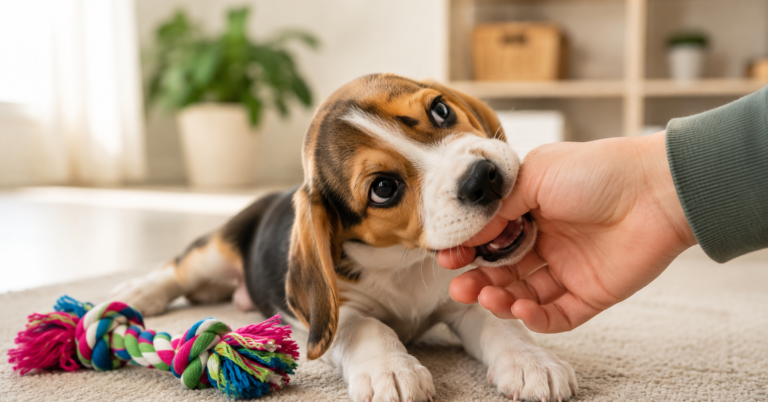
A new puppy owner may notice that their puppy ignores expensive toys but immediately goes for their hands during play.
The reason is simple: hands move, react, and create excitement. To a puppy, they can seem like the most interesting “toy” available.
Redirecting that interest toward proper toys helps create better habits.
Puppy Teething Timeline Explained
Teething is one of the biggest reasons puppies become extra mouthy.
Puppies are born without visible teeth and later develop 28 baby teeth. These are gradually replaced by 42 adult teeth as they mature. During this period, chewing can become more noticeable because puppies are adjusting to changes in their mouths.
Puppy Teething Stages
| Age | What Happens |
|---|---|
| Around 2–3 weeks | Baby teeth begin appearing |
| Around 8 weeks | Puppies usually have their baby teeth |
| 3–4 months | Baby teeth begin falling out |
| 4–6 months | Adult teeth replace puppy teeth |
| Around 6 months | Most puppies have adult teeth |
During teething, puppies may:
- Chew furniture
- Bite hands more often
- Carry objects around
- Seek different textures to chew
Providing safe chew options and redirecting biting behavior can make this stage easier.
Why Puppies Bite So Much
Understanding the reason behind puppy biting makes training much easier.
1. Puppies Explore With Their Mouths
Dogs do not have hands like humans, so puppies use their mouths to investigate new things.
A puppy may bite because:
- Something moves
- Something feels interesting
- They want attention
- They are excited
- They are playing
The behavior is natural, but puppies still need to learn appropriate boundaries.
2. Puppies Are Learning Bite Inhibition
Puppy bite inhibition means learning how much pressure to use when mouthing.
Puppies often begin learning this skill during play with their littermates. If a puppy bites too hard, play may stop, teaching them that rough biting changes the interaction.
At home, owners continue this learning by:
- Ending rough play
- Rewarding gentle behavior
- Redirecting bites toward toys
- Avoiding games that encourage hand biting
The goal is not to punish normal puppy behavior. The goal is to teach better control.
3. Puppies Become Overexcited
Some puppies bite more when they are overwhelmed or tired.
Many owners notice a pattern often called the puppy witching hour.
A puppy may suddenly start:
- Running around the house
- Attacking socks
- Biting ankles
- Ignoring commands
This often happens in the evening after a full day of activity.
Example
A 12-week-old puppy spends the day learning commands, exploring, and playing. By evening, they become wild and start biting everything.
The solution may not be more exercise. Sometimes the puppy simply needs quiet time, a chew toy, or a nap.
How Puppies Develop Better Bite Control
Bite inhibition does not mean a dog will never use its mouth.
It means the puppy learns:
- Softer pressure
- Better control
- When play should stop
- What objects are acceptable to chew
This skill becomes more important as puppies grow because their adult teeth and stronger jaws can make rough behavior painful.
The ASPCA puppy mouthing guidance explains that puppies can learn to control their mouth behavior through appropriate training and consistent responses.
Trainer Insight
A helpful training approach is to teach puppies what they should do, not only what they should avoid.
Keep a toy nearby during play sessions. If your puppy starts moving toward your hands, calmly offer the toy instead.
The lesson becomes:
“Toys keep the game going.”
How to Stop Puppies From Biting and Teach Better Habits
Knowing when do puppies stop biting helps owners understand that this behavior is temporary, but age alone does not teach a puppy better manners.
Puppies need consistent guidance to learn what is acceptable to chew and what is not. The goal is not to completely stop a puppy from using its mouth because mouthing is a natural part of puppy development. Instead, the focus should be on teaching gentle behavior and redirecting biting toward appropriate objects.
How to Stop Puppy Biting: Practical Training Methods
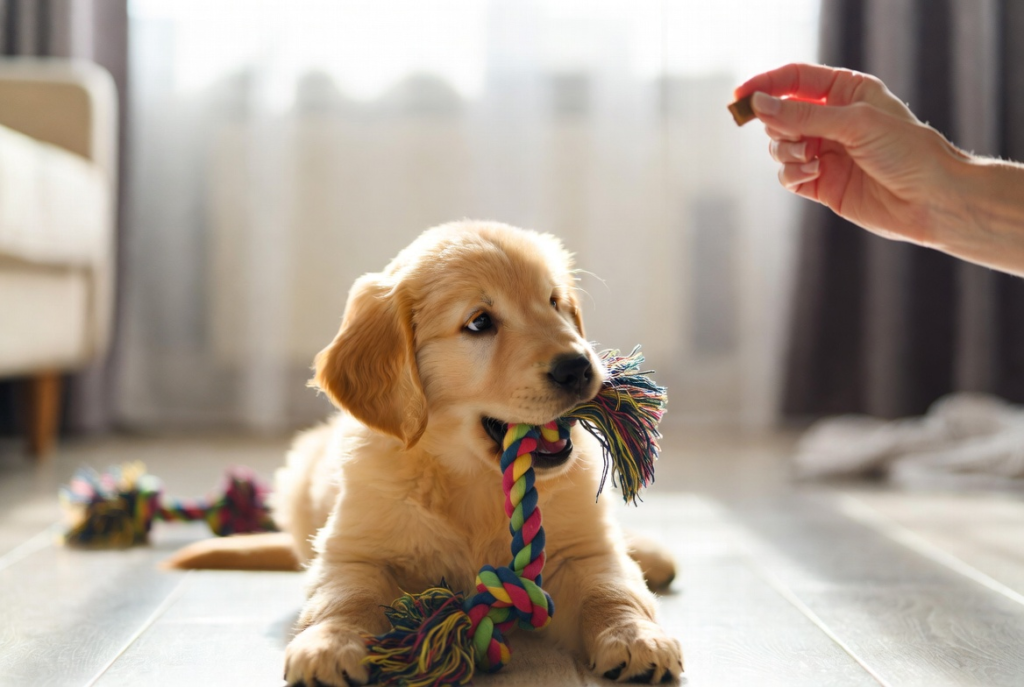
1. Redirect Your Puppy to Toys
One of the most effective ways to manage puppy nipping is teaching your puppy what they can bite.
When your puppy bites your hands:
- Stay calm.
- Stop moving your hands.
- Offer a suitable chew toy.
- Praise your puppy when they choose the toy.
Over time, your puppy begins to understand:
Hands = interaction
Toys = chewing
Real-Life Example
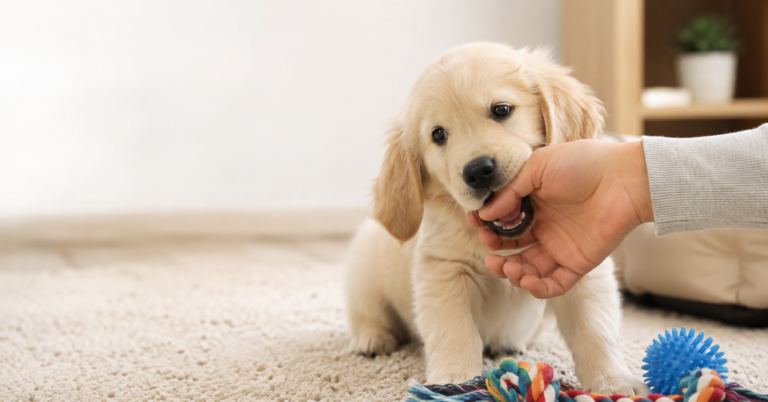
A 4-month-old Golden Retriever puppy grabs fingers whenever someone sits on the floor. Instead of pushing the puppy away, the owner keeps a toy nearby and immediately redirects the puppy.
After consistent practice, the puppy learns that grabbing the toy keeps playtime going.
Using appropriate chew toys and redirecting unwanted mouthing is a common recommendation from the American Kennel Club for managing puppy biting behavior.
2. Make Biting End the Fun
Puppies repeat behaviors that create exciting reactions.
If biting your hands creates laughter, movement, or attention, your puppy may think biting is part of the game.
A simple approach:
- Puppy bites too hard.
- Stop interaction immediately.
- Turn away or remove attention briefly.
- Resume play when the puppy is calm.
The lesson is:
Gentle play continues. Hard biting pauses the fun.
The AKC recommends stopping play and removing attention when puppies mouth people because attention itself can reward the behavior.
3. Reward Gentle Choices
Many owners notice biting but forget to reward calm behavior.
Your puppy should receive attention when they:
- Sit politely
- Chew their own toys
- Relax beside you
- Play without biting
- Respond to training cues
Positive reinforcement helps puppies understand which behaviors are worth repeating.
Example
Instead of only saying “no” when your puppy bites, reward the moment they sit calmly after play.
That calm behavior is what you want your puppy to practice.
Why Does Puppy Biting Get Worse in the Evening?
Many puppy owners experience the famous puppy witching hour.
A puppy that behaves well all day may suddenly start:
- Biting ankles
- Pulling clothes
- Running around the house
- Ignoring commands
This usually happens when puppies become tired, overstimulated, or have difficulty calming themselves.
Real-Life Scenario
A 14-week-old puppy spends the day exploring, learning commands, and playing. Around 6 PM, the puppy starts attacking socks and hands.
The owner assumes the puppy needs more exercise, but the real solution may be a quiet break, chew toy, or nap.
Young puppies need plenty of rest, and overtired behavior can sometimes look like extra energy.
Common Mistakes That Make Puppy Biting Continue
1. Allowing Hand Wrestling
Playing directly with hands teaches puppies that fingers are acceptable targets.
Avoid games like:
- Moving fingers in front of the puppy
- Pushing the puppy’s face away during play
- Encouraging chasing hands
Use:
- Tug toys
- Balls
- Chew toys
- Puzzle toys
instead.
2. Reacting Too Strongly
Some puppies become more excited when owners shout, push, or wave their hands.
A big reaction can accidentally become part of the game.
A calmer response is usually easier for puppies to understand.
3. Changing Rules Every Day
Consistency matters.
If one person allows biting during play while another immediately stops it, the puppy receives mixed messages.
Everyone in the home should follow the same training approach.
Understanding Puppy Bite Inhibition
Puppy bite inhibition means learning to control the pressure of a bite.
Puppies naturally develop this skill while playing with their mother and littermates. When a puppy bites too hard, play may stop, helping them understand that rough biting changes the interaction.
At home, owners continue this learning process by:
- Ending painful play
- Rewarding gentle behavior
- Redirecting bites to toys
- Avoiding rough hand games
A puppy does not need to lose the instinct to use its mouth. They simply need to learn control.
When Should You Be Concerned About Puppy Biting?
Most puppy biting is normal, but some situations need extra attention.
Speak with a veterinarian or qualified trainer if your puppy:
- Shows fear before biting
- Guards food or toys aggressively
- Causes serious injuries
- Suddenly becomes more aggressive
- Shows signs of mouth pain
Normal puppy play biting usually improves with maturity and training.
Puppy Biting Training Checklist
Use this daily checklist:
✅ Keep toys within reach
✅ Redirect biting early
✅ Reward calm behavior
✅ Stop painful play
✅ Avoid hand-based games
✅ Provide mental stimulation
✅ Give enough rest time
✅ Keep training consistent
Small improvements add up over time.
Trainer Insight
A better training mindset is to focus on teaching the behavior you want.
Instead of only thinking:
“How do I stop my puppy from biting?”
Think:
“How do I show my puppy what to do instead?”
A puppy holding a toy, sitting calmly, or licking instead of biting should receive attention and rewards.
Veterinary Advice
Teething and mouthing are normal parts of puppy development. However, contact your veterinarian if your puppy has unusual symptoms such as:
- Difficulty eating
- Mouth swelling
- Broken teeth
- Excessive pain
- Sudden behavior changes
A gradual reduction in biting is expected as puppies mature.
Myth vs Fact
| Myth | Fact |
|---|---|
| Puppies bite because they are trying to dominate people. | Most puppy biting happens because of play, exploration, teething, and learning. |
| A puppy should never use its mouth. | Puppies naturally explore with their mouths and need guidance. |
| Puppies stop biting automatically. | Maturity helps, but training creates better habits. |
| Punishment is the fastest solution. | Consistent redirection and reward-based training are commonly recommended. |
Frequently Asked Questions
When do puppies stop biting completely?
Most puppies become much less mouthy after the teething stage, often around 6–8 months, but occasional mouthing during excitement may continue.
What is the worst puppy biting age?
Many owners find 3–6 months challenging because teething, curiosity, and play biting happen together.
Why is my 6-month-old puppy still biting?
Some puppies continue biting because they are still learning self-control or because the behavior has become a habit.
Do puppies stop biting after teething?
Many puppies improve after teething ends, but training is still needed to replace unwanted habits.
How long does puppy nipping last?
The timeline varies. Some puppies improve quickly, while others need several months of consistent practice.
Should I ignore my puppy when they bite?
Briefly removing attention can help, but combine it with redirection toward toys and rewarding calm behavior.
Are some breeds more likely to bite as puppies?
Some breeds are naturally more mouth-oriented because of their original working roles, but every puppy can learn better habits.
Is puppy biting aggressive?
Usually no. Normal play biting is different from aggression, which may involve fear, guarding, or threatening body language.
Conclusion
If you are wondering when do puppies stop biting, remember that puppy biting is a normal developmental stage rather than a sign of a bad dog.
Most puppies gradually improve as they finish teething, develop better self-control, and learn appropriate ways to interact with people.
The most effective approach is simple: redirect biting, reward gentle behavior, provide suitable chew options, and stay consistent.
Those sharp puppy teeth are temporary, but the habits your puppy learns during these early months can shape their behavior for years.