
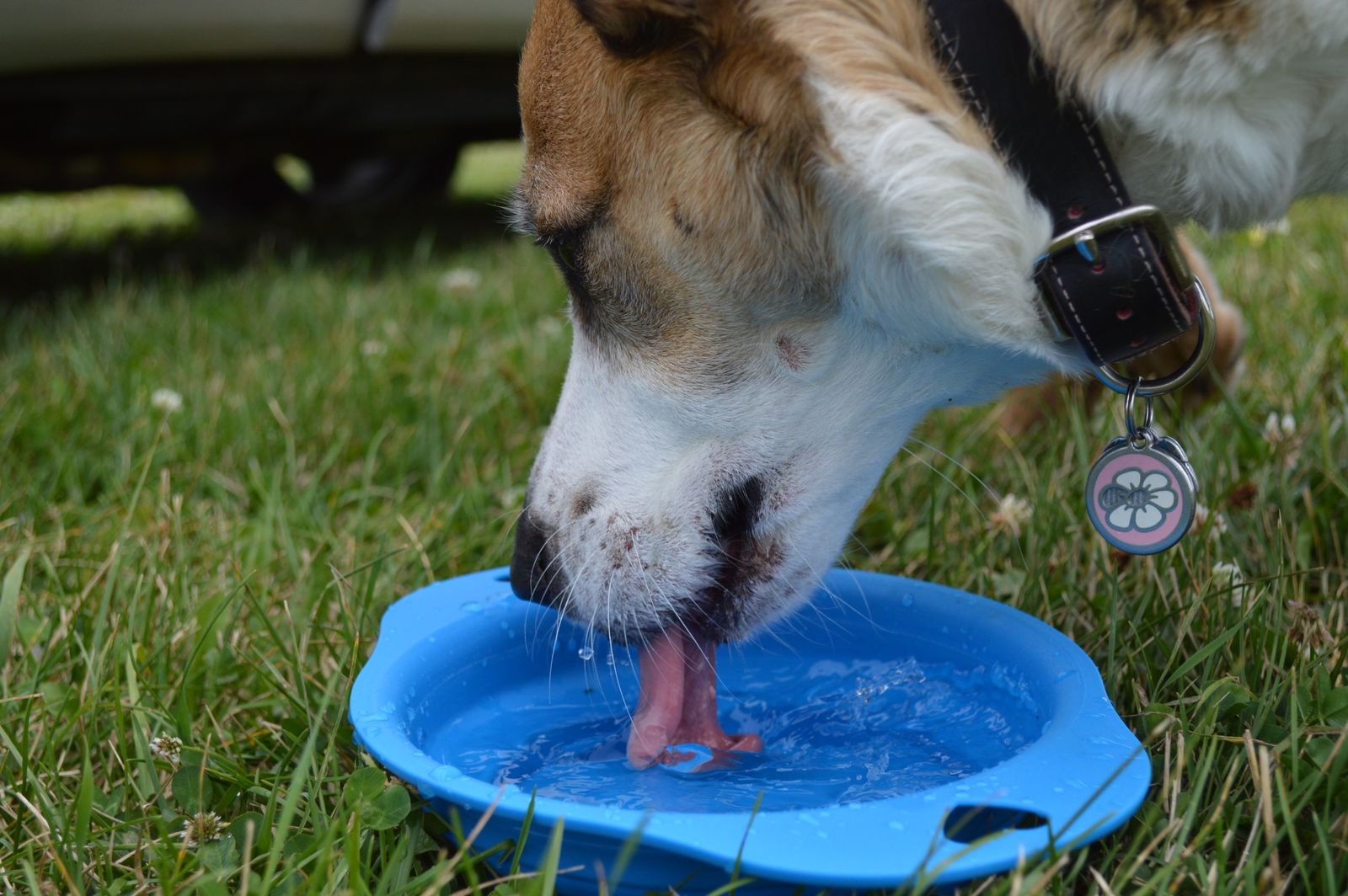
Why Does My Dog Drink So Much Water? Causes & When to Worry
Why does my dog drink so much water? How much is normal for your dog’s weight, how to measure it at home, and the red flags that need a vet.
The bowl is empty again. Your dog is asking to go out more, maybe having accidents, maybe waking you at night for water. When drinking changes like that, owners rightly worry — because sometimes it is just a hot day, and sometimes it is the first sign of disease.
If you are asking why does my dog drink so much water, start with the number for your dog’s weight, then measure at home to see where “watch” becomes “vet”.
Quick Answer: Why Does My Dog Drink So Much Water?
Harmless reasons include heat, exercise, dry food, salty treats, and some medicines. But drinking that stays high without an obvious cause can signal kidney disease, diabetes, Cushing’s disease, or a urinary infection. Never restrict water — measure it, and see a vet if it stays high.
How Much Water Is Normal for a Dog?
Two yardsticks are used, and they roughly agree:
- Cornell (Riney Canine Health Center): about 40–60 ml per kg of body weight per day.
- PetMD: roughly 1 fluid ounce per pound per day (which works out to about 65 ml/kg — slightly above Cornell’s range).
Puppies normally drink more for their size than adult dogs (Cornell), so ask your vet what is normal for your puppy’s age and weight.
The exact need shifts with diet (wet food carries water), weather, and activity. What matters most is change: excessive drinking (polydipsia) is generally over 100 ml/kg/day, but any marked rise from your own dog’s normal is worth attention (Cornell, AKC).
| Dog weight | Normal per day | Excessive if over |
|---|---|---|
| 5 kg (11 lb) | 200–300 ml (7–10 fl oz) | 500 ml (17 fl oz) |
| 10 kg (22 lb) | 400–600 ml (14–20 fl oz) | 1,000 ml (34 fl oz) |
| 15 kg (33 lb) | 600–900 ml (20–30 fl oz) | 1,500 ml (51 fl oz) |
| 20 kg (44 lb) | 800–1,200 ml (27–41 fl oz) | 2,000 ml (68 fl oz) |
| 25 kg (55 lb) | 1,000–1,500 ml (34–51 fl oz) | 2,500 ml (85 fl oz) |
| 30 kg (66 lb) | 1,200–1,800 ml (41–61 fl oz) | 3,000 ml (101 fl oz) |
| 40 kg (88 lb) | 1,600–2,400 ml (54–81 fl oz) | 4,000 ml (135 fl oz) |
Worked example: a 20 kg dog normally drinks about 800–1,200 ml a day. If that dog is consistently finishing 2 litres or more, that is over the excessive line — book a vet.
How to Measure Your Dog’s Drinking at Home
- Use one bowl and a measuring jug. In the morning, pour in a measured amount (for example 1 litre) and note it.
- Every refill, measure what you add. Note spills as best you can.
- After 24 hours, measure what is left. Intake = what you poured − what remains.
- Measure over a full 24 hours. Repeat on another day if the first day was unusual. Note urination changes too — drinking and weeing usually rise together.
- Multi-dog homes: measure one dog at a time by separating bowls for the measuring period, or the number means nothing.
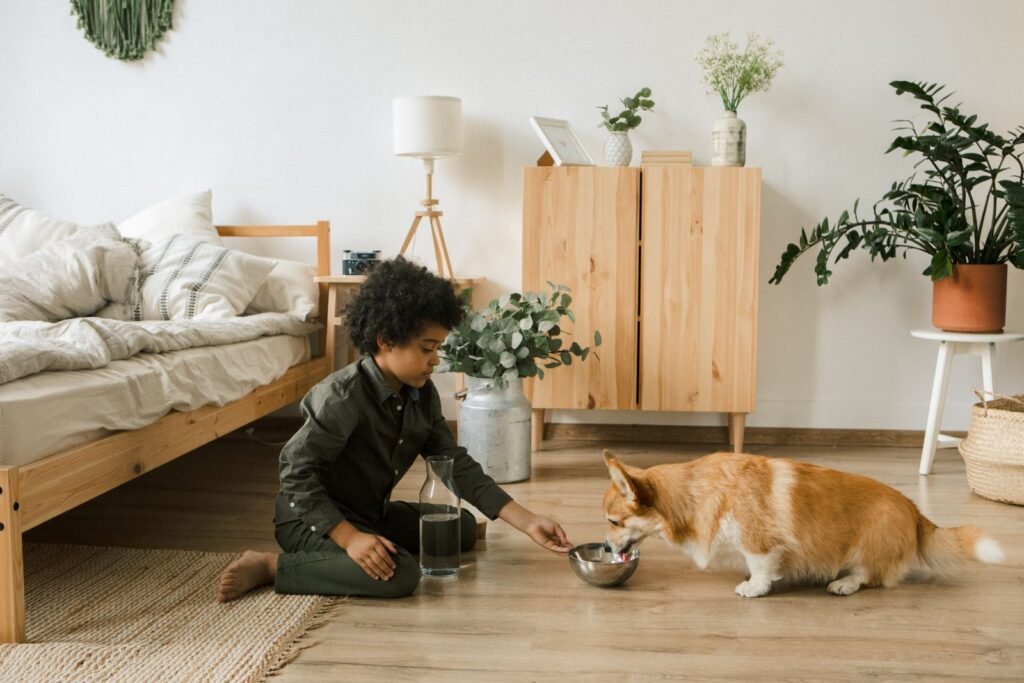
Bring these numbers to the vet. “Drinking a lot” is vague; “2.3 litres a day for a 20 kg dog” is a number your vet needs to see.

Harmless Reasons Dogs Drink More
- Heat and exercise — drinking settles as the dog cools and rests.
- Food changes — switching from wet to dry food, or salty treats and chews, can raise thirst.
- Medicines — steroids (such as prednisone), phenobarbital, and diuretics (such as furosemide) all increase drinking and urination (PetMD, PDSA). Expected, but tell your vet if it seems extreme.
- Stress or habit drinking — some dogs drink from behaviour, not thirst. Vets call this psychogenic polydipsia, an uncommon cause (Cornell, VCA).
The pattern to trust: harmless causes explain themselves (hot day, new food, new medicine) and usually settle once the cause passes.
Medical Causes: When Drinking Is a Symptom
Most of the time, the kidneys lose water first (polyuria) and drinking follows to compensate (polydipsia) — vets call the pair PU/PD. There are many possible causes (Cornell, PDSA). The most common are below.
Diabetes mellitus (sugar diabetes)
Signs are drinking and weeing a lot, losing weight even though the dog eats well or eats more, and low energy. Sugar builds up in the blood, and the kidneys remove the extra sugar along with water, so the dog drinks more to replace it (Cornell). The vet checks blood and urine for sugar, and may use a fructosamine test to confirm it (VCA).
Chronic kidney disease
Signs build up slowly: drinking more, weeing more at night, losing weight, eating less, vomiting, diarrhoea, mouth ulcers and breath that smells of ammonia (VCA). Healthy kidneys concentrate urine, but damaged kidneys make weak, watery urine, so the dog loses water and drinks more. The vet checks blood for urea and creatinine, and checks how concentrated the urine is (VCA).
Cushing’s disease
Signs are drinking and weeing more, eating more, panting, a pot belly, thinning hair and weak muscles (VCA, Cornell). The body makes too much of the hormone cortisol from overactive adrenal glands, and this drives thirst and urination (VCA). The vet uses blood tests for adrenal disorders, such as a low-dose dexamethasone test (VCA).
Urinary tract infection
Signs are trying to wee often, straining, passing only a little urine each time, blood in the urine, and pain when weeing (VCA). An infection in the bladder makes a dog need to wee often, and a kidney infection can also make a dog drink and wee more (VCA). The vet tests the urine, looking for red and white blood cells that show infection and inflammation (VCA).
Pyometra (womb infection)
This affects unspayed females, often weeks after a season. Signs are drinking more, low energy, eating less, vomiting, and sometimes discharge from the vulva (Cornell). The infected womb can make a dog very ill fast, so this is an emergency. The vet may find raised white blood cells on blood tests, and may use X-rays or an ultrasound scan to check the womb (VCA).
Liver disease
Signs can include vomiting, diarrhoea, eating less, weight loss, drinking and weeing more, yellow skin, eyes or gums (jaundice), and changes in behaviour (PDSA). The liver clears waste and toxins from the blood, and when it fails, waste builds up and the dog drinks and wees more. The vet checks liver enzymes on blood tests, and may use scans or other liver tests (VCA).
High calcium in the blood
A high calcium level in the blood can make a dog drink and wee more (VCA, Cornell). There may be no other clear sign at home, so this cause is usually found on tests. The vet measures calcium on a blood test, then looks for the reason it is high (VCA).
Leptospirosis
This is a bacterial infection that dogs can pick up from water or soil contaminated with urine from infected animals (PDSA). Signs can include fever, eating less, vomiting, diarrhoea, drinking more, jaundice and muscle pain, and it can damage the liver and kidneys (PDSA). The vet uses blood and urine tests to check the kidneys and liver and to look for the infection.
Diabetes insipidus
This is not sugar diabetes. It is a hormone problem: the brain does not make enough antidiuretic hormone (ADH), or the kidneys do not respond to it, so the kidneys cannot concentrate urine (VCA). The dog loses a lot of water in weak urine and drinks a lot to replace it. The vet may use a water deprivation test, an ADH test, or a plasma osmolality test (VCA).
Dehydration and electrolyte imbalance
Vomiting, diarrhoea, heat, or not eating and drinking enough can leave the body short of water and salts (PDSA). The dog then drinks more to replace what was lost, and certain electrolyte imbalances can also drive thirst and urination (VCA). The vet checks hydration, including whether the gums are pink and moist (PDSA), and tests blood electrolytes. A severely dehydrated dog may need fluids (PDSA).
None of these can be told apart from the water bowl. They are told apart with blood and urine tests — which is why measuring first, then testing, is the right order.
Night, Morning, At Once, After Eating: The Variants
Drinking a lot at night
A dog that wakes to drink and wee at night has usually lost the ability to concentrate urine overnight — an early sign of kidney disease, diabetes or Cushing’s. Night drinking that is new and persistent is a vet visit, not a behaviour problem. If your dog is also panting at night, read that guide too.
Drinking a lot in the morning
A big morning drink after a dry night can be normal, especially on dry food. It is the 24-hour total that matters — measure before worrying.
Drinking a lot at once (gulping)
Gulping a whole bowl after exercise is common. Slow it down with smaller, more frequent offerings after hard exercise, and watch for vomiting after gulping. If your dog also keeps throwing up, that combination needs a vet.
Drinking a lot after eating
Dry food makes dogs thirsty — normal. A sudden change in post-meal drinking, with no food change, is worth measuring.
Drinking a lot and peeing a lot (PU/PD)
Vets call this pair polyuria (peeing a lot) and polydipsia (drinking a lot), or PU/PD for short (Cornell, VCA). In most cases the dog passes large amounts of weak urine first, then drinks more to replace the water lost (VCA). PU/PD is a sign, not a diagnosis, so the vet looks for the cause with blood and urine tests.
Drinking a lot all of a sudden
A sudden rise is a change from your dog’s normal, and that change matters even before you know the 24-hour total (Cornell, PDSA). Measure what your dog drinks, note any other signs, and contact your vet rather than waiting to see if it settles. A sudden change with vomiting, low energy, or not eating needs advice the same day (PDSA).
Drinking a lot and vomiting
Vomiting makes a dog lose fluid, and repeated vomiting can lead to dehydration (PDSA). A dog that drinks a lot and vomits may be losing water both ways, so contact your vet for advice. Get help urgently if your dog cannot keep water down, vomits again and again, or seems weak or in pain (PDSA).
Drinking a lot and panting
Panting helps a dog cool down after exercise or in hot weather, and drinking more then can be normal (PDSA). Panting that does not settle with rest, or panting with drinking and weeing more, can be a sign of illness such as Cushing’s disease (Cornell). If the panting is new, heavy, or comes with other signs, contact your vet.
Drinking a lot and licking lips
Lip smacking or licking can happen when a dog feels sick (VCA). If your dog licks its lips, drools, vomits, or goes off its food and also drinks a lot, contact your vet. Tell the vet when the lip licking happens, such as before vomiting or after eating, as this helps them find the cause.
Should I Limit My Dog’s Water?
No. Never restrict water unless your vet specifically tells you to, and never do a home “water deprivation test” (AKC warns against this; PetMD, PDSA and Cornell also say never to restrict water). A dog drinking excessively is usually compensating for water loss; cutting water risks dehydration and makes the underlying problem worse.
When to See a Vet
PDSA and Cornell give one clear rule: contact your vet if your dog is drinking or weeing more than normal for them, or drinking over 100 ml per kg in a day. Do not wait to see if it settles on its own. Measure your dog’s drinking for 24 hours if you can, and give the vet that number, but do not delay contacting the vet to get it.
Get help the same day if the extra drinking comes with vomiting or diarrhoea, lethargy, not eating, blood in urine, straining to wee, a swollen belly, or an unspayed female that seems unwell.
In senior dogs, new excessive drinking can be an early sign of kidney disease, diabetes and Cushing’s; do not write it off as “old age”.
Signs to watch for
- Drinking or weeing more than normal, or waking at night to drink or wee
- Accidents in the house, or needing to go out more often
- Losing weight, eating more or eating less
- Low energy, vomiting or diarrhoea
- Straining to wee, passing only a little urine, or blood in the urine
- Panting that does not settle, a pot belly, or thinning hair
- Yellow skin, eyes or gums, bad breath, or mouth ulcers
- An unspayed female that is unwell weeks after a season, with or without discharge
Note which signs you see and when they started, and tell your vet. This helps the vet choose the right tests (VCA).
What Will the Vet Do?
First-line tests are consistent across sources: a physical exam, blood tests (complete blood count (CBC) and chemistry panel), and urinalysis (AKC, Cornell, VCA, PetMD). Those three usually narrow the cause a lot. Initial tests can also include imaging (Cornell). Further tests follow if needed — urine culture or hormone tests. Bring your measured intake numbers and a note of medicines, food changes, and urination changes.
Treatment and outlook
Treatment depends on the cause the tests find, so only your vet can decide after those tests (VCA). It may include fluids for a dehydrated dog, or medicine for the underlying cause, and some causes need urgent treatment, such as pyometra (Cornell). The outlook also depends on the cause and how early it is found, which is why contacting your vet when drinking changes matters. Keep water available while you wait — never restrict it at home (Cornell).
Key Takeaways
- Normal is roughly 40–60 ml/kg/day (Cornell); over 100 ml/kg/day is excessive.
- Change from your dog’s own normal matters as much as the chart.
- Track a full day’s drinking with a jug — real numbers beat guesses.
- Never restrict water or do a home deprivation test.
- Top medical causes: diabetes, Cushing’s, kidney disease — found with blood and urine tests.
- New night drinking in an older dog is an early warning, not old age.
FAQs
What counts as excessive thirst in dogs?
Generally more than 100 ml of water per kg of body weight per day (Cornell, AKC) — for a 20 kg dog, over 2 litres daily. A clear rise from your dog’s usual intake also counts, even below that line.
Is 2 bowls of water a day too much for a dog?
It depends on the bowl and the dog. Measure the bowl’s volume, multiply by two, and compare with the chart for your dog’s weight. A 20 kg dog’s normal is about 0.8–1.2 litres; two 1-litre bowls would be excessive.
Should I let my dog drink all the water he wants?
Yes — always keep fresh water available and never restrict it unless your vet directs otherwise. If drinking seems excessive, track a full day’s drinking and take the numbers to your vet.
What disease makes dogs drink a lot of water?
The most common are diabetes mellitus, Cushing’s disease and chronic kidney disease, with urinary infections and womb infection (pyometra) also on the list. There are many possible causes (Cornell, PDSA), separated by blood and urine tests.
Why does my older dog suddenly drink a lot of water?
Sudden increased drinking in a senior dog is an early sign of kidney disease, diabetes or Cushing’s disease. Track a full day’s drinking and book a vet — these conditions are easier to manage when caught early.
Do dogs drink more water as they get older?
Not as a rule. VCA notes that ageing dogs may feel less thirst, so do not put a clear rise down to age alone. A sudden or large increase in a senior dog can be an early sign of kidney disease, diabetes or Cushing’s disease. Track a full day’s drinking and book a vet.
Sources
- Cornell Riney Canine Health Center — Canine Polyuria and Polydipsia (PU/PD)
- Cornell Riney Canine Health Center — Diabetes in dogs
- Cornell Riney Canine Health Center — Pyometra
- PDSA — Why is my dog drinking lots of water and weeing more than usual?
- PDSA — Liver disease in dogs
- PDSA — Leptospirosis in dogs
- PDSA — Vet Q&A: Is my dog panting too much?
- VCA Animal Hospitals — Testing for Increased Thirst and Urination
- VCA Animal Hospitals — Chronic Kidney Disease in Dogs
- VCA Animal Hospitals — Cushing’s Disease in Dogs
- PetMD and AKC were also consulted for the intake yardsticks above.
Photo Credits
Featured photo: Doug Brown via Pexels. Water bowl photo: KATRIN BOLOVTSOVA via Pexels. Vet photo: Mikhail Nilov via Pexels. Intake chart: PetCavo.




2 Comments