Why Does My Puppy Keep Looking Behind While Walking?
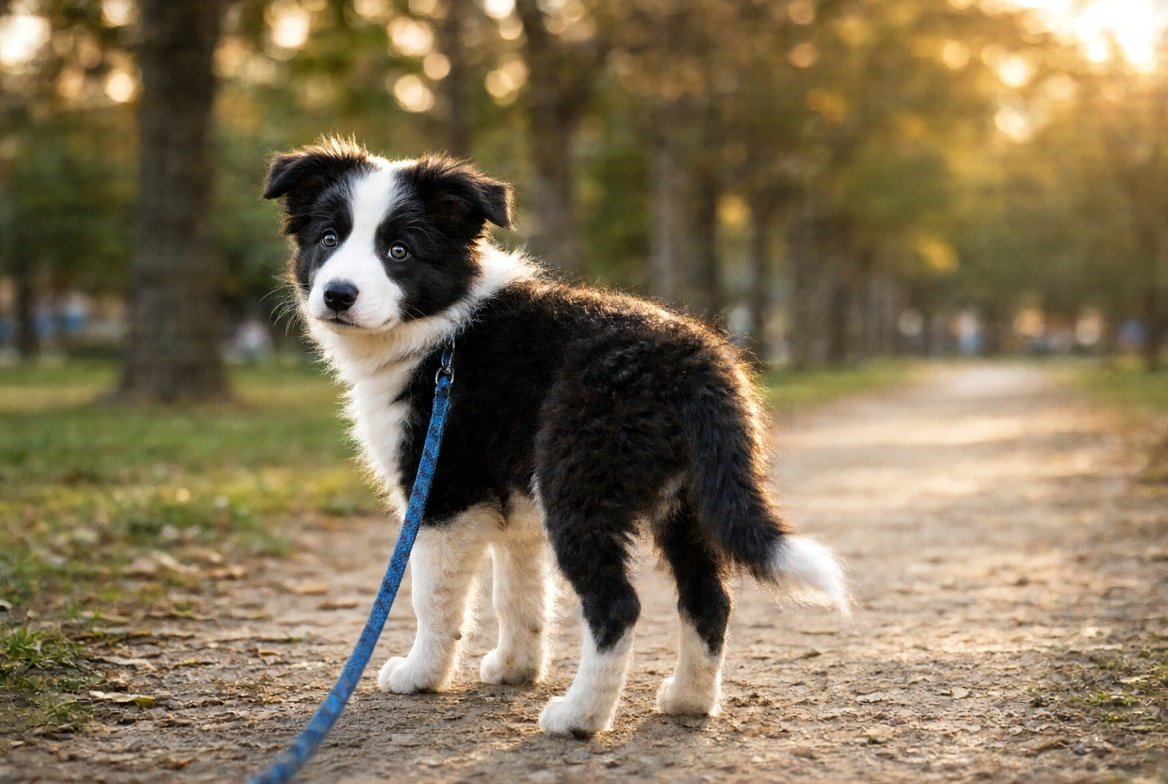
You are walking along normally when your puppy suddenly turns their head, looks behind them, and then keeps walking. A few steps later, they do it again. Sometimes they seem curious; other times, they slow down, stop, or even turn around.
So, why does my puppy keep looking behind while walking?
Usually, the answer is simple: your puppy has noticed something that caught their attention, is checking in with you, reacting to leash pressure, or trying to understand an unfamiliar environment. Puppies are still learning how to process the sights, sounds, smells, and movement around them, and leash walking itself is a skill they have to learn.
A relaxed glance behind is often nothing to worry about. The more useful question is what happens before and after your puppy looks back. That pattern can tell you whether the behavior is simple curiosity, distraction, uncertainty, or something that needs closer attention.
Quick Answer: Why Does My Puppy Keep Looking Behind While Walking?
If your puppy keeps looking behind while walking, they may be:
- Hearing a sound behind them
- Smelling something interesting
- Watching a person, dog, vehicle, or other movement
- Checking in with you
- Reacting to a tight leash or unfamiliar equipment
- Feeling overwhelmed or uncertain
- Getting tired or physically uncomfortable
The body language around the behavior matters. A puppy who looks back with a loose body and then happily continues walking is very different from one who repeatedly looks behind, freezes, pulls away, tucks their tail, or suddenly refuses to move.
AKC leash-training guidance recommends rewarding puppies for attention and voluntary check-ins while gradually increasing distractions, rather than expecting them to automatically understand how to walk on a leash.
Is It Normal for a Puppy to Look Behind While Walking?
Yes, occasional looking back can be completely normal.
Your puppy is experiencing a much richer stream of information than you may notice. A faint sound, unfamiliar smell, moving person, barking dog, or something changing behind them can be enough to make them turn their head.
Puppies also do not automatically know how to ignore every distraction. Walking politely on a leash is learned through practice, and young dogs can have short attention spans when the environment becomes exciting.
What matters is the pattern.
If your puppy briefly looks back and then continues walking, you usually don’t need to correct the behavior. If they repeatedly turn around, become tense, retreat, freeze, or suddenly behave differently from normal, look more closely at what is triggering the response.
7 Reasons Your Puppy Keeps Looking Behind While Walking
1. Your Puppy Heard Something Behind You
A puppy may turn around because they heard a sound that you barely noticed.
It could be footsteps, a car, a bicycle, a gate closing, another dog barking, construction noise, or even a sound coming from inside a nearby building.
Young dogs are still learning which sounds matter and which can be ignored. Turning around gives them a chance to locate the source.
Real-world example: Your puppy walks normally until a truck passes behind you. They turn their head, watch it for a moment, then continue once the noise fades.
If your puppy remains relaxed, there is usually no need to interrupt this brief investigation.
2. Your Puppy Smelled Something Interesting
Sometimes the reason is not something they can see or hear at all.
Dogs rely heavily on their sense of smell to gather information about their surroundings. During a walk, a scent trail can be more interesting to your puppy than whatever is happening directly in front of them. AKC guidance specifically recommends giving dogs appropriate opportunities to sniff because exploration provides valuable mental stimulation.
Your puppy might smell another dog, food, grass, wildlife, or something that recently passed through the area.
When the environment is safe, allowing a short sniffing opportunity can be more useful than constantly trying to keep your puppy moving.
3. Your Puppy Is Checking In With You
Not every look behind means your puppy is distracted.
Sometimes your puppy may simply be looking toward you for information or reassurance. This can happen when they are unsure what you are going to do next, especially during early leash training.
However, don’t assume that every glance has a specific meaning. Eye contact alone cannot tell you exactly what your puppy is thinking. Look at the rest of their body language and what happens immediately afterward.
If your puppy looks at you, stays relaxed, and continues walking, you can quietly reward that attention.
AKC recommends marking and rewarding voluntary eye contact and attention during leash training, including automatic check-ins when a puppy reaches the end of the leash.
4. Your Puppy Is Distracted by Something Behind You
Sometimes the trigger is simply interesting.
A person walking in the opposite direction, another dog, a cyclist, a child, a bird, or a moving vehicle can all compete for your puppy’s attention.
The key is whether your puppy can notice the distraction and then return their attention to you.
If they repeatedly turn toward the same person, dog, or object, don’t assume they are being stubborn. They may simply be finding the environment more rewarding than the walk itself.
Pro tip: If your puppy is too distracted to respond to their name or a familiar cue, move farther away from the distraction rather than repeatedly giving the cue. AKC recommends reducing the level of distraction when a puppy cannot successfully respond.
5. Your Puppy Is Reacting to Leash Pressure
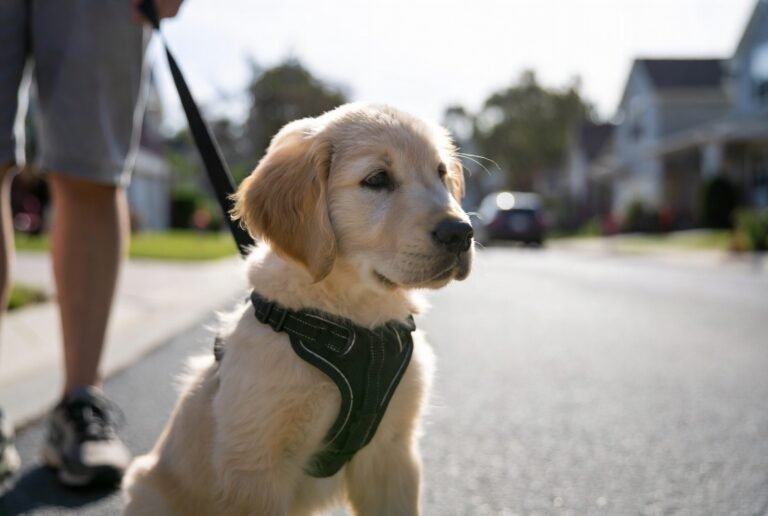
Leash pressure can also explain why a puppy keeps turning around.
If the leash becomes tight, your puppy may feel pressure from the collar or harness and turn toward the sensation. They may also be trying to understand why their movement has suddenly been restricted.
This is especially common when a puppy is still learning what the leash means. Leash walking is not an instinctive skill, and puppies may initially freeze, pull backward, or struggle to understand how to move comfortably with the equipment.
Instead of pulling your puppy forward, try creating slack in the leash and encouraging them to move with you.
You can also practice indoors or in a quiet yard before expecting your puppy to handle a busy sidewalk.
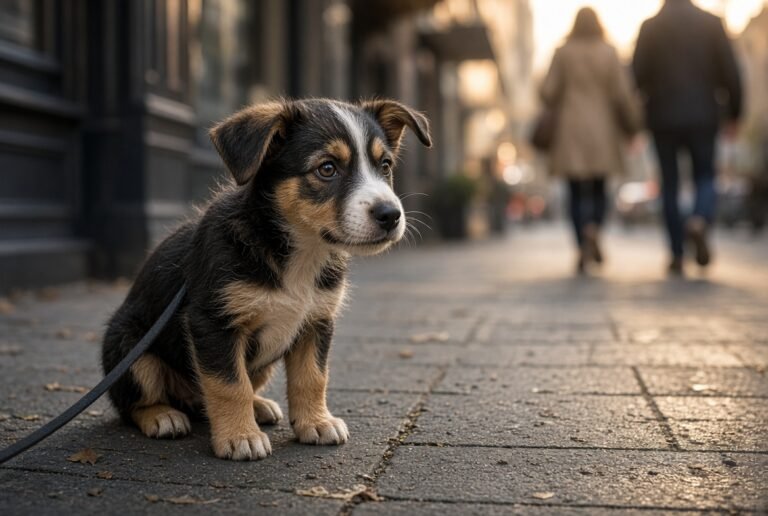
6. Your Puppy Feels Nervous or Overwhelmed
Repeated looking behind can sometimes happen when a puppy is uncomfortable with their surroundings.
The trigger might be a particular person, dog, vehicle, loud sound, unfamiliar location, or combination of several distractions.
Fear or uncertainty usually becomes clearer when you look at the puppy’s entire body rather than just their head.
| Looking back with… | What it may suggest |
|---|---|
| Loose body and relaxed movement | Curiosity or normal observation |
| Forward ears and active sniffing | Interest in the environment |
| Relaxed body while looking at you | Attention or a possible check-in |
| Stiff posture and fixed attention | Concern or heightened arousal |
| Low posture, tucked tail, or retreating | Fear or uncertainty |
| Looking back when the leash tightens | Response to leash pressure |
VCA’s puppy body-language guidance similarly emphasizes looking at posture, tail, ears, eyes, and mouth together rather than interpreting one signal in isolation.
If your puppy appears worried, don’t drag them toward the thing that concerns them. Give them more distance and let them regain composure.
7. Your Puppy Is Tired or Physically Uncomfortable
Puppies can become tired quickly, particularly when a walk includes lots of new sights, smells, and distractions.
A tired puppy may slow down, pause, sit, or become less interested in continuing. That’s different from a puppy who suddenly starts looking behind on every walk despite previously walking normally.
Physical discomfort is another possibility, especially if the behavior is new or accompanied by other changes.
Watch for signs such as:
- Limping or favoring a leg
- Reluctance to move
- Difficulty walking normally
- Signs of pain
- A sudden reduction in normal activity
- Unusual behavior that persists after the walk
Looking behind by itself does not tell you that your puppy has a medical problem. The important clue is a sudden change or a combination of behavioral and physical signs.
If you notice concerning symptoms, stop trying to solve the behavior as a training problem and speak with your veterinarian.
Is Your Puppy Looking at Something Behind or Looking Back at You?
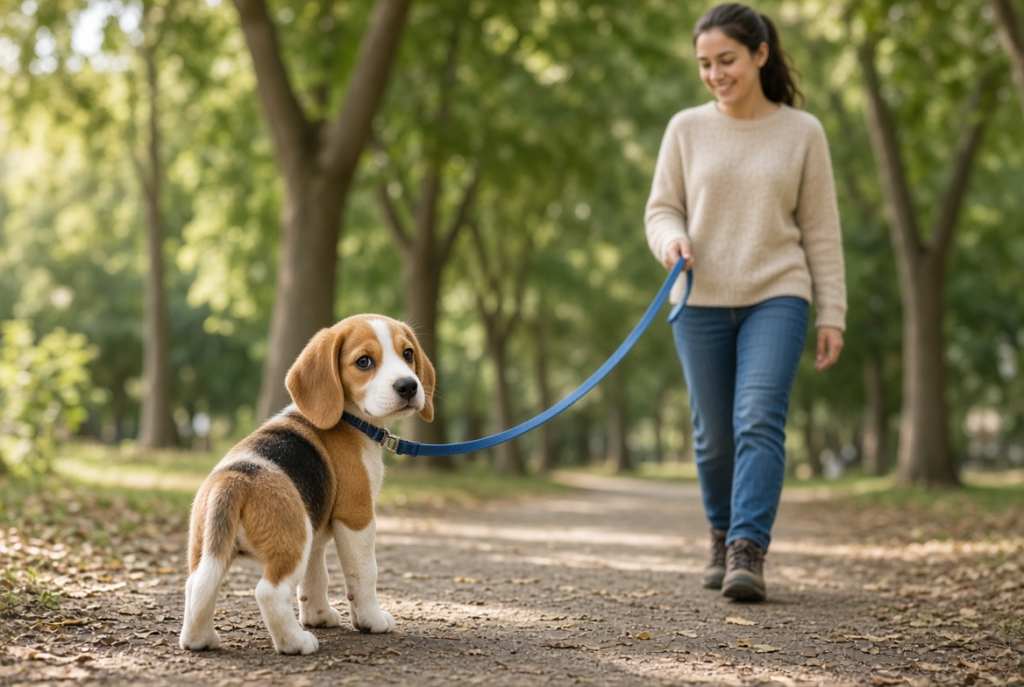
This distinction can make the behavior much easier to understand.
Looking toward something behind you
Your puppy may be responding to:
- A sound
- A scent
- Another dog
- A person
- Traffic
- Movement
- Something unfamiliar
Looking directly toward you
Your puppy may be seeking information, attention, or guidance.
This can become a useful training opportunity. When your puppy voluntarily looks at you, you can calmly mark the behavior and reward it.
Looking back while moving away
If your puppy repeatedly looks behind while slowing down, pulling backward, crouching, or showing a tense posture, consider whether something behind them is making them uncomfortable.
The behavior should be interpreted as a pattern, not as a single signal with one guaranteed meaning.
What Should You Do When Your Puppy Looks Behind?
The best response depends on why your puppy is doing it.
| What happens | What you can do |
| Puppy glances back once and keeps walking | Let them observe and continue |
| Puppy smells something safe | Allow a brief sniff |
| Puppy looks at you | Mark and reward the attention |
| Puppy keeps watching a distraction | Increase distance and redirect |
| Puppy freezes or looks worried | Stop pushing forward and create space |
| Puppy turns when the leash tightens | Loosen the leash and encourage movement |
| Puppy shows possible pain | Stop the walk and assess the situation |
The goal is not to prevent your puppy from ever looking around.
A successful walk is not one where your puppy ignores everything. It is one where your puppy can notice the environment and still learn to reconnect with you.
A Simple Training Exercise: Look Back, Check In, Continue
If your puppy frequently looks behind while walking, practice attention in an easy environment before working around major distractions.
Step 1: Start somewhere quiet
Begin indoors, in your yard, or in another low-distraction area. VCA recommends introducing puppies to leash walking gradually, starting in familiar environments before increasing the difficulty.
Step 2: Let your puppy notice the environment
Don’t immediately correct every glance.
Give your puppy a moment to observe. If they remain relaxed, wait for their attention to return naturally.
Step 3: Reward attention
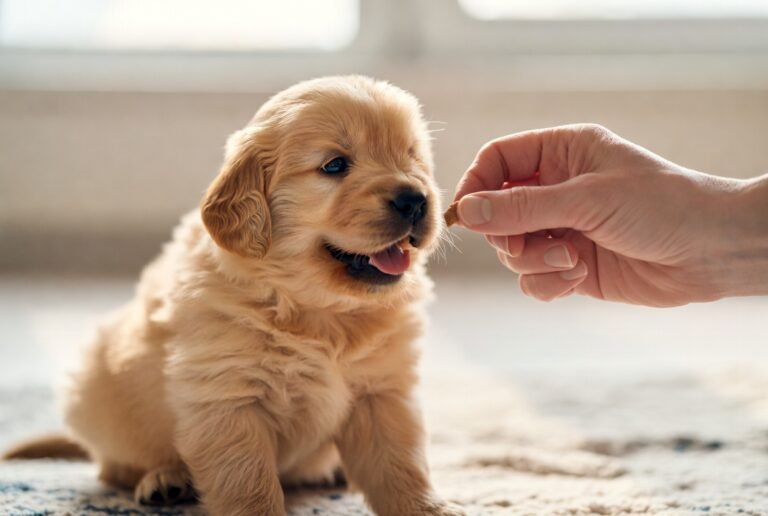
When your puppy looks toward you, use a consistent marker such as “yes” and immediately give a small treat.
This teaches your puppy that reconnecting with you is worthwhile.
Step 4: Take a few steps
Once your puppy has checked in, take two or three relaxed steps forward.
Reward them for following with a loose leash.
Step 5: Gradually add distractions
Only increase the difficulty when your puppy is succeeding at the current level.
You might progress from:
Living room → yard → quiet street → normal neighborhood walk → busier environment
If your puppy stops responding, the environment may simply be too difficult at that moment. Move to a quieter location and try again.
AKC recommends building leash skills gradually and rewarding attention rather than relying on leash pressure to control movement.
Common Mistakes to Avoid
Pulling your puppy forward
If your puppy is worried or distracted, pulling can add more pressure without teaching them what you want them to do.
Instead, reduce pressure and make the next step easier.
Treating every glance as a training problem
Your puppy is allowed to notice the world.
Trying to stop every sniff, glance, or pause can make walks unnecessarily frustrating for both of you.
Increasing distractions too quickly
A puppy who can focus in your living room may struggle outside.
That does not mean training has failed. It means the environment is more difficult.
Ignoring body language
Don’t focus only on where your puppy’s head is pointing.
Look at their posture, tail, ears, eyes, movement, and willingness to continue.
Myth vs. Fact
Myth: Looking behind means my puppy is disobedient.
Fact: Looking around is normal during a walk. The important question is whether your puppy can eventually return their attention to you.
Myth: I should pull my puppy forward when they stop looking behind.
Fact: Leash walking is a learned skill. Positive reinforcement and gradual practice are more useful than simply forcing a puppy forward.
Myth: A puppy should ignore everything during a walk.
Fact: Sniffing and exploring are normal parts of a dog’s experience outdoors. You can teach polite leash behavior while still allowing appropriate opportunities to explore.
Expert Tips for Better Puppy Walks
- Reward voluntary attention. If your puppy chooses to look at you, make that behavior worthwhile.
- Keep early sessions manageable. Puppies can struggle when too many distractions are introduced at once.
- Give safe sniffing opportunities. Exploration can be part of a rewarding walk rather than something you always need to interrupt.
- Watch the pattern. Note what happens immediately before and after your puppy looks behind.
- Increase distance from difficult triggers. More space can make it easier for your puppy to remain calm and responsive.
- Check the equipment. Make sure the collar or harness and leash are comfortable and properly introduced.
When Should You Get Professional Help?
Occasional looking behind usually does not require professional intervention.
Consider getting help if your puppy repeatedly becomes frightened, freezes, tries to escape, cannot make progress despite gradual training, or reacts strongly to everyday walking situations.
A qualified positive-reinforcement trainer can help with persistent leash-walking or fear-related behavior. If the change is sudden or accompanied by signs of pain, limping, weakness, illness, or another physical concern, a veterinarian is the more appropriate first contact.
Frequently Asked Questions
Why does my puppy keep looking behind while walking?
Your puppy may be responding to a sound, smell, movement, another animal, leash pressure, or something unfamiliar. Look at their overall body language and what happens immediately afterward to understand the likely reason.
Why does my puppy keep looking behind me but continue walking?
Your puppy may simply be monitoring something behind you while remaining comfortable enough to continue. If their body stays relaxed and they keep moving normally, the behavior may be ordinary environmental awareness.
Why does my puppy keep looking behind but not stopping?
A puppy can notice something behind them without feeling the need to stop. They may be listening, smelling, watching movement, or briefly checking the environment before continuing.
Why does my puppy look behind when the leash gets tight?
Your puppy may be reacting to the pressure or restriction created by a tight leash. Creating slack and rewarding your puppy for moving with you can help them learn a more comfortable leash response.
Why does my puppy stop walking when another dog approaches?
The reason could be excitement, curiosity, uncertainty, or concern. Watch your puppy’s posture and create more distance if they appear tense, frightened, or unable to respond to you.
Should I stop my puppy from looking behind?
Not necessarily. Looking around is a normal part of exploring the environment. The goal is to teach your puppy that they can notice distractions and then reconnect with you when needed.
Why does my puppy keep turning around on the leash?
Repeated turning can happen because of distractions, interesting smells, unfamiliar leash sensations, or uncertainty. Look for a consistent trigger rather than assuming the behavior has one cause.
How can I teach my puppy to focus on me during walks?
Start in a quiet environment and reward voluntary attention. Gradually increase distractions as your puppy becomes successful. AKC recommends rewarding eye contact and attention during leash training.
Should I let my puppy sniff during walks?
Yes, when the area is safe. Sniffing is a natural behavior and can provide mental stimulation. You can balance exploration with short periods of loose-leash walking and attention training.
When should I worry about my puppy looking behind?
Pay closer attention if the behavior suddenly appears, becomes persistent, or occurs with limping, pain, reluctance to move, marked fear, or other unusual changes. Those signs deserve more than a simple training response.
Conclusion
If you have been wondering, why does my puppy keep looking behind while walking, don’t assume your puppy is being stubborn or badly behaved.
They may have heard something, caught an interesting scent, noticed movement, checked in with you, reacted to leash pressure, or felt uncertain about something in the environment.
The most useful clue is what happens immediately before and after the glance.
A relaxed puppy who looks back and keeps walking is very different from one who repeatedly turns, freezes, retreats, or shows signs of discomfort. Once you identify that difference, you can respond appropriately instead of correcting a behavior you may not fully understand.
Keep walks gradual, reward the attention you want, give your puppy safe opportunities to sniff and explore, and avoid forcing them through situations that appear overwhelming. Leash walking is a skill your puppy learns over time—not something they are expected to understand perfectly from the first walk.