Why Does My Dog Eat Better on the Floor Than From the Bowl?
You put your dog’s favorite food into a clean bowl, set it down, and expect them to eat. Instead, they sniff it, look at you, and walk away.
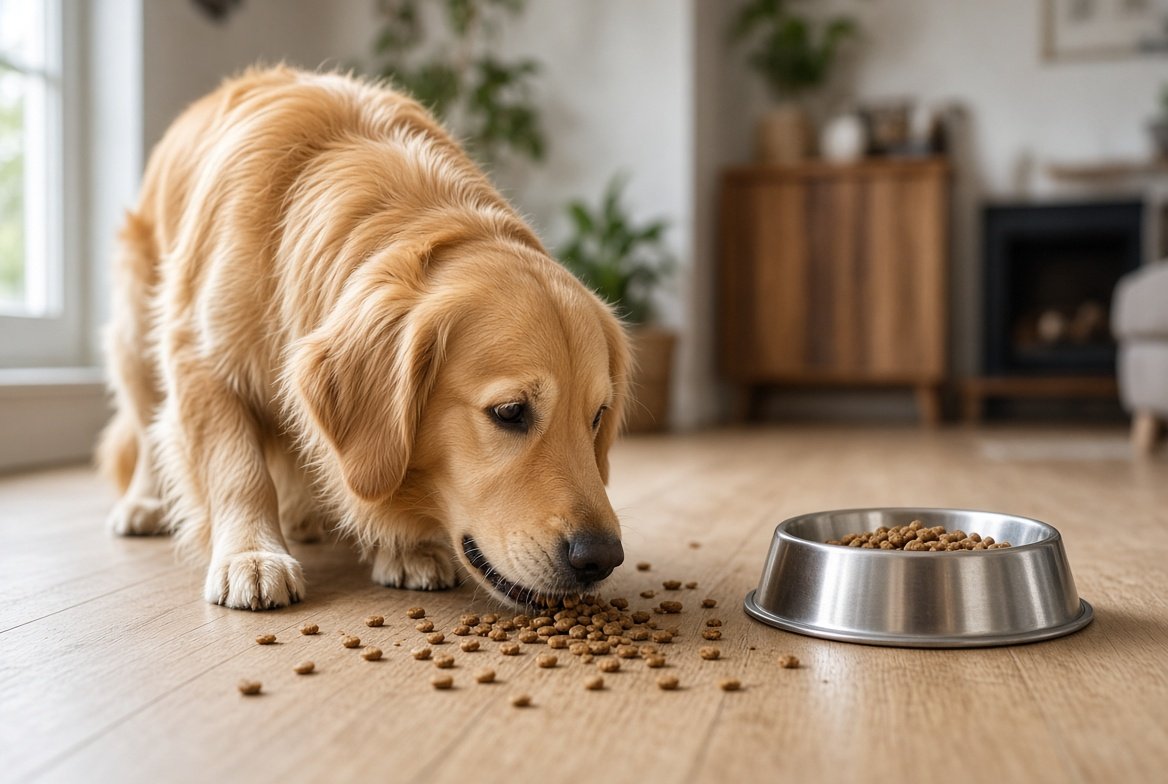
Then you scatter the same food on the floor—and suddenly they eat every bite.
If you’ve been wondering, why does my dog eat better on the floor than from the bowl?, the answer may be surprisingly simple. Your dog may dislike the bowl’s noise, movement, shape, location, or the environment around it.
Sometimes, though, the bowl is not really the problem. A sudden change in eating behavior can also happen when a dog is stressed or having difficulty picking up, chewing, or swallowing food.
The useful clue is what changes when the food moves from the bowl to the floor.
Table of Contents
- Why Does My Dog Eat Better on the Floor Than From the Bowl?
- Quick Answer: What Your Dog’s Eating Pattern Can Tell You
- Is It Normal for a Dog to Prefer Eating From the Floor?
- 8 Reasons Your Dog Eats Better on the Floor
- How to Tell If Your Dog May Have Bowl Aversion
- A Simple Bowl Troubleshooting Test
- What to Do If Your Dog Won’t Eat From the Bowl
- How to Choose a Better Dog Food Bowl
- Common Feeding Mistakes
- Myth vs. Fact
- Expert Tips
- When Should You Call a Veterinarian?
- Frequently Asked Questions
- Conclusion
Why Does My Dog Eat Better on the Floor Than From the Bowl?
The most likely explanation is that something about the bowl or feeding setup is less comfortable or appealing than eating from the floor.
A dog may dislike the sound of a metal bowl, the way the bowl slides while they eat, the shape of the opening, or the location where meals are served. Some dogs may also feel more relaxed eating away from other pets or household activity.
The fact that your dog eats the same food from the floor is useful information. It suggests that the food itself may not be the only issue.
Instead of immediately changing the diet, look at the entire feeding experience.
Quick Answer: What Your Dog’s Eating Pattern Can Tell You
Your dog’s exact behavior can provide clues about what is happening.
| What you notice | What it may point to |
|---|---|
| Eats the same food immediately from the floor | Bowl or feeding setup preference |
| Avoids only one particular bowl | Bowl aversion or negative association |
| Bowl moves while eating | Stability problem |
| Bowl makes clanging sounds | Noise may be bothering your dog |
| Eats after the bowl is moved | Feeding-location issue |
| Eats when other pets are absent | Social pressure or competition |
| Drops food while chewing | Possible difficulty eating comfortably |
| Suddenly eats less overall | Appetite or health concern |
| Refuses the bowl after a stressful event | Possible negative association |
This table is not a diagnosis. It is a starting point for observing patterns.
For example, if your dog refuses a deep metal bowl but immediately eats the same kibble from a shallow ceramic dish, you have a much more useful clue than simply saying, “My dog is picky.”
Is It Normal for a Dog to Prefer Eating From the Floor?
It can be.
Some dogs simply develop a preference for eating away from the bowl. If your dog has always behaved this way, eats an appropriate amount, maintains normal energy, and shows no signs of discomfort, the behavior may be a preference rather than a problem.
Dogs can also develop habits around where and how they eat. The American Kennel Club notes that feeding routines and environmental factors can influence eating behavior.
The more important question is whether your dog is eating comfortably and consistently.
A lifelong preference for eating from a mat is different from a dog that suddenly refuses a bowl they have used for years.
8 Reasons Your Dog Eats Better on the Floor
1. The Bowl Makes Unpleasant Sounds
Some dogs are bothered by noises that humans barely notice.
A metal bowl may clang when kibble hits the bottom. A collar tag can strike the rim when your dog lowers their head. The bowl itself may scrape against tile or another hard surface.
The American Kennel Club has specifically described dogs carrying food from a bowl to softer surfaces and notes that bowl noise, including the sound of a metal tag hitting stainless steel, can be a possible factor.
Try this: Watch your dog closely during a meal. If they hesitate when the bowl makes noise, test a quieter dish and keep everything else the same.
2. The Bowl Slides While Your Dog Eats
A lightweight bowl can move every time your dog takes a bite.
On tile, wood, laminate, or other smooth flooring, that movement may make eating feel less predictable. A dog may decide that food on the floor is easier because the surface stays exactly where it is.
Real-world example: Your dog takes a bite, the bowl slides several inches, and they step back. You put the same food into a stable dish, and they eat normally.
In that situation, the food was never the main problem.
Pro tip: Before buying another bowl, place the current one on a non-slip mat and see whether the behavior changes.
3. The Bowl’s Shape or Depth Is Awkward
A bowl can be perfectly safe and still be uncomfortable for an individual dog.
A very deep bowl may make access awkward for some dogs, while a narrow opening may make it harder for a dog to reach food comfortably. Some dogs may also dislike their ears touching the sides.
This does not mean one bowl shape is universally better than another. Your dog’s size, face shape, eating style, and individual preference all matter.
If your dog refuses the bowl but readily eats from a flat dish, compare the two setups rather than assuming the food is the issue.
4. The Feeding Area Is Too Busy
The bowl itself may be fine, but the location may not be.
A feeding station beside a doorway, washing machine, television, dishwasher, or busy hallway can expose your dog to repeated movement and noise. Another pet wandering through the area may also interrupt meals.
Environmental changes can influence eating behavior, and a predictable feeding routine can help dogs that are easily distracted or unsettled.
Try moving the bowl to a quieter, low-traffic area.
Example: If your dog refuses breakfast while everyone is moving around the kitchen but eats comfortably when the bowl is placed in a quiet room, the environment is an important clue.
5. The Floor Feels More Comfortable
Sometimes the simplest answer is that your dog likes the surface.
A rug or washable mat may provide better traction than a smooth floor. Your dog may also prefer having more space around their face rather than placing their muzzle inside a container.
If your dog consistently eats from the floor but otherwise behaves normally, you do not necessarily need to turn the behavior into a battle.
Instead, you can create a cleaner version of the same preference.
Place a washable feeding mat underneath a suitable dish or use a feeding setup that gives your dog the surface and space they seem to prefer.
6. Your Dog Has Developed a Negative Association With the Bowl
A dog can learn that a particular object or situation predicts something unpleasant.
Think back to when the behavior started. Was there a loud noise during a meal? Did the bowl suddenly slide? Was your dog startled while eating? Did they become uncomfortable around mealtimes?
You may not always know exactly what caused the association, but the timing can provide a clue.
If your dog still wants the food but avoids one particular bowl, test a different bowl in a calm location rather than repeatedly forcing them to use the original one.
This is different from simply preferring the floor. A negative association is more about the dog’s learned response to the bowl or feeding setup.
7. Another Pet Is Creating Pressure
Some dogs are less comfortable eating when another animal is nearby.
A second dog hovering around the bowl, a cat passing close by, or another pet waiting for leftovers can make meals feel competitive.
Your dog might respond by eating faster, moving food away from the bowl, or choosing a different location.
If your dog eats normally when alone but behaves differently around another pet, try feeding them separately.
Be especially careful if you see stiff body language, freezing, hard staring, growling, snapping, or other signs of food guarding. Resource guarding can range from subtle tension to more serious aggressive behavior.
Simply eating away from the bowl does not mean your dog is resource guarding. The surrounding body language and situation matter.
8. Eating Has Become Uncomfortable
A change in eating behavior should not automatically be blamed on the bowl.
Dogs can have difficulty eating because of problems affecting the mouth, chewing, swallowing, appetite, or general health. Veterinary guidance distinguishes between a dog that is not interested in food and one that wants to eat but has difficulty physically eating it.
The important clue is not simply that your dog prefers the floor. It is whether the behavior is new or accompanied by other changes.
Watch for:
- Reduced appetite
- Difficulty chewing
- Dropping food
- Excessive drooling
- Vomiting
- Diarrhea
- Weight loss
- Low energy
- Signs of pain or discomfort
- Difficulty swallowing
If your dog suddenly changes eating habits, investigate rather than assuming they have become picky.
How to Tell If Your Dog May Have Bowl Aversion
Bowl aversion is a useful way to describe a dog that appears reluctant to eat from a particular bowl or feeding setup.
It may be more likely when your dog:
- Refuses food only when it is in the bowl
- Eats the same food from the floor
- Approaches the bowl and backs away
- Avoids one particular bowl
- Reacts when the bowl moves
- Reacts when the bowl makes noise
- Eats normally after the food is transferred elsewhere
Compare the behavior rather than focusing on one meal.
| Test | What happens | Possible clue |
| Original food + original bowl | Refuses | Bowl or setup may matter |
| Original food + stable bowl | Eats | Movement may be relevant |
| Original food + quiet location | Eats | Environment may be relevant |
| Original food + shallow dish | Eats | Shape may matter |
| Original food + floor | Eats | Strong floor preference or bowl aversion |
These tests cannot diagnose a medical problem. They simply help you identify patterns worth discussing with your veterinarian if the problem persists.
A Simple Bowl Troubleshooting Test
Before buying several new bowls, test the setup systematically.
Step 1: Keep the Food the Same
Use the food your dog normally eats.
Changing food and bowl simultaneously makes it difficult to know what caused the change.
Step 2: Stabilize the Bowl
Place it on a non-slip mat.
If your dog suddenly eats normally, movement may have been the issue.
Step 3: Change the Location
Move the bowl away from heavy household traffic and other pets.
Give your dog enough space to eat without being interrupted.
Step 4: Test a Different Shape
If needed, try a shallow or differently shaped dish while keeping the location and food unchanged.
Step 5: Watch the Entire Meal
Look at how your dog approaches the food, starts eating, pauses, chews, and finishes.
Do not focus only on whether the first bite comes from the bowl.
What to Do If Your Dog Won’t Eat From the Bowl
If your dog won’t eat from the bowl but eats the same food elsewhere, start with simple changes.
- Move the bowl to a quieter location.
- Make sure it stays firmly in place.
- Check whether it creates noise.
- Try a different shape or material if needed.
- Feed pets separately if another animal creates pressure.
- Keep meals reasonably predictable.
- Avoid forcing your dog toward the bowl.
- Change one variable at a time.
- Monitor overall appetite and behavior.
The goal is to identify what makes eating easier, not to win a battle over the bowl.
If your dog is showing food-guarding aggression, do not deliberately take the food away or repeatedly interfere with the meal. AVSAB warns that repeatedly removing food can actually create or increase defensive behavior around food.
How to Choose a Better Dog Food Bowl
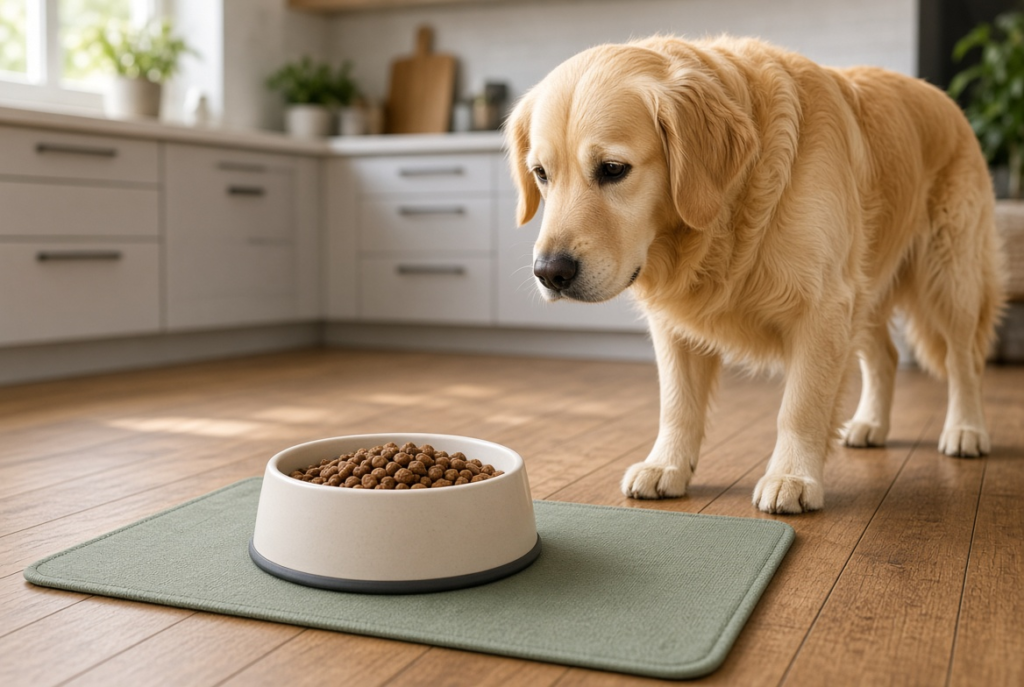
There is no single best dog food bowl for every dog.
Choose based on your dog’s comfort and the problem you are actually trying to solve.
Look for stability
A bowl that stays in place can be easier for a dog that dislikes movement.
Consider the shape
If your dog seems uncomfortable reaching into a deep or narrow bowl, test a different shape.
Consider the material
If noise appears to be the trigger, a quieter feeding dish may be worth trying.
Choose an appropriate size
Your dog should be able to reach the food comfortably without repeatedly bumping their face or ears against the sides.
Check cleanliness
A bowl should be easy to clean thoroughly. Look for lingering food residue, grease, cracks, or odors that could make the dish unpleasant.
You do not need the most expensive bowl. You need a clean, stable, comfortable feeding setup that your dog accepts.
Common Feeding Mistakes
Changing Everything at Once
A new bowl, new food, new location, and new feeding schedule make troubleshooting difficult.
Change one thing first.
Assuming Your Dog Is Just Picky
If your dog eats the same food enthusiastically from the floor, something about the feeding setup may be influencing the behavior.
Forcing the Bowl
Pushing or forcing your dog toward a bowl does not identify the reason for avoidance and may make the feeding experience more stressful.
Ignoring a Sudden Change
A dog that has always preferred the floor is different from a dog that suddenly refuses a bowl after years of normal eating.
Changes in appetite and eating patterns warrant investigation, particularly when other symptoms appear.
Myth vs. Fact
| Myth | Fact |
| My dog eats from the floor because they hate the food. | The bowl, location, noise, movement, or surface may be the issue. |
| Every dog should eat from a traditional bowl. | Individual dogs can have different feeding preferences. |
| Eating from the floor proves my dog is healthy. | A sudden change in eating behavior can have medical causes. |
| An expensive bowl will solve the problem. | Comfort, stability, shape, location, and cleanliness matter more than price alone. |
| Refusing the bowl means my dog is stubborn. | Bowl aversion, learned associations, environmental pressure, or discomfort may contribute. |
Expert Tips for Easier Mealtimes
Watch the whole pattern. Notice where your dog eats, when they refuse, and what changes their behavior.
Change one thing at a time. This makes your troubleshooting much more useful.
Keep the feeding area calm. Other pets, noise, and constant activity can interfere with comfortable eating.
Don’t punish food refusal. If something about the setup is uncomfortable, punishment does not solve the underlying problem.
Separate lifelong habits from sudden changes. A long-standing preference is usually approached differently from a new eating problem.
Take physical discomfort seriously. A dog may want food but still have difficulty picking it up, chewing, or swallowing.
When Should You Call a Veterinarian?
If your dog has always preferred eating from the floor and otherwise eats normally, you may simply be dealing with an individual feeding preference.
A sudden change is different.
Contact your veterinarian if your dog is eating less overall, repeatedly refuses food, appears painful while eating, has difficulty chewing or swallowing, or develops other symptoms such as vomiting, diarrhea, lethargy, or weight loss.
Veterinary guidance notes that decreased food intake can have many causes, including medical conditions, and that changes in eating behavior should be taken seriously.
Do not assume that a dog who accepts food from the floor cannot have a health problem. A dog can still be interested in food while having difficulty physically eating it.
Frequently Asked Questions
Why does my dog eat better on the floor than from the bowl?
Your dog may dislike the bowl’s noise, movement, shape, location, or the environment around it. They may also have developed a preference for the floor or a negative association with a particular bowl.
Why won’t my dog eat from the bowl but eats from the floor?
If your dog eats the same food from the floor, investigate the bowl and feeding setup before changing the food. Check stability, noise, shape, location, and distractions.
Does eating from the floor mean my dog hates the bowl?
Not necessarily. Your dog may dislike one particular bowl or simply prefer eating from a different surface. Look for a consistent pattern.
Why does my dog eat from my hand but not the bowl?
Your dog may have learned to associate hand-feeding with positive attention, or something about the bowl may be uncomfortable or distracting. Test the bowl’s location, stability, shape, and noise before assuming the food is the problem.
What is dog bowl aversion?
Dog bowl aversion describes reluctance to eat from a particular bowl or feeding setup. Possible contributors include noise, movement, shape, location, learned associations, or physical discomfort.
Should I let my dog eat from the floor?
If the surface is clean and safe and your dog is otherwise eating normally, eating from a designated washable mat may be acceptable. However, a sudden preference for the floor should prompt you to investigate what changed.
What type of bowl is best for a dog that refuses bowls?
There is no universally best bowl. Choose one that is stable, clean, appropriately sized, and comfortable for your dog’s individual eating style. If noise or movement appears to be the problem, address those factors first.
Why does my dog suddenly refuse the bowl?
A sudden refusal can follow a change in the bowl, feeding location, routine, household environment, or your dog’s physical condition. Stress can affect appetite, while medical problems can also change eating behavior.
Why does my dog drop food while chewing?
Repeatedly dropping food can be a sign that eating has become difficult or uncomfortable. If it is new, frequent, or accompanied by reduced appetite, drooling, pain, or other changes, contact your veterinarian.
Should I change my dog’s food if they refuse the bowl?
Not automatically. If your dog happily eats the same food from the floor, the food may not be the reason for the refusal. Test the feeding setup first while continuing to monitor overall appetite.
Conclusion
If you’ve been asking, why does my dog eat better on the floor than from the bowl?, the answer may have more to do with the feeding experience than the food itself.
Your dog may dislike the bowl’s noise, movement, shape, or location. They may prefer a softer surface, feel more relaxed away from other pets, or have developed a learned association with a particular feeding setup.
Start with the simplest approach: keep the food the same, change one factor at a time, and watch your dog’s entire eating pattern.
Most importantly, distinguish a long-standing preference from a sudden change.
A dog that prefers the floor may simply have a feeding preference. A dog that suddenly struggles to eat deserves a closer look.
The goal is not to force your dog to use a particular bowl. It is to create a feeding routine where they can eat comfortably, safely, and consistently.