How to Potty Train a Puppy: A Step-by-Step Guide for Success
Bringing home a puppy is exciting, but cleaning up accidents isn’t. The good news is that successful potty training doesn’t require complicated methods—it requires consistency.
Most puppies want to keep their sleeping area clean, but they need your guidance to learn where they should go. By following a predictable routine, rewarding the right behavior, and preventing accidents before they happen, you can build reliable potty habits that last for life.
Table of Contents
- Quick Answer
- Why Potty Training Matters
- When Should You Start Potty Training?
- Puppy Potty Training Timeline
- Puppy Potty Schedule
- Signs Your Puppy Needs to Go
- How to Potty Train a Puppy in 9 Proven Steps
- Nighttime Potty Training
- Troubleshooting
- FAQs
How to Potty Train a Puppy
Quick Answer (Featured Snippet)
How to Potty Train a Puppy: Take your puppy to the same potty spot on a consistent schedule, supervise them indoors, reward every successful potty break immediately, and stay patient with accidents. Most puppies learn faster when training begins as soon as they come home and follows the same daily routine.
Potty training isn’t about waiting for your puppy to understand the rules. It’s about creating enough successful trips outside that good habits become automatic.
Why Potty Training Matters
House training is one of the first and most important lessons every puppy learns.
A well-trained puppy is easier to live with, more confident, and less likely to develop unwanted bathroom habits indoors.
Good potty training also:
- Creates a predictable daily routine
- Reduces stress for both owner and puppy
- Supports crate training
- Helps prevent repeat accidents
- Builds trust through positive reinforcement
The earlier you begin, the easier it is for your puppy to understand what you expect.
Real-Life Example
Imagine bringing home an eight-week-old Labrador puppy.
Instead of waiting until the puppy asks to go outside, you take it outdoors after every nap, meal, and play session. Within a couple of weeks, the puppy begins heading toward the door before needing to pee.
That’s how routines become lifelong habits.
When Should You Start Potty Training?
Start potty training a puppy the day they arrive home.
Most puppies join their new families at around eight weeks of age, making this the ideal time to establish a consistent routine.
Older puppies and rescue dogs can absolutely learn too, although they may need a little more patience if they’ve already formed different habits.
Puppy Potty Training Timeline
| Puppy Age | Training Goal |
|---|---|
| 8–10 weeks | Learn the designated potty area and daily routine |
| 10–12 weeks | Fewer accidents with close supervision |
| 3–4 months | Better bladder control and improved consistency |
| 4–6 months | Many puppies begin signaling when they need to go outside |
| 6+ months | Most healthy puppies are reliably house trained |
Every puppy learns at a different pace. Temporary setbacks after travel, moving, or changes in routine are completely normal.
Puppy Potty Schedule
A predictable routine gives your puppy the best chance to succeed.
| Time | What to Do |
|---|---|
| Wake up | Go outside immediately |
| After breakfast | Potty break |
| After playtime | Potty break |
| After every nap | Potty break |
| During the day | Regular potty trips based on age |
| After dinner | Potty break |
| Before bedtime | Final potty trip |
Young puppies should also go outside after drinking water, chewing, or exciting play sessions because these activities often trigger the need to urinate.
Signs Your Puppy Needs to Go
Recognizing your puppy’s body language helps prevent accidents before they happen.
Watch for signs such as:
- Sniffing the floor
- Walking in circles
- Suddenly leaving playtime
- Whining near the door
- Squatting
- Restlessness
- Wandering away from people
The faster you respond, the more successful your potty training becomes.
How to Potty Train a Puppy: 9 Proven Steps
Step 1. Choose One Potty Spot
Always take your puppy to the same outdoor location.
Dogs rely heavily on scent, so using one consistent potty area helps them recognize why they’re there and often encourages them to go more quickly.
Why It Works
A familiar scent becomes a powerful training cue over time.
Step 2. Follow a Consistent Potty Schedule
Routine is the foundation of successful house training a puppy.
Take your puppy outside:
- First thing every morning
- After every meal
- After every nap
- After play sessions
- Before bedtime
Don’t wait until your puppy is desperate. Frequent opportunities help prevent accidents and reinforce the correct behavior.
Quick Tip
Set reminders on your phone during the first few weeks so no potty break is missed.
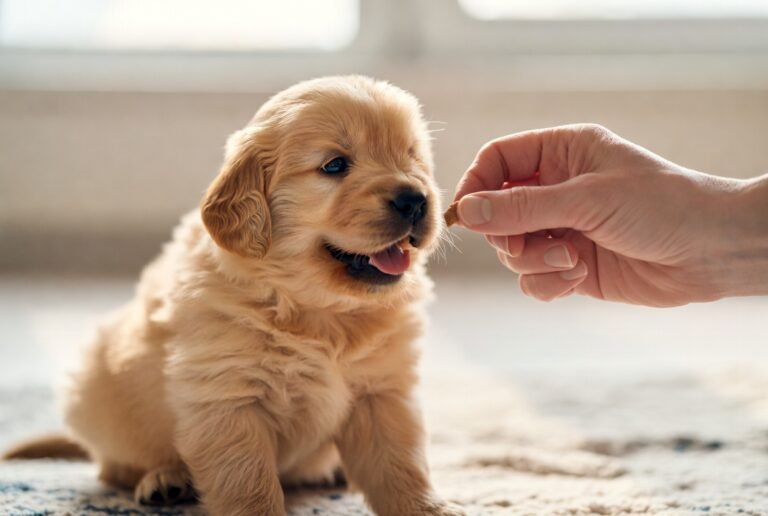
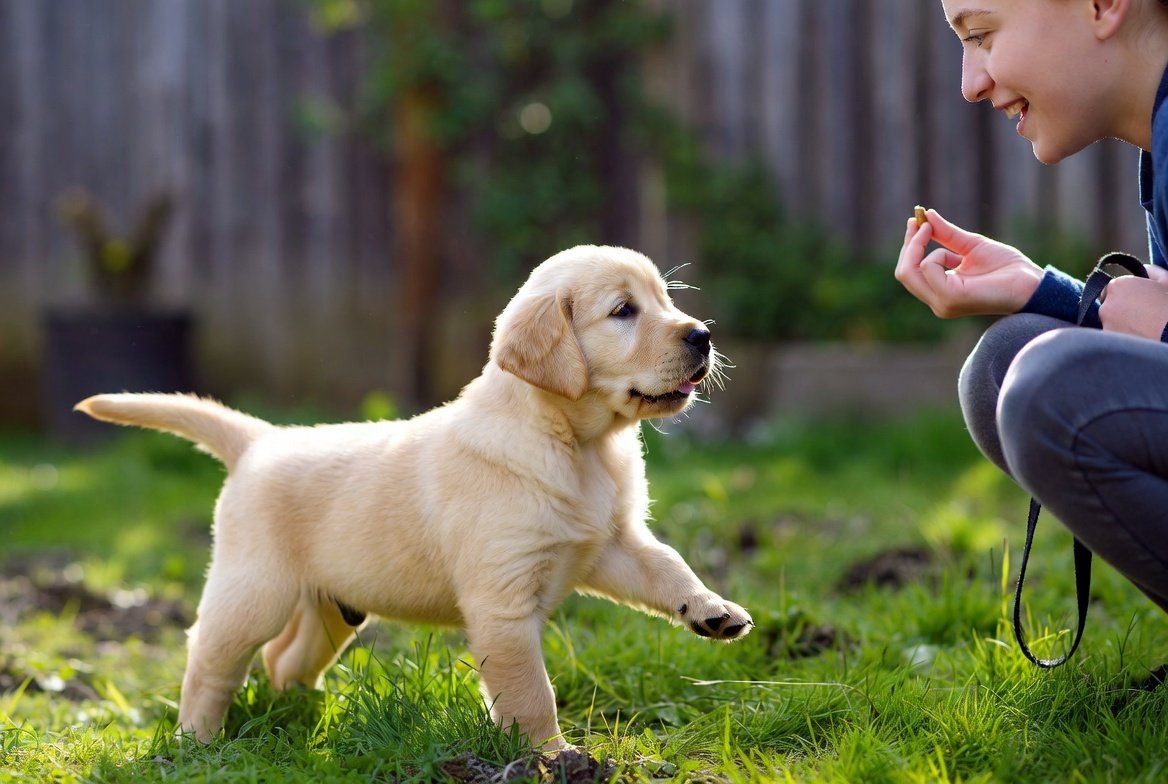
Step 3. Reward Immediately
The moment your puppy finishes going outside:
- Praise enthusiastically.
- Give a small treat.
- Reward before going back inside.
Waiting too long makes it harder for your puppy to connect the reward with the correct behavior. Positive reinforcement is one of the most effective training methods recommended by experienced trainers.
Common Mistake
Giving the treat after returning indoors instead of immediately after your puppy finishes outside.
Owner Story
Many new owners notice that their puppy seems to have an accident just minutes after coming inside.
In many cases, the puppy became distracted outdoors by smells, leaves, or birds instead of focusing on going to the bathroom.
Standing quietly in one potty area for a few extra minutes often solves this problem.
Step 4. Supervise Your Puppy Indoors
Until your puppy is reliable, supervision is essential.
If you can’t actively watch them, use a crate or a safe playpen for short periods. This reduces the chance of hidden accidents and gives you more opportunities to guide them outside at the right time.
Step 5. Handle Accidents Calmly
Accidents are part of the learning process.
If you catch your puppy in the act, calmly interrupt them and take them straight outside. If you find an accident later, clean it thoroughly with an enzymatic cleaner and move on.
Punishment doesn’t teach your puppy where to go—it only creates confusion or fear.
Step 6. Teach a Consistent Potty Cue
Once your puppy starts understanding the routine, introduce a simple cue such as:
- “Go potty”
- “Go pee”
- “Be quick”
Say the cue once when you reach the potty area, then wait quietly.
Avoid repeating the command over and over. With enough repetition, your puppy will begin connecting the cue with the behavior, making potty breaks quicker and easier—especially when traveling or during bad weather.
Quick Tip
Use the same words every time. Switching between different commands can confuse young puppies.
Step 7. Keep Nighttime Potty Breaks Calm
Nighttime accidents are common during the first few weeks because young puppies have limited bladder control.
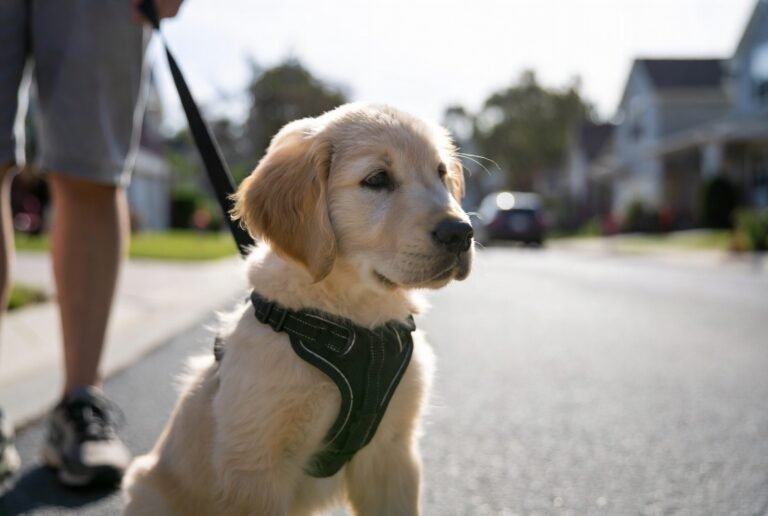
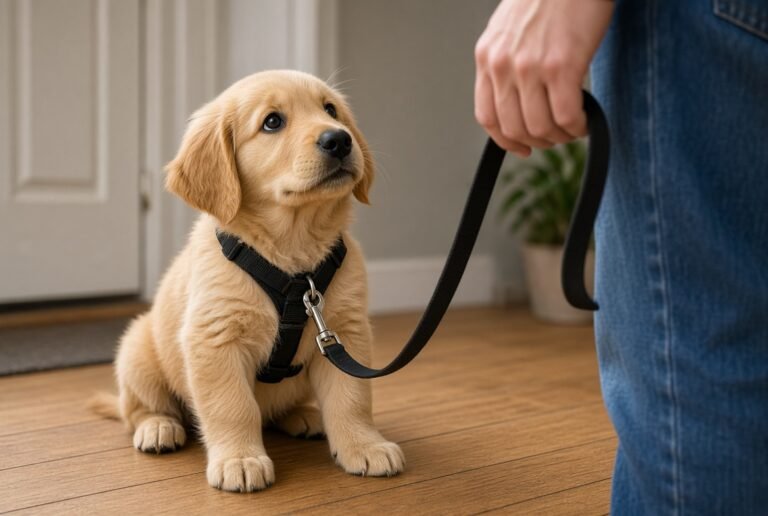
If your puppy wakes up whining, calmly take them outside on a leash.
Keep the trip:
- Quiet
- Short
- Focused only on potty
After they finish, reward them and return them to bed without starting a play session. This helps your puppy understand that nighttime is for sleeping, not playing.
Real-Life Example
Many owners notice their puppy cries during the first few nights. After a quick potty break outside, the puppy settles back to sleep much faster because the real problem wasn’t loneliness—it was a full bladder.
Step 8. Combine Crate Training With Potty Training
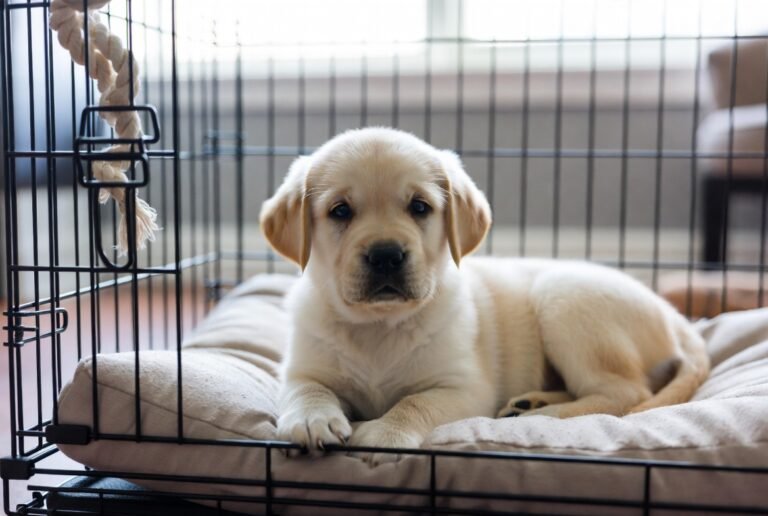
A properly sized crate can make house training a puppy much easier.
Dogs naturally prefer not to soil the area where they sleep, so the crate encourages your puppy to wait until they’re taken outside.
Use the crate:
- During naps
- Overnight
- When you can’t supervise directly
Always take your puppy outside immediately after opening the crate door. Crate training works best when it’s combined with frequent potty breaks rather than used as a substitute for them.
Trainer Insight
The crate should always feel like a safe place—not a punishment. A puppy that enjoys resting in its crate usually adapts to house training more quickly.
Step 9. Stay Consistent Every Day
The final step is also the most important.
Successful potty training isn’t about finding a secret trick.
It’s about repeating the same routine every day.
Feed meals at consistent times.
Use the same potty area.
Reward every success.
Prevent as many accidents as possible.
Small daily successes build lifelong habits.
How Long Does Potty Training Take?
Every puppy learns at a different pace, but most follow a similar pattern.
| Timeframe | What to Expect |
|---|---|
| First 2–4 weeks | Puppy begins learning the routine and potty location |
| Around 3–4 months | Accidents become less frequent with close supervision |
| Around 4–6 months | Many puppies are reliably house trained |
| Up to 6–12 months | Some puppies still need reminders after excitement or routine changes |
Don’t compare your puppy to someone else’s. Breed, age, previous experiences, and consistency all influence how quickly training progresses.
Potty Frequency and Bladder Guide
| Puppy Age | Potty Break Frequency | Typical Maximum Holding Time* |
|---|---|---|
| 8–10 weeks | Every 30–60 minutes while awake | About 2–3 hours |
| 10–12 weeks | Every 1–2 hours | About 3 hours |
| 3–4 months | Every 2–3 hours | About 4–5 hours |
| 4–6 months | Every 3–4 hours | About 5–6 hours |
| 6+ months | Every 4–6 hours | About 6–7 hours |
*These are general guidelines. Many puppies need more frequent breaks after eating, drinking, playing, training, or waking from a nap.
Indoor Potty Pads vs Outdoor Potty Training
| Indoor Potty Pads | Outdoor Potty Training |
|---|---|
| Helpful for apartments | Best long-term solution |
| Useful during severe weather | Builds lifelong outdoor habits |
| Convenient for owners with limited mobility | Reduces confusion about where to eliminate |
| May require a later transition outdoors | Preferred by many trainers for consistent house training |
Your choice depends on your living situation, but if outdoor potty training is your long-term goal, introducing it early usually makes the transition smoother.
What If My Puppy Keeps Having Accidents?
Occasional accidents are a normal part of learning.
Before assuming your puppy isn’t making progress, ask yourself:
- Has it been too long since the last potty break?
- Did my puppy just wake up?
- Did they recently eat or drink?
- Was I supervising closely?
- Did I thoroughly clean previous accidents with an enzymatic cleaner?
If accidents suddenly become frequent after your puppy was doing well, or if you notice straining, excessive urination, or blood in the urine, contact your veterinarian to rule out a medical problem.
Common Potty Training Problems
| Problem | Possible Cause | Practical Solution |
|---|---|---|
| Puppy pees after playing | Excitement or delayed potty break | Go outside immediately after play |
| Puppy soils the crate | Crate too large or left too long | Adjust crate size and potty schedule |
| Puppy sniffs then pees indoors | Early signals were missed | Increase supervision and take frequent breaks |
| Puppy keeps using the same indoor spot | Lingering odor | Clean thoroughly with an enzymatic cleaner |
| Puppy suddenly starts having accidents | Routine change or possible health issue | Re-establish the schedule and consult a veterinarian if needed |
Common Mistakes to Avoid
Even experienced dog owners make mistakes during potty training. Fortunately, most are easy to fix.
Avoid these common errors:
- Punishing your puppy for accidents instead of rewarding success
- Allowing too much freedom before your puppy is reliable
- Skipping potty breaks because your puppy “hasn’t asked”
- Changing the potty location every day
- Feeding meals at inconsistent times
- Cleaning accidents with regular household cleaners instead of enzymatic cleaners
- Waiting too long after naps or play sessions before going outside
Consistency is far more effective than correction. Puppies learn best when they’re repeatedly rewarded for making the right choice.
Potty Training Checklist
Before ending each day, check your progress:
- ✅ Took puppy outside immediately after waking up
- ✅ Followed a consistent feeding schedule
- ✅ Used the same potty location
- ✅ Rewarded every successful potty trip
- ✅ Supervised indoors
- ✅ Prevented unnecessary accidents
- ✅ Cleaned accidents with an enzymatic cleaner
- ✅ Finished with a final bedtime potty break
The more boxes you check each day, the faster your puppy usually develops reliable habits.
Trainer Insight
Many owners think they should wait until their puppy signals they need to go outside.
Professional trainers usually do the opposite.
They predict bathroom breaks before the puppy has an accident.
For example, many puppies need to eliminate within a few minutes after an energetic play session. Taking them outside before they start sniffing the floor often prevents accidents altogether.
Veterinary Advice
Occasional accidents are normal while learning.
However, contact your veterinarian if your puppy:
- Suddenly starts having frequent accidents after making good progress
- Strains while urinating
- Has blood in the urine
- Drinks excessively and urinates unusually often
- Appears uncomfortable while eliminating
Sometimes what looks like a training problem is actually a medical issue such as a urinary tract infection.
Myth vs Fact
| Myth | Fact |
|---|---|
| Puppies naturally know where to potty. | They must learn through routine and positive reinforcement. |
| Punishment speeds up potty training. | Punishment often causes fear without teaching the correct behavior. |
| One accident ruins all progress. | Occasional setbacks are completely normal. |
| Older puppies can’t be house trained. | Dogs of almost any age can learn with patience and consistency. |
| Potty training should only happen outdoors. | Indoor solutions like puppy pads can work in certain situations before transitioning outdoors if needed. |
Frequently Asked Questions
How long does potty training usually take?
Many puppies develop a reliable routine within a few weeks, while complete house training often takes several months depending on age, consistency, and individual development.
How often should a puppy pee?
Young puppies usually need frequent potty breaks throughout the day, especially after waking, eating, drinking, playing, or chewing.
Should I wake my puppy at night?
Very young puppies often need one or more nighttime potty breaks. As bladder control improves, they gradually begin sleeping through the night.
Should I use puppy pads?
Puppy pads can be helpful for apartment living, limited outdoor access, or mobility challenges, but many trainers recommend transitioning to outdoor potty training if that’s your long-term goal.
Why does my puppy keep peeing right after coming inside?
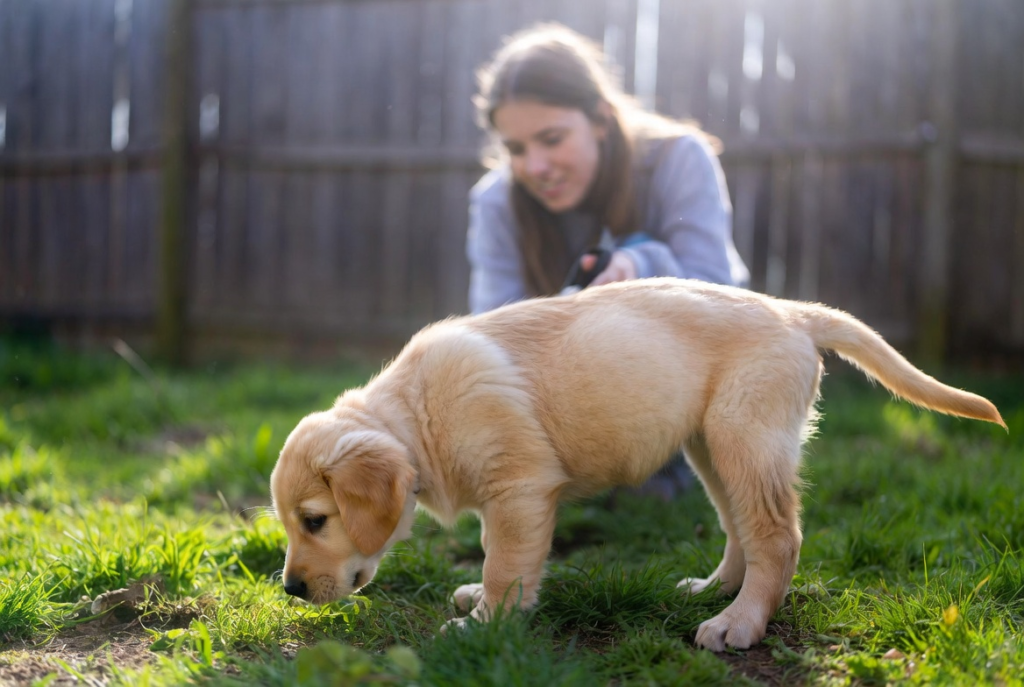
Many puppies become distracted outdoors. Stay in one quiet potty area until they finish before returning inside.
Should I punish my puppy after an accident?
No. Calmly interrupt the behavior if you catch it happening, take your puppy outside, and reward successful elimination. Never punish a puppy for an accident discovered later.
Why does my puppy have accidents after playing?
Physical activity and excitement often stimulate the bladder. A potty break immediately after play helps prevent accidents.
What cleaner should I use?
Use an enzymatic pet cleaner to remove urine odors completely. This helps discourage your puppy from returning to the same spot.
Can crate training help with potty training?
Yes. A properly sized crate encourages puppies to hold their bladder because most dogs prefer not to eliminate where they sleep.
When is a puppy fully potty trained?
Many puppies become dependable around 4–6 months, although some dogs need longer depending on breed, routine, and individual development.
Conclusion
Learning How to Potty Train a Puppy takes patience, consistency, and realistic expectations. There isn’t a shortcut, but there is a proven formula: follow a routine, supervise closely, reward every success, and stay calm during setbacks.
Every successful trip outside strengthens good habits. With daily practice, your puppy will gradually understand exactly where to go, giving both of you a cleaner home and a more confident start together.