How to Teach a Puppy Its Name: A Step-by-Step Guide
Imagine calling your puppy over and over while they happily chase a leaf across the yard.
It can feel frustrating, but the problem usually isn’t stubbornness. Your puppy simply hasn’t learned that their name means, “Pay attention to me.”
The good news is that this is one of the easiest training skills to teach. With short, enjoyable practice sessions and good timing, most puppies quickly learn that hearing their name leads to something positive. Once that happens, every other part of training—from recall to basic commands—becomes much easier.
Table of Contents
- Quick Answer
- Why Teaching Your Puppy’s Name Matters
- How Dogs Actually Learn Their Name
- When Should You Start Name Training?
- Age Progress Timeline
- Signs Your Puppy Knows Their Name
- How to Teach a Puppy Its Name in 7 Proven Steps
- Fun Name Games
- Common Mistakes
- FAQs
How to Teach a Puppy Its Name
Quick Answer (Featured Snippet)
To teach a puppy its name, say the name once in a cheerful voice. As soon as your puppy looks at you, praise them and offer a small reward. Practice several short sessions each day in quiet places, then slowly introduce new environments as your puppy becomes more confident.
Why Teaching Your Puppy’s Name Matters
Your puppy’s name isn’t just a label.
It’s the foundation of communication.
Before your puppy can reliably learn “sit,” “come,” or “leave it,” they first need to understand that hearing their name means they should focus on you.
A puppy that responds to its name is often:
- Easier to train
- More attentive during walks
- Better prepared for puppy recall training
- Safer in distracting environments
- More engaged during everyday interactions
Rather than thinking of the name as a command, think of it as an attention signal that starts every future lesson.
How Dogs Actually Learn Their Name
Many people assume puppies understand words the way humans do.
They don’t.
Instead, puppies learn through repeated associations.
When they hear the same sound and something enjoyable follows—such as food, praise, or play—they begin connecting those experiences together.
Over time, your puppy realizes:
“When I hear this sound, something good usually happens.”
This learning process explains why timing matters so much. Rewarding your puppy immediately after they respond makes the connection much clearer than waiting several seconds.
When Should You Start Name Training?
Start as soon as your puppy comes home.
Most puppies are ready for simple reward-based learning from around eight weeks of age.
There’s no need for long lessons.
Five short sessions lasting one to three minutes each are usually more productive than one lengthy practice session because puppies have short attention spans.
Puppy Name Training Progress by Age
| Puppy Age | Typical Progress |
|---|---|
| 8 weeks | Begins noticing the new name |
| 10 weeks | Looks toward the owner consistently |
| 12 weeks | Responds well inside the home |
| Around 4 months | Responds in moderately distracting environments |
Remember that every puppy learns at a different pace. Personality, motivation, and regular practice usually matter more than breed alone.
Signs Your Puppy Recognizes Its Name
Your puppy is making good progress if they:
- Turn their head when they hear their name.
- Make eye contact without hesitation.
- Walk toward you after hearing it.
- Pause what they’re doing to check in with you.
- Respond even when there are mild distractions nearby.
These small responses show that your puppy is beginning to understand the purpose of their name rather than simply reacting to your voice.
How to Teach a Puppy Its Name in 7 Proven Steps
Step 1. Choose One Clear Name
Before training begins, make sure everyone in the family uses exactly the same name.
Avoid switching between:
- Charlie
- Charles
- Chuck
- Buddy
during the learning stage.
Consistency helps your puppy recognize one clear sound instead of trying to understand several different versions. Short names with one or two syllables are often easier for dogs to recognize, and names that sound like common commands should be avoided.
Why It Works
Your puppy learns faster when every family member uses the same cue in the same way.
Step 2. Say the Name Once
Wait until your puppy isn’t already looking at you.
Then say their name one time using a happy, natural voice.
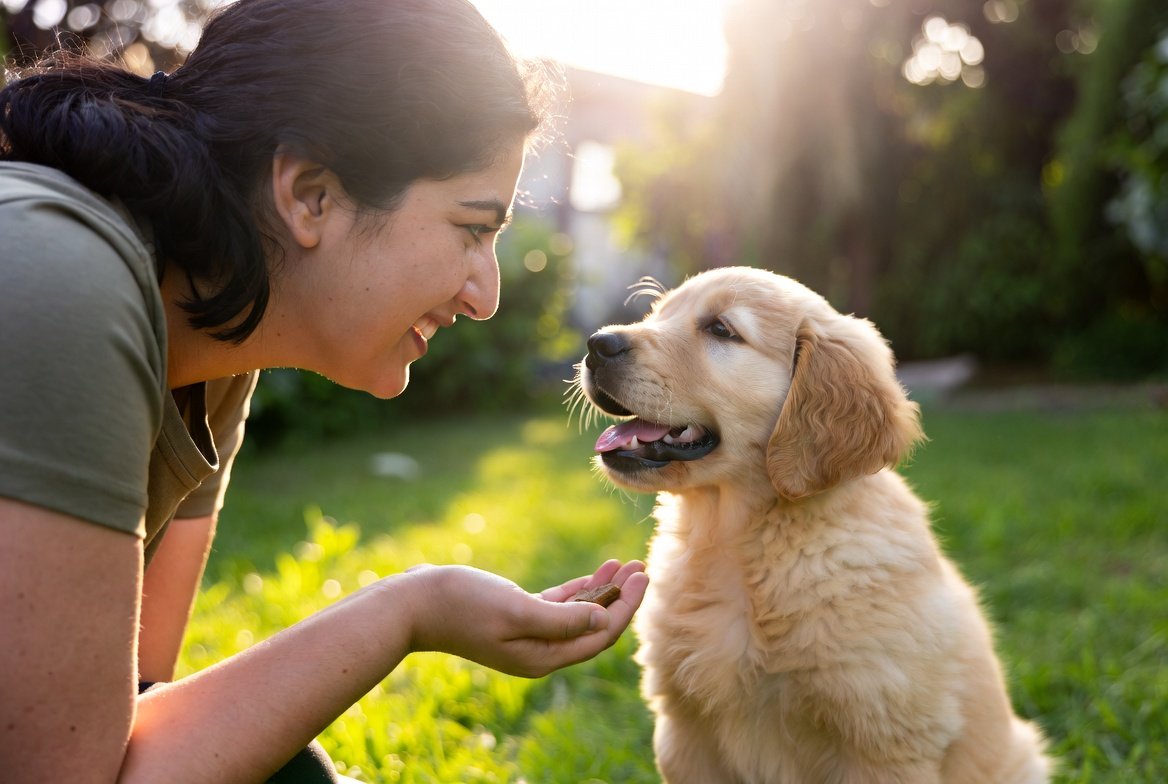
The moment they look toward you, mark the behavior with praise and offer a reward.
If they don’t respond, don’t keep repeating the name.
Instead, move closer or reduce distractions before trying again. Repeating the name over and over teaches puppies that they can safely ignore the first few calls.
Quick Tip
Save your puppy’s name for moments when you genuinely want their attention. This keeps it meaningful instead of becoming background noise.
Step 3. Reward the Right Moment
Timing matters more than the size of the reward.
As soon as your puppy turns to look at you:
- Praise enthusiastically.
- Offer a small treat.
- Smile and interact for a few seconds.
The faster the reward arrives, the easier it is for your puppy to understand exactly what they did correctly.
Common Mistake
Waiting several seconds before rewarding.
By then, your puppy may think they were rewarded for something completely different.
Step 4. Practice in Different Places
Once your puppy responds consistently inside your home, begin practicing in slightly more distracting environments.
A gradual progression works best:
- Living room
- Backyard
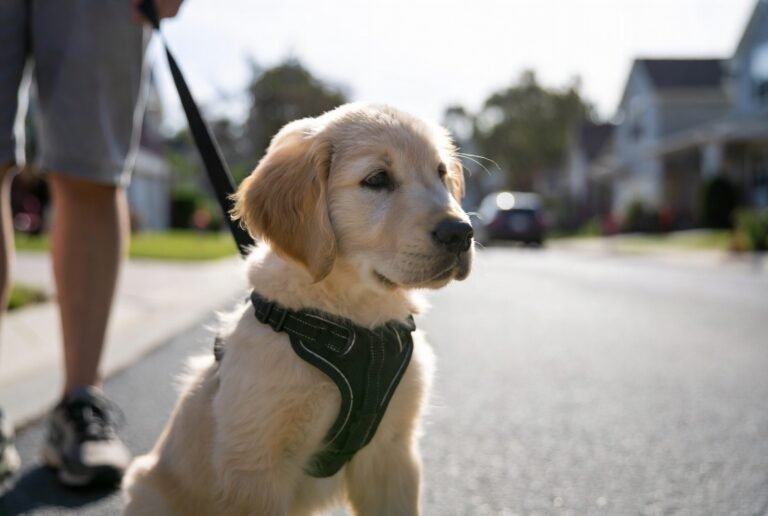
- Quiet sidewalk
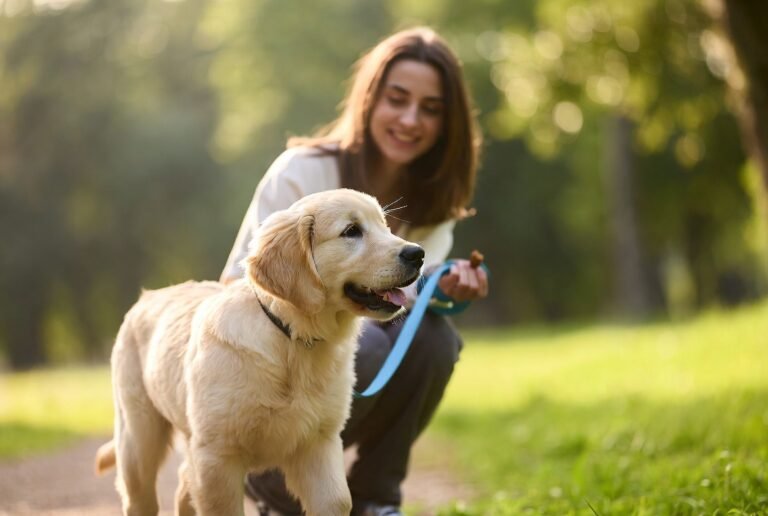
- Calm neighborhood park
- Fenced dog-friendly area
Moving too quickly can confuse your puppy. If they stop responding, simply return to an easier location and build confidence again before increasing distractions.
Trainer Insight
Don’t measure success by where you train.
Measure it by how reliably your puppy responds.
Ten successful repetitions indoors are far more valuable than struggling through one difficult session at a busy park.
Step 5. Make Training Feel Like a Game
Puppies learn fastest when they think they’re playing.
Instead of formal drills every time, mix in short games throughout the day.
Treat Toss Game
Say your puppy’s name.
When they look at you, reward them with a treat tossed a few feet away.
After they finish it, wait until they’re distracted again and repeat.
This naturally encourages repeated attention.
Hide and Seek
Ask another family member to gently hold your puppy.
Hide nearby.
Call your puppy’s name once.
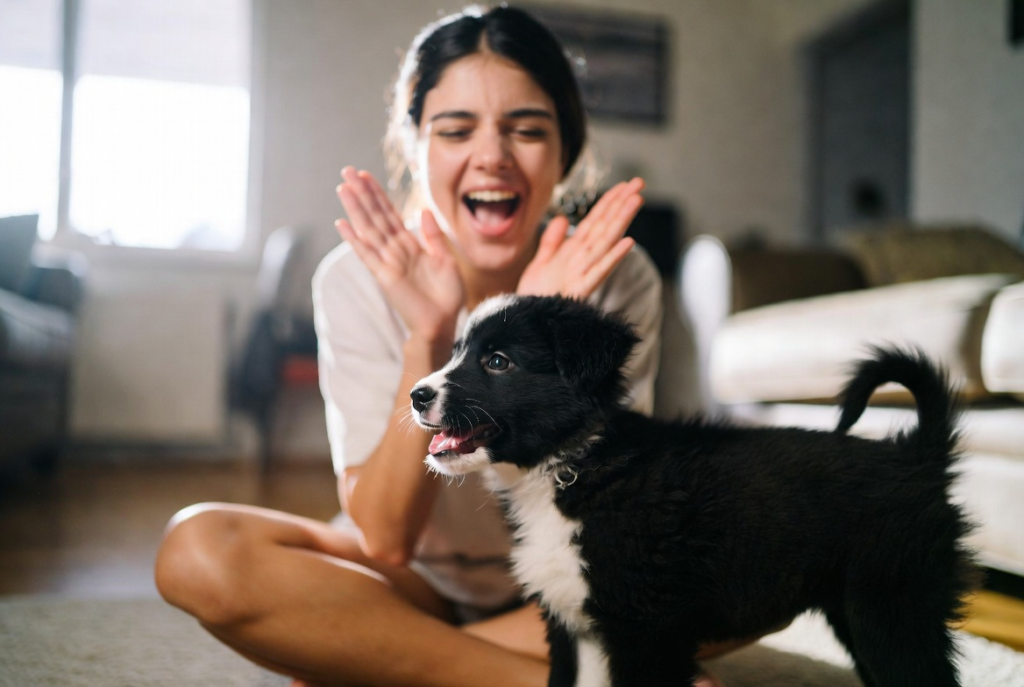
Celebrate enthusiastically when they find you.
Ping Pong Recall
Two people stand several feet apart.
Take turns saying the puppy’s name followed by “Come.”
Reward every successful response.
This game builds both puppy responds to name skills and future recall.
Find Me Game
Walk into another room while your puppy isn’t watching.
Call their name once.
When they find you, reward generously.
Games like these keep training enjoyable while strengthening attention and confidence.
Step 6. Connect the Name to Future Commands
Your puppy’s name is not the recall command.
Think of it like this:
Name = “Look at me.”
Come = “Walk all the way to me.”
Once your puppy turns toward you after hearing their name, you can give another cue such as:
- Come
- Sit
- Down
- Leave It
- Touch
Teaching these separately creates much clearer communication and makes later obedience training easier. AKC also recommends avoiding your dog’s name before every command so the name remains an attention cue rather than becoming part of every instruction.
Pro Tip
If your puppy already looks at you when you say their name, pause for a second before giving the next command.
This tiny pause reinforces that making eye contact is the correct first response.
Step 7. Practice Every Day
Consistency matters more than long lessons.
A good routine looks like this:
- 1–3 minutes per session
- 5–8 sessions daily
- Practice before meals
- Practice during playtime
- End while your puppy is still excited
Frequent short sessions fit naturally into everyday life and help build lasting habits.
Success Sign
Your puppy is ready for more advanced training when they:
- Look at you immediately after hearing their name.
- Respond in different rooms.
- Stay focused around mild distractions.
- Wait for your next instruction instead of wandering away.
Do Some Puppies Learn Faster Than Others?
Every puppy learns at their own pace.
Motivation, confidence, and regular practice usually matter more than breed.
That said, breeds developed to work closely with people—such as Border Collies, Poodles, and Labrador Retrievers—often learn training cues quickly, while other puppies may simply need more repetition and patience. Individual personality is always more important than breed alone.
Common Name Training Mistakes
Avoid these habits if you want faster progress:
- Choosing a very long or difficult name.
- Picking names that sound like common commands.
- Using several nicknames during the first few weeks.
- Calling your puppy only for baths or nail trims.
- Using an angry or frustrated voice.
- Repeating the name again and again.
- Expecting success in busy places too soon.
- Letting different family members use different cues.
Small changes in your routine often produce much bigger improvements than increasing the length of training sessions.
What If Your Puppy Ignores Their Name?
If your puppy doesn’t respond, don’t assume they’re being stubborn.
Ask yourself:
- Is the environment too distracting?
- Is my reward exciting enough?
- Is my puppy tired?
- Have I practiced enough indoors first?
Instead of repeating the name, move closer, lower the difficulty, and help your puppy succeed. Ending on a successful repetition builds confidence for the next session.
Daily Name Training Checklist
Before ending each day, see how many of these you can check off:
- ✅ Practiced several short sessions instead of one long lesson
- ✅ Used your puppy’s name in a cheerful tone
- ✅ Praised or rewarded successful responses
- ✅ Practiced in at least one different location
- ✅ Ended training while your puppy was still interested
- ✅ Everyone in the family used the same name
- ✅ Avoided using the name in a negative situation
If you can consistently complete most of this checklist, your puppy is likely making steady progress.
Myth vs. Fact
| Myth | Fact |
|---|---|
| Puppies automatically know their name. | A name is simply a sound until it’s paired with positive experiences. |
| Saying the name louder helps. | Clear timing and positive associations work better than raising your voice. |
| A puppy’s name means “Come.” | A name should first mean “Pay attention,” while “Come” is a separate cue. |
| Nicknames are fine from day one. | One consistent name helps puppies learn faster. |
| Older dogs can’t learn a new name. | Dogs of any age can learn a new name through positive training. |
Frequently Asked Questions
How long does it take for a puppy to learn its name?
Many puppies begin recognizing their name within a few days, while dependable responses in different environments usually develop over several weeks of regular practice.
Can I change my puppy’s name?
Yes. Dogs can successfully learn a new name when it’s used consistently and paired with praise, treats, or play.
Can puppies confuse similar-sounding names?
Yes. Names that sound like common commands or resemble another pet’s name can create confusion. Choosing a distinct, easy-to-pronounce name makes learning easier.
Can two dogs have similar names?
It’s best to avoid it. Dogs respond to sound patterns, so very similar names may cause both dogs to react when only one was called.
What if my puppy only responds when I have treats?
This is normal during early training. As your puppy becomes reliable, gradually replace some food rewards with praise, toys, or play while continuing to reinforce good responses.
Should I use a clicker?
A clicker can help mark the exact moment your puppy responds correctly, but a consistent marker word such as “Yes!” works well too.
Why does my puppy respond indoors but not outside?
Outdoor environments contain far more distractions. Practice first in quiet places, then slowly increase the level of difficulty as your puppy improves.
Does teaching a puppy its name help with recall?
Absolutely. Name recognition builds attention, which is the first step before teaching a reliable recall command like “Come.”
Conclusion
Teaching your puppy its name is one of the first building blocks of successful training. Every short practice session strengthens communication, builds trust, and prepares your puppy for future skills like recall, loose-leash walking, and basic obedience.
Keep sessions fun, stay patient, and celebrate small wins along the way. Just a few minutes of practice each day can make a lasting difference. Before long, your puppy will hear their name, happily look toward you, and be ready for whatever you teach next.