Why Is My Puppy Biting My Hands? Understanding the Behavior and How to Stop It
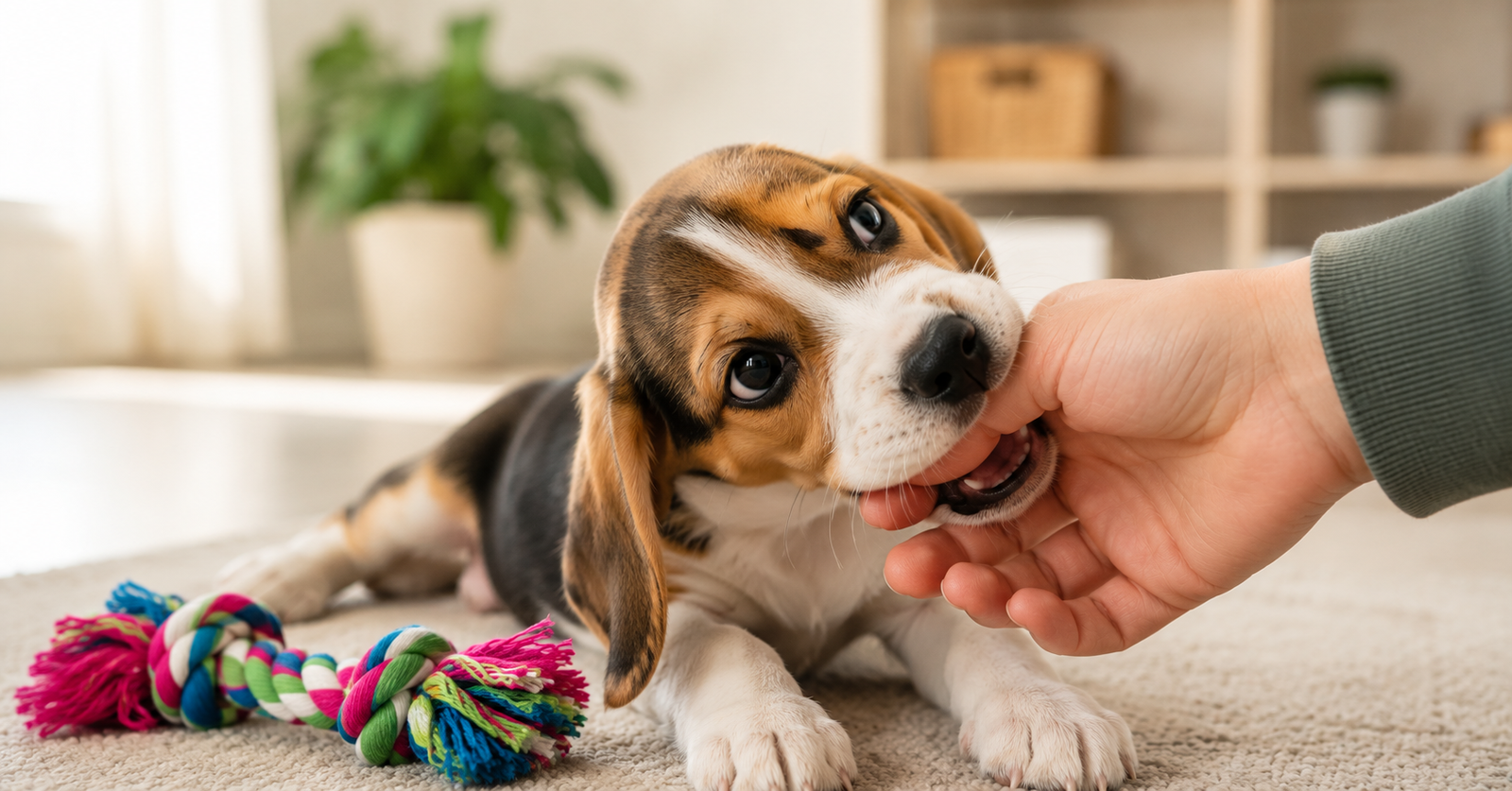
Those tiny, needle-sharp puppy teeth can turn playtime into a painful experience. If you’re constantly asking, “Why is my puppy biting my hands?”, you’re dealing with one of the most common challenges new dog owners face.
The reassuring news is that hand biting is usually a normal part of puppy development. Young puppies explore the world with their mouths, learn social skills through play, and experience teething discomfort that makes chewing feel comforting. In most cases, this behavior is not a sign of aggression but a stage that improves with patient, consistent training.
By understanding why your puppy is biting, you’ll be able to respond in a way that teaches better habits while strengthening your bond.
Table of Contents
- Why do puppies bite hands?
- Is puppy biting normal?
- The most common reasons puppies bite hands
- Is it play or aggression?
- How age affects puppy biting
- Why some breeds are naturally mouthier
- What your puppy is trying to tell you
- How to stop puppy biting
- Trainer Tip
- Vet Tip
- Common mistakes
- FAQs
- Conclusion
Why Do Puppies Bite Hands?
Quick Answer
Most puppies bite hands because they’re playing, teething, exploring their surroundings, or learning bite inhibition. This behavior is considered normal during puppyhood and can usually be improved through positive reinforcement, redirection, and consistent training rather than punishment.
Is It Normal for a Puppy to Bite Your Hands?
Yes.
In fact, puppy biting owner and puppy nipping hands are among the most common concerns discussed with veterinarians and dog trainers.
Unlike humans, puppies investigate nearly everything with their mouths. They chew, lick, nibble, and gently mouth objects to learn about their environment.
According to the American Kennel Club (AKC), mouthing, chewing, and play biting are normal puppy behaviors and don’t usually indicate aggression. The ASPCA also explains that puppies naturally use their mouths while playing with people and littermates, making early training important rather than punishment.
7 Common Reasons Your Puppy Is Biting Your Hands
1. Your Hands Look Like Fun Toys
To a puppy, moving fingers are irresistible.
Your hands move quickly, grab toys, pet them, and wave around during play. Those movements naturally trigger a puppy’s instinct to chase and grab.
Example
You’re sitting on the floor tossing a toy. As soon as your hand moves, your puppy ignores the toy and grabs your fingers instead.
Instead of pulling your hand away quickly, calmly offer a chew toy and continue the game using that toy.
2. Puppy Play Biting Is Part of Growing Up
Puppy play biting is how young dogs learn social skills.
When puppies play together, they:
- Wrestle
- Chase each other
- Mouth faces and ears
- Grab legs
- Practice gentle biting
If one puppy bites too hard, the other usually stops playing. This teaches bite inhibition—the ability to control bite pressure.
Your puppy is now learning those same lessons with you.
3. Teething Makes Chewing Feel Better
Teething is another major reason puppies chew on hands.
According to the AKC:
- Puppies have 28 baby teeth.
- Adult dogs eventually have 42 permanent teeth.
- Teething generally continues until around 6 months of age, during which puppies may become especially mouthy.
Sore gums make chewing feel soothing, and your fingers often become the closest available target.
Better alternatives include:
- Soft rubber puppy chew toys
- Food-stuffing enrichment toys
- Puppy-safe teething toys
- Vet-approved edible chews
Giving your puppy an appropriate outlet often reduces unwanted chewing significantly.
4. Your Puppy Is Overtired
Many owners assume biting always means too much energy.
Sometimes it’s the opposite.
An overtired puppy often behaves like an overtired toddler—excitable, impulsive, and unable to settle down.
Signs include:
- Zoomies around the house
- Barking more than usual
- Ignoring simple cues
- Biting hands and clothing
- Difficulty relaxing
A quiet nap may solve the problem faster than another play session.
5. Your Puppy Wants Your Attention
Sometimes puppy behavior is surprisingly simple.
Your puppy bites.
You laugh.
You move your hands.
You start talking.
From your puppy’s perspective, biting successfully started an exciting interaction.
Even negative attention can accidentally reward the behavior.
6. Your Puppy Needs More Mental Stimulation
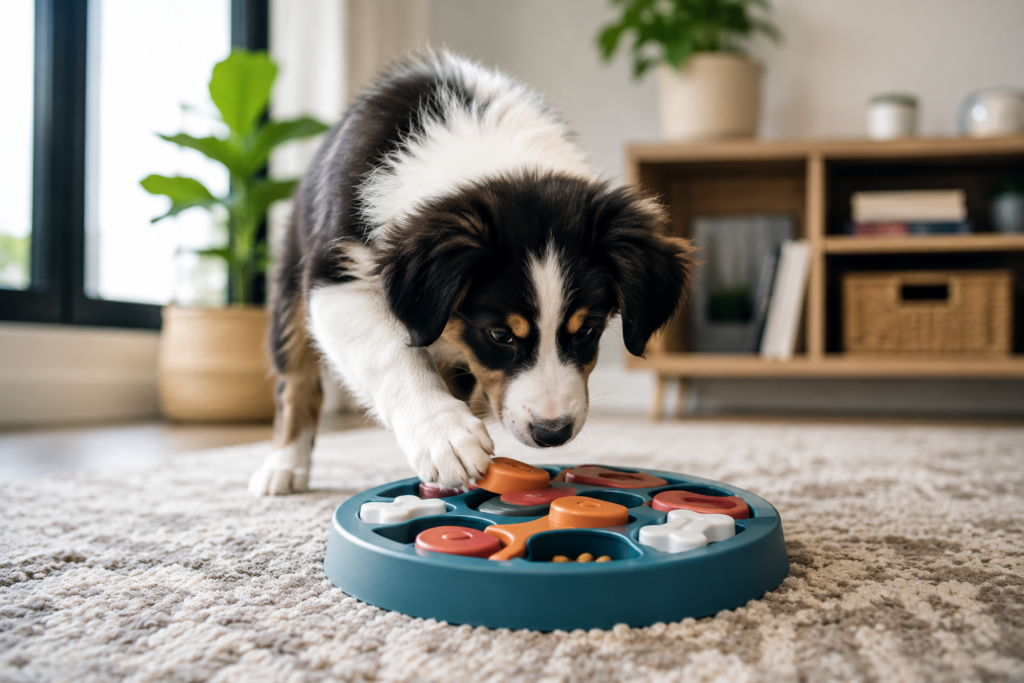
Physical exercise alone doesn’t always prevent biting.
Puppies also need activities that challenge their brains.
Good options include:
- Food puzzle toys
- Basic obedience training
- Sniff games
- Hide-and-seek
- Short scent games
- Learning new cues
Mental exercise often tires puppies more effectively than endless running.
7. Your Puppy Is Still Learning Bite Inhibition
Bite inhibition is one of the most important skills a puppy develops.
Young puppies naturally learn this from their mother and littermates. When they bite too hard, play usually stops.
The AKC recommends continuing this lesson at home by rewarding gentle play and calmly ending interactions after painful bites.
Is My Puppy Playing or Being Aggressive?
Many owners confuse playful mouthing with aggression.
The differences are usually quite noticeable.
| Normal Play Biting | Possible Aggression |
|---|---|
| Loose, wiggly body | Stiff body posture |
| Play bows | Fixed stare |
| Relaxed face | Wrinkled muzzle with tension |
| Easily distracted by toys | Ignores redirection |
| Stops briefly during play | Continues escalating |
| Happy, bouncy movement | Defensive body language |
The ASPCA notes that playful puppies generally appear relaxed, while puppies showing fear or defensive aggression display much stiffer body language and more intense bites.
How Age Affects Puppy Biting
Knowing your puppy’s age helps you understand what’s normal.
| Puppy Age | Typical Behavior |
|---|---|
| 8–10 weeks | Exploring everything with the mouth |
| 10–16 weeks | Heavy play biting and learning bite inhibition |
| 3–6 months | Peak teething and chewing |
| 6–8 months | Improved self-control with training |
| 8+ months | Most puppies become much gentler |
Every puppy develops at a slightly different pace, but consistent training usually produces steady improvement.
Are Some Breeds More Mouthy Than Others?
Yes.
Some breeds naturally use their mouths more because of the work they were originally bred to perform.
These include:
- Labrador Retrievers
- Golden Retrievers
- German Shepherds
- Border Collies
- Australian Shepherds
Being naturally mouthy doesn’t mean a puppy is aggressive. It simply means they often benefit from additional training and appropriate chew outlets.
What Is Your Puppy Trying to Tell You?
Instead of focusing only on stopping the behavior, think about what your puppy is communicating.
Your puppy may be saying:
- “I want to play.”
- “My gums hurt.”
- “I’m bored.”
- “I’m tired.”
- “I’m excited.”
- “I need something safe to chew.”
Understanding the reason behind the behavior makes choosing the right response much easier.
Trainer Tip
Professional Trainer Tip
Keep a toy in your pocket during play sessions. If your puppy starts biting your hands, immediately redirect them to the toy. Over time, they’ll begin associating play with toys instead of human skin—a strategy recommended by positive reinforcement trainers and supported by AKC guidance.
Vet Tip
Veterinarian Tip
Teething puppies naturally chew more, but sudden severe pain, excessive bleeding from the mouth, difficulty eating, or unusual swelling isn’t considered normal. If you notice these signs, schedule a veterinary examination to rule out dental or oral health problems.
How to Stop Your Puppy From Biting Your Hands
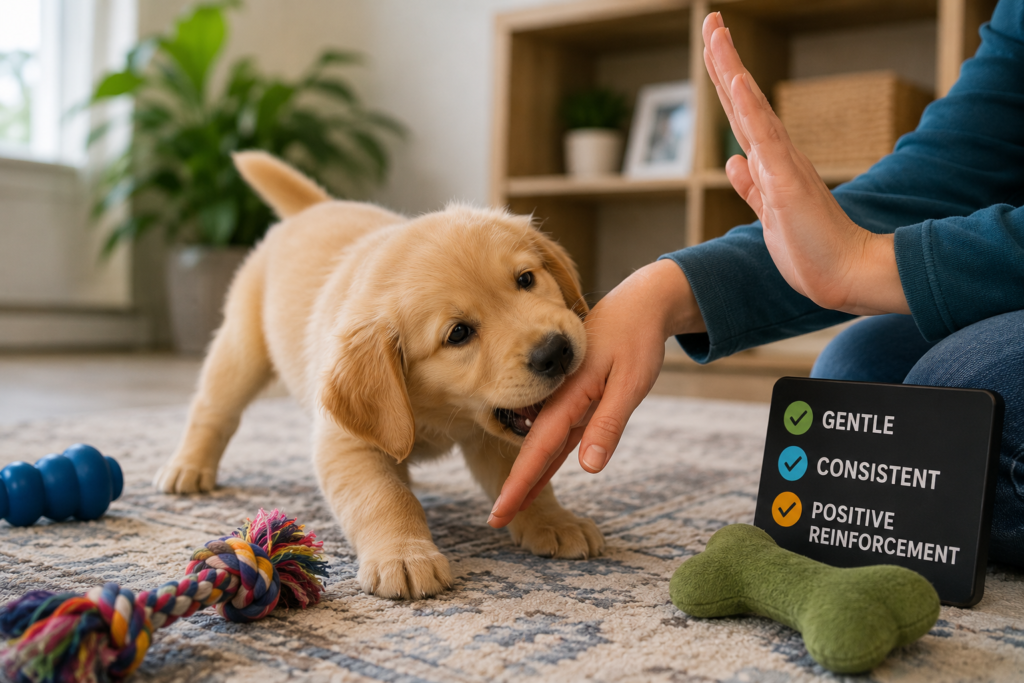
The best approach is to teach your puppy what to do instead of simply trying to stop the behavior. Puppies learn faster when they’re rewarded for making good choices than when they’re punished for making mistakes. Positive reinforcement, consistent routines, and patience are the foundation of successful bite training.
1. Redirect to a Chew Toy Immediately
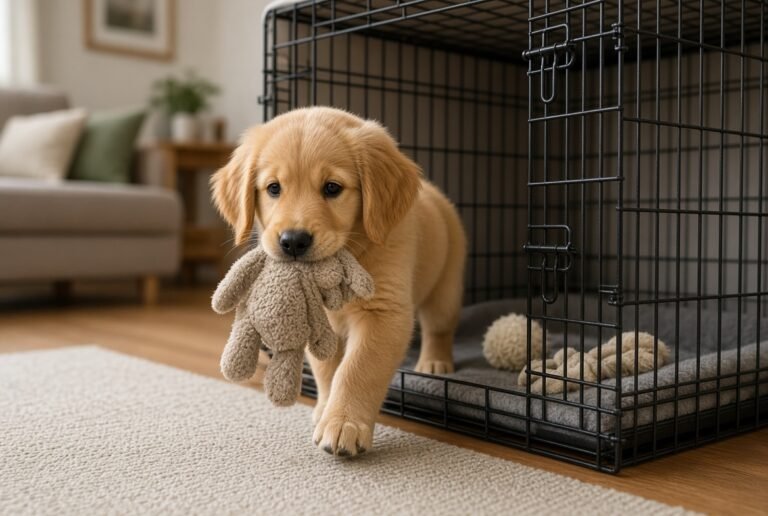
Keep an appropriate chew toy within reach whenever you’re interacting with your puppy.
The moment your puppy grabs your fingers, calmly remove your hand and offer the toy instead. As soon as they begin chewing the toy, praise them enthusiastically.
Why it works
Your puppy still satisfies the natural urge to chew but learns that toys—not human hands—are acceptable.
2. Stop Play for a Few Seconds
One of the most effective lessons is simple:
Biting makes the fun stop.
If your puppy bites too hard:
- Stay calm.
- Freeze your hands.
- Stand up or turn away.
- Ignore your puppy for 10–20 seconds.
- Resume play only after they’re calm.
Over time, your puppy learns that gentle play keeps your attention while rough biting ends the game.
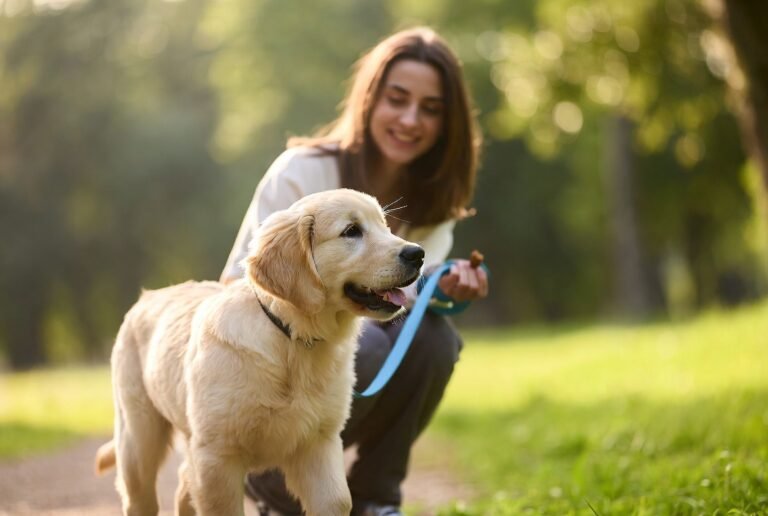
3. Reward Gentle Behavior
Many owners only react when their puppy bites.
Instead, actively reward moments when your puppy:
- Plays without using their teeth
- Chooses a chew toy
- Greets you calmly
- Licks instead of bites
- Responds to a cue like “Sit”
Puppies repeat behaviors that consistently earn praise, treats, or playtime.
4. Prevent Overtired “Land Shark” Moments
If your puppy suddenly becomes extra bitey in the evening, they may simply need sleep.
Young puppies require many hours of rest every day. An overtired puppy often loses self-control and becomes much mouthier.
A quiet nap can sometimes solve what looks like a training problem.
5. Meet Your Puppy’s Mental and Physical Needs
Exercise alone isn’t enough.
Puppies also need activities that challenge their minds.
Good daily enrichment includes:
- Food puzzle toys
- Short obedience sessions
- Sniff walks
- Hide-and-seek games
- Food-stuffing toys
- Gentle tug with clear rules
Mental enrichment often reduces unwanted chewing and puppy play biting because it helps prevent boredom.
Which Chew Toys Work Best?
Not every chew toy suits every puppy.
| Toy Type | Best For | Why It Helps |
|---|---|---|
| Soft rubber chew toy | Young teething puppies | Gentle on sore gums |
| Food-stuffing toy | High-energy puppies | Keeps them mentally occupied |
| Puppy teething ring | Puppies 3–6 months | Helps soothe irritated gums |
| Durable rubber toy | Strong chewers | Provides a safe chewing outlet |
Choose toys that match your puppy’s size and chewing strength, and inspect them regularly for damage.
Trainer Tip
Professional Trainer Tip
Carry a toy in your pocket whenever you’re playing with your puppy.
The instant your puppy reaches for your hands, redirect them to the toy before they have a chance to bite.
This simple habit creates a new association:
Play = Toys
instead of
Play = Human Hands
Positive reinforcement trainers commonly recommend this strategy because it prevents puppies from practicing unwanted habits.
Vet Tip
Veterinarian Tip
Teething naturally increases chewing and mouthing, but contact your veterinarian if your puppy:
- Refuses food because of mouth pain
- Has excessive bleeding from the gums
- Shows swelling around the mouth
- Breaks a tooth
- Suddenly becomes unusually aggressive while chewing
These signs may indicate a dental or medical issue rather than normal teething.
Common Mistakes That Make Puppy Biting Worse
Many owners accidentally encourage the very behavior they’re trying to stop.
Avoid these common mistakes:
- Wrestling with your hands
- Waving fingers in your puppy’s face
- Pulling your hand away suddenly
- Inconsistent rules between family members
- Punishing or hitting your puppy
- Allowing rough play one day but correcting it the next
- Skipping naps for young puppies
Consistency is more important than perfection.
Myth vs. Fact
| Myth | Fact |
|---|---|
| Puppies bite because they’re trying to dominate people. | Most puppies bite because they’re playing, teething, or learning bite inhibition. |
| Punishment is the fastest solution. | Positive reinforcement and consistent redirection are generally recommended over physical punishment. |
| Every puppy that bites is aggressive. | Normal play biting is very different from true aggression, which usually involves stiff body language and defensive behavior. |
| Puppies automatically outgrow biting without training. | Maturity helps, but consistent training teaches appropriate bite inhibition and manners. |
Daily Puppy Biting Checklist
Use this quick checklist every day:
- □ Keep chew toys nearby.
- □ Redirect biting immediately.
- □ End play after painful bites.
- □ Reward calm interactions.
- □ Schedule regular naps.
- □ Provide mental enrichment.
- □ Practice short training sessions.
- □ Stay consistent with every family member.
Small improvements each day create lasting habits.
When Should You Seek Professional Help?
Normal puppy behavior improves gradually.
However, contact your veterinarian or a qualified positive reinforcement trainer if your puppy:
- Frequently breaks skin with bites
- Guards food or toys aggressively
- Shows stiff body language before biting
- Doesn’t respond to consistent training after several weeks
- Appears to bite because of pain or fear
- Displays sudden behavior changes
Early guidance is easier than correcting established habits later.
Frequently Asked Questions
Why is my puppy biting my hands so much?
Most puppies bite because they’re exploring, teething, playing, or learning bite inhibition. It’s a normal developmental stage.
At what age do puppies stop biting?
Many puppies become noticeably gentler between 5 and 7 months, especially after teething ends and training becomes consistent. Individual puppies may mature at different rates.
Should I let my puppy chew on my fingers?
No. Allowing finger chewing teaches your puppy that hands are acceptable chew toys. Redirect them to an appropriate toy instead.
Why does my puppy bite only me?
Your puppy may associate you with play, or your reactions may unintentionally reward the behavior.
Why is my puppy more bitey in the evening?
Evening biting is often linked to overtiredness or overstimulation. A calm routine and adequate naps can help.
Is puppy biting a sign of aggression?
Usually not. Playful puppies have relaxed body language, while aggressive behavior is typically accompanied by stiffness, fear, or guarding.
What if my puppy ignores toys?
Try different toy textures or food-stuffing toys. End play whenever teeth touch skin, then restart once your puppy is calm.
Should I say “Ouch” when my puppy bites?
Some puppies respond well to a brief, high-pitched “ouch,” while others become more excited. If it increases biting, quietly stop the interaction instead.
Conclusion
If you’ve been wondering, “Why is my puppy biting my hands?”, remember that you’re seeing one of the most common stages of puppy development. Whether it’s teething, curiosity, excitement, or learning bite inhibition, most puppies aren’t trying to be aggressive—they’re learning how to interact with the world.
The key is consistency. Redirect puppy bites hands toward appropriate chew toys, reward gentle behavior, and calmly end play whenever biting becomes too rough. With time, patience, and positive reinforcement, your puppy will learn that gentle play is far more rewarding than using their teeth.
The sharp puppy teeth won’t last forever, but the habits you teach today can shape your dog’s behavior for years to come.