Why Is My Cat Coughing? Causes, Sounds, and When To See a Vet
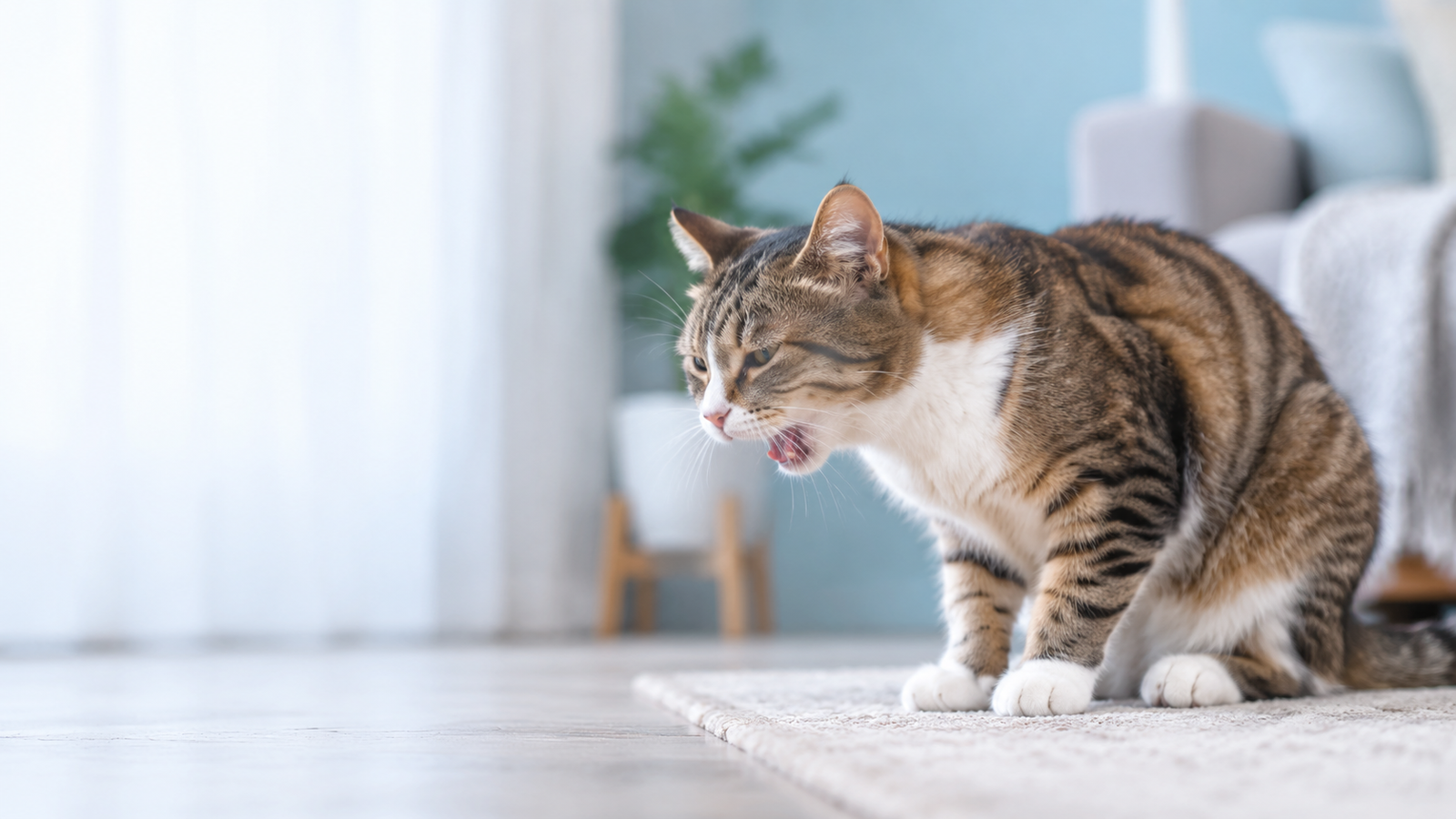
A cat suddenly crouching down, stretching its neck forward, and making a strange hacking sound can be alarming. Many owners immediately think their cat is trying to get rid of a hairball, but coughing and hairball episodes are not the same thing.
A coughing cat may have simple airway irritation, but repeated coughing can also be linked to conditions such as asthma, bronchitis, infections, allergies, parasites, or other respiratory problems. Cats generally do not cough as frequently as humans, so recurring episodes deserve attention.
The first step is understanding what kind of sound your cat is making, how often it happens, and whether other symptoms appear.
Table of Contents
- What Does a Coughing Cat Look Like?
- Is My Cat Coughing or Trying To Bring Up a Hairball?
- What Does a Cat Cough Sound Like?
- Common Causes of Cat Coughing
- Why Is My Cat Coughing But Acting Normal?
- Why Does My Cat Cough More at Night?
- Cat Asthma: A Common Cause of Chronic Coughing
- When Is Cat Coughing an Emergency?
- How Veterinarians Diagnose a Coughing Cat
- Treatment Options for Cat Coughing
- What You Can Do at Home
- Common Mistakes Cat Owners Make
- Expert Tips for Managing Cat Coughing
- Myth vs Fact
- Frequently Asked Questions
- Final Thoughts
What Does a Coughing Cat Look Like?
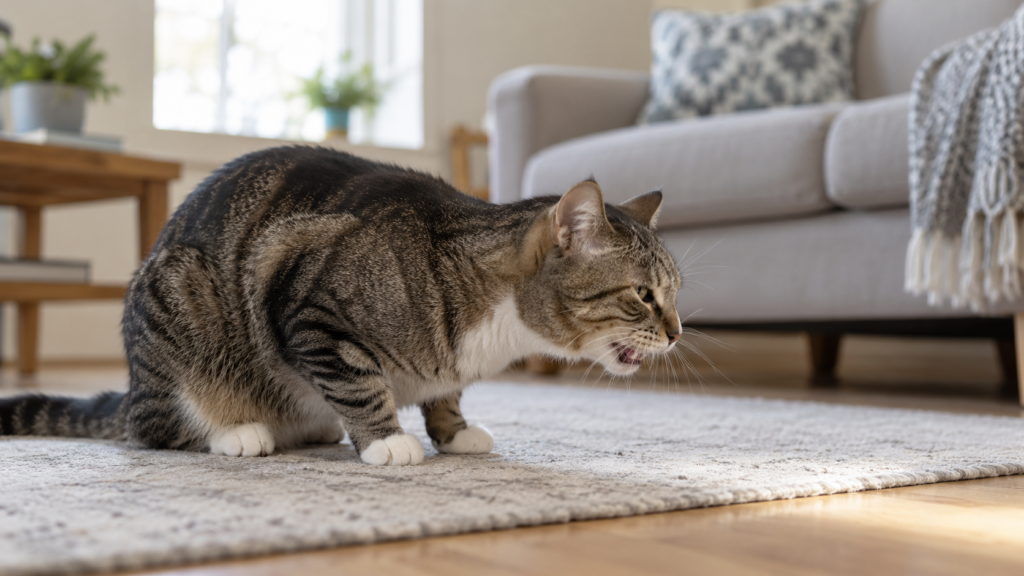
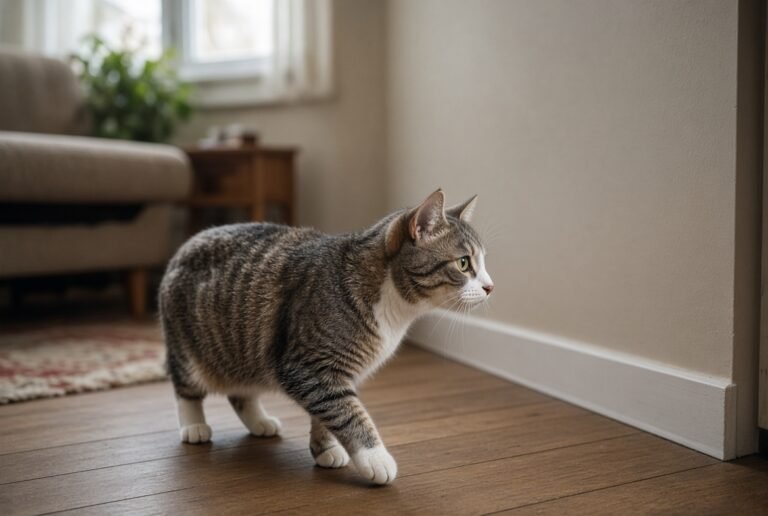
A true cat cough usually comes from the respiratory system. During a coughing episode, many cats lower their body, extend their neck, and forcefully push air out of their lungs.
Common signs of coughing include:
- Dry hacking sounds
- Neck stretched forward
- Crouched posture
- Repeated coughing movements
- Little or no material coming out afterward
A common example is a cat sitting on the floor and making several hacking sounds without producing a hairball. Many owners mistake this for vomiting, but the movement comes from the airways rather than the stomach.
Recording the episode on your phone can be extremely helpful. A veterinarian can often learn more from seeing the actual movement than from a verbal description.
Is My Cat Coughing or Trying To Bring Up a Hairball?
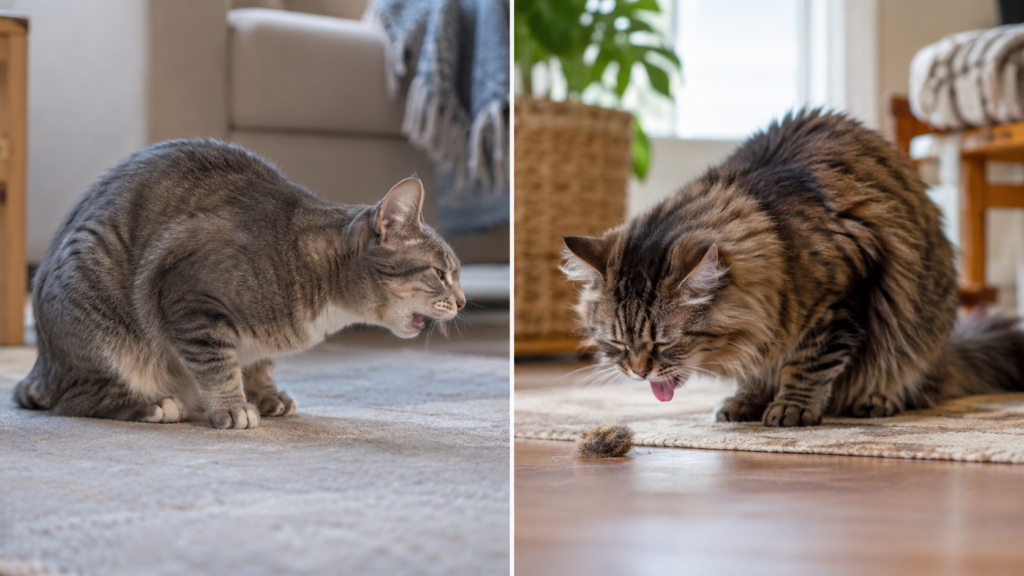
This is one of the biggest sources of confusion among cat owners.
Hairballs involve the digestive system, while coughing involves the throat, windpipe, and lungs.
| Coughing | Hairball |
|---|---|
| Comes from the airways | Comes from the stomach |
| Dry hacking sound | Retching or vomiting motion |
| Neck often extends forward | Strong abdominal movement |
| Usually nothing comes out | Hairball may appear afterward |
| May suggest respiratory irritation | Usually related to grooming |
A cat repeatedly coughing without producing a hairball should not automatically be treated for hairballs. The cause may be related to the lungs or airways.
What Does a Cat Cough Sound Like?
Cat coughs can sound different depending on the underlying problem.
| Type of Cough | What It May Suggest |
|---|---|
| Dry hacking cough | Asthma, airway irritation, bronchitis |
| Wheezing cough | Narrowed or inflamed airways |
| Wet cough | Mucus or respiratory infection |
| Honking sound | Possible airway abnormality |
The sound alone cannot confirm a diagnosis, but it can help your veterinarian understand what may be happening.
A useful tip is to note:
- When the coughing happens
- How long each episode lasts
- Whether exercise triggers it
- Whether it happens after exposure to dust, sprays, or smoke
Common Causes of Cat Coughing
A coughing cat can have several possible causes. Some are temporary, while others require medical treatment.
Feline Asthma
Asthma is one of the more recognized causes of repeated coughing in cats.
It happens when the airways become inflamed and narrowed, making it harder for air to move normally.
Possible signs include:
- Repeated dry coughing
- Wheezing
- Breathing difficulty
- Crouching low during episodes
- Neck stretched forward
Environmental triggers may include dust, smoke, perfumes, and other airborne irritants.
Bronchitis
Bronchitis occurs when the bronchial tubes become inflamed. This inflammation can lead to persistent coughing.
Cats with bronchitis may show:
- Frequent dry cough
- Breathing changes
- Reduced activity
- Increased sensitivity to irritants
Chronic airway inflammation may require ongoing management.
Respiratory Infections
Upper respiratory infections can irritate the airways and cause coughing.
Other symptoms may include:
- Sneezing
- Nasal discharge
- Low appetite
- Tiredness
- Fever
Young cats and cats exposed to other animals may have a higher chance of developing respiratory infections.
Allergies and Environmental Irritants
Some cats react to substances in their surroundings.
Possible triggers include:
- Dusty litter
- Cigarette smoke
- Air fresheners
- Cleaning chemicals
- Strong perfumes
- Mold
Example:
A cat that starts coughing every time the litter box is cleaned may be reacting to dust particles rather than having a contagious illness.
Parasites
Certain parasites can affect the respiratory system.
Possible causes include:
- Heartworm disease
- Lung parasites
- Other internal parasites
Parasite-related coughing can sometimes look similar to asthma, which is why testing may be needed.
Foreign Objects
Cats can occasionally inhale small particles that irritate their airways.
Examples include:
- Grass pieces
- Dust particles
- Small plant materials
Sudden coughing after outdoor activity may need closer evaluation.
Why Is My Cat Coughing But Acting Normal?
A cat can cough and still appear completely normal afterward.
This often confuses owners because cats may continue eating, playing, and sleeping normally.
Occasional coughing after a brief irritation may not always indicate a serious problem. However, repeated coughing should not be ignored even if your cat seems fine.
Monitor:
- How often coughing occurs
- Whether episodes increase
- Changes in appetite
- Breathing pattern
- Energy levels
A helpful approach is keeping a simple cough diary.
Write down:
- Date and time
- Duration of coughing
- Possible triggers
- Other symptoms
This information can help your veterinarian identify patterns.
Why Does My Cat Cough More at Night?
Some cats appear to cough more during nighttime hours.
Possible reasons include:
- Dry indoor air
- Dust exposure in sleeping areas
- Allergens near bedding
- Asthma triggers becoming noticeable during rest
Check your cat’s sleeping environment.
Look for:
- Dusty blankets
- Strong cleaning products
- Scented candles
- Air fresheners
If nighttime coughing becomes frequent, a veterinary evaluation is recommended.
Cat Asthma: Signs of an Attack

Asthma deserves special attention because some episodes can become serious.
Possible asthma signs include:
- Sudden coughing attacks
- Wheezing
- Difficulty breathing
- Open-mouth breathing
- Blue or gray gums
An asthma attack involving breathing difficulty is an emergency and requires immediate veterinary care.
Never use human inhalers or medications for your cat unless specifically prescribed by a veterinarian.
When Is Cat Coughing an Emergency?
Not every cough requires emergency care, but some warning signs should never be ignored.
Seek urgent veterinary help if your cat has:
- Open-mouth breathing
- Severe breathing effort
- Blue or gray gums
- Coughing blood
- Collapse
- Extreme weakness
Contact a veterinarian soon if:
- Coughing continues for several days
- Episodes keep returning
- Your cat loses weight
- Appetite decreases
- Wheezing develops
A quick response can prevent some respiratory problems from becoming worse.
How Veterinarians Diagnose a Coughing Cat
A veterinarian will first look at your cat’s history and perform a physical examination.
They may ask:
- When did coughing begin?
- How often does it happen?
- Is it getting worse?
- Are there environmental triggers?
- Is your cat indoor-only or outdoor?
Possible tests include:
- Chest X-rays
- Blood tests
- Parasite testing
- Airway examination
- Additional respiratory testing when needed
The goal is not just stopping the cough but finding the reason behind it.
Treatment Options for Cat Coughing
Treatment depends on the underlying cause.
| Cause | Possible Treatment Approach |
|---|---|
| Asthma | Airway management and prescribed medication |
| Infection | Treatment based on diagnosis |
| Parasites | Parasite-specific medication |
| Irritation | Removing triggers |
| Foreign object | Removal if necessary |
There is no universal cough medicine for cats because coughing is a symptom, not a single disease.
What You Can Do at Home

While waiting for veterinary advice, you can support your cat by:
- Removing smoke exposure
- Avoiding strong fragrances
- Keeping the environment clean
- Reducing dust
- Providing fresh water
- Keeping your cat calm
A humidifier may help some cats with airway irritation, but it should not replace veterinary care when coughing continues.
Common Mistakes Cat Owners Make
Assuming Every Cough Is a Hairball
Many cats cough without producing a hairball. Treating every episode as a grooming problem can delay proper care.
Giving Human Medicine
Human cough medicines may be unsafe for cats.
Ignoring Repeated Coughing
A cat that coughs regularly should be evaluated rather than simply monitored forever.
Using Strong Household Fragrances
Perfumes, sprays, and smoke can irritate sensitive airways.
Expert Tips for Managing Cat Coughing
- Record coughing episodes on video.
- Track frequency and triggers.
- Use low-dust litter if dust seems to worsen symptoms.
- Keep your home free from smoke.
- Schedule veterinary checks when coughing repeats.
Small details can help your veterinarian reach a diagnosis faster.
Myth vs Fact
| Myth | Fact |
|---|---|
| Cats only cough because of hairballs | Cats can cough because of airway and lung problems |
| A normal-looking cat cannot be sick | Cats often hide symptoms |
| All coughs need the same treatment | Treatment depends on the cause |
| Indoor cats cannot develop asthma | Indoor cats can still have respiratory issues |
Frequently Asked Questions
Why is my cat coughing but no hairball comes out?
Repeated coughing without a hairball may indicate airway irritation, asthma, infection, or another respiratory problem.
Is it normal for cats to cough?
Occasional coughing may happen, but frequent coughing is not considered normal for most cats.
What does a cat asthma cough sound like?
Asthma coughing is often dry and repetitive. Some cats may also wheeze or show breathing difficulty.
Can dusty litter make my cat cough?
Yes. Dust particles from litter can irritate some cats’ airways.
Why does my cat cough after playing?
Exercise can sometimes trigger coughing in cats with airway inflammation, including asthma.
Can indoor cats get asthma?
Yes. Indoor cats can still develop asthma due to airway inflammation and environmental triggers.
Should I record my cat coughing?
Yes. A video can help a veterinarian distinguish coughing from gagging or hairball behavior.
How many times coughing is too much for a cat?
There is no exact number that applies to every cat, but repeated or increasing coughing should be discussed with a veterinarian.
Can a cat cough go away on its own?
A mild cough caused by temporary irritation may improve, but ongoing coughing requires evaluation.
When should I worry about my cat coughing?
Worry when coughing is frequent, worsening, or combined with breathing problems, weakness, appetite changes, or abnormal behavior.
Final Thoughts
A coughing cat should not automatically cause panic, but repeated coughing deserves attention. The biggest challenge for owners is identifying whether they are seeing a true cough, a hairball attempt, or another type of breathing problem.
Pay attention to the sound, frequency, triggers, and any changes in your cat’s behavior. Recording episodes, reducing irritants, and seeking veterinary advice when needed can help your cat receive the right care sooner.
A cough is a symptom, not a diagnosis. Finding the reason behind it is the key to helping your cat breathe comfortably again.