

Coughing Cat: 6 Causes, Symptoms & Vet Advice
A coughing cat suddenly crouching down, stretching its neck forward, and making a strange hacking sound can be alarming. Many owners immediately think their cat is trying to get rid of a hairball, but coughing and hairball episodes are not the same thing. In short: if your cat keeps coughing, note the sound, frequency, and…
A coughing cat suddenly crouching down, stretching its neck forward, and making a strange hacking sound can be alarming. Many owners immediately think their cat is trying to get rid of a hairball, but coughing and hairball episodes are not the same thing. In short: if your cat keeps coughing, note the sound, frequency, and triggers — then see a vet. This guide explains what different coughs mean, when it is an emergency, and what you can do at home.
A coughing cat may have simple airway irritation, but repeated coughing can also be linked to conditions such as asthma, bronchitis, infections, allergies, parasites, or other respiratory problems. Cats generally do not cough as frequently as humans, so recurring episodes deserve attention.
What Does a Coughing Cat Look Like?
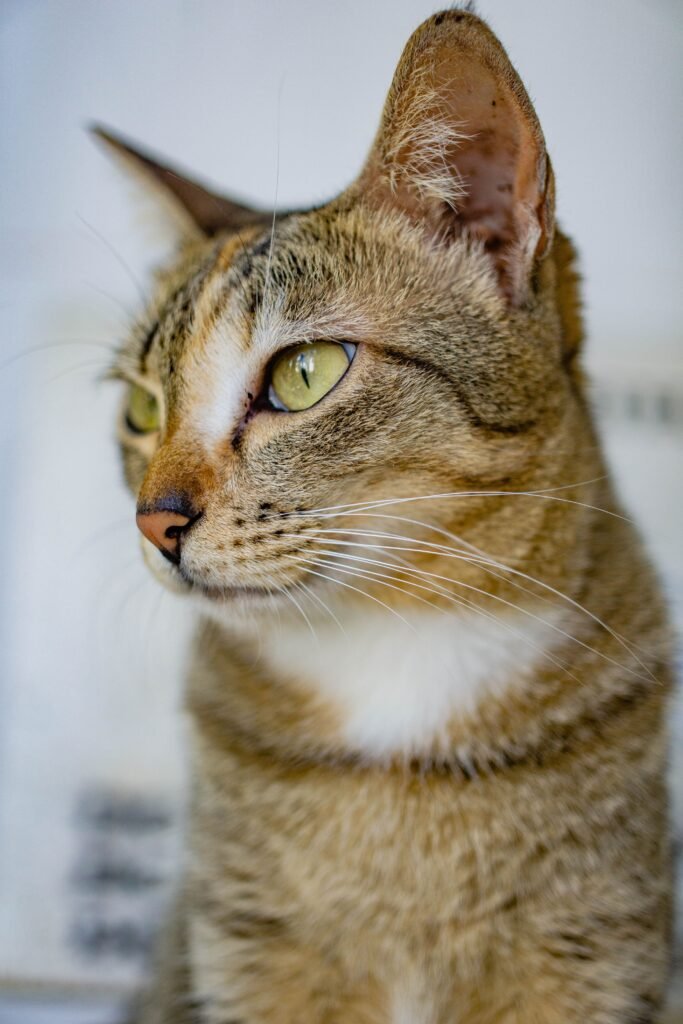
A true cat cough usually comes from the respiratory system. During a coughing episode, many cats lower their body, extend their neck, and forcefully push air out of their lungs.
Common signs of coughing include:
- Dry hacking sounds
- Neck stretched forward
- Crouched posture
- Repeated coughing movements
- Little or no material coming out afterward
A common example is a coughing cat sitting on the floor and making several hacking sounds without producing a hairball. Many owners mistake this for vomiting, but the movement comes from the airways rather than the stomach.
Recording your coughing cat on your phone can be extremely helpful. A veterinarian can often learn more from seeing the actual movement than from a verbal description.
Is My Cat Coughing or Trying To Bring Up a Hairball?
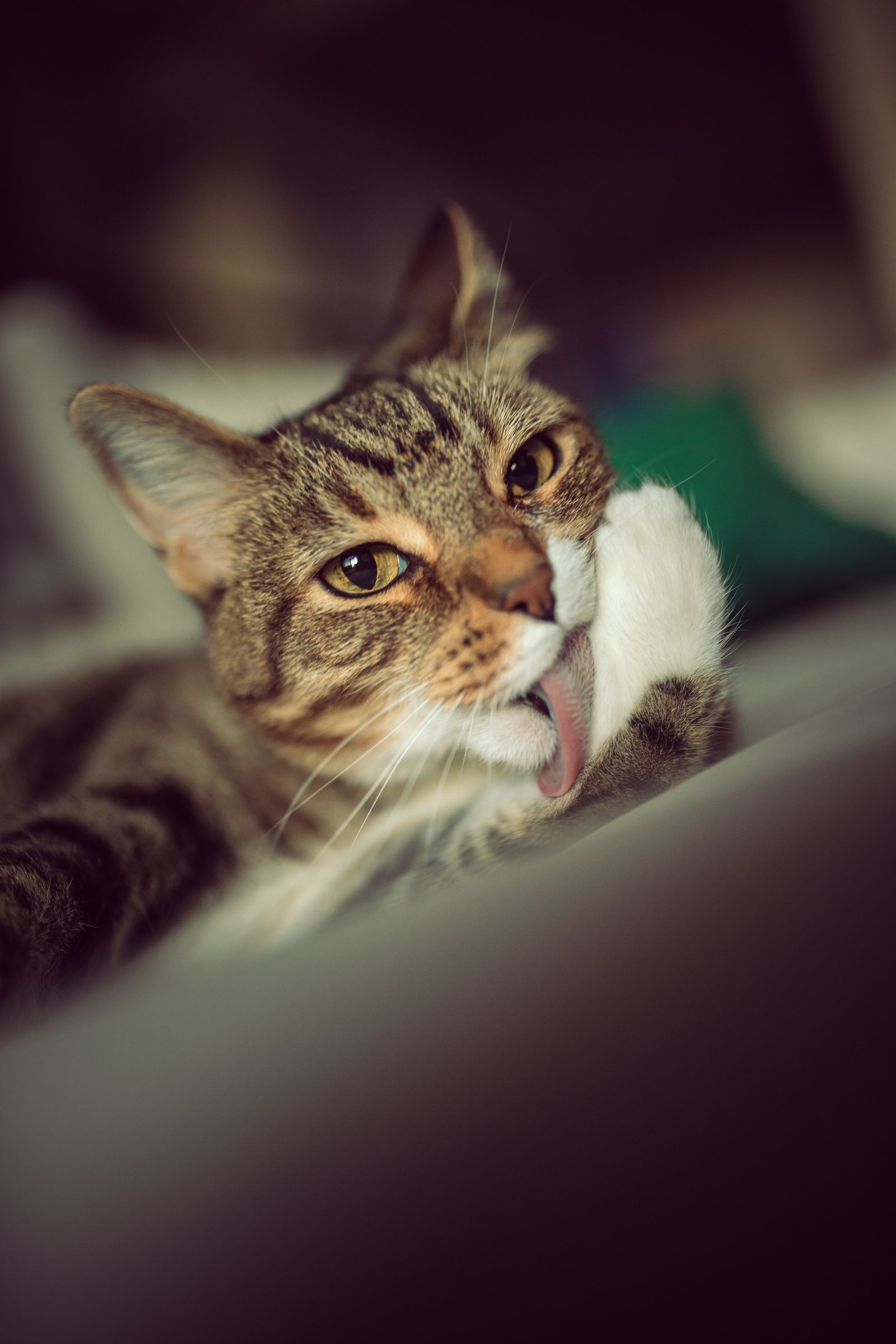
This is one of the biggest sources of confusion among cat owners.
Hairballs involve the digestive system, while coughing involves the throat, windpipe, and lungs.
| Coughing | Hairball |
|---|---|
| Comes from the airways | Comes from the stomach |
| Dry hacking sound | Retching or vomiting motion |
| Neck often extends forward | Strong abdominal movement |
| Usually nothing comes out | Hairball may appear afterward |
| May suggest respiratory irritation | Usually related to grooming |
A cat repeatedly coughing without producing a hairball should not automatically be treated for hairballs. The cause may be related to the lungs or airways.
Hairballs form when loose fur swallowed during grooming builds up — learn how your cat’s tongue works to understand the grooming behind them.
What Does a Cat Cough Sound Like?
Cat coughs can sound different depending on the underlying problem.
| Type of Cough | What It May Suggest |
|---|---|
| Dry hacking cough | Asthma, airway irritation, bronchitis |
| Wheezing cough | Narrowed or inflamed airways |
| Wet cough | Mucus or respiratory infection |
| Honking sound | Possible airway abnormality |
The sound alone cannot confirm a diagnosis, but it can help your veterinarian understand what may be happening.
A useful tip is to note:
- When the coughing happens
- How long each episode lasts
- Whether exercise triggers it
- Whether it happens after exposure to dust, sprays, or smoke
Cat Wheezing vs Coughing: How to Tell the Difference
Owners often use the words “wheezing” and “coughing” interchangeably, but they describe different sounds — and they can point to different problems. A cough is a sudden, forceful burst of air from the lungs, usually with a hacking motion and the neck stretched forward. A wheeze is a high-pitched whistling sound your cat makes while breathing in or out, caused by air squeezing through narrowed airways.
In practice, the two often appear together: a cat with inflamed airways may wheeze between coughs, or start wheezing and then break into a coughing fit. Vets see this wheezing cough pattern most often with feline asthma, bronchitis, or other lower-airway conditions.
A quick way to tell them apart:
- Coughing: repeated hacking bursts, usually in short episodes, with the neck stretched forward
- Wheezing: a continuous whistling sound with each breath, sometimes audible even at rest
- Wheezing cough: whistling breathing that turns into hacking fits — mention this pattern to your vet
If you notice a new whistling sound when your cat breathes, or the wheezing is getting louder or more frequent, book a vet visit. A phone recording of the sound is far more useful to a vet than a verbal description.
Common Causes of Cat Coughing
A coughing cat can have several possible causes. Some are temporary, while others require medical treatment.
Feline Asthma
Asthma is one of the most common causes of repeated coughing in cats. During an episode, the airways become inflamed and narrowed — Cornell’s feline health centre explains the process in detail.
It happens when the airways become inflamed and narrowed, making it harder for air to move normally.
Possible signs include:
- Repeated dry coughing
- Wheezing
- Breathing difficulty
- Crouching low during episodes
- Neck stretched forward
Environmental triggers may include dust, smoke, perfumes, and other airborne irritants.
Bronchitis
Bronchitis occurs when the bronchial tubes become inflamed. This inflammation can lead to persistent coughing.
Cats with bronchitis may show:
- Frequent dry cough
- Breathing changes
- Reduced activity
- Increased sensitivity to irritants
Chronic airway inflammation may require ongoing management.
Respiratory Infections
Upper respiratory infections can irritate the airways and cause coughing.
Other symptoms may include:
- Sneezing
- Nasal discharge
- Low appetite
- Tiredness
- Fever
Young cats and cats exposed to other animals may have a higher chance of developing respiratory infections. Some of these infections, like feline calicivirus, also cause mouth ulcers and drooling — see our guide on why cats drool.
Allergies and Environmental Irritants
Some cats react to substances in their surroundings.
Possible triggers include:
- Dusty litter
- Cigarette smoke
- Air fresheners
- Cleaning chemicals
- Strong perfumes
- Mold
Example:
A cat that starts coughing every time the litter box is cleaned may be reacting to dust particles rather than having a contagious illness.
Parasites
Certain parasites can affect the respiratory system.
Possible causes include:
- Heartworm disease
- Lung parasites
- Other internal parasites
Parasite-related coughing can sometimes look similar to asthma, which is why testing may be needed.
Foreign Objects
Cats can occasionally inhale small particles that irritate their airways.
Examples include:
- Grass pieces
- Dust particles
- Small plant materials
Sudden coughing after outdoor activity may need closer evaluation.
Why Is My Cat Coughing But Acting Normal?
A coughing cat can still appear completely normal afterward.
This often confuses owners because cats may continue eating, playing, and sleeping normally.
Occasional coughing after a brief irritation may not always indicate a serious problem. However, repeated coughing should not be ignored even if your cat seems fine.
Monitor:
- How often coughing occurs
- Whether episodes increase
- Changes in appetite
- Breathing pattern
- Energy levels
A helpful approach is keeping a simple cough diary.
Write down:
- Date and time
- Duration of coughing
- Possible triggers
- Other symptoms
This information can help your veterinarian identify patterns.
My Cat Coughs Once a Day or Only Sometimes — Is That Normal?
Hearing your cat cough once in a while can be unsettling, especially if it seems to happen around the same time each day. The reassuring news is that an occasional, isolated cough — a single hack after a dusty sprint around the house, for instance — can simply be your cat clearing a minor throat or airway irritation.
Many owners describe a pattern like this: their cat coughs once a day, or randomly coughs once or twice and then carries on as normal. A one-off feline cough now and then is often nothing to worry about. What matters more than the single cough is the pattern around it.
A once-a-day (or occasional) cough is more likely to be harmless if:
- It is brief — a cough or two, then done
- Your cat is otherwise completely normal: eating, playing, and breathing easily
- There is an obvious trigger, like dust from the litter tray, a dusty room, or excitement
- It does not get more frequent over days or weeks
However, if your cat has coughed and the episodes slowly become a daily habit, that shift matters. A cough that settles into a once-a-day routine — particularly a dry, hacking one with no hairball — is worth mentioning at your next vet visit, because early asthma and chronic bronchitis often start exactly this way. Keep that cough diary going, and note whether the once-a-day cough is staying the same, fading, or creeping up in frequency.
Why Does My Cat Cough More at Night?
Some cats appear to cough more during nighttime hours.
Possible reasons include:
- Dry indoor air
- Dust exposure in sleeping areas
- Allergens near bedding
- Asthma triggers becoming noticeable during rest
Check your coughing cat’s sleeping environment.
Look for:
- Dusty blankets
- Strong cleaning products
- Scented candles
- Air fresheners
If nighttime coughing becomes frequent, a veterinary evaluation is recommended.
Cat Asthma: Signs of an Attack
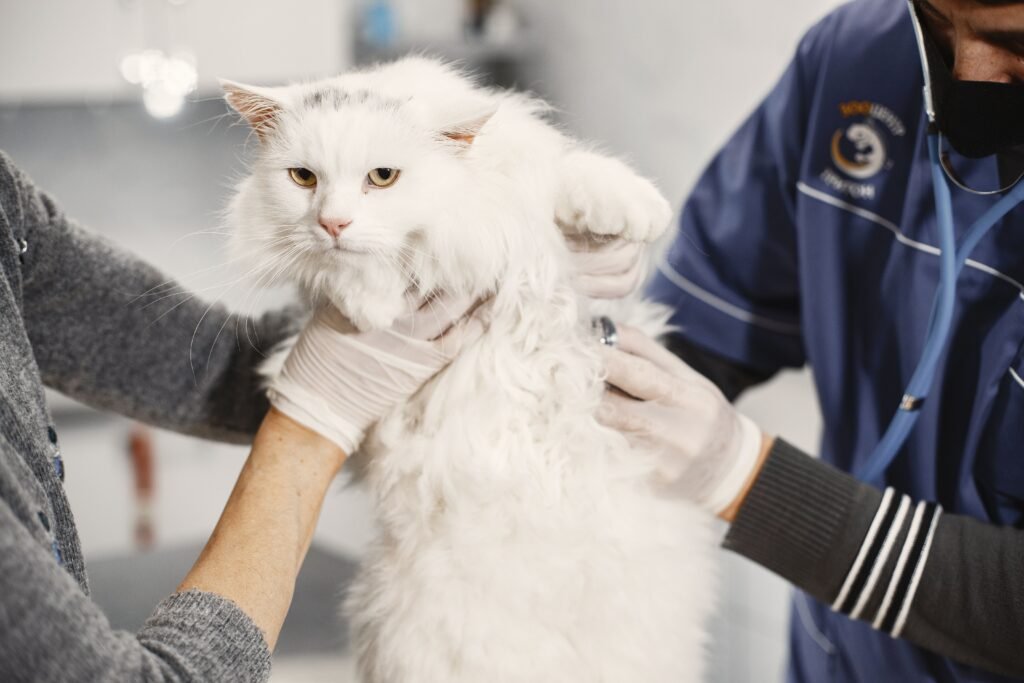
Asthma deserves special attention because some episodes can become serious.
Possible asthma signs include:
- Sudden coughing attacks
- Wheezing
- Difficulty breathing
- Open-mouth breathing
- Blue or grey gums
An asthma attack involving breathing difficulty is an emergency and requires immediate veterinary care.
Never use human inhalers or medications for your cat unless specifically prescribed by a veterinarian.
Chronic Coughing in Cats: What It Can Mean
When feline coughing stops being an occasional event and becomes a recurring part of your cat’s life, vets describe it as chronic coughing. As a rough guide, coughing that keeps returning over weeks — or happens most days — falls into this category.
Chronic coughing in cats is most often linked to long-term airway conditions rather than one-off irritations:
- Feline asthma — the most common cause of a persistent dry cough
- Chronic bronchitis — ongoing inflammation of the bronchial tubes
- Lung parasites or heartworm disease, which can mimic asthma
- Less commonly, tumours or inhaled foreign material
A chronic cough rarely resolves on its own, and it can quietly damage the airways over time if the underlying cause goes untreated. If your cat’s coughing has become a regular feature of daily life, ask your vet about chest X-rays and airway testing — the sooner the cause is identified, the better the chances of keeping your cat comfortable long term.
Cat Coughing Fits: What to Do During One
A coughing fit — a sudden burst of repeated hacking that can last from a few seconds to a couple of minutes — looks dramatic, but most fits pass on their own. Here is what to do while it is happening:
- Stay calm and keep the room quiet — a stressed owner can unsettle the cat further
- Do not hold your cat’s mouth shut or try to ‘help’ the cough out — let the episode run its course
- Watch the breathing: is the mouth closed between coughs? Are the gums pink?
- Time the fit and note anything that came before it — excitement, dust, smoke
- Film it if you safely can — footage of coughing fits is gold for your vet
Offer water and a calm place to rest once the coughing stops. Call your vet promptly if fits are becoming more frequent or lasting longer, or if any fit involves open-mouth breathing, blue or grey gums, or collapse — those are emergencies, not wait-and-see moments.
When Is Cat Coughing an Emergency?
Not every cough requires emergency care, but some warning signs should never be ignored.
Seek urgent veterinary help if your cat has:
- Open-mouth breathing
- Severe breathing effort
- Blue or grey gums
- Coughing blood
- Collapse
- Extreme weakness
Contact a veterinarian soon if:
- Coughing continues for several days
- Episodes keep returning
- Your cat loses weight
- Appetite decreases
- Wheezing develops
Acting quickly can stop some respiratory problems from getting worse.
How Veterinarians Diagnose a Coughing Cat
A veterinarian will first look at your cat’s history and perform a physical examination.
They may ask:
- When did coughing begin?
- How often does it happen?
- Is it getting worse?
- Are there environmental triggers?
- Is your cat indoor-only or outdoor?
Possible tests include:
- Chest X-rays
- Blood tests
- Parasite testing
- Airway examination
- Additional respiratory testing when needed
The goal is not just stopping the cough but finding the reason behind it.

Treatment Options for a Coughing Cat
Treatment depends on the underlying cause.
| Cause | Possible Treatment Approach |
|---|---|
| Asthma | Airway management and prescribed medication |
| Infection | Treatment based on diagnosis |
| Parasites | Parasite-specific medication |
| Irritation | Removing triggers |
| Foreign object | Removal if necessary |
There is no universal cough medicine for a coughing cat because coughing is a symptom, not a single disease.
What You Can Do at Home
While waiting for veterinary advice, you can support your coughing cat by:
- Removing smoke exposure
- Avoiding strong fragrances
- Keeping the environment clean
- Reducing dust
- Providing fresh water
- Keeping your cat calm
A humidifier may help a coughing cat with airway irritation, but it should not replace veterinary care when coughing continues.
Common Mistakes Cat Owners Make
Assuming Every Cough Is a Hairball
Many cats cough without producing a hairball. Treating every episode as a grooming problem can delay proper care.
Giving Human Medicine
Human cough medicines may be unsafe for cats.
Ignoring Repeated Coughing
A cat that coughs regularly should be evaluated rather than simply monitored forever.
Using Strong Household Fragrances
Perfumes, sprays, and smoke can irritate sensitive airways.
Myth vs Fact
| Myth | Fact |
|---|---|
| Cats only cough because of hairballs | Cats can cough because of airway and lung problems |
| A normal-looking cat cannot be sick | Cats often hide symptoms |
| All coughs need the same treatment | Treatment depends on the cause |
| Indoor cats cannot develop asthma | Indoor cats can still have respiratory issues |
What to Do Right Now If Your Cat Is Coughing
If your cat is coughing right now, stay calm and check the breathing first. If the mouth stays closed and the coughing stops within a minute, monitor closely and note what happened. If your cat breathes with its mouth open, struggles for air, or has pale or blue gums, treat it as an emergency and get to a vet immediately. A short phone video of the episode helps your vet tell coughing apart from retching or reverse sneezing.
Key Takeaways
- Repeated coughing, wheezing or laboured breathing needs a vet visit.
- Asthma narrows the airways. Dust, smoke and sprays can trigger it.
- Open-mouth breathing, blue gums or collapse is an emergency.
- Note the sound, frequency and triggers, and film an episode.
Frequently Asked Questions
Why is my cat coughing but no hairball comes out?
Repeated coughing without a hairball may indicate airway irritation, asthma, infection, or another respiratory problem.
Is it normal for cats to cough?
Occasional coughing may happen, but frequent coughing is not considered normal for most cats.
What does a cat asthma cough sound like?
Asthma coughing is often dry and repetitive. Some cats may also wheeze or show breathing difficulty.
Can dusty litter make my cat cough?
Yes. Dust particles from litter can irritate some cats’ airways.
Why does my cat cough after playing?
Exercise can sometimes trigger coughing in cats with airway inflammation, including asthma.
Can indoor cats get asthma?
Yes. Indoor cats can still develop asthma due to airway inflammation and environmental triggers.
Should I record my cat coughing?
Yes. A video can help a veterinarian distinguish coughing from gagging or hairball behavior.
How many times coughing is too much for a cat?
There is no exact number that applies to every cat, but repeated or increasing coughing should be discussed with a veterinarian.
Can a cat cough go away on its own?
A mild cough caused by temporary irritation may improve, but ongoing coughing requires evaluation.
When should I worry about my cat coughing?
Worry when coughing is frequent, worsening, or combined with breathing problems, weakness, appetite changes, or abnormal behavior.
My cat is coughing right now — should I go to the emergency vet?
If your cat is breathing with its mouth open, has blue or grey gums, or is struggling to breathe, go to the emergency vet immediately. If the coughing stops and your cat breathes normally afterward, monitor closely and call your regular vet in the morning.
How do I give my cat an inhaler?
Your vet may prescribe inhaled medicine with a spacer chamber and mask made for cats. Follow your vet’s instructions for each dose, and pair each session with a treat so your cat accepts the mask.
How much does a vet visit for cat coughing cost?
Vet costs vary widely by clinic and region. Call your clinic for an estimate before you go, and bring notes on frequency and triggers to avoid repeat visits.
Can a humidifier help my coughing cat?
A cool-mist humidifier in your cat’s favourite room can ease mild airway irritation from dry air. Keep it clean to prevent mould. It helps with symptoms but does not treat the underlying cause — see a vet if coughing persists.
My cat coughs once a day — should I be worried?
A single brief cough once a day is often just minor airway irritation, especially if your cat is otherwise healthy and the cough is not getting more frequent. Start a simple cough diary noting the time and any triggers. If the once-a-day cough persists for more than a week or two, becomes more frequent, or is joined by wheezing or laboured breathing, book a vet check.
Is my cat wheezing or coughing?
A cough is a forceful burst of air with a hacking motion, while a wheeze is a high-pitched whistling sound your cat makes while breathing in or out. The two often occur together in asthma or bronchitis — a pattern vets call a wheezing cough. A phone recording of the sound will help your vet tell them apart.
Why does my cat keep having coughing fits?
Recurring coughing fits are often caused by feline asthma, chronic bronchitis, respiratory infections, or airway irritants such as dust and smoke. During a fit, stay calm, let it pass, and check that your cat’s mouth stays closed and gums stay pink between coughs. If fits are becoming more frequent or longer, or breathing looks laboured, see your vet promptly.
Why does my cat cough like something is stuck in its throat?
That ‘stuck’ feeling can sometimes be reverse sneezing rather than a true cough — a loud snorting or honking sound cats make while rapidly pulling air inward to clear irritants from the nose or throat. It can look like choking but usually passes in seconds. A wet, congested cough can sound similar. See your vet promptly if episodes repeat, or if your cat gags, paws at its mouth, drools, or struggles to swallow.
Can my other cats catch my cat’s cough?
It depends on the cause. Respiratory infections such as feline herpesvirus or calicivirus are highly contagious between cats, while asthma, allergies, and airway irritants are not. Until your vet identifies the cause, keep a coughing cat separated from other cats and wash your hands after handling them.
Final Thoughts
A coughing cat should not automatically cause panic, but repeated coughing deserves attention. The biggest challenge for owners is identifying whether they are seeing a true cough, a hairball attempt, or another type of breathing problem.
Pay attention to the sound, frequency, triggers, and any changes in your coughing cat’s behaviour. Recording episodes, reducing irritants, and seeking veterinary advice when needed can help your cat receive the right care sooner.
A cough is a symptom, not a diagnosis. Finding the reason behind it is the key to helping your cat breathe comfortably again.
Photo Credits
Featured image: white and brown cat with its mouth wide open — photo by Marlon Soares via Unsplash. Body images: tabby cat portrait by FOX via Pexels (free licence); grooming tabby cat by Benjamin Farren via Pexels (free
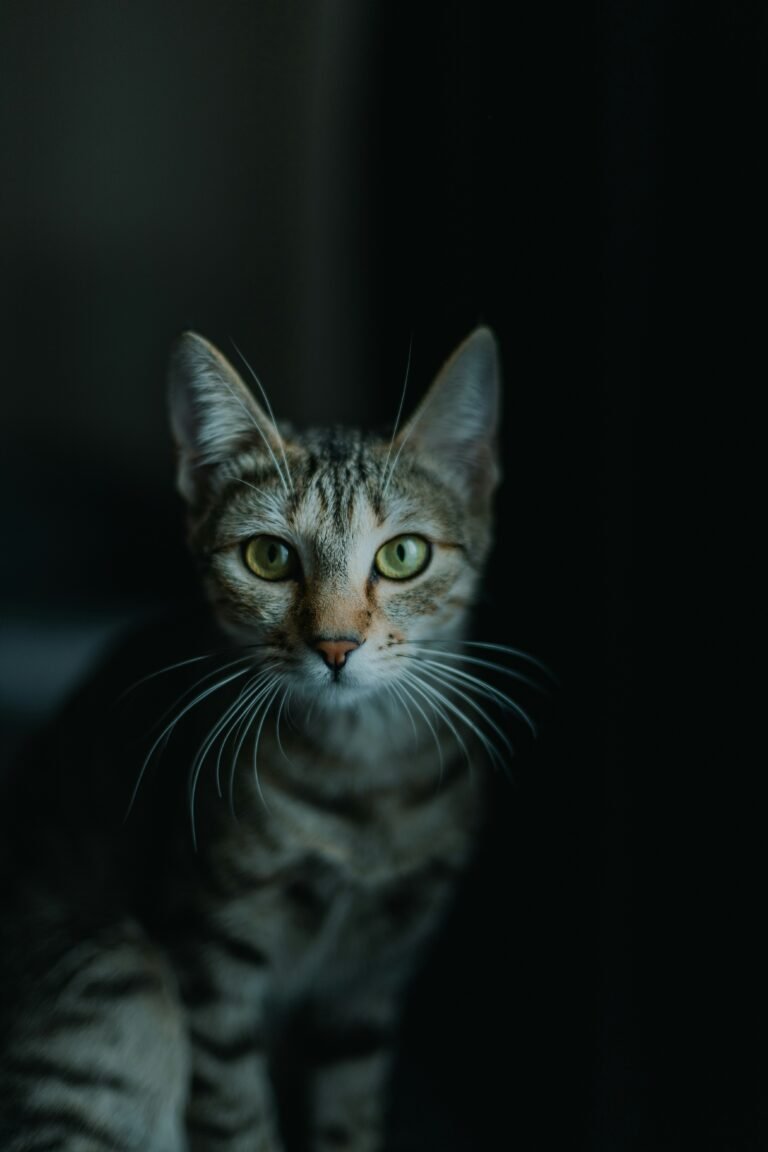
Tabby with green eyes: photo by FOX via Pexels (free licence).
Grooming tabby: photo by Benjamin Farren via Pexels (free licence).
Vet with white cat: photo by Gustavo Fring via Pexels (free licence).
Vet with stethoscope: photo by Sueda Guzeldere via Pexels (free licence).
Hand petting calico: photo by Nothing Ahead via Pexels (free licence).



3 Comments