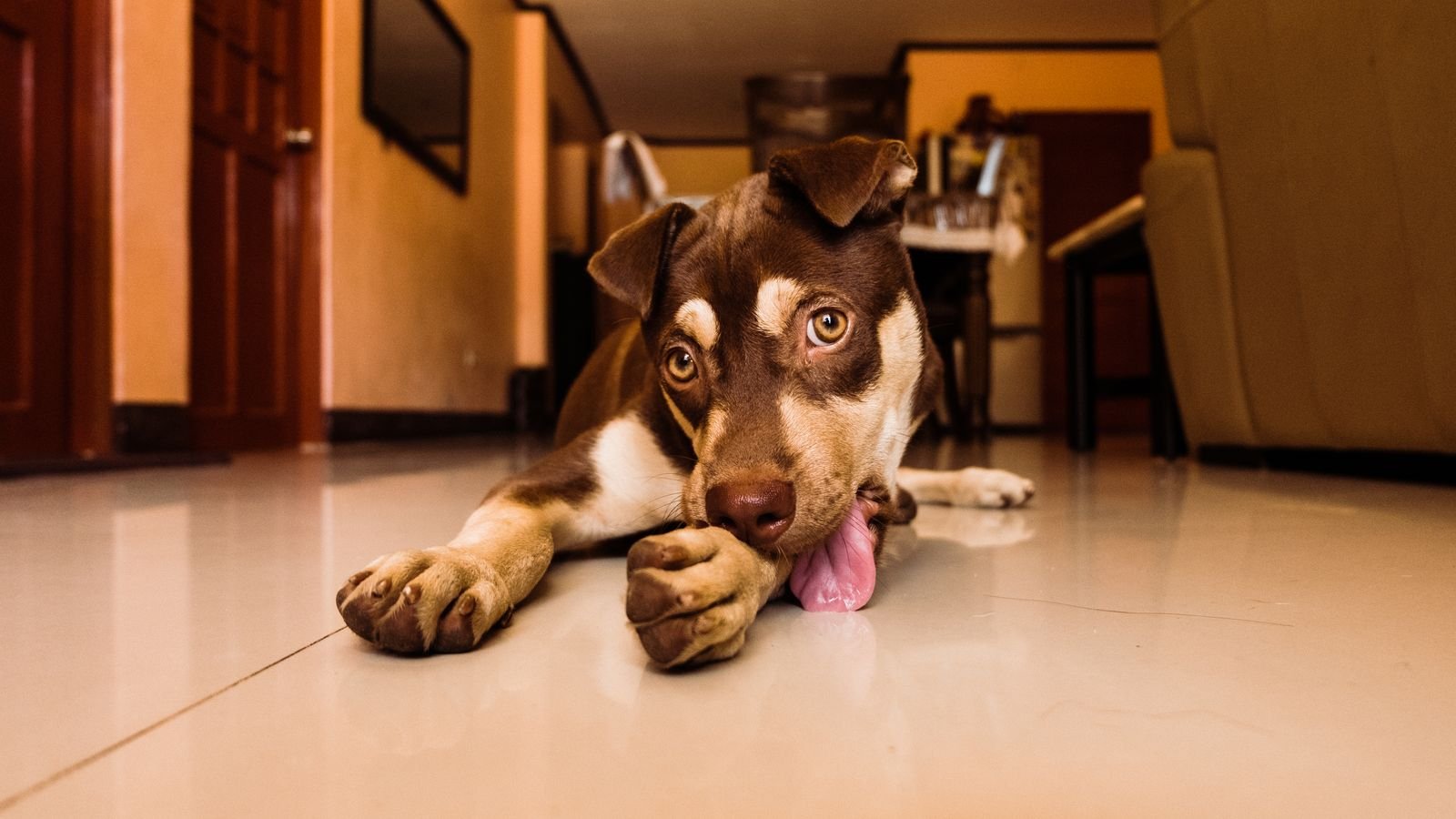
Why Does My Dog Keep Licking His Paws? Causes & Fixes
Why does my dog keep licking his paws? One paw vs all paws, a 2-minute home paw check, what helps tonight, and the signs that need a vet.
A quick paw lick after a walk is normal grooming. But when your dog licks and licks — at night, after every walk, until the fur turns rusty — something is driving it.
If you keep wondering why your dog keeps licking his paws, this guide starts with the one question that narrows it down — one paw or all paws? — then a 2-minute home check, what helps tonight, and the signs that need a vet.
Quick Answer: Why Does My Dog Keep Licking His Paws?
One paw usually means a local problem: an injury, a thorn or grass seed, or a sore spot. All four paws usually means allergies, skin infection, or parasites. If it keeps going, or the skin is red, swollen, or broken, see your vet.
One Paw or All Paws? Start Here
| Pattern | Most likely causes | First step |
|---|---|---|
| One paw, sudden start | Cut, thorn, grass seed, cracked pad | Paw check below |
| One paw, same spot again | Local infection, sore joint, lick granuloma | Vet — closer look needed |
| All paws, spring/fall | Environmental allergies (atopy) | Vet for allergy testing |
| All paws + itchy ears, belly | Allergies, food, or parasites | Vet — skin tests, diet trial |
| Mostly at night / alone | Itch worse at rest; boredom, anxiety | Note when it happens |
| Senior dog, one leg joint | Pain — arthritis is common | Vet for a pain check |
The 2-Minute Paw Check
Do this while your dog is calm. A treat helps.
- Look between the toes for redness, swelling, cuts, or anything stuck there.
- Check the pads for cracks or cuts. Press gently; flinching means pain.
- Smell the paw. A yeasty, corn-chip or sour smell suggests yeast or bacteria.
- Look at the fur color. Rusty brown staining usually comes from salivary pigments or yeast overgrowth (VCA).
- Check nails and nail beds for breaks, redness or discharge.
- Compare all four paws: one paw or all? Front or back? Any limping?

If you find a thorn or seed you can remove easily with clean tweezers, do so gently. Anything embedded, bleeding, or painful belongs to the vet.
Common Causes, Explained
Allergies (the big one)
Allergies are the most common reason dogs lick their paws. An estimated 10–15% of dogs have allergic skin disease (atopy). Signs typically start between 6 months and 3 years of age, and the condition is lifelong — managed, not cured (Cornell). Paws are a classic target, often with itchy ears, belly and armpits, and food allergies can look identical; only a vet-guided elimination diet trial separates the two. Labradors, Golden Retrievers, West Highland White Terriers, Bulldogs, Boxers, and Shih Tzus are more prone to it.
Yeast and bacterial infection
Constant licking keeps the skin between the toes warm and moist — perfect for yeast and bacteria. The skin looks red or dark and feels greasy, with a musty smell, and the fur may turn brown or red. Yeast often grows after allergies or damp paws, and returns if the allergy stays untreated (VCA).
How to tell if it is yeast
No single sign proves yeast, but this combination is a strong clue:
- Red or reddish-brown skin between the toes
- Greasy-feeling skin, or fur that looks damp and stained
- A musty smell, often described as smelling like corn chips
- Brown discharge, or brown staining on the fur
- Hair loss or thinning where the licking is worst
If most of these fit, tell your vet. Only a skin sample under a microscope can confirm yeast.

Injury and foreign bodies
Grass seeds, thorns, small cuts, cracked pads, and stings are the usual one-paw culprits, especially after a walk. Check the nails too: a broken or ingrown nail, or a nail-bed infection, can hurt with every step.
Sometimes you check the paw and find nothing, yet the dog keeps licking it. A grass seed or splinter can sit deep under the skin, an infection can start below the surface, and joint pain can make a dog lick the paw nearest the sore joint. Habit can do it too. That is why a vet looks deeper than the surface, even when the paw looks fine.
Interdigital cysts (a lump between the toes)
An interdigital cyst is a painful, inflamed bump between the toes, sometimes called a furuncle. The dog licks one spot because it hurts, and the licking makes it worse. Allergy is the most common cause. Do not squeeze it — it needs a vet (VCA).
Parasites
Mange mites and fleas can drive intense itching, including on the paws. Keep parasite prevention up to date. If the itching is severe and you cannot see a cause, ask your vet to check for mites.
Pain
Dogs lick sore joints. A senior dog focused on one wrist or hock may be telling you about arthritis, and an old injury can ache in cold or wet weather. Watch for limping, stiffness after rest, or a dog that avoids stairs.
Boredom, anxiety and habit
Some dogs lick to self-soothe, and over time it can become compulsive. Behavior is usually considered only after medical causes are ruled out. More play, training, and puzzle toys help, but they will not fix an allergy or an infection.
Lick granuloma (when licking becomes the disease)
A lick granuloma, also called acral lick dermatitis, is a raised, hairless sore a dog creates by licking the same spot over and over, usually on the front wrist or leg. The licking starts for one reason — an itch, a sore spot, or stress — and then becomes the disease itself. It needs a vet, because the sore cannot heal while the dog can still reach it (VCA).
Spot the Pattern: Keep a Simple Symptom Diary
Keeping notes can save months of guessing. Jot down:
- Date and time (after walks? at night? after meals?)
- Which paws, and any smell, redness or staining
- Weather, season, and where you walked
- Food, treats, and new products
- Other itch: ears, belly, face rubbing, scooting
Seasonal patterns point to environmental allergy; year-round itch points more to food, parasites, or habit.
After walks, pollen, grass, salt, and cleaning chemicals can irritate paws. If the licking eases once you are home, the trigger was probably on the ground. After eating, licking within a few hours of a meal, or after a new food, may point to a food allergy: note it in your diary and ask your vet about a diet trial. Licking that flares in spring or summer and eases in winter points to pollen.

Why Does My Dog Lick His Paws at Night?
Night licking is common for two reasons: there are fewer distractions, so the itch gets full attention, and licking soothes an anxious dog. A dog that licks at night and pants may be in pain or anxious — that is worth a vet visit. If your dog also pants a lot at night, read our guide to dog panting at night. A walk, a chew, or a short training session before bed can help a dog settle.
What Helps at Home Tonight
If you want something safe to try tonight, these steps are simple, and they buy time while you work out the cause.
- Wash and dry paws after walks — plain water, then dry well, including between the toes.
- Keep paws dry after rain, baths and swims.
- Use a cone or booties short-term if your dog is creating a raw spot.
- Give them more to do: exercise, sniffy walks, and chew toys reduce boredom licking.
- Check parasite prevention is up to date.
Do not put undiluted vinegar on raw or broken skin. It stings and can make irritation or infection worse, and there is little evidence it clears skin infections — plain water is the safer default. Do not use human creams, antiseptics, or essential oils unless your vet tells you to; many are unsafe if licked.
What about medicine?
Antihistamines are sometimes used for itchy dogs, but they do not cure an infection, fix a wound, or help every dog. Whether one suits your dog depends on their weight and health, and some products contain other ingredients that are unsafe for dogs, so ask your vet first. Vets have stronger options for itch, including prescription anti-itch medicines and corticosteroids, plus antifungals and antibiotics when infection is part of the problem.
When to See a Vet
Call your vet if you see any of these. Do not wait for them to get worse.
- Licking that creates redness, hair loss, sores or a smell.
- One paw with limping, swelling, bleeding, or something embedded.
- Ear scratching, belly itch, or recurring ear infections — allergies often affect the ears too (see why dogs keep shaking their heads).
- A senior dog licking one joint.
- Home steps have not helped, or the licking keeps coming back.
What Will the Vet Do?
At the vet, expect a skin and paw exam, plus simple tests: cytology (a tape or swab sample checked under a microscope), skin scrapings, and allergy testing when the cause is unclear. Your vet will also ask when the licking started and which paws are affected. PetMD likewise advises working with your vet to find the cause, and lists injuries, allergies, parasites, arthritis, and behavior as the common reasons (PetMD).
Treatment depends on the cause:
- Allergy: anti-itch medicine, medicated shampoo, allergy testing, immunotherapy, or a diet trial.
- Yeast or bacteria: antifungal or antibiotic treatment, often with a medicated shampoo.
- Injury, cyst, or nail problem: treat the sore spot and remove the cause.
- Pain: pain relief for the joint or injury behind it.
- Boredom or anxiety: behavior changes, more exercise, and sometimes anti-anxiety medicine.
The first visit is often about finding the cause.

How to Prevent Paw Licking
Most prevention is routine. A few minutes after walks does more than any single product.
- Use paw balm or booties in cold, salty weather.
- Trim nails regularly; keep fur between the toes short.
- Keep parasite prevention going all year.
- Check paws weekly, so a sore spot is caught early.
Key Takeaways
- A single paw points to something local, like an injury or a thorn; licking all four paws points more to allergy, infection, or parasites.
- Rusty-brown staining on the fur is a sign the licking has been happening for some time (VCA).
- Do not work out antihistamine doses yourself — leave that decision to your vet.
- The licking only stops for good when its cause is treated; soothing the lick by itself is not enough.
FAQs
Can I give my dog Benadryl for paw licking?
Only if your vet advises it. Your vet will decide whether an antihistamine suits your dog’s weight and health, so ask your vet first. Antihistamines will not fix an infection or a wound, and they do not help every dog.
What home remedy stops paw licking?
See the wash-and-dry routine in What Helps at Home Tonight. It helps in the short term, and exercise and chew toys can help if boredom is part of the problem. But a home remedy only helps if the cause is mild. If the licking continues, see your vet.
Why are my dog’s paws turning brown?
There is usually reddish brown staining of the fur from either salivary pigments or yeast overgrowth. It is a sign the licking has been happening for a while, not a problem on its own. Find the cause and the staining stops spreading.
Why does my dog lick only one paw?
One-paw licking usually has a local cause: a cut, thorn, grass seed, cracked pad, infection, or sore joint. Check the paw closely. If you find nothing and the licking continues, ask your vet.
Is paw licking a sign of anxiety?
It can be, but allergies, infection, pain, and parasites are more common causes.
How can I tell if it is a yeast infection?
Yeast often shows as reddened skin between the toes, a greasy or damp feel, a musty, corn-chip-like smell, brown discharge or staining, and thinning fur where the licking is worst. No single clue is proof on its own, so ask your vet to check a skin sample under a microscope.
When should I worry about my dog licking his paws?
Worry if the skin is bleeding, oozing, swollen, or smelly, if your dog limps or cries when you touch the paw, or if the licking lasts more than a few days or keeps coming back. See a vet promptly.
What will the vet actually do or prescribe?
The vet will examine the paws and may take a skin scraping, swab, or tape sample to check for yeast and bacteria. Treatment depends on the cause: anti-itch medicine, antifungals, antibiotics, allergy testing, or a diet trial.
Sources
These are the sources used to check this guide:
- VCA Animal Hospitals — Pododermatitis in Dogs
- VCA Animal Hospitals — Yeast Dermatitis in Dogs
- VCA Animal Hospitals — Interdigital Cysts in Dogs
- VCA Animal Hospitals — Lick Granuloma in Dogs
- Cornell University College of Veterinary Medicine — Atopic Dermatitis (Atopy)
- PetMD — Why Do Dogs Lick and Chew Their Paws?
Photo Credits
Featured photo: Jayson Lorenzo via Pexels. Paw pads photo: Su La Pyae via Pexels. Vet photo: Tima Miroshnichenko via Pexels.
Other images created for PetCavo.