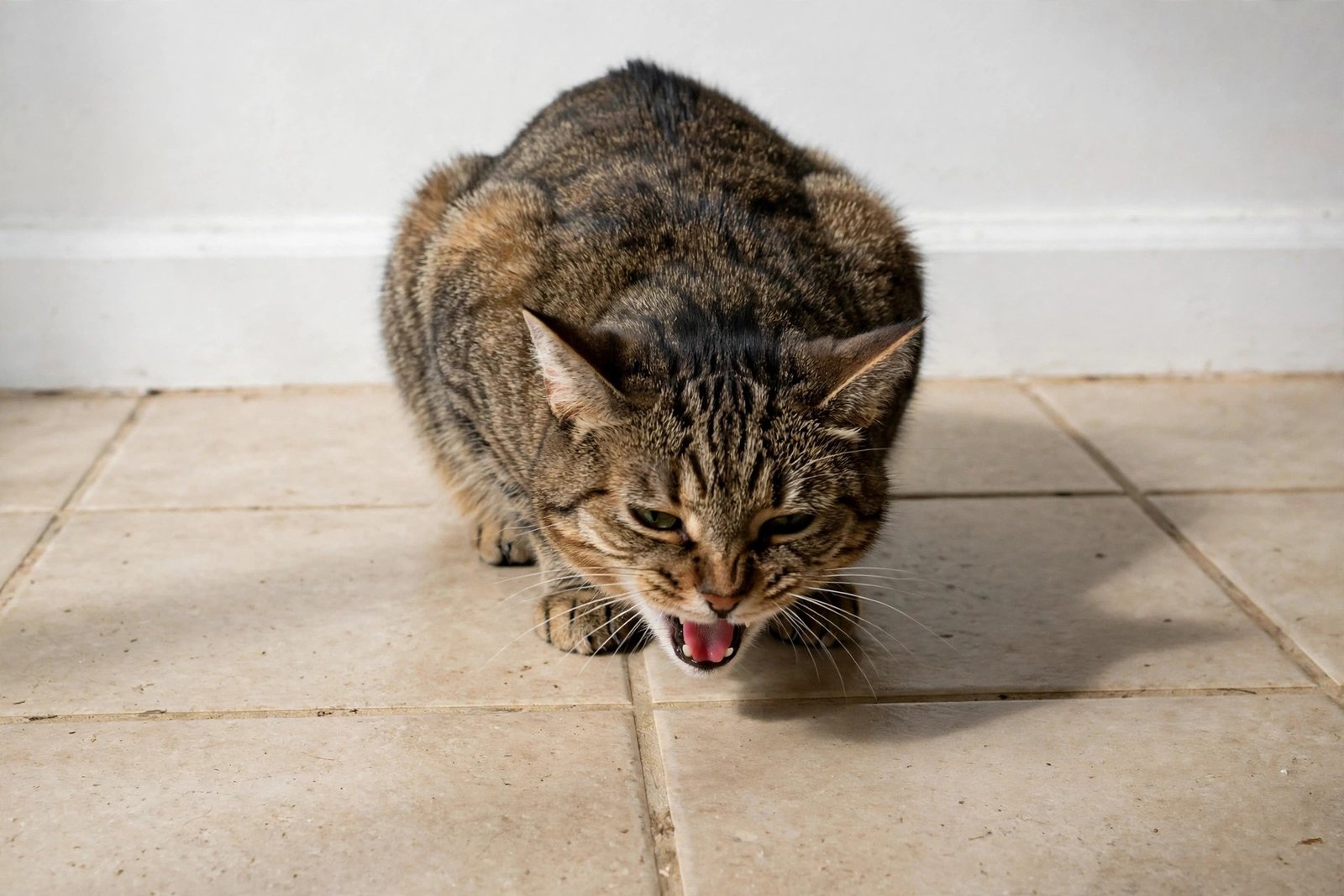
Why Does My Cat Keep Throwing Up? Causes & When to Worry
Why does my cat keep throwing up? What each vomit color means, how often is too often, safe home care steps, and the signs that need a vet fast.
Almost every cat owner knows that sound: the retching, the crouch, then a puddle on the floor. One vomit is usually nothing. But when your cat keeps throwing up — again and again over the weeks, or several times in a day — it stops being “just a hairball” and needs an answer.
This guide covers what the color and timing of vomit can tell you, how often is too often, what you can safely do at home, and the signs that mean vet — today.
Have a dog with the same problem? Our guide to why dogs keep throwing up covers the dog side.
Quick Answer: Why Does My Cat Keep Throwing Up?
Common causes include eating too fast, hairballs, a food change or intolerance, parasites, and illnesses such as kidney or thyroid disease. A single vomit from a cat that is otherwise bright and well is rarely an emergency; repeated vomiting, blood, or a cat that cannot keep water down needs a vet the same day. Start with the pattern: how often it happens, what the vomit looks like, and whether your cat is otherwise well.
Red Flags: Call the Vet Now
- Blood in the vomit, or vomit that looks like coffee grounds or is black.
- String, thread, or ribbon hanging from the mouth.
- Lilies or another toxin your cat may have eaten.
- Dry heaving — retching with nothing coming up.
- Your cat cannot keep water down.
- Lethargy, hiding, or weakness.
- Not eating for more than 24 hours.
Vomiting, Regurgitation or a Hairball? Know the Difference
They look similar but mean different things (VCA Animal Hospitals):
- Vomiting is active: your cat retches, the belly heaves, and partly digested food comes up.
- Regurgitation is passive: undigested food comes up almost effortlessly, often right after eating, with no retching. It points to the esophagus (food pipe), not the stomach.
- Hairball gagging is retching and coughing that ends with a tubular clump of fur — or nothing at all.
Nausea often shows first: lip-licking, drooling, restlessness, crouching low, or sudden meowing. Coughing is often mistaken for vomiting, but a cough usually has no retching and brings nothing up. If you are unsure what you saw, film it — a short video helps your vet more than any description.
Acute or Chronic? Why the Work-Up Differs
Vomiting several times in a day is acute. Vomiting that keeps coming back week after week is chronic, even if your cat seems fine between episodes. Acute vomiting usually points toward something swallowed, a toxin, or a sudden infection; chronic vomiting usually needs blood work, imaging, and a diet trial.
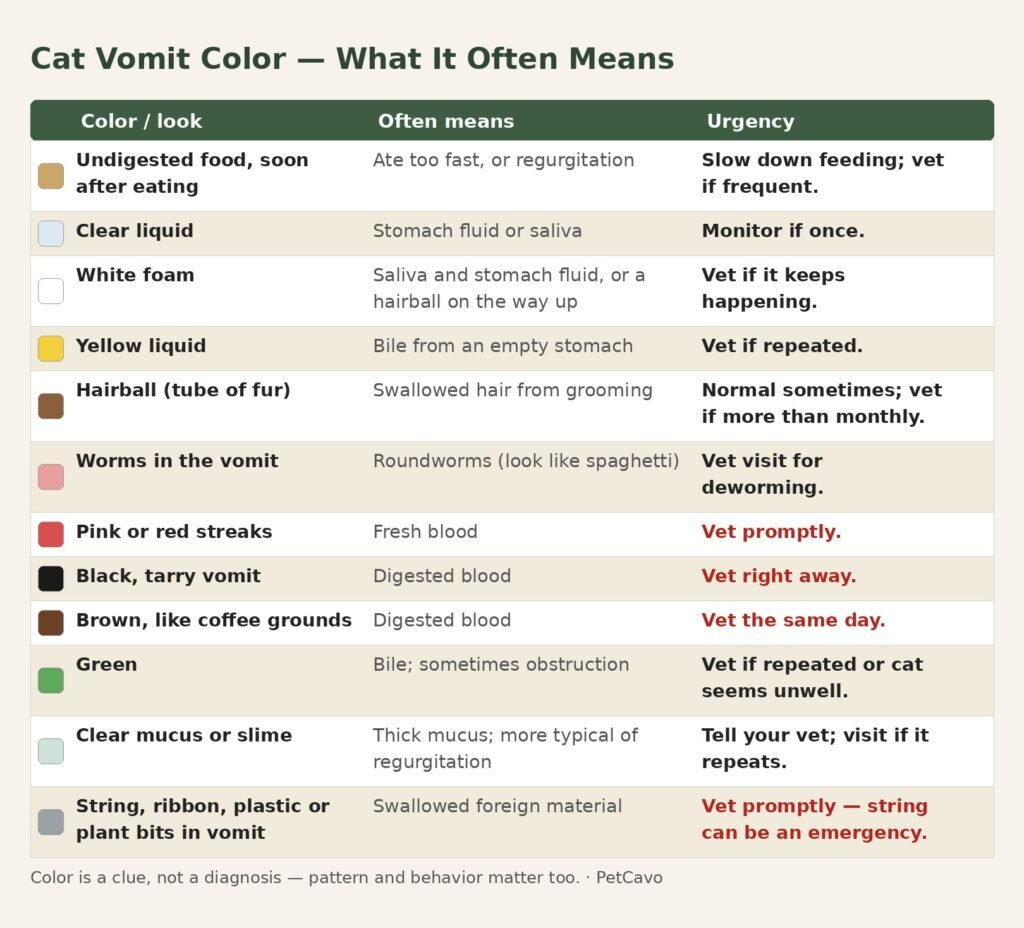
What the Color of Vomit Tells You
| Color / look | Often means | Urgency |
|---|---|---|
| Undigested food, soon after eating | Ate too fast, or regurgitation | Slow down feeding; vet if frequent. |
| Clear liquid | Stomach fluid or saliva | Monitor if once. |
| White foam | Saliva and stomach fluid, or a hairball on the way up | Vet if it keeps happening. |
| Yellow liquid | Bile from an empty stomach | Vet if repeated. |
| Hairball (tube of fur) | Swallowed hair from grooming | Normal sometimes; vet if more than monthly. |
| Worms in the vomit | Roundworms (look like spaghetti) | Vet visit for deworming. |
| Pink or red streaks | Fresh blood | Vet promptly. |
| Black, tarry vomit | Digested blood | Vet right away. |
| Brown, like coffee grounds | Digested blood | Vet the same day. |
| Green | Bile; sometimes obstruction | Vet if repeated or cat seems unwell. |
| Clear mucus or slime | Thick mucus; more typical of regurgitation | Tell your vet; visit if it repeats. |
| String, ribbon, plastic or plant bits in vomit | Swallowed foreign material | Vet promptly — string can be an emergency. |
Color meanings summarized from PetMD’s cat vomiting guide.
How Often Is Too Often?
Sources give slightly different lines, so here they are side by side:
- Cornell Feline Health Center: vomiting more than once a week is not normal and should be checked.
- VCA Animal Hospitals: if your cat otherwise seems well, but continues to vomit for more than one to two days, seek veterinary care.
- PetMD: more than twice in 24 hours, or 1–2 times a week for several weeks, needs veterinary attention.
A one-off vomit from a cat that is still eating and otherwise well can simply be watched at home. Vomiting that settles into a weekly pattern, repeats within a day, or comes with other signs should be checked.
Common Causes of Repeated Vomiting
Eating too fast
Cats that bolt their food often bring it straight back up, undigested. Smaller, more frequent meals and a slow-feeder bowl usually fix this.
Hairballs
Cats swallow hair as they groom, and long-haired cats swallow more. Occasional hairballs are expected, but if they are coming up more often than about once a month, it can signal over-grooming, skin problems or gut issues. Regular brushing helps; our guide to how a cat’s tongue works explains why so much hair gets swallowed.

Food change or intolerance
A sudden new food, rich treats, or an ingredient your cat does not tolerate can trigger vomiting. Change foods gradually.
Food allergy: a true food allergy is uncommon, affecting about 1% of cats according to PetMD, and is an immune reaction to a protein the cat has eaten before, most often beef, fish or chicken. It often causes itchy skin as well as vomiting, and is confirmed with a strict hypoallergenic diet trial run with your vet, with no other foods or treats.
Parasites
Roundworms and other intestinal parasites are a common cause, especially in kittens and outdoor cats — keep worming up to date.
Foreign objects — especially string
String, ribbon, yarn and tinsel are dangerous: one end can anchor while the gut bunches up along it (a linear foreign body). Never pull string hanging from the mouth or rear — get to a vet.
Toxins and plants
True lilies are toxic and can cause kidney failure (ASPCA). If your cat may have touched a lily, call a vet immediately — do not wait for symptoms. If you think your cat has swallowed something toxic, call the ASPCA Animal Poison Control Center on (888) 426-4435, which is open 24 hours a day. A consultation fee may apply.
Internal disease
Kidney disease, an overactive thyroid, diabetes, pancreatitis and inflammatory bowel disease can all cause repeated vomiting, often with weight loss, appetite changes or increased thirst. Only blood tests can find them.
Inflammatory bowel disease (IBD): in IBD the gut wall becomes chronically inflamed and thickened, which disrupts digestion and the absorption of nutrients.
Do indoor cats throw up too?
Yes — hairballs, fast eating, and food intolerance do not need a backyard. Going outside adds parasites and toxins to the list, but the most common causes are the same.
What to Do at Home: Step by Step
- Check the whole cat first: bright, breathing normally, and interested in you — or hiding, drooling, crying, or unable to settle? A cat that is weak, wobbly or not responding needs a vet right away.
- Take a photo of the vomit before cleaning up — color and contents help your vet.
- Offer water in small amounts. Once vomiting has stopped for an hour or two, offer a few laps of water or an ice cube. If it stays down, offer a little more. Keep food away while the stomach settles, but do not fast a cat for a full day without vet advice. If your cat cannot keep water down, call the vet.
- Feed small and bland. Wait a few hours after the water stays down, then offer a tablespoon or two of plain cooked chicken with no skin, bones, or seasoning, or a veterinary gastrointestinal diet. PetMD describes bland diets as easy-to-eat foods for cats with digestive upset, typically commercial diets formulated to aid in digestive health. Plain cooked chicken is one simple home-cooked option, not the definition of a bland diet.
- Build back up slowly. If the small meals stay down, feed a little more every few hours and return to normal portions over a day or two.
- Start a vomit diary. Date, time, what came up, what and when your cat last ate, and how your cat acted before and after. Two weeks of notes saves a lot of guesswork.
Check for dehydration. Try the skin-pinch test that PetMD describes. Gently lift the skin over your cat’s shoulder blades and let go. In a hydrated cat it quickly snaps back into position, while skin that slowly settles back instead of snapping may be a sign of dehydration. Dry or tacky gums are another sign. The test only works well in young, healthy cats with elastic skin and is less useful in older cats or cats with chronic illness, so have your vet confirm dehydration. (PetMD)
Do not give human stomach medicines unless your vet directs it (PetMD).
Pepto-Bismol (bismuth subsalicylate) is toxic to cats because it contains salicylate, a substance similar to aspirin (PetMD).
When to See a Vet — and When It Is an Emergency
Any red flag above means same-day care:
- Same day: vomiting several times in a few hours, belly pain, crying, or collapse.
- Within 24 hours: your cat is eating or drinking less, or is a kitten or a senior.
- Same week: vomiting keeps coming back, hairballs turning up more than monthly, or vomiting with weight loss or more thirst or urination.
After a single vomit, if your cat is eating, drinking, playing and using the litter box again within a few hours, you can usually just watch and wait. A cat that keeps hiding, will not eat or drink, or stays lethargic needs a vet.
Kittens: kittens are more fragile than adult cats and can dehydrate quickly, and parasites are a common cause of vomiting in kittens. For a kitten, do not wait to see whether it passes — call your vet the same day, especially if the kitten is also lethargic, not eating, or has diarrhea.
Senior cats: in older cats, repeated vomiting is more likely to point to an underlying illness such as kidney disease, an overactive thyroid or diabetes, so a new pattern of vomiting in a senior cat deserves a vet visit even if the cat still seems bright. Mention any weight loss, extra thirst or changes in appetite, as these help your vet decide which tests to run first.
What the Vet Will Ask You
Your vet will want the pattern, not just the puddle.
Having these answers ready helps your vet narrow down the cause quickly:
- When it started, and how often it happens
- What was in the vomit, color, undigested food, hair, worms or blood
- Eating and drinking, and any other symptoms
- Recent food changes, medicines, and toxin exposure
- Indoor or outdoor, and whether other cats are ill
What Will the Vet Do?
A visit starts with an exam, then tests are staged — simple first, deeper tests only if the first round does not explain it:
- Blood work and urinalysis — kidney, liver, thyroid, blood sugar.
- Fecal test — parasites and infections.
- X-ray — blockages and foreign objects.
- Ultrasound — stomach and intestines in more detail.
- Endoscopy or biopsy — long-standing cases other tests have not explained.
Treatment depends on the cause: fluids for dehydration, anti-nausea medication, a diet trial with a new or veterinary food, and treatment of the underlying disease, such as kidney or thyroid disease. Bring your vomit diary and photos.

Key Takeaways
- One vomit from a cat that seems well is usually fine — but if the vomiting keeps coming back week after week, book a vet check.
- Color helps: undigested food = too fast; yellow = bile/empty stomach; blood or coffee-grounds = vet today.
- Hairballs that keep recurring more than monthly are worth mentioning to your vet.
- String and lilies are emergencies.
- Never give human stomach medicines to cats.
- A vomit diary with photos helps your vet.
FAQs
Why does my cat keep throwing up but acting normal?
Hairballs, fast eating, or a mild food intolerance come and go, so a cat can seem fine between episodes. Repeated vomiting still deserves a vet visit.
Why does my cat throw up undigested food?
Undigested food usually means eating too fast or regurgitation. Try smaller, more frequent meals and a slow feeder; see a vet if it keeps happening.
What does yellow vomit mean in cats?
Yellow vomit is usually bile from an empty stomach or mild irritation. A single episode in a cat that seems fine in every other way can be watched; repeated yellow vomiting needs a vet.
How many times can a cat throw up before seeing a vet?
There is no safe number. Cornell’s guidance is that vomiting more than weekly needs checking, and more than twice in 24 hours needs a vet.
Are hairballs dangerous?
An occasional hairball is normal, especially in long-haired cats. When they start appearing more than monthly, that is too frequent, so talk to your vet; retching with nothing coming up needs a vet.
What is the most common cause of vomiting in cats?
No single cause is ranked first. Eating too fast, hairballs, food intolerance, parasites, and kidney or thyroid disease are all common.
Does throwing up hurt for cats?
Vomiting is uncomfortable, and repeated retching can be distressing. A cat that vomits often or seems in pain should be seen by a vet.
My cat throws up once a month — is this normal?
Yes, one vomit in a month is usually fine when the cat seems well otherwise, and a hairball is often the cause. If it becomes more frequent, book a vet visit.
What should I feed a cat that is throwing up?
Once vomiting has stopped for a few hours and water stays down, offer a tablespoon or two of plain cooked chicken or a veterinary gastrointestinal diet.
Why do indoor cats throw up?
Indoor cats still vomit from hairballs, eating too fast, and food intolerance. Being indoors only removes outdoor risks such as hunting, parasites, and toxins.
How do I tell if my cat is OK after throwing up?
If your cat settles back to normal within a few hours of throwing up — eating, drinking, playing, and using the litter box — that is a reassuring sign. Call the vet if your cat keeps hiding.
Sources
These are the sources used to check this guide:
- VCA Animal Hospitals — Vomiting in Cats
- Cornell Feline Health Center — Vomiting
- PetMD — Cat Vomiting: Causes, Types, and What to Do
- ASPCA — Toxic and Non-toxic Plants: Lily
- ASPCA Animal Poison Control Center — ASPCA Poison Control
Photo Credits
Grooming photo: Cats Coming via Pexels. Vet photo: Tahir Xəlfəquliyev via Pexels. Color chart: PetCavo.
Featured image: Original image created for PetCavo.