How to Stop a Puppy From Biting: Gentle Methods That Really Work
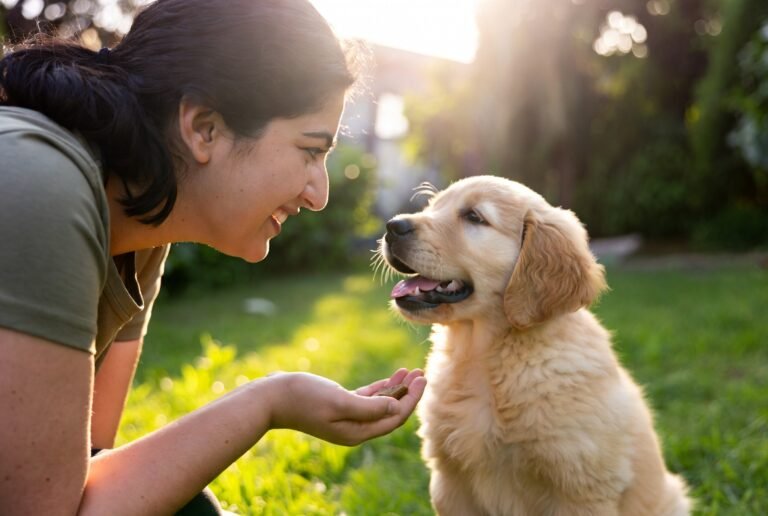
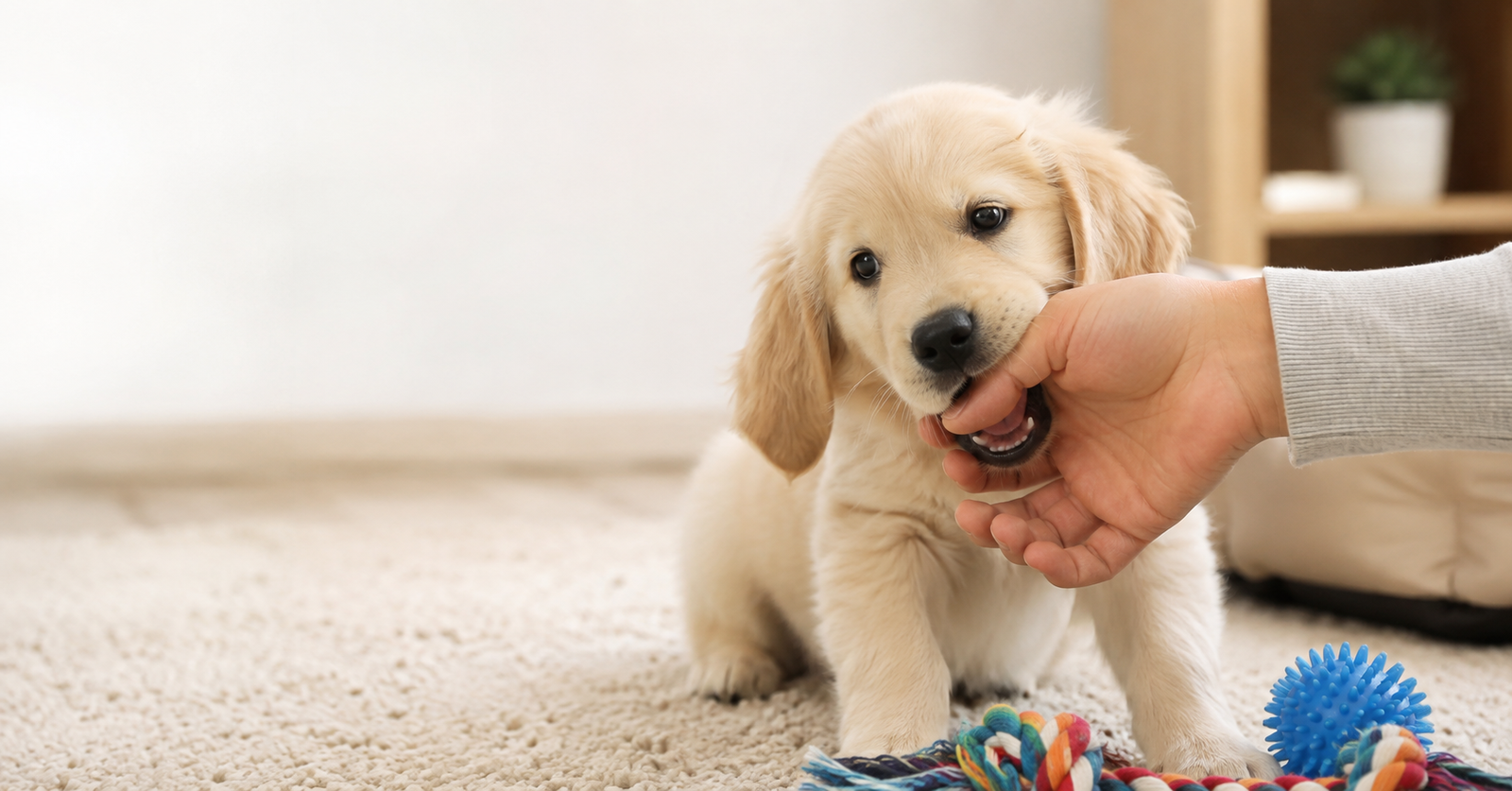
A playful puppy can quickly earn the nickname “little land shark.” One moment they’re happily chasing a toy, and the next they’re attached to your sleeve, shoelaces, or fingers with surprisingly sharp teeth.
If you’re wondering whether this is normal, the answer is almost always yes.
Most puppies bite because they’re learning about the world, practicing social skills, or coping with teething discomfort—not because they’re aggressive. The goal isn’t to stop every bit of mouthing immediately. Instead, it’s to teach your puppy that people are never appropriate chew toys while helping them develop gentle bite control.
With consistency, positive reinforcement, and realistic expectations, most puppies learn this skill successfully.
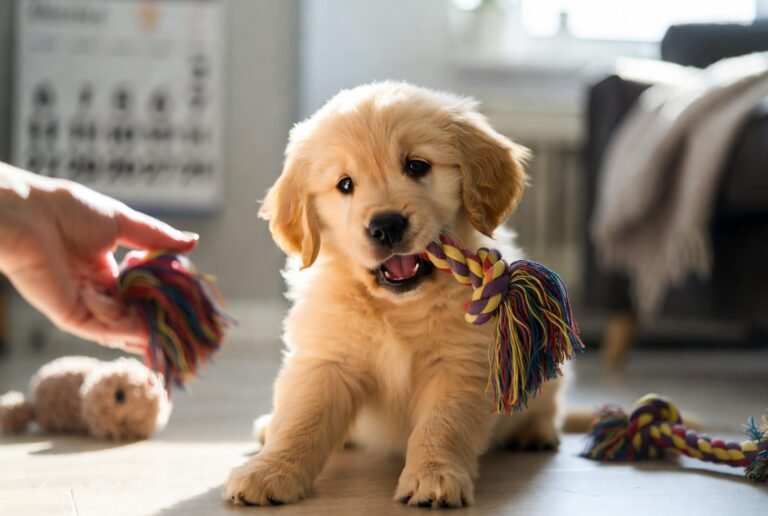
Image Suggestion: Happy Golden Retriever puppy chewing a rubber toy instead of a hand.
How to Stop a Puppy From Biting (Quick Answer)
If you need the short version, here’s what works best:
- Stay calm and avoid punishment.
- End play immediately when teeth touch skin.
- Redirect your puppy to an appropriate chew toy.
- Reward calm, gentle behaviour.
- Support healthy puppy teething with safe chew toys.
- Make sure your puppy gets enough sleep.
- Practice short daily training sessions.
- Stay consistent—most puppies improve as they mature and learn bite inhibition.
Table of Contents
- Why puppies bite
- What is puppy bite inhibition?
- Puppy teething and why biting gets worse
- How to stop a puppy from biting step by step
- Common reasons puppies become extra bitey
- What not to do
- Breed differences
- Bite inhibition vs aggression
- FAQs
Why Do Puppies Bite?
Understanding why puppies bite makes training much easier.
Puppies don’t have hands. They explore, communicate, and play with their mouths.
Most biting is completely normal and happens because your puppy is:
- Playing
- Exploring new objects
- Learning bite pressure
- Going through the puppy chewing phase
- Teething
- Overexcited
- Overtired
- Looking for attention
According to guidance from the American Kennel Club (AKC), play biting and mouthing are normal parts of puppy development and help puppies learn bite inhibition.
A Practical Example
Imagine your 10-week-old Labrador happily chasing a tennis ball.
After a minute, he suddenly grabs your sleeve instead.
He’s not trying to hurt you.
He’s simply treating your arm as another exciting toy because he hasn’t yet learned the difference.
Your training should calmly teach:
Toy = fun continues
Human skin = fun pauses
That simple lesson forms the foundation of positive reinforcement training.
What Is Puppy Bite Inhibition?
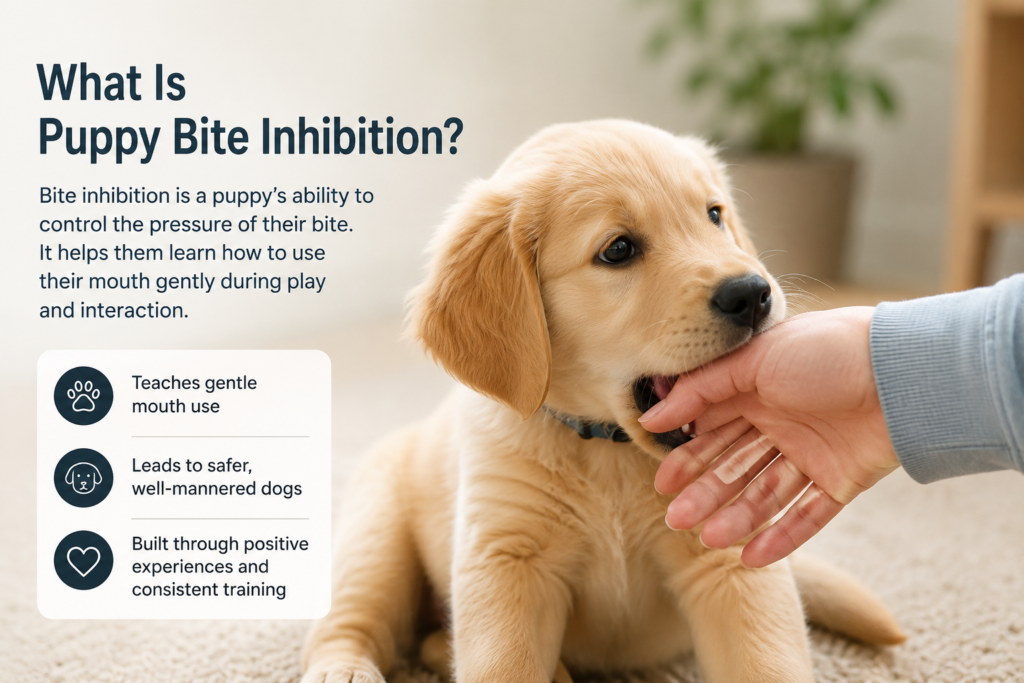
One of the most important concepts in puppy behaviour is puppy bite inhibition.
Bite inhibition means learning how much pressure is acceptable when using the mouth.
Rather than teaching puppies never to mouth anything, they’re taught to control how hard they bite.
This matters because every dog could someday become frightened, startled, or injured. A dog with good bite inhibition is more likely to use a softer mouth than one that never learned pressure control.
How Puppies Learn It Naturally
Long before humans begin training, puppies start learning from:
- Their mother
- Their littermates
- Play sessions with siblings
If one puppy bites too hard:
- the other puppy yelps,
- play immediately stops,
- the lesson is learned.
Your training should copy this natural process rather than punish it.
Bite Inhibition vs Simply Stopping Biting
| Bite Inhibition | Simply Stopping Mouthing |
|---|---|
| Teaches pressure control | Tries to eliminate all mouthing immediately |
| Builds safer adult behaviour | Doesn’t necessarily teach bite control |
| Learned gradually | Often expected too quickly |
| Uses feedback and positive reinforcement | May rely on punishment |
Puppy Teething: Why Biting Suddenly Gets Worse
Many owners think training has failed when biting suddenly increases around four months.
Usually, it’s just puppy teething.
Puppies have 28 baby teeth, which are gradually replaced by 42 adult teeth, typically between 3 and 6 months of age. Sore gums naturally increase chewing and mouthing during this period.
Common Signs of Puppy Teething
- Constant chewing
- Red gums
- Increased drooling
- Preferring cold chew toys
- Suddenly chewing furniture
- Increased puppy mouthing
This stage is temporary, but your puppy needs appropriate outlets.
Choosing the Right Chew Toy
Not every chew toy suits every puppy.
| Toy Type | Why It Helps |
|---|---|
| Rubber chew toys | Durable and satisfy chewing urges |
| Food-stuffed toys | Combine mental stimulation with chewing |
| Puppy teething toys | Designed for sore gums |
| Frozen rubber toys | May soothe teething discomfort |
Always supervise chewing sessions and replace damaged toys before pieces can be swallowed.
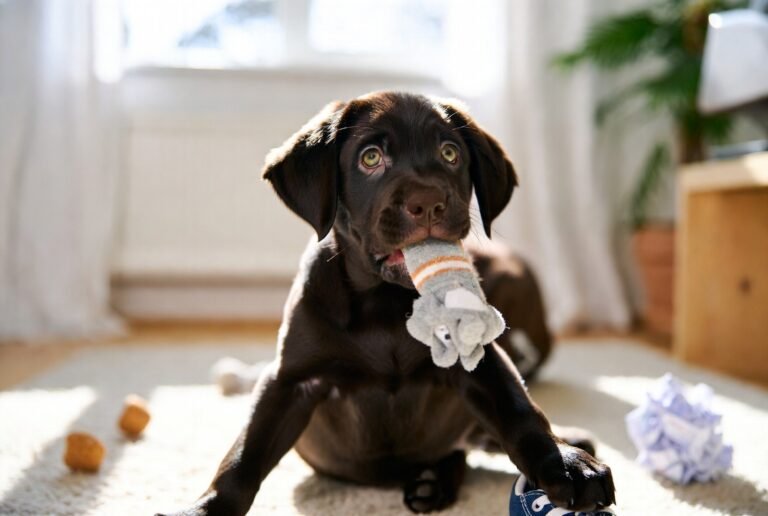
Image Suggestion: Puppy happily chewing a frozen rubber toy.
How to Stop a Puppy From Biting
No single trick works overnight.
Instead, combine several consistent habits.
Step 1: Stay Calm
Your reaction teaches your puppy.
Yelling, pushing, or grabbing your puppy often creates more excitement.
Instead:
- Freeze briefly.
- Stay relaxed.
- Speak calmly.
- Avoid turning biting into a game.
Some puppies respond well to a brief “Ouch!” because it mimics feedback from littermates, while others become more excited. If that happens, quietly end the interaction instead.
Step 2: Make Biting End the Fun
One of the simplest puppy training tips is teaching:
Biting = game over.
Each time teeth touch skin:
- Stop moving.
- Fold your arms.
- Turn away.
- Ignore your puppy for about 10–20 seconds.
When they’re calm, begin playing again.
This teaches that gentle play keeps attention coming.
Step 3: Redirect Immediately
Every puppy needs to chew.
They simply need better choices.
Keep toys nearby throughout your home.
When your puppy reaches for your hand:
Replace your hand with a chew toy before excitement increases.
Over time, this creates a habit:
People → not for chewing
Toys → always okay
Real-Life Scenario
Your Border Collie puppy grabs your shoelaces every evening.
Instead of chasing him around the room, calmly offer a rope toy.
The game continues—but only with the toy.
Repeated hundreds of times, this becomes a powerful learning experience.
Step 4: Reward Gentle Behaviour
Many owners only notice mistakes.
Great trainers notice success.
Reward your puppy whenever they:
- Lick instead of bite
- Sit politely
- Choose their own chew toy
- Release toys calmly
- Play gently
Positive reinforcement helps your puppy understand exactly which behaviours earn praise and attention.
Step 5: Never Use Hands as Toys
Hands should mean:
- Affection
- Feeding
- Training
- Comfort
Not wrestling.
Using hands during play creates confusion, especially for young puppies.
Instead, play with:
- Tug toys
- Balls
- Soft fetch toys
- Flirt poles suitable for puppies
Step 6: Don’t Underestimate Sleep
One of the biggest reasons puppies become “land sharks” is simple exhaustion.
Young puppies commonly sleep 16–20 hours each day. Overtired puppies often become hyperactive, mouthy, and unable to settle.
Signs Your Puppy Needs a Nap
- Zoomies
- Constant nipping
- Barking
- Ignoring cues
- Difficulty settling
Sometimes the solution isn’t another training session.
It’s a quiet nap.
Step 7: Exercise the Brain, Not Just the Body
Physical exercise alone won’t solve excessive puppy chewing.
Mental enrichment often works even better.
Try:
- Food puzzle toys
- Snuffle mats
- Basic obedience practice
- Short scent games
- Scatter feeding
- Five-minute training sessions
A mentally satisfied puppy is often a much calmer puppy.
Related Puppy Guides
For new puppy owners, these guides naturally complement bite training:
- Best Puppy Chew Toys
- Crate Training a Puppy
- Puppy Vaccination Schedule
- Puppy Feeding Guide by Age
- How to Socialize a Puppy
- Best Puppy Training Treats
These resources help build good habits alongside bite training.
What Not to Do When Your Puppy Bites
Many puppy owners accidentally make nipping worse without realizing it. Avoiding these common mistakes can speed up your puppy’s progress.
Don’t Punish Normal Puppy Behaviour
Play biting, puppy mouthing, and chewing are normal parts of development. Hitting, shouting, or using physical corrections can frighten your puppy without teaching the right behaviour. Positive reinforcement is recommended by many trainers and behaviour professionals because it focuses on teaching appropriate alternatives rather than suppressing normal behaviour.
Don’t Play Rough With Your Hands
Wrestling with bare hands teaches your puppy that skin is a toy.
Instead:
- Use rope toys.
- Use tug toys.
- Toss a ball.
- End play if teeth touch skin.
Don’t Expect Overnight Results
Learning bite inhibition takes weeks of consistent practice.
Small improvements—such as softer bites or choosing a toy more often—are signs your puppy is learning.
Don’t Ignore Overtiredness
Many owners assume an energetic puppy needs more exercise.
In reality, an overtired puppy often becomes a “land shark.”
If biting suddenly becomes intense after a busy day, your puppy may simply need a quiet nap.
Do Some Breeds Bite More Than Others?
Breed can influence how mouthy a puppy is, but personality, training, and early socialization matter just as much.
| Breed | Typical Mouthiness |
|---|---|
| Labrador Retriever | High |
| Golden Retriever | Moderate to High |
| Border Collie | High |
| Australian Shepherd | High |
| German Shepherd | Moderate |
| Cavalier King Charles Spaniel | Usually Lower |
Herding breeds such as Border Collies and Australian Shepherds often nip more because selective breeding encouraged controlled nipping while moving livestock. That doesn’t mean they are aggressive—it simply means consistent training is especially important.
Pro Tip: Never assume your puppy’s breed determines their future behaviour. Good training and early puppy socialization have a much greater influence than breed alone.
Puppy Bite Inhibition vs Aggression
Many new owners worry that normal puppy biting is a sign of aggression.
In most cases, it isn’t.
This comparison can help you tell the difference.
| Normal Puppy Mouthing | Behaviour That Deserves Professional Advice |
|---|---|
| Loose, wiggly body | Stiff body posture |
| Play bows | Fixed stare |
| Relaxed tail | Raised hackles or prolonged freezing |
| Stops after redirecting | Continues escalating despite calm intervention |
| Happens during play | Often linked to fear, guarding, or pain |
| Learns over time | Doesn’t improve or becomes more severe |
If your puppy shows repeated guarding, fear-based biting, or causes serious injuries, contact your veterinarian or a qualified positive-reinforcement trainer.
Training Timeline by Age
Knowing what’s normal at each stage helps set realistic expectations.
| Age | What to Expect | Training Focus |
|---|---|---|
| 8–10 weeks | Frequent nipping and exploring with the mouth | Redirect to toys and reward calm behaviour |
| 10–16 weeks | Puppy teething often increases biting | Provide safe chew toys and reinforce bite inhibition |
| 4–6 months | Adult teeth replace baby teeth | Continue consistency and impulse-control games |
| 6–8 months | Mouthing usually decreases | Strengthen obedience and social skills |
| 8–12 months | Occasional excitement mouthing | Maintain good habits and regular training |
Remember that every puppy develops at their own pace.
Common Mistakes During Teething
Teething can make even a well-behaved puppy seem like they’ve forgotten everything.
Avoid these mistakes:
- Taking away every object they chew without offering an alternative.
- Leaving inappropriate items like shoes within reach.
- Allowing chewing one day but correcting it the next.
- Giving toys that are too hard or damaged.
- Forgetting that teething discomfort may temporarily increase mouthing.
Real-World Example
A four-month-old Golden Retriever suddenly starts chewing furniture after weeks of improvement.
Rather than assuming training has failed, the owner offers a chilled rubber chew toy and increases supervised enrichment sessions. Within a few weeks, the furniture chewing decreases as teething progresses.
Expert Tips That Make Training Easier
Small habits often produce the biggest improvements.
- Keep chew toys in every room.
- Rotate toys every few days to keep them interesting.
- Reward calm choices before your puppy becomes overexcited.
- Teach cues such as “sit,” “leave it,” and “drop it.”
- Schedule several short training sessions instead of one long session.
- Give your puppy opportunities for safe socialization with healthy, vaccinated dogs when appropriate.
Owners on puppy-training communities also frequently report that enforced naps and consistent redirection reduce “land shark” behaviour during the teething phase, although experiences vary by puppy.
Myth vs Fact
| Myth | Fact |
|---|---|
| Puppies bite because they’re aggressive. | Most puppies bite because of play, exploration, or teething. |
| Punishment stops biting fastest. | Positive reinforcement teaches better long-term behaviour. |
| Puppies naturally outgrow biting without guidance. | Maturity helps, but consistent training teaches good habits. |
| Saying “Ouch!” works for every puppy. | Some puppies calm down, while others become more excited. |
| Teething is the only reason puppies bite. | Play, excitement, fatigue, curiosity, and learning bite inhibition also play major roles. |
Puppy Biting Checklist
Before worrying that your puppy is “bad,” check these basics:
- ✔ Has your puppy had enough sleep today?
- ✔ Do they have safe chew toys available?
- ✔ Did you redirect instead of punishing?
- ✔ Are all family members responding consistently?
- ✔ Have you rewarded gentle behaviour?
- ✔ Has your puppy had mental enrichment today?
- ✔ Is your puppy getting appropriate exercise without becoming overtired?
If you answered “yes” to most of these, you’re already building good habits.
Frequently Asked Questions
Is puppy biting normal?
Yes. Mouthing and play biting are normal developmental behaviours that help puppies learn bite inhibition.
At what age do puppies stop biting?
Most puppies improve noticeably between four and six months as teething ends and training progresses, although some remain mouthier for longer depending on breed and individual temperament.
Why does my puppy bite me more than other people?
You’re probably the person your puppy spends the most time playing with. Puppies often repeat behaviours that reliably get attention.
Should I let my puppy chew on my hands?
No. Redirect chewing to appropriate toys so your puppy learns that hands are for affection and training—not play biting.
What are the best toys for puppy teething?
Durable rubber chew toys, food-stuffable toys, and puppy-specific teething toys are excellent choices because they satisfy chewing needs while helping redirect mouthing. Always supervise chewing sessions.
Why does my puppy become bitey in the evening?
Many puppies become overtired later in the day. Fatigue often leads to zoomies and increased mouthing. A quiet nap may help more than extra play.
Can I completely stop puppy mouthing?
The goal isn’t simply to stop all mouthing immediately. It’s to teach bite inhibition, self-control, and appropriate chewing habits that continue into adulthood.
Should I use a spray bottle or physical punishment?
These methods are generally discouraged because they may create fear without teaching the behaviour you want. Positive reinforcement and consistent boundaries are more effective for most puppies.
When should I contact a veterinarian or trainer?
Seek professional advice if your puppy shows guarding, fear-based aggression, repeated severe bites, or little improvement despite consistent training.
Related Puppy Guides
Continue building your puppy’s skills with these helpful topics:
- Best Puppy Chew Toys
- Puppy Feeding Guide by Age
- Puppy Vaccination Schedule
- Crate Training a Puppy
- How to Socialize a Puppy
- Best Puppy Training Treats
These articles naturally complement bite training and strengthen your site’s internal linking structure.What Is Puppy Bite Inhibition?
Conclusion
Learning how to stop a puppy from biting is less about stopping every nip instantly and more about teaching lifelong habits.
By understanding why puppies bite, supporting them through puppy teething, and building strong puppy bite inhibition, you’re helping your puppy become a confident, well-mannered companion.
Celebrate small improvements, stay consistent with positive reinforcement training, and remember that every calm redirection, every rewarded gentle interaction, and every appropriate chew toy is another step toward success.
With patience and daily practice, today’s energetic “land shark” can grow into tomorrow’s gentle family dog.