Can Rabbits Eat Cabbage? Yes, But Read This First
So your rabbit is eyeing the cabbage in your grocery bag. Can rabbits eat cabbage? Yes — cabbage is not toxic to rabbits. The bad news: it is one of the gassiest vegetables you can feed them. Here is exactly how much is safe, which type is best, and what to do if your rabbit…
So your rabbit is eyeing the cabbage in your grocery bag. Can rabbits eat cabbage? Yes — cabbage is not toxic to rabbits. The bad news: it is one of the gassiest vegetables you can feed them. Here is exactly how much is safe, which type is best, and what to do if your rabbit already ate too much.
Quick Answer
Yes, rabbits can eat cabbage. It is not toxic. See the size table: small — one thumb-sized piece; medium — one piece about 1.5 inches square; large — two small pieces; 1–2 times a week, never daily. Too much causes painful gas, and rabbits cannot burp. Never feed cabbage to babies under 12 weeks.
What If My Rabbit Already Ate Too Much?
Act fast. Watch for these signs:
- Hunched posture — belly pressed flat to the floor
- Not eating — refusing even favorite treats
- Loud gurgling or a completely silent belly
- Tooth grinding — harsh grinding means pain
- Fewer, smaller or no droppings
Do not wait 2–3 hours to seek help. Remove cabbage and other gassy foods, offer unlimited hay and water, keep the rabbit warm and moving if it will move, and contact a rabbit-savvy vet immediately — sooner if eating or droppings have stopped, the belly is swollen/hard, or the rabbit is hunched and grinding its teeth. Diarrhoea is also a warning sign.
If gas or diarrhoea appears: stop cabbage and all treats; offer unlimited hay and fresh water; watch droppings and eating; contact a rabbit-savvy vet immediately if eating or droppings stop, the belly swells, or the rabbit hunches or grinds its teeth; do not give human medicines and do not wait 2–3 hours.
Can Cabbage Kill a Rabbit?
Yes, in extreme cases. Cabbage ferments in the gut and produces a lot of gas. Since rabbits cannot burp, the gas gets trapped. A badly bloated belly can press on the stomach and stop it moving — a condition called GI stasis. This is painful. Untreated gut slowdown (GI stasis) can become fatal, so treat it as an emergency and contact a vet immediately.
A piece at the table amount, 1–2 times a week, will not do this. The danger comes from large portions or feeding cabbage too often. See the size table: small — one thumb-sized piece; medium — one piece about 1.5 inches square; large — two small pieces; 1–2 times a week, never daily.
How Much Cabbage Is Safe?
| Rabbit Size | Safe Portion | How Often |
|---|---|---|
| Small (2–4 lbs) | One thumb-sized leaf piece | 1–2 times per week |
| Medium (5–8 lbs) | One piece, ~1.5 inches square | 1–2 times per week |
| Large (9+ lbs) | Two small pieces | 1–2 times per week |
Never make cabbage a daily food. It is a treat, not a staple.
For context, rabbit.org puts total daily greens at about 1 cup packed per 2 lb of body weight, and the cabbage piece counts inside that total — not on top of it.
Can I Feed Cabbage Every Day?
No. Feeding it daily gives the gut repeated gas-forming food and leaves no recovery gap. That is why it is occasional, not daily — not because compounds ‘build up’ in the body. Rabbit.org notes that too much cabbage can cause thyroid enlargement and digestive problems, which is another reason to keep it occasional — not a reason to claim that a thumb-sized piece 1–2 times a week harms the thyroid. Rotate cabbage with gentler greens like romaine, cilantro, and dandelion greens instead.
Which Parts Are Safe?
| Part | Safe? | Notes |
|---|---|---|
| Outer leaves | Yes | Wash well, feed raw |
| Inner leaves | Yes | Same as outer |
| Hard core/stalk | Avoid | Cut away the hard core/stalk — it is tough and hard to eat. Feed soft leaves only. |
| Wilted/yellow leaves | Never | Never — discard spoiled/wilted leaves; do not serve vegetables you would not eat yourself. |
Which Type of Cabbage Is Best?
Savoy and napa are often chosen because their leaves are softer, but no welfare source checked ranks them as proven gentler on digestion. Treat all types the same way: small amounts, 1–2 times a week, and stop if gas or soft droppings appear.
| Type | Texture | Portion rule |
|---|---|---|
| Savoy | Soft, crinkled | Small amounts, 1–2 times a week |
| Napa | Soft, mild and tender | Same small amount, 1–2 times a week |
| Green head | Denser | Same small amount, 1–2 times a week |
| Red | Safe, same as green | Same small amount, 1–2 times a week |
How to Introduce Cabbage Safely
- Offer one thumb-sized piece (under ½ oz) in the morning.
- No other new food that day.
- Wait 24 hours — not 48 — and check droppings, appetite and behaviour.
- If droppings get small, soft, or stop, remove the cabbage and offer hay.
- If all is well, offer it again only in the table amount.
Who Should Never Eat Cabbage?
- Babies under 12 weeks — their guts are not ready. Stick to hay, milk, and pellets. Introduce greens gradually after 12 weeks.
- Sick or recovering rabbits.
- Rabbits with a history of gas or bloating — including older rabbits with sensitive digestion.
- Age alone is not the rule; sensitivity is.
Raw Only — Never Cooked
Feed cabbage raw and washed only — never cooked, boiled, steamed or pickled (including sauerkraut/kimchi). Cooked and pickled cabbage are not part of a rabbit’s raw-leaf diet and pickled kinds add salt/seasoning; stick to raw, washed leaves.
Prepare it this way: wash under cold running water; cut away the core; serve at room temperature; remove uneaten leaves the same day.
Better Daily Greens Than Cabbage
| Green | Gas Risk | Notes |
|---|---|---|
| Romaine lettuce | Very low | Great daily staple (never iceberg) |
| Cilantro | Very low | Rabbits love it |
| Dandelion greens | Low | Low gas risk; rotate with other greens. |
| Parsley | Low | Rotate (has calcium) |
| Basil / dill | Very low | Aromatic, gentle |
Rabbit.org publishes a full safe-vegetables list — worth checking before trying anything new. For variety, you can also rotate in ripe tomato flesh as an occasional treat, grapes as an occasional treat and carrots as an occasional treat — carrot tops, not the root, are the daily-green part.
Key Takeaways
- Yes, rabbits can eat cabbage — in small amounts.
- See the size table: small — one thumb-sized piece; medium — one piece about 1.5 inches square; large — two small pieces; 1–2 times a week, never daily.
- Too much cabbage means gas, and gas can turn into GI stasis, which can be fatal.
- Savoy and Napa are often chosen because their leaves are softer. Always cut away the hard core.
- Feed raw and washed only — never cooked or pickled.
- Never feed cabbage to babies under 12 weeks.
- Do not wait 2–3 hours to seek help. Remove cabbage and other gassy foods, offer unlimited hay and water, keep the rabbit warm and moving if it will move, and contact a rabbit-savvy vet immediately — sooner if eating or droppings have stopped, the belly is swollen/hard, or the rabbit is hunched and grinding its teeth.
FAQs
Can I feed cabbage to my rabbit every day?
No. Feeding it daily gives the gut repeated gas-forming food and leaves no recovery gap. That is why it is occasional, not daily — not because compounds ‘build up’ in the body. Rabbit.org notes that too much cabbage can cause thyroid enlargement and digestive problems, which is another reason to keep it occasional — not a reason to claim that a thumb-sized piece 1–2 times a week harms the thyroid. Rotate it with gentler greens like romaine and cilantro.
Can baby rabbits eat cabbage?
No — no cabbage before 12 weeks. At 12 weeks, start with gentle leafy greens first, one at a time, under ½ oz, waiting 24 hours. Do not make cabbage a first green. Add cabbage only later, once gentle greens are tolerated, and only in the table amount.
My rabbit ate too much cabbage. What should I do?
Do not wait 2–3 hours to seek help. Remove cabbage and other gassy foods, offer unlimited hay and water, keep the rabbit warm and moving if it will move, and contact a rabbit-savvy vet immediately — sooner if eating or droppings have stopped, the belly is swollen/hard, or the rabbit is hunched and grinding its teeth. Diarrhoea is also a warning sign.
Can rabbits eat red cabbage?
Yes. Red cabbage is safe in the same tiny amounts as green cabbage. See the size table: small — one thumb-sized piece; medium — one piece about 1.5 inches square; large — two small pieces; 1–2 times a week, never daily. Always serve it raw.
Can rabbits eat cooked cabbage?
No. Feed cabbage raw and washed only — never cooked, boiled, steamed or pickled (including sauerkraut/kimchi). Cooked and pickled cabbage are not part of a rabbit’s raw-leaf diet and pickled kinds add salt/seasoning; stick to raw, washed leaves.
Is savoy cabbage better for rabbits?
Savoy and napa are often chosen because their leaves are softer, but no welfare source checked ranks them as proven gentler on digestion. Treat all types the same way: small amounts, 1–2 times a week, and stop if gas or soft droppings appear.
Do wild rabbits eat cabbage?
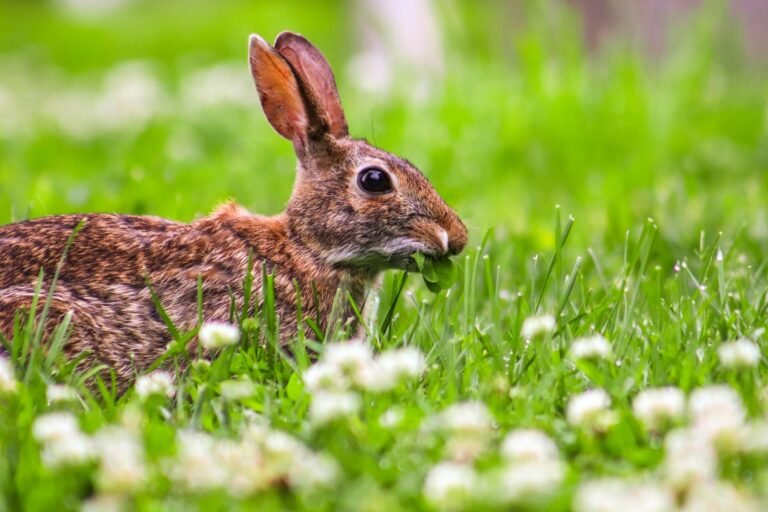
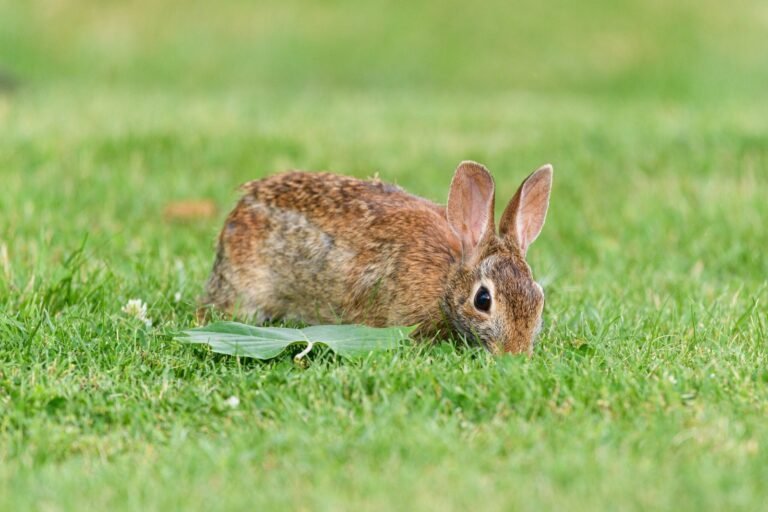
Wild rabbits may nibble cabbage if they get into a vegetable garden, but it is not part of their natural diet — see what wild rabbits eat. Do not deliberately feed wild rabbits cabbage; garden nibbling is not a feeding recommendation, and fencing/protecting beds is the practical step for a vegetable patch.
Why does cabbage cause gas in rabbits?
Cabbage contains raffinose, a complex sugar that rabbits’ guts cannot fully break down. It ferments in the gut, producing gas — and because rabbits cannot burp, the gas gets trapped, causing painful bloating.
Can rabbits eat coleslaw mix?
No. Do not feed shop-bought coleslaw mix or dressed coleslaw to rabbits. Dressings, salt, sugar and other added ingredients are not safe for them. Offer plain, raw cabbage leaves only, washed and with the hard core cut away, in the table amount — 1–2 times a week, never daily.
Photo Credits
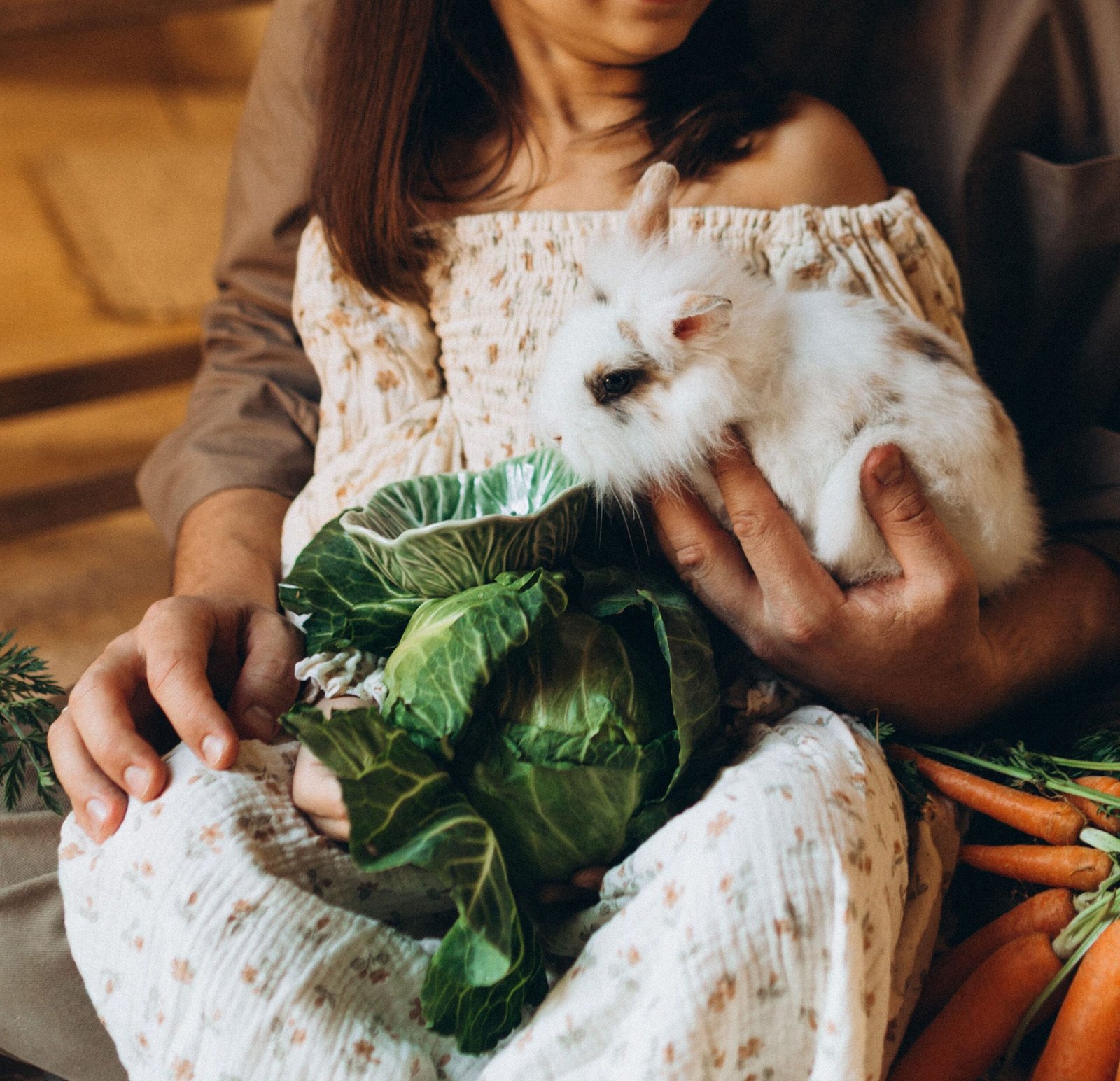
Featured image: Dmitry Rodionov via Pexels.



6 Comments