
What Do Wild Rabbits Eat? Diet, 4 Myths & Safe Plants
Wild rabbits graze on grasses, clover and wildflowers in summer, then bark, twigs and buds in winter. Safe plants, toxic plants, feeding myths and FAQs.
This guide covers cottontails and European wild rabbits; plant names are marked UK/US where they differ.
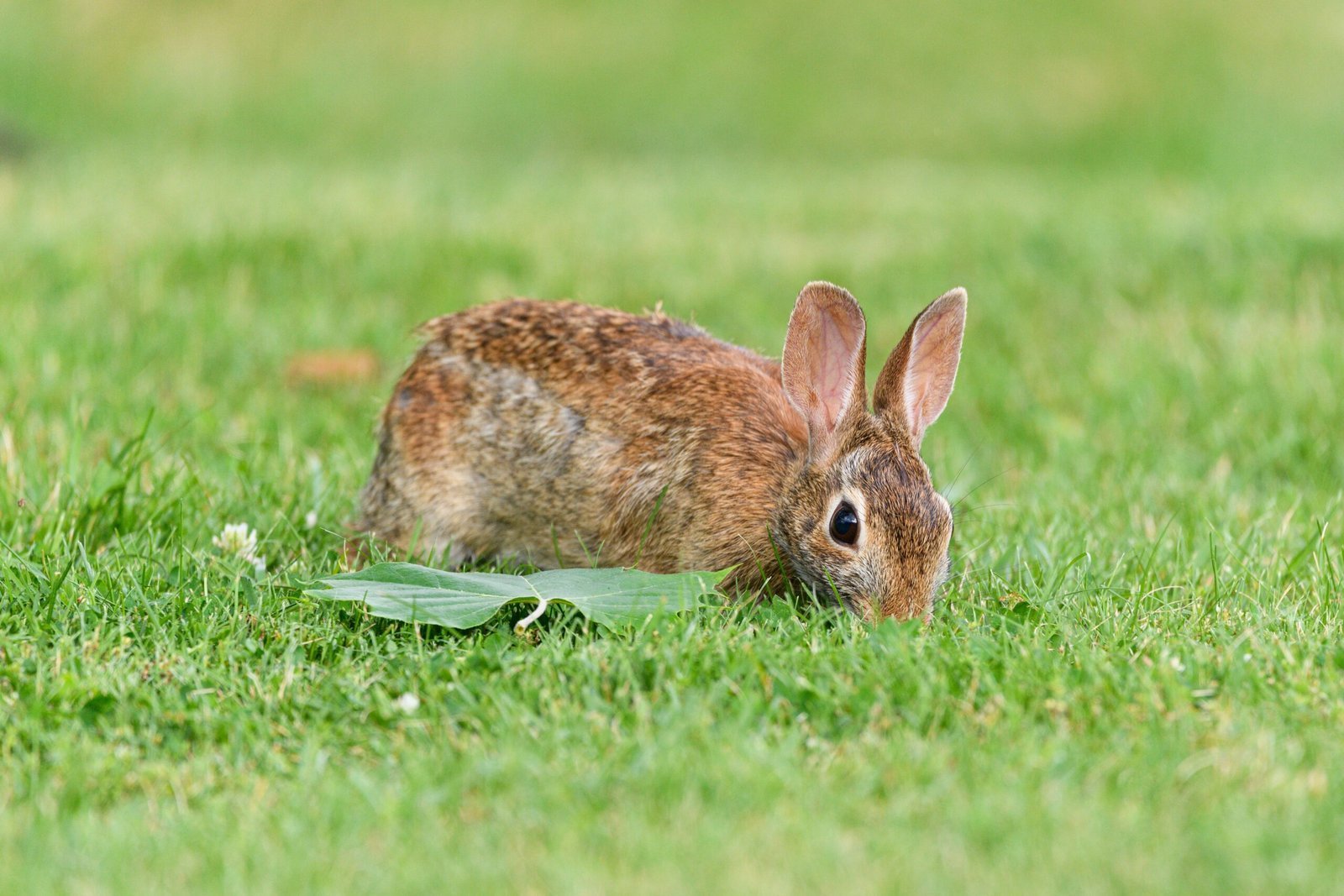
Spotted a cottontail nibbling clover on your lawn and wondering what wild rabbits eat? The short answer is that wild rabbits are strict herbivores: through spring and summer they graze mainly on grasses, clover and wildflowers, then switch to bark, twigs and buds when winter arrives.
It is a very different menu from the cartoon image of a bunny crunching carrots all day. In this guide, we break down the wild rabbit’s real seasonal diet, which garden plants are safe and which are toxic, the feeding myths that refuse to die, whether wild rabbits eat fruit — and whether you should ever feed the rabbits visiting your yard.
What Do Wild Rabbits Eat? The Short Answer
Wild rabbits eat almost entirely plant material, and exactly what they eat depends on the time of year. According to the Washington Department of Fish and Wildlife, from spring to autumn rabbits and hares eat grass, clover, wildflowers, weeds, and farm and garden crops, while in winter their diet shifts to buds, twigs and bark.
They do most of their feeding in the low light of dawn and dusk, when they are naturally most active. In a typical garden they eat whatever green, fibrous plants the season provides, nibbled a little at a time across many short grazing sessions.
| Season | Foods |
|---|---|
| Spring/Summer | grasses, clover, dandelion, plantain, chickweed, herbs |
| Autumn | berries, buds, garden greens |
| Winter | twigs, buds, inner bark |
The Wild Rabbit’s Seasonal Diet
A wild rabbit does not eat the same thing all year. Like many grazing animals, it follows the seasons: tender green growth in the warm months, woody survival food in the cold ones.
Spring and Summer: Grasses, Clover and Wildflowers
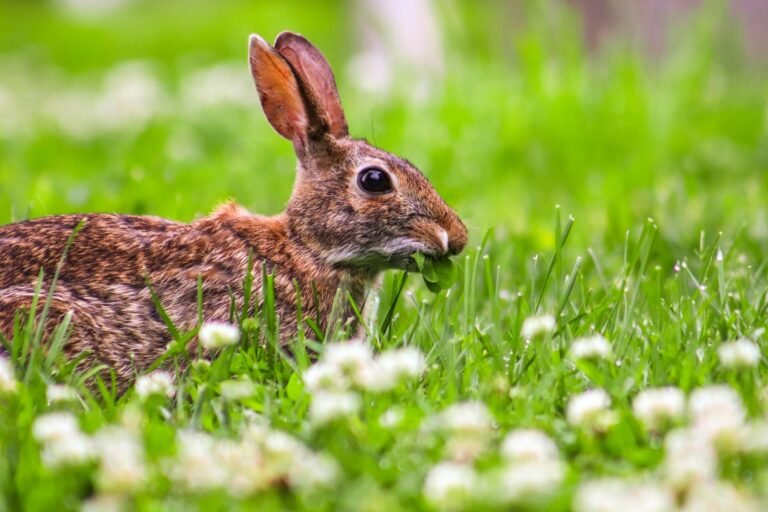
Spring and summer are the seasons of plenty. Fresh grasses, clover and wildflowers are rich in moisture and fibre, and rabbits make the most of them. The warm-season diet is grasses and legumes, with garden vegetables where available. This is also breeding season, when nursing mothers need the extra nutrition that lush spring growth provides.
| Food group | Examples rabbits seek out |
| Fresh grasses | Meadow grasses and young green shoots |
| Legumes | White and red clover |
| Wildflowers and weeds | Dandelion leaves, plantain and chickweed |
| Garden greens | Leafy vegetable tops, herbs such as basil and mint |
Autumn and Winter: Bark, Twigs and Buds
When the first frosts kill off the tender greens, rabbits turn to woody food. In winter the diet shifts to buds, twigs and bark, and to the bark and fruits of woody vegetation. It is lean fare, but a rabbit’s digestion is well adapted to extracting nutrition from fibrous woody plants.
Many people assume wild rabbits hibernate through winter — rabbits do not hibernate.
| Food group | Examples |
| Twigs and buds | Young shoots and leaf buds of shrubs |
| Bark | Bark (especially the inner bark) of shrubs and saplings |
| Woody fruits | Berries and fruits persisting into autumn |

Garden plants they can nibble if you grow them
If rabbits visit your garden, these are plants they can nibble without harm — a mix of the wild foods described by wildlife agencies and the Rabbit Welfare Association’s guidance on safe greens, veg and herbs. If you would like to share your garden with them, growing a few of these on purpose is a far kinder approach than putting food out.
- Grasses — the foundation of the wild rabbit diet
- Clover (white and red) — a warm-season favourite
- Dandelion leaves — a wild rabbit favourite
- Herbs — basil, mint, coriander and rosemary
- Watercress and rocket — nutrient-rich leafy greens
- Romaine lettuce and spring greens — safe salad leaves
- Parsley — a safe herb
- Plantain and chickweed — wild weeds
These are pet-rabbit-safe greens; wild rabbits mainly find grasses, clover and weeds — they do not forage rocket or rosemary in the wild.
Cabbage is another garden vegetable wild rabbits will happily nibble — but like pet rabbits, they should only get small amounts, since too much causes painful gas.
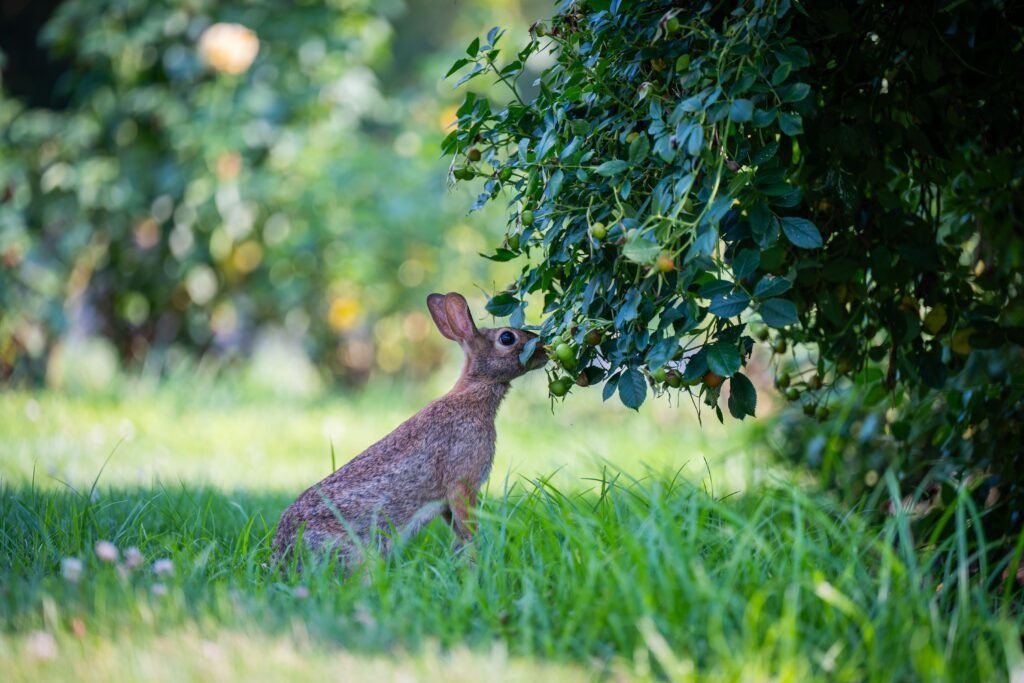
One important exception: never feed rabbits lawnmower clippings. The RSPCA warns that cut grass from mowers ferments quickly and can harbour harmful bacteria, making rabbits seriously ill. Fresh growing grass is fine; a pile of mowings is not.
Plants That Are Toxic to Rabbits
Many common garden plants are poisonous to rabbits, so check this list before planting — or if a visiting rabbit has been nibbling your borders. These plants are flagged as toxic by the RSPCA, the Rabbit.org Foundation and veterinary practices:
Garden plants — toxic
| Plant | Part / note |
|---|---|
| Foxglove | All parts; highly toxic |
| Lily of the valley | All parts; highly toxic |
| Bluebells (UK) | Bulbs and leaves toxic |
| Holly | Berries toxic |
| Tulips | Bulbs most toxic |
| Azalea | Leaves toxic |
| Daffodils (narcissus) | Bulbs most toxic |
| Buttercups | Leaves and stems irritate |
| Deadly nightshade | Berries and leaves; highly toxic |
| Hemlock | All parts; highly toxic |
| Ivy | Leaves and berries toxic |
| Iris | Rhizomes most toxic |
| Yew | Leaves and seeds; highly toxic |
| Rhododendron | Leaves toxic |
| Clematis | Leaves irritate |
| Lilies | Principally a cat emergency; still avoid |
| Horse chestnut | Conkers and leaves toxic |
| Hyacinth | Bulbs most toxic |
| Lupine (US) / lupin (UK) | Toxicity varies by species |
| Mayapple (US) | Fruit and roots toxic |
| Mistletoe | Berries toxic |
| Bittersweet (US) | Berries toxic |
| Rhubarb leaves | Leaves toxic; stalks are food for people |
| Potato plant | Leaves and stems toxic; green tubers too |
| Tomato plant | Leaves and stems toxic; ripe flesh only a treat |
If you think a rabbit — wild or pet — has eaten something toxic, contact a rabbit-savvy vet promptly rather than waiting for symptoms to appear.
Human foods — do not offer
| Food | Part / note |
|---|---|
| Avocado | Fruit toxic to rabbits |
| Chocolate | Theobromine toxic |
| Onion | Allium family; damages red blood cells |
| Garlic | Allium family; damages red blood cells |
| Leeks | Allium family; damages red blood cells |
| Rhubarb | Leaves toxic; stalks too rich for rabbits |
| Potato | Raw potato and green parts toxic; starchy |
| Mushrooms | Not part of a rabbit diet; some toxic |
| Dairy | Rabbits cannot digest milk products |
| Meat | Rabbits are herbivores |
| Eggs | Animal product; not for rabbits |
| Caffeine | Stimulant; do not offer |
| Xylitol products | Sweetener; do not offer |
See the RSPCA’s list of foods to avoid and the RWAF list of safe greens, veg and herbs for pet rabbits.
Wild Rabbit vs Pet Rabbit: What’s Different About Their Diets?
Wild and domestic rabbits share the same digestive system, but their lifestyles — and therefore their diets — look quite different:
| Wild rabbit | Pet rabbit | |
| Main food | Whatever the season provides: grasses, clover and wildflowers, then bark and twigs | Unlimited grass hay, plus measured fresh greens daily |
| Water | Dew, puddles and moisture in fresh plants | Fresh, clean drinking water available all day |
| Treats | None — no human food at all | Small amounts of fruit or carrot as occasional treats only |
The RSPCA’s guidance for pet rabbits — hay and grass as the bulk of the diet, leafy greens every day, everything else as an occasional treat — is essentially an attempt to recreate the fibre-rich grazing diet that wild rabbits find for themselves. And getting a pet rabbit’s diet right matters enormously: diet is one of the biggest factors in how long bunnies live, with well-cared-for indoor rabbits reaching 8–12 years while most wild cottontails do not live as long as pet rabbits, largely because of predators.
For pet rabbits, see the rabbit.org food and diet guide for safe foods and portions.
Why Do Rabbits Eat Their Droppings?
Here is the diet habit that surprises most people: rabbits eat some of their own droppings. Rabbits produce two kinds of droppings — the hard, dry pellets you see scattered on lawns, and softer, moist pellets called caecotrophs, which they eat directly. It sounds unpleasant, but it is simply food getting a second pass through the digestive system, and it lets rabbits squeeze extra goodness out of tough, fibrous plants. The RSPCA notes that caecotrophs are an essential part of a rabbit’s diet — wild rabbits just do naturally what every rabbit is built to do.
4 Myths About What Wild Rabbits Eat
Plenty of myths about what wild rabbits eat circulate online — and rabbit myths don’t stop at diet: many people still believe rabbits are rodents. Here are the four feeding myths we see most often — and what the evidence actually says.
Myth 1: Carrots are a rabbit’s staple food.
Reality: “Despite popular belief, carrots aren’t the main source of food for rabbits — nor should they be,” says the RSPCA. Carrots are high in sugar and can contribute to weight gain and digestive problems. They belong on the occasional-treat list, not the daily menu.
Myth 2: Dried corn is good food for wild rabbits.
Reality: RSPCA lists sweetcorn, including dried corn, under foods to avoid; the hulls are poorly digested and the kernels are high in starch/sugar.
Myth 3: Sunflower seeds make a healthy snack.
Reality: Seeds are not part of a rabbit’s natural diet, and sunflower seeds are very high in fat. Do not offer sunflower seeds: they are high in fat, not part of a wild diet, and seed mixes are discouraged for rabbits (rabbit.org).
Myth 4: Bread is a harmless treat.
Reality: Bread is a processed human food with no place in a rabbit’s diet, and the RSPCA includes it on its list of foods to avoid. Starchy, salty human snacks can seriously upset a rabbit’s digestion.
What Do Baby Wild Rabbits (Kits) Eat?
Newborn wild rabbits — called kits or kittens — drink only their mother’s milk. Rabbit mothers nurse their babies for only about five minutes a day, usually in two brief visits at dawn and dusk, so a nest of kits sitting alone in the garden is perfectly normal and not a sign of abandonment.
Kits’ eyes open at around 7 to 10 days old, and they begin leaving the nest at three to four weeks, nibbling the same grasses and greens as the adults. Because of this, wildlife rehabilitators stress that most baby bunnies found outdoors do not need rescuing.
If you find kits that are injured, or you are certain the mother has died, do not try to feed them yourself. Contact a licensed wildlife rehabilitator. The CDC advises leaving baby wild animals alone; do not handle them, noting that most babies found alone are not orphaned or abandoned.
For help with a wild rabbit, see the Humane World guide to wild rabbits.
For the full week-by-week feeding timeline, see what baby bunnies eat.
Do Wild Rabbits Drink Water?
Yes. Wild rabbits get a good deal of moisture from dew and the fresh plants they eat, and they will also drink from puddles, birdbaths and garden ponds. The RSPCA notes that rabbits should have access to fresh, clean drinking water throughout the day, and that without it they can become seriously ill — so a shallow dish of fresh water is one of the kindest things you can offer visiting rabbits.
For pet rabbits, the RSPCA says they should have access to fresh, clean drinking water throughout the day. For wild visitors, a shallow bowl is optional help in heat/frost, not a requirement — wild rabbits also get moisture from dew and fresh plants.
Do Wild Rabbits Eat Fruit?
Very little fruit. A wild rabbit that finds a fallen apple or a bramble full of ripe blackberries will nibble. Fruit is a rare windfall, not daily food. It is high in sugar, so the RSPCA classes it as an occasional treat. Do not deliberately feed apple pips/seeds; a wild rabbit nibbling a fallen apple is not a reason to clear every fruit — remove large piles of rotting fruit for hygiene, not for pips alone. For pet rabbits, ripe flesh only is a treat; leaves, stems and unripe fruit are to be avoided (RSPCA). Do not plant tomatoes as wild-rabbit food. For pet rabbits, see our full guide on tomatoes.
For pet rabbits, grapes are an occasional treat only, not wild-rabbit food.
Is It OK to Feed Wild Rabbits in Your Yard?
- Leave it alone — do not chase, pick up or try to tame it.
- Water in a shallow heavy bowl, changed daily, sheltered spot, break ice in frost.
- Food — best nothing, garden grass and clover is enough.
- Before mowing, check long grass for nests, leave any nest and mow around it.
- Protect young trees with mesh guards and beds with 2-foot fencing.
- Injured, pet-caught or certainly orphaned kit — do not feed, contact a licensed wildlife rehabilitator or vet, keep pets away, wash hands.
Best: offer nothing. Water is separate from food. If you choose to offer a rare nibble despite agency advice, keep it to hay, dandelion or romaine, small, scattered, pesticide-free, never in a pile, and never mouldy. The CDC’s guidance is direct — do not feed wildlife.
Well-meaning feeding can do more harm than good: it concentrates animals in one spot, which spreads disease; it teaches them to depend on handouts; and it can attract predators. Wild rabbits are expert foragers — a garden with grass, clover and safe plants already feeds them very well.
Never offer mouldy or damp hay, kitchen scraps, bread, corn, sunflower seeds, processed snacks or lawnmower clippings. Wash your hands, and do not handle the rabbit.
| Safe nibble | Never |
|---|---|
| grass, clover, dandelion, romaine, herbs | bread, corn/sweetcorn, sunflower seeds, iceberg, lawnmower clippings, kitchen scraps, pet food, milk, chocolate, onion, avocado |
What Does It Mean When a Rabbit Stays in Your Yard?
A rabbit that keeps visiting has found the three things every wild rabbit needs: food, cover and safety. Long grass and clover for grazing, shrubs or brush piles to hide under, and relatively little disturbance make a yard attractive — especially at dawn and dusk, when rabbits are naturally most active. In spring, a resident female may also be nesting nearby, so tread carefully around overgrown corners.
Are Wild Rabbits Bad for Your Yard?
They can be hard on a garden. Wild rabbits eat flowers, vegetables and young shrubs at any time of year, and in winter they gnaw the bark of young trees. When the bark is chewed all the way around a trunk — called girdling — the tree can die.
They do most of this feeding at dawn and dusk, so the damage often seems to appear out of nowhere. Rabbit cuts are clean and angled; deer tears are ragged. The rabbit damage guide from the University of Wisconsin Extension has clear, practical steps.
| Area | Protection |
|---|---|
| Beds | 2-foot-high chicken wire |
| Young trees | Tree wrap or guards |
| Near beds | Remove brush and cover |
For more garden advice, see the Humane World guide to wild rabbits.
Key Takeaways
- Wild rabbits eat grasses, clover and wildflowers in spring and summer, then bark, twigs and buds in winter.
- Best to offer nothing — a shallow bowl of clean water is the kind exception.
- Never offer bread, corn, sunflower seeds or lawnmower clippings.
Frequently Asked Questions
Here are the questions people ask most about the big one — what do wild rabbits eat? — answered in brief. For more bunny advice, browse our rabbit care guides.
Is it okay to feed wild rabbits in your yard?
Best: offer nothing. The CDC advises against feeding wildlife, and grass, clover and safe plants already give wild rabbits all they need.
What food can I leave out for a wild rabbit?
Ideally nothing — wild rabbits are self-sufficient foragers. If you want to offer an occasional nibble, stick to small amounts of pesticide-free leafy greens such as romaine lettuce or dandelion leaves. Never leave out bread, corn, sunflower seeds, processed food or lawnmower clippings.
What is a wild bunny’s favourite food?
In spring and summer, wild rabbits favour tender young grasses and clover above all else. In autumn and winter, when greens disappear, their favourites become the buds, twigs and bark of shrubs. Fresh, green and fibrous always beats anything starchy or processed.
What does it mean when a rabbit stays in your yard?
It usually means your yard offers food, cover and safety: grass and clover to graze, shrubs to hide under, and little disturbance.
Do wild rabbits eat carrots?
Rarely, and never as a staple — for pet rabbits, see exactly how much carrot counts as a safe treat. A wild rabbit’s real diet is grasses, clover, wildflowers and, in winter, bark and twigs.
What do baby wild rabbits eat?
Baby wild rabbits (kits) drink only their mother’s milk for the first weeks of life. The mother nurses them for just a few minutes a day, their eyes open at 7 to 10 days, and they leave the nest at three to four weeks to nibble grasses and greens like the adults.
Can I leave water out for wild rabbits?
Yes — a shallow, heavy bowl of clean water is one of the kindest things you can offer, especially in hot summers and freezing winters when puddles dry up or ice over. Change the water daily and keep the bowl in a sheltered spot.
Can I feed wild rabbits lettuce?
Dark-leafed lettuces such as romaine are fine as a rare nibble. Skip iceberg — the RSPCA lists it under foods to avoid; it is mostly water and low in fibre, unlike romaine. Stick to leafy, fibrous greens like dandelion leaves and keep portions small.
What do wild rabbits eat at night?
They feed mainly at dawn/dusk, not all night.
What vegetables do wild rabbits eat?
Leafy garden greens and tops; root vegetables are not their natural food.
What do wild rabbits eat in winter?
Buds, twigs and bark when greens are gone; they do not hibernate.
Photo Credits
Photography via Pexels (free to use under the Pexels licence): “Wild Rabbit Grazing in Lush Green Field” by Jay Brand; “Wild Rabbit in Snowy Forest Setting” by Mark Neminov; “A wild rabbit nibbling on leaves in a vibrant green garden during summer” by Chris F.
Sources
- RSPCA rabbit diet advice
- Rabbit Welfare Association safe greens guide
- rabbit.org food and diet guide
- Humane World wild rabbits guide
- Washington Department of Fish and Wildlife rabbits
- University of Wisconsin Extension rabbit guide





8 Comments