
Can Rabbits Eat Tomatoes? Safe Portions, Risks
Can rabbits eat tomatoes? Yes — ripe flesh only, as an occasional treat. Portion guide, toxic parts to avoid, kit age rules and emergency steps.
Tomatoes divide rabbit owners: one forum calls them a healthy treat, another calls them poison. The truth depends on the part of the plant — this guide is checked against RSPCA and Oxbow guidance.
Quick answer: Yes — rabbits can eat ripe tomato flesh, but only as an occasional treat. Portions: ½ cherry (small), 1 cherry (medium), up to 2 cherries (large); small once a week, others no more than twice a week. Remove all seeds, leaves, stems and vines first. Never feed green tomatoes or any green part of the plant.
Can rabbits eat tomatoes?
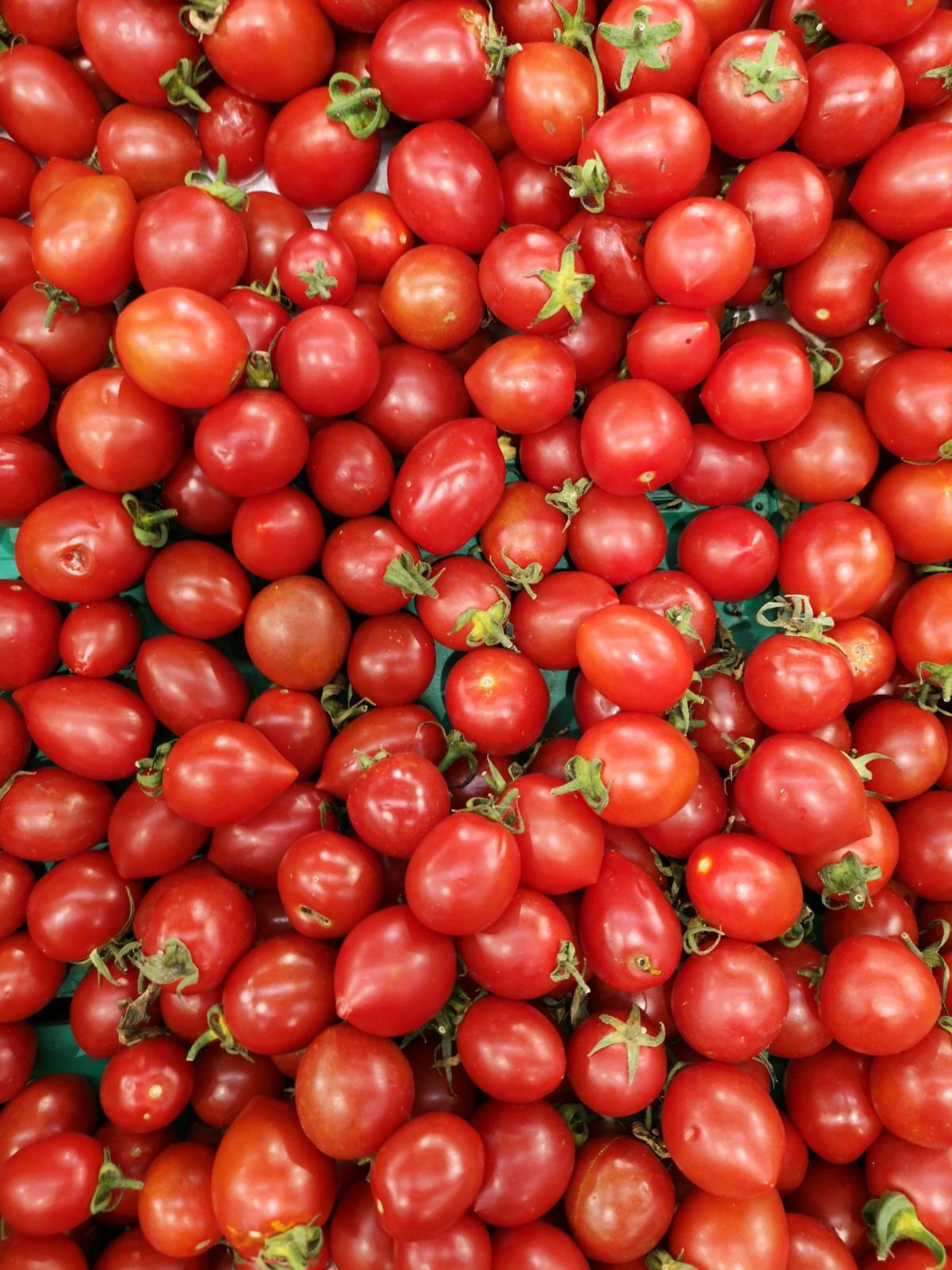
Yes — but only fully ripe flesh, and only as an occasional treat. A ripe tomato is mostly water with a little natural sugar: a light, hydrating mouthful rather than a nutritious staple. Beyond water, a ripe tomato carries small amounts of vitamin C, vitamin A and potassium — handy extras, but nothing your rabbit can’t already get from hay and leafy greens. Ripe flesh is not listed as toxic, but too much sugar/acid can upset the gut. Stop tomato and call the vet if droppings change, appetite drops, or itching/swelling/breathing problems appear. The problems start with the green parts of the plant — and with overfeeding.
Which parts of the tomato plant are toxic to rabbits?
Everything green. The leaves, stems and vines of the tomato plant contain tomatine and solanine — bitter compounds from the nightshade family that are toxic to rabbits. The RSPCA lists tomato leaves and stems among the foods rabbits should never eat. Unripe green tomatoes carry higher levels of tomatine too, so skip those as well. Only fully ripe — deep red, yellow or orange all over, with no green shoulders or green patches — makes the cut. Do not feed flowers either — they are part of the plant, not the fruit.
How much tomato can a rabbit have?
Think of tomato the way you’d think of fruit: a treat, not a vegetable portion. The RSPCA classes fruit as an occasional extra, and tomato’s sugar content means the same restraint applies. As a conservative starting point:
| Your rabbit’s size | A sensible serving | How often |
|---|---|---|
| Small (under 2 kg) | ½ cherry | Once a week |
| Medium (2–4 kg) | 1 cherry | No more than twice a week |
| Large (over 4 kg) | Up to 2 cherries | No more than twice a week |
Always start with less than you think — a pea-sized piece the first time — and watch the droppings for 24 hours. Soft or misshapen droppings mean it was too much, too soon. And tomato should never displace the daily leafy greens that make up roughly a tenth of the diet.
Do I need to remove the seeds?
Remove seeds every time. Oxbow advises removing all seeds/pits before offering fruit, and RSPCA lists fruit seeds/pips as foods to avoid. This is a precaution, not proof that a swallowed seed is automatically toxic. Halve the tomato, scoop out the seedy centre with a teaspoon, and offer only the firm outer flesh.
How do I prepare tomato for my rabbit?
- Choose a tomato that’s fully ripe — deep red, yellow or orange all over, with no green shoulders or green patches.
- Wash it well under running water; discard any tough, unripe skin.
- Pull off the stalk and cut away any green bits.
- Halve it and scoop out the seeds and jelly.
- Cut the remaining flesh into one cherry-sized piece (about ½ inch / one bite-sized piece), not a full slice of a large tomato, and serve fresh at room temperature — never cook it first (see below).
Can baby rabbits eat tomatoes?
No tomato for kits. No fresh leafy greens, vegetables or fruit treats before 12 weeks. Leafy greens come first; tomato is a treat, not a first green. At 12 weeks, leafy greens may be introduced one at a time (under ½ oz, waiting 24 hours before the next new food) under House Rabbit Society guidance; hold sugary fruit treats until later and ask a rabbit-savvy vet. Start with a pea-sized piece only once greens are tolerated, and wait a day. Our week-by-week guide to what baby bunnies eat explains the full early diet. For kit care, see the rabbit.org baby bunnies guide and the rabbit.org diet guide.
What about cherry tomatoes, cooked tomatoes and tomato sauce?
Cherry and grape tomatoes: fine, following the same rules — ripe, de-seeded, stalk removed. Their small size actually makes portioning easier.
Cooked tomatoes: skip them. Only raw, ripe, plain flesh is covered here; most cooked dishes also add oil, salt or seasoning, and dried forms concentrate sugar.
Tinned tomatoes, passata, ketchup and pasta sauce: never. They contain added salt and frequently garlic or onion, both of which are harmful to rabbits. If your rabbit licks a dropped bit of sauce, don’t panic — just don’t make a habit of it, and watch for any digestive upset.
Can rabbits eat tomatoes and cucumber?
Yes — cucumber is another safe occasional treat, so the two can share the plate. As PetCavo’s conservative guide, keep cucumber to a couple of thin slices once or twice a week. Serve it washed and fresh. Like tomato, cucumber is mostly water, so too much can cause soft droppings. Don’t let either treat replace hay or leafy greens.
Can rabbits eat tomatoes every day?
No. Daily tomato means daily sugar, and a rabbit’s digestion is built for fibre, not fructose. Too much sugar too often can mean soft droppings, painful gas and, over time, weight gain — while filling them up so they eat less hay. Hay is what keeps their teeth worn and their gut moving, so treats should never displace it. Once or twice a week is the sensible ceiling.
What should I do if my rabbit eats tomato leaves or stems?
Act quickly but don’t panic:
- Remove any remaining plant material from their reach.
- Call a rabbit-savvy vet straight away — the RSPCA advises calling as soon as you can if your rabbit eats something poisonous, and Oxbow says to call regardless of how much was eaten.
- Tell the vet what was eaten, roughly how much, and when.
- Watch for warning signs: drooling, lethargy, going off food, diarrhoea or a swollen belly. Any of these means an urgent trip, not a wait-and-see.
Prevention beats cure: if you grow tomatoes, keep pots and beds out of roaming range, and never toss pruned vines into the run.
Do wild rabbits eat tomatoes?
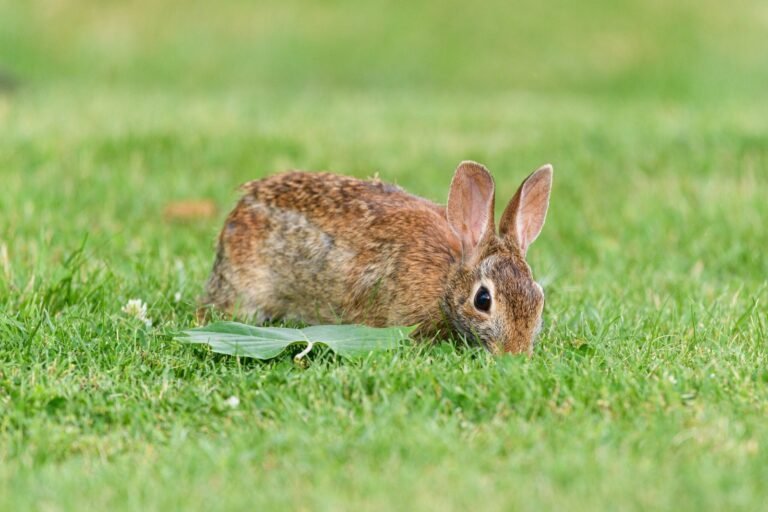
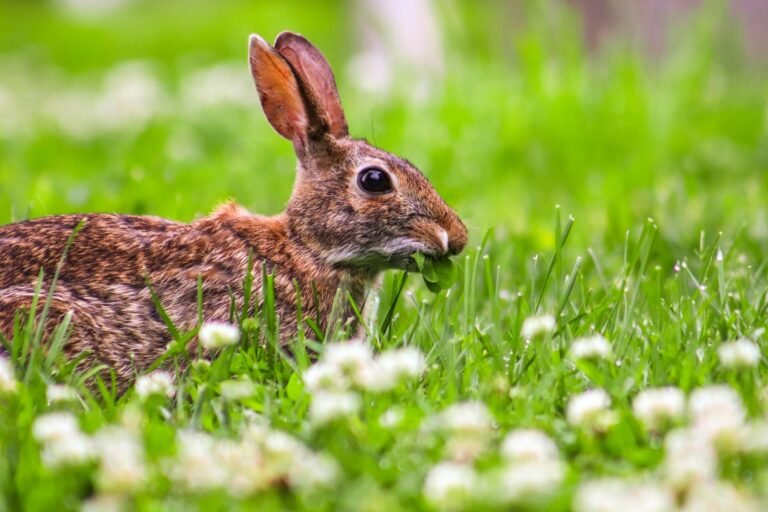
Not by choice. Wild rabbits are grazers — grasses, clover, wildflowers and bark make up their natural menu, as we explain in our guide to what wild rabbits eat. A wild rabbit might sample a tomato plant that strays into its territory, but the foliage is just as toxic to wild rabbits as to pet ones. Gardeners: if rabbits keep raiding your tomato bed, fence beds off with a wire fence at least 2 feet high and bury the base so they cannot dig under. It protects both your crop and the local bunnies.
Where do tomatoes fit in a rabbit’s daily diet?
Nowhere essential — and that’s fine. The RSPCA’s daily blueprint is about 85% hay or grass, 10% leafy greens and roughly 5% pellets, with fresh water always available. Tomato sits outside that core, in the same “occasional extras” space as a slice of apple or a thumb-sized piece of cabbage. Get the foundations right and the odd treat is harmless; get them wrong and no treat fixes it. Like grapes, tomato is a sugary fruit treat, not a daily vegetable. Carrots are also a treat, not a staple. See the rabbit.org diet guide and the PDSA feeding guide for the same balance.
Key Takeaways
- Ripe, red tomato flesh is safe for rabbits as an occasional treat — green parts are not.
- Leaves, stems, vines and unripe green tomatoes contain toxic tomatine and solanine.
- Remove seeds, stalks and all green bits before serving.
- Portions: ½ cherry (small), 1 cherry (medium), up to 2 cherries (large). Small once a week, others no more than twice a week.
- No kits under 12 weeks; no cooked, tinned or sauced tomato, ever.
- If your rabbit eats leaves or stems, remove the plant and call your vet promptly.
Frequently Asked Questions
Can rabbits eat tomatoes every day?
No — keep tomato as an occasional treat, offered once or twice a week at most. The bulk of your rabbit’s diet should be unlimited hay or grass (around 85%), leafy greens (about 10%) and a small measured portion of pellets, as the RSPCA advises. Sugary extras like tomato should stay a tiny fraction of the diet.
Can rabbits eat cherry tomatoes?
Yes — cherry tomatoes follow the same rules as larger varieties. Only offer fully ripe ones, remove the stalk and any green bits, and halve them and scoop out the seeds. Portions: ½ cherry (small), 1 cherry (medium), up to 2 cherries (large); small once a week, others no more than twice a week. Wash it first, as you would any fresh produce.
Should I remove the seeds from tomatoes?
Yes. Oxbow advises removing all seeds and pits before offering fruit to rabbits, and the RSPCA lists fruit seeds and pips among foods rabbits should avoid. Tomato seeds are small and slippery — a choking hazard — and concentrated in the jelly around them. Scoop out the seedy centre and offer just the firm outer flesh.
Can baby rabbits eat tomatoes?
No — wait until your kit is at least 12 weeks old. Young rabbits have delicate digestive systems that are adjusting after weaning, and rich or sugary foods can trigger dangerous gut upsets. Until then, stick to unlimited hay, water and their mother’s milk or junior pellets as advised by your vet, introducing any new food one at a time.
Can rabbits eat cooked tomatoes or tomato sauce?
No. Only offer raw, ripe, plain tomato flesh. Cooking concentrates the sugars, and tinned tomatoes, passata, ketchup and pasta sauces contain added salt, and often garlic or onion — both harmful to rabbits. A tiny lick is unlikely to cause disaster, but these processed forms should never be fed deliberately.
My rabbit ate tomato leaves — what should I do?
Remove any remaining leaves, stems or vines straight away, then call your vet promptly — the RSPCA advises calling your vet as soon as you can if your rabbit eats something poisonous, and Oxbow says to call regardless of the amount eaten. Note what and roughly how much was eaten, and watch for drooling, lethargy, loss of appetite or diarrhoea.
Do wild rabbits eat tomatoes?
Wild rabbits are grazers: grasses, clover, wildflowers and leafy plants — not garden vegetables. They may nibble tomato plants in a vegetable patch, but leaves and stems are just as toxic to them, so fence tomato beds off.
Can rabbits eat tomatoes and cucumber?
Yes — both are safe as occasional treats. Offer ripe, de-seeded tomato flesh and a couple of thin cucumber slices, each once or twice a week. Cucumber is mostly water, so keep portions small to avoid soft droppings, and wash everything well.
Photo Credits
Featured image: PetCavo. Body photography: Engin Akyurt via Pexels (free licence).




7 Comments