How to Crate Train a Puppy: A Step-by-Step Guide for Success
Bringing home a new puppy is exciting, but it also comes with chewed shoes, sleepless nights, and the challenge of teaching good habits from the very beginning. One of the best investments you can make in your puppy’s future is crate training.
When introduced correctly, a crate becomes much more than a place to keep your puppy. It becomes a safe sleeping area, a quiet retreat, and a valuable training tool that supports potty training, prevents destructive behavior, and helps puppies feel secure. The goal is never to lock your puppy away—it’s to create a space they genuinely enjoy using.
Table of Contents
- What is crate training?
- Why crate training is important
- When should you start crate training?
- Choosing the right crate
- Types of puppy crates
- Crate training age timeline
- How to Crate Train a Puppy in 9 steps
- Night crate training
- Troubleshooting common problems
- FAQs
How to Crate Train a Puppy
Quick Answer (Featured Snippet)
How to Crate Train a Puppy: Introduce the crate gradually using treats, meals, toys, and praise. Let your puppy enter voluntarily, close the door for short periods, slowly increase crate time, and always make the crate a positive place. Never use it as punishment.
Every successful case of crate training a puppy follows one simple principle:
Build positive experiences before expecting long periods inside the crate.
Trying to rush the process often leads to crying, frustration, and setbacks.
Why Crate Training Is Worth It
Many first-time owners worry that crate training is unfair.
When done correctly, the opposite is true.
Dogs naturally seek small, comfortable spaces where they can rest undisturbed. A properly introduced crate can become your puppy’s personal bedroom rather than a place of confinement.
Benefits of Crate Training
- Supports house training
- Prevents destructive chewing
- Creates a safe place to relax
- Helps during travel
- Makes veterinary recovery easier
- Builds independence
- Provides a predictable routine
Real-Life Scenario
Imagine bringing home a nine-week-old Labrador puppy.
You answer the front door for two minutes.
Without supervision, your puppy finds an electrical cable and begins chewing it.
With proper crate training, your puppy spends those few minutes safely relaxing with a chew toy instead.
The crate protects both your puppy and your home.
When Should You Start Crate Training?
The best time to begin is as soon as your puppy comes home, which is often around 8 weeks of age.
Starting early helps puppies accept the crate as a normal part of everyday life instead of something new introduced later.
That said, older puppies and even adult dogs can still learn to love a crate with patience and positive reinforcement.
Crate Training Age Timeline
Every puppy learns at a different pace, but the following timeline gives realistic expectations.
| Puppy Age | Training Goal |
|---|---|
| 8–10 weeks | Explore the crate and enjoy short sessions with treats |
| 10–12 weeks | Eat meals inside and take daytime naps |
| 3–4 months | Stay calm for longer daytime periods with potty breaks |
| 4–6 months | Sleep comfortably overnight and enter on cue |
| 6+ months | Use the crate confidently as part of the daily routine |
Remember that confidence grows gradually. Some puppies adjust within days, while others need several weeks. Both are normal.
Choosing the Right Crate
Buying the first crate you see isn’t always the best decision.
The right crate should allow your puppy to:
- Stand comfortably
- Turn around easily
- Stretch out fully
- Lie on either side
If the crate is too large, puppies may sleep at one end and toilet at the other, making potty training more difficult.
Many owners choose adjustable divider crates so the crate can grow with the puppy.
Types of Puppy Crates
| Crate Type | Best For | Things to Know |
|---|---|---|
| Wire Crate | Everyday home use | Excellent airflow and usually includes a divider |
| Plastic Crate | Travel and shy puppies | Creates a den-like environment |
| Foldable Fabric Crate | Calm, crate-trained dogs | Not suitable for heavy chewers |
| Furniture Crate | Indoor living spaces | Blends with home décor but offers less flexibility |
| Airline Crate | Air travel | Designed to meet airline travel requirements |
Choose the crate that fits your puppy’s personality and your lifestyle—not simply the cheapest option.
How to Crate Train a Puppy: 9 Proven Steps
Step 1. Let Your Puppy Discover the Crate
Place the crate in a room where your family spends time.
Leave the door open.
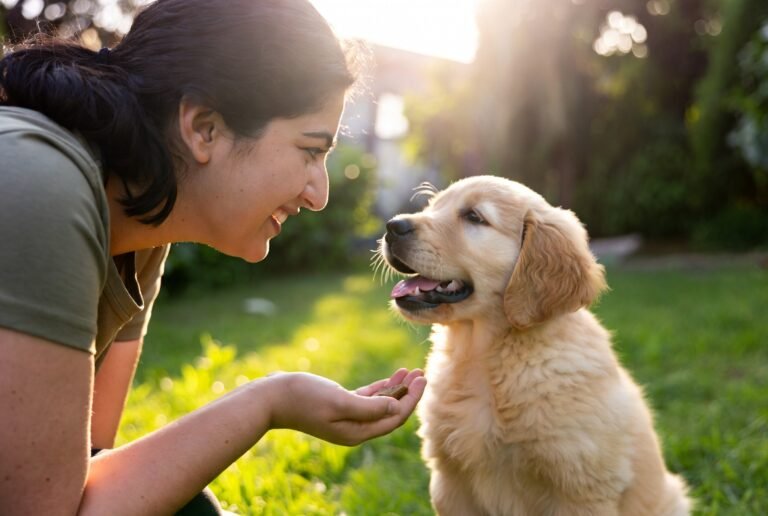
Scatter a few treats near the entrance and allow your puppy to explore freely.
Avoid lifting your puppy inside.
Why This Works
Voluntary exploration builds curiosity instead of fear.
Common Mistake
Forcing the puppy into the crate during the first introduction.
Step 2. Feed Meals Near the Crate
Food creates positive associations faster than almost anything else.
Begin by placing the food bowl beside the crate.
As your puppy becomes comfortable, gradually move meals inside.
Soon your puppy will happily walk into the crate expecting something enjoyable.
Why This Works
Your puppy starts linking the crate with daily rewards.
Common Mistake
Moving the food bowl too far inside before your puppy feels confident.
Step 3. Reward Every Voluntary Entry
Whenever your puppy enters the crate without being asked:
- Praise calmly.
- Give a small treat.
- Allow them to leave again if they choose.
The goal isn’t keeping your puppy inside.
The goal is teaching that entering the crate always leads to something positive.
Step 4. Close the Door for Just a Few Seconds
Once your puppy comfortably eats or relaxes inside, gently close the door.
Stay nearby.
Reward calm behavior.
Open the door before your puppy becomes anxious.
Gradually increase the time over multiple training sessions rather than trying to rush the process.
Why This Works
Your puppy learns that the closed door is temporary and nothing to fear.
Common Mistake
Leaving the room during the very first closed-door session.
Step 5. Slowly Build Time Inside
When your puppy stays relaxed:
- Increase crate time by one or two minutes.
- Walk a short distance away.
- Return calmly.
- Reward quiet behavior.
Some puppies progress quickly.
Others need several weeks.
Both are perfectly normal.
Step 6. Make the Crate Your Puppy’s Favorite Place
Your puppy should never think of the crate as somewhere they’re “sent.”
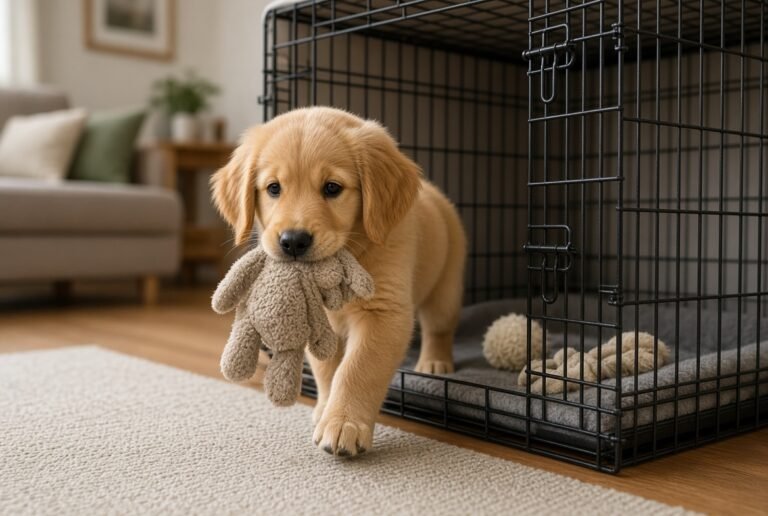
Instead, it should become the place where the best things happen.
Keep the experience positive by placing enjoyable items inside, such as:
- A stuffed food toy
- Safe chew toys
- Soft bedding (if your puppy doesn’t chew it)
- Surprise treats hidden in the crate
- Calm praise whenever your puppy chooses to rest there
Leave the crate door open whenever you’re home so your puppy can walk in and out freely. Over time, many puppies begin using the crate on their own for naps. The AKC recommends creating positive associations and never using the crate as punishment.
Why This Works
Your puppy begins choosing the crate voluntarily instead of avoiding it.
Common Mistake
Only putting your puppy in the crate when you’re leaving the house.
Step 7. Practice Short Departures
Once your puppy stays relaxed with the crate door closed, begin leaving the room for very short periods.
Start with:
- 30 seconds
- 1 minute
- 2 minutes
- 5 minutes
Return calmly without making a big fuss.
This teaches your puppy that you always come back.
Real-Life Example
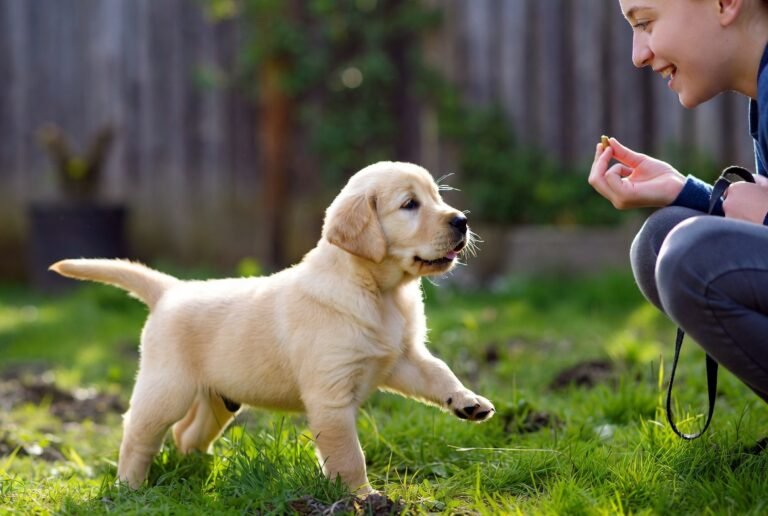
A 10-week-old Golden Retriever happily stayed in the crate while the owner walked into another room for one minute.
After several successful sessions over a week, the puppy remained relaxed for 20–30 minutes with a chew toy.
Why This Works
Small successes build confidence much faster than long absences.
Common Mistake
Leaving the house for an hour during the first practice session.
Step 8. Teach a Crate Cue
After your puppy happily walks into the crate, begin adding a verbal cue.
Popular cues include:
- “Crate”
- “Kennel”
- “Bed”
Say the cue just before your puppy enters.
Reward immediately.
Eventually, your puppy will understand the cue without needing a treat every time. Teaching a verbal cue after positive crate associations have formed is recommended in step-by-step crate training methods.
Why This Works
Your puppy learns exactly what you’re asking.
Common Mistake
Repeating the cue several times before your puppy understands it.
Step 9. Stay Consistent Every Day
Consistency matters far more than long training sessions.
Aim for several short sessions each day instead of one long session.
Your puppy will learn faster when crate training becomes part of the daily routine.
Why This Works
Frequent, positive repetition builds lasting habits.
Common Mistake
Skipping training for several days and expecting the same progress.
Where Should You Place the Crate?
Location can make a surprising difference during the first few weeks.
Best Places
- Bedroom during the first few nights
- Living room where the family spends time
- Quiet corner with normal household activity
Avoid
- Garage
- Basement
- Direct sunlight
- Next to heaters
- High-traffic hallways
Keeping the crate near you initially often helps puppies settle because they’re adjusting to a completely new environment.
Puppy Crate at Night
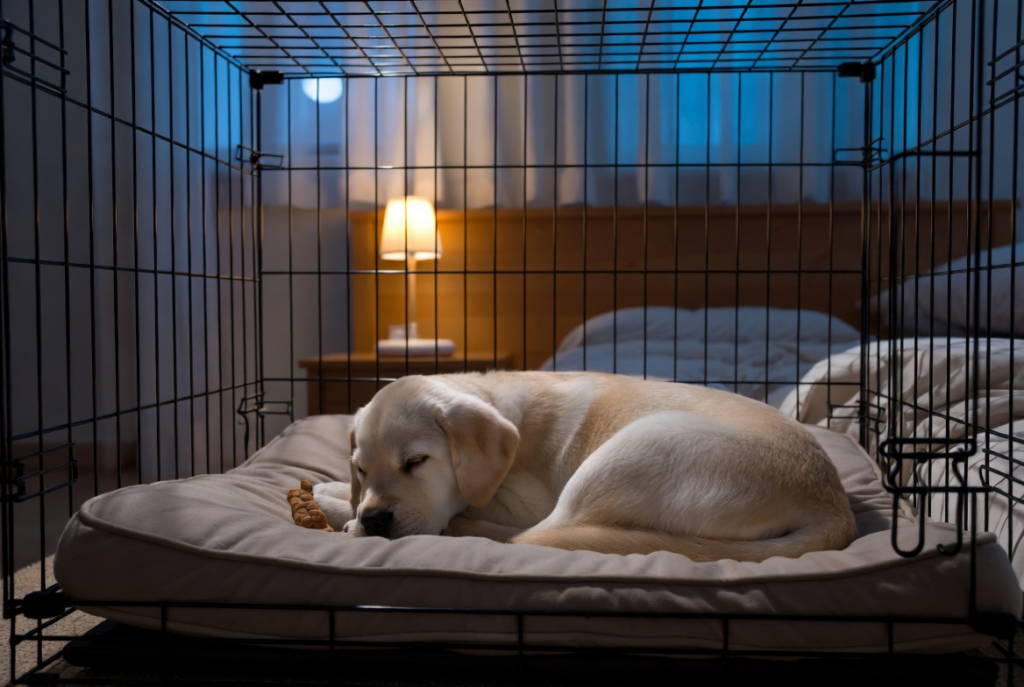
The first few nights are often the hardest.
A young puppy has just left their littermates and may feel uncertain in a new home.
Some whining during the first night or two is common while they adjust.
To make bedtime easier:
- Give your puppy a potty break immediately before bed.
- Keep the bedtime routine calm.
- Place the crate beside your bed during the first week.
- Use a safe chew toy if appropriate.
- Keep lights dim and avoid exciting games before bedtime.
Real Owner Story
A nine-week-old Labrador cried for the first two nights.
Rather than moving the puppy into bed, the owner placed the crate beside the bed and followed the same bedtime routine every evening.
By the fourth night, the puppy settled within minutes and slept much more peacefully.
Puppy Crate Training Schedule
Consistency helps puppies understand what happens next.
| Time | Activity |
|---|---|
| Morning | Potty break → Breakfast → Play → Short crate nap |
| Mid-Morning | Potty → Training → Supervised play |
| Afternoon | Lunch (young puppies) → Potty → Rest in crate |
| Evening | Walk or play → Dinner → Quiet family time |
| Bedtime | Final potty break → Crate for the night |
How Long Can a Puppy Stay in a Crate?
The crate should never replace exercise, social interaction, or bathroom breaks.
As a general guideline:
| Puppy Age | Maximum Recommended Time* |
|---|---|
| 8–10 weeks | 30–60 minutes |
| 10–12 weeks | 1–2 hours |
| 3–6 months | 2–3 hours |
| 6+ months | 3–4 hours |
*Individual puppies vary depending on bladder control, health, and training progress. Puppies should not be left crated for extended periods without breaks.
What If My Puppy Cries in the Crate?
Not every puppy cries for the same reason.
Understanding why your puppy is whining helps you respond appropriately.
First Night Crying
The first night is often emotional for a young puppy.
They’re adjusting to sleeping without their mother and littermates.
Some whining is expected during this transition.
Normal Whining vs Separation Anxiety
| Normal Adjustment | Possible Separation Anxiety |
|---|---|
| Settles after a short time | Panic continues for a long period |
| Eats treats | Refuses food |
| Sleeps eventually | Cannot relax |
| Improves over several days | Gets worse over time |
| Responds to routine | Shows extreme distress even with training |
If your puppy appears genuinely panicked rather than simply protesting, stop increasing crate time and seek help from a qualified trainer or veterinarian.
When to Ignore Crying
It’s usually reasonable to wait briefly if:
- Your puppy recently had a potty break.
- They’ve been exercised.
- They’re simply asking for attention.
Wait for a few seconds of quiet before opening the crate door. This helps avoid accidentally rewarding whining.
When to Take a Potty Break
Take your puppy outside if:
- They’re very young.
- Several hours have passed overnight.
- They woke from a long sleep.
- You suspect they genuinely need to eliminate.
Meeting genuine bathroom needs is different from rewarding attention-seeking behavior.
Common Crate Training Problems and Solutions
| Problem | Possible Cause | What to Do |
|---|---|---|
| Puppy cries in the crate | Training progressed too quickly | Return to shorter sessions and rebuild confidence |
| Puppy has accidents | Crate is too large or potty breaks are too infrequent | Use the correct crate size and follow a consistent potty schedule |
| Puppy refuses to enter | Negative association with the crate | Go back to treats, meals, toys, and voluntary entry |
| Puppy chews the crate | Boredom, stress, or excess energy | Increase exercise, mental enrichment, and safe chew options |
| Puppy panics when left alone | Separation-related distress | Pause training and consult a qualified trainer or veterinarian if needed |
Remember that setbacks are normal. Most puppies don’t progress in a perfectly straight line. Patience and consistency usually produce better results than trying to move faster.
Common Mistakes to Avoid
Even well-meaning owners sometimes slow their puppy’s progress.
Avoid these common mistakes:
- Using the crate as punishment
- Leaving your puppy inside for too long
- Skipping potty breaks
- Forcing your puppy into the crate
- Moving through the training steps too quickly
- Making a big fuss every time your puppy enters or leaves the crate
- Ignoring signs of fear or panic
A crate should always feel like a safe place, not a timeout area.
Pros and Cons of Crate Training
| Pros | Cons |
|---|---|
| Helps with potty training | Requires patience and consistency |
| Prevents destructive chewing | Puppies may cry during the adjustment period |
| Creates a safe resting space | Wrong crate size can slow house training |
| Makes travel easier | Not a substitute for exercise or social interaction |
| Supports daily routines | Progress varies between puppies |
Crate Training Checklist
Before you finish each training day, check these boxes:
✅ Correct crate size
✅ Short, positive training sessions
✅ Meals or treats used inside the crate
✅ Potty break before crate time
✅ Safe chew toy provided
✅ Calm praise for entering voluntarily
✅ No punishment involving the crate
✅ Consistent daily routine
Trainer Insight
Many owners think successful crate training means teaching a puppy to tolerate being confined.
A better goal is teaching your puppy to choose the crate.
When puppies regularly walk into the crate on their own for naps or quiet time, you’ve built genuine confidence—not just obedience.
Veterinary Advice
If your puppy suddenly refuses the crate after previously enjoying it, cries excessively despite gradual training, or shows signs of pain, loss of appetite, vomiting, or diarrhea, schedule a veterinary examination.
Medical problems can sometimes look like training problems, so it’s important to rule them out before changing your training plan.
Myth vs Fact
| Myth | Fact |
|---|---|
| Crate training is cruel. | When introduced correctly, many dogs see the crate as a safe place to rest. |
| Puppies should stay in the crate all day. | Puppies need frequent potty breaks, exercise, play, and social interaction. |
| Crying should always be ignored. | First make sure your puppy doesn’t need a bathroom break or medical attention. |
| A bigger crate is always better. | A properly sized crate usually works best for crate and potty training. |
| Once crate trained, dogs never need practice again. | Positive experiences throughout life help maintain good crate habits. |
Frequently Asked Questions
How long does crate training usually take?
Some puppies adjust within a few days, while others need several weeks. Personality, previous experiences, and consistency all affect progress.
Should I put water in my puppy’s crate?
During short crate sessions, water usually isn’t necessary. For longer periods or warm conditions, ask your veterinarian what’s appropriate for your puppy’s age and routine.
Should my puppy sleep in the crate every night?
Yes. Many trainers recommend using the crate overnight because it supports routine, safety, and house training when introduced gradually.
Can I leave toys in the crate?
Yes, but only safe toys appropriate for your puppy’s chewing habits. Avoid anything that could break apart or become a choking hazard.
What if my puppy falls asleep outside the crate?
That’s perfectly normal. Gently guide them to the crate for naps when possible so they continue building positive associations.
Is crate training helpful for potty training?
Yes. Dogs naturally try to keep their sleeping area clean, which makes crate training a useful tool when combined with regular outdoor bathroom breaks.
Can older puppies still learn crate training?
Absolutely. Older puppies and adult dogs can learn successfully, although they may require a slower introduction.
Should I cover the crate?
Some puppies relax with a partially covered crate, while others prefer being able to see their surroundings. Make sure ventilation remains adequate.
What if my puppy hates the crate?
Go back to shorter sessions, use higher-value rewards, and rebuild positive associations instead of forcing the process.
Is it okay to crate my puppy while I’m at work?
Young puppies usually need frequent potty breaks and shouldn’t spend long periods in a crate. Arrange for someone to let them out if you’ll be away for several hours.
Conclusion
Learning How to Crate Train a Puppy takes patience, but the long-term rewards are worth the effort.
By introducing the crate gradually, rewarding voluntary entry, following a consistent routine, and avoiding punishment, you’ll help your puppy see the crate as a safe and comfortable place. Every puppy learns at a different pace, so focus on steady progress instead of rushing the process.