
Why Does My Cat Stare at Me? 9 Meanings & What to Do
Why does my cat stare at me? Discover 9 reasons behind the feline gaze, how to read your cat’s body language, and when staring means a vet visit.
If you’ve ever caught your cat’s unblinking gaze and wondered, “why does my cat stare at me?” — you’re not alone. In most cases, that long feline look means affection, curiosity, or a simple request like dinner or play. Cats talk with their eyes, and watching their favourite person is usually completely normal.
Still, not every stare means the same thing. A relaxed, slow-blink stare and a tense, wide-eyed stare tell very different stories. This guide breaks down 9 common reasons for the stare, decodes the body language around it, and shows you exactly when staring is a sign to call your vet.
The 10-Second Stare Decoder: Pupils, Ears, Tail and Posture
Before you interpret the stare, scan the rest of your cat. The eyes start the story, but the pupils, ears, tail and posture finish it. Run through this quick checklist:
| Body signal | What you’re seeing | What it usually means |
|---|---|---|
| Pupils wide and round | Big, dilated pupils | Heightened arousal — excitement, fear or playfulness — or simply dim light |
| Pupils narrow slits | Thin, constricted pupils | Bright light, or a cat that’s focused and possibly irritated |
| Ears forward and upright | Relaxed, forward-facing ears | Curious, content and at ease |
| Ears flattened or sideways | Ears pinned back or rotated out | Fearful, anxious or annoyed — give them space |
| Tail upright with a gentle quiver | Tail held high, tip trembling slightly | A friendly greeting |
| Tail low, tucked or thrashing | Tail down or whipping side to side | Fear or overstimulation — back off |
| Body loose, blinking slowly | Soft posture, slow relaxed blinks | Content and affectionate — the “I love you” stare |
| Body stiff, leaning in, unblinking | Tense muscles, hard fixed stare | Alert, uneasy or confrontational — don’t stare back |
Veterinary behaviorists use the same approach: read the eyes together with the ears, tail and posture before deciding what your cat is feeling. As PetMD’s veterinary behaviorist guide explains, the stare alone never tells the whole story — it’s the full body that reveals whether your cat is feeling affectionate, fearful or confrontational.
9 Reasons Your Cat Stares at You
Most staring falls into one of these nine categories. Work through them with the decoder above, and you’ll usually find your answer.
1. They’re Showing You Affection
Yes — really. Many cats stare at the people they love most, simply because they like looking at them. A soft, relaxed gaze, often paired with slow blinks, is one of the quietest ways a cat says you’re their favourite. If your cat watches you from across the room with a loose body and half-closed eyes, take it as the compliment it is — cats that are closely bonded with their owners seek out their person’s company again and again, and watching you is part of that.
2. They’re Curious About What You’re Doing
You are, objectively, the most interesting thing in your cat’s territory. You open cans, operate the mysterious glowing rectangle, and disappear for hours at a time. Cats are keen observers of routine, and staring is how they study yours. Started a new habit — working from home, rearranging furniture, cooking something fragrant? Expect an audience.
3. They’re Hungry (or Think Dinner Is Due)
The pre-dinner stare is a classic. Cats learn schedules fast, and many will park themselves directly in your line of sight ten minutes before mealtime, just in case you’ve forgotten. This stare usually comes with strategic positioning: near the kitchen, the treat cupboard, or wherever the food appears. It’s not manipulation — it’s communication, and it works.
4. They Want Something From You
Food is the most common request, but far from the only one. The “I want” stare can mean: play with me, open the door, clean my litter box, or come and sit down so I can sit on you. Watch what your cat does right after the stare — leading you to the door, meowing at the toy basket or patting your leg usually reveals the agenda.
5. They’re Reading Your Mood
Cats pay close attention to human body language, tone of voice and daily patterns. If you’re upset, unwell or behaving oddly, your cat may watch you more intently than usual — not out of worry as we understand it, but because you’re acting unpredictably and they’re trying to work out what’s going on. Changes in your routine often trigger extra observation.
6. They’re Feeling Anxious or Unsure
Not every stare is warm. A cat that feels nervous — about a visitor, a new pet, a loud noise or a change at home — may fix its eyes on the source of its unease, and sometimes that source is you (if you’re the one running the vacuum, for instance). Anxious staring usually comes with a tense body, flattened ears or a tucked tail. The kindest response is to give them space, not to approach or force contact.
7. They’ve Zoned Out Completely
Here’s a secret: sometimes your cat isn’t staring at you at all. A cat in a light doze can look for all the world as though it’s gazing soulfully into your eyes — while actually being half asleep. If the body is floppy, the breathing is slow and the stare seems to drift, your cat has simply powered down while facing your direction.
8. They’re in Play (or Hunt) Mode
The hunter’s stare is unmistakable once you know it: wide pupils, body low, rear end wiggling. Your feet moving under a blanket, a dangling sleeve or a hand gesturing in conversation can all flip the play switch. This stare is fun, not frightening — but it’s a good cue to redirect that energy onto a wand toy rather than your ankles. And when the pounce ends in teeth, here’s how to read a gentle bite.
9. Something Might Be Wrong
Rarely, a stare signals a problem. The key word is change: a cat that suddenly starts staring blankly at walls, seems not to recognise you, or pairs its staring with disorientation, appetite changes or clumsiness deserves attention. Don’t panic — but do read the red-flag checklist below, and call your vet if anything on it looks familiar.
8 Staring Scenarios, Decoded
The same stare can mean different things in different situations. Here are the scenarios owners ask about most.
Staring at You While You Sleep
Being watched while you sleep is startling, but the explanation is usually mundane: cats are most active at dawn and dusk, your sleeping face is simply there to observe, and some cats learn that watching you wake up leads to breakfast. We’ve covered this one in depth — including when nighttime staring is worth a vet visit — in our guide to why your cat stares at you while you sleep.
Staring at You From a Distance
A cat watching from across the room is usually doing one of two things: monitoring (you’re the centre of their world, so they keep tabs) or waiting for a cue (dinner, play, lap time). Distance staring with a relaxed body is the feline equivalent of keeping the television on in the background — you’re comforting company.
Staring Without Blinking
Cats blink far less often than humans do — researchers have measured around four blinks a minute in cats — so an unbroken gaze is less dramatic to them than it feels to us. Judge the eyelids, not just the blink rate: soft, slightly droopy lids mean relaxation, while wide staring eyes on a rigid body mean high alert. Context is everything.
Staring With Huge, Round Pupils
Dilated pupils mean arousal — excitement, fear or intense focus — or simply a dark room, since pupils widen to gather light. Big pupils plus a loose, playful body usually mean a cat that’s thrilled or ready to play. Big pupils plus flattened ears, a crouched body or raised fur mean a cat that’s frightened. Same eyes, very different messages.
Staring While Purring
This is one of the sweetest combinations in cat language. A cat that settles near you, fixes you with a soft gaze and purrs is usually content — the feline equivalent of companionable silence. Purring can also be self-soothing, so if the purr comes with restlessness or other behaviour changes, pay attention — but a relaxed stare-purr is pure affection.
Sitting at Your Feet and Staring Up
The at-your-feet stare is usually a request delivered with eye contact: pick me up, feed me, play with me, or simply acknowledge me. Some cats also plant themselves by their person’s feet as a guarding behaviour — you’re their safe place, and they’re keeping watch. A gentle word or a chin scratch usually resolves the negotiation.
Staring at You While You Pet Them
A stare that locks onto you mid-cuddle can be a polite early warning. Some cats have a limited tolerance for sustained stroking — behaviourists call the flip side petting-induced aggression — and the warning signs tend to arrive in a familiar order: the gaze fixes, the pupils widen, the tail starts lashing and the ears rotate back. Cornell’s feline behaviour guide describes similar warning signs and keeps the advice refreshingly simple: stop petting and give the cat a cooling-down period with no physical contact.
This isn’t rejection — it’s a cat managing its own comfort. Learn your cat’s usual quota (many tap out after the same number of strokes), favour the chin and cheeks over long back strokes, and pause the moment the body tenses. And if the warning ends in teeth anyway, here’s what a gentle bite during petting usually means.
Staring at the Wall or Into Empty Space
Not every stare has you as its target. A cat locked onto a blank wall is often tracking something your senses simply can’t register — cats hear far into the ultrasonic range (their ears can capture sounds up to around 60 kilohertz, roughly three times the upper limit of human hearing), and their low-light vision catches movements you’d never notice. Dust drifting in a sunbeam, a mouse behind the drywall, a moth’s wingbeat: all perfectly respectable reasons to stare at “nothing”.
When to look closer: if the wall-staring is new, frequent and blank — your cat seems not to register you at all — or comes with disorientation or other behaviour changes, treat it as a potential red flag rather than curiosity. Long bouts of empty staring in a senior cat can be an early sign of cognitive decline, so check the red-flag checklist above rather than assuming they’re just being mysterious.
Why It Feels Creepy (and Why It Really Isn’t)
Let’s be honest: being stared at by a silent animal in a dark hallway is objectively unnerving. There’s a reason for that. Humans are wired to read sustained direct gaze as significant — in our social world, a stranger’s unbroken stare signals threat, dominance or intense interest. We can’t help applying human rules to feline eyes.
But cats didn’t get the memo about our social rules. For a cat, watching isn’t confrontational — it’s how they gather information about the creature that controls the food, the doors and the warmest sleeping spots. That “creepy” stare is usually just your cat paying close attention to the most important being in their environment: you.
It can help to reframe it: your cat isn’t plotting; they’re people-watching, and you’re their favourite show. Once you learn to read the body language around the stare, the unease usually melts into something closer to flattery.
When the Stare Is a Red Flag: What’s Normal vs. What’s Not
Most staring is harmless. Use this checklist to tell the difference — and act on the right-hand column promptly.
| Probably normal | See your vet |
|---|---|
| Relaxed body, otherwise behaving normally | A sudden change in staring behaviour |
| Pupils match the light — wide in dim rooms, narrow in bright ones | Pupils that stay huge in bright light, tiny in dim light, or differ in size from each other |
| Still eating, playing and grooming as usual | Staring blankly into space or at walls, especially in a senior cat |
| A long-standing habit | Seeming disoriented, bumping into things, or not recognising you |
| The stare breaks when you engage | Staring paired with appetite, activity or litter-box changes |
Two specifics worth knowing. Pupils of different sizes — called anisocoria — can signal an underlying eye or neurological problem, and VCA Animal Hospitals advises treating sudden anisocoria as an emergency. And in older cats, long bouts of blank staring can be one sign of cognitive dysfunction syndrome, the feline equivalent of dementia — Cornell’s Feline Health Center lists staring into space among its signs.
Also take note if the staring comes with sudden freezing or unresponsiveness — we’ve explored exactly when that behaviour warrants concern in our guide to why cats suddenly freeze and stare.
Should You Stare Back? Try the Slow Blink Instead
It’s tempting to meet that gaze and hold it — but a long, direct, unblinking stare can read as confrontational to a cat. Researchers studying cat–human communication have noted that cats may perceive direct eye contact from humans as threatening. So instead of staring back, try the slow blink: the closest thing cats have to a smile.
Here’s how to do it properly:
- Pick a calm moment. Choose a time when your cat is relaxed — lounging, not mid-zoomies, startled or locked onto prey. A tense cat won’t be in the mood for eye games.
- Catch their eye softly. Let your gaze meet theirs naturally. Keep your face relaxed, your body still, and don’t lean in — looming feels threatening.
- Close your eyes slowly. Lower your lids over about a full second, like an exaggerated, lazy blink. No scrunching, no peeking.
- Hold for a beat. Keep your eyes closed for one to two seconds — long enough to be deliberate, not so long it feels odd.
- Open slowly, then glance away. Ease your eyes open and let your gaze drift slightly to the side. Holding the stare after blinking defeats the purpose.
- Wait and watch. Give your cat ten to thirty seconds. Many cats will slow-blink back, look away contentedly, or even come closer.
- Read the response. A returned slow blink or a relaxed look-away means your message landed. If your cat flattens their ears or moves off, no harm done — just give them space and try another time.
This isn’t just folk wisdom. In a 2020 study at the University of Sussex, published in Scientific Reports, cats slow-blinked back at unfamiliar experimenters — and were significantly more likely to approach the unfamiliar experimenter after a slow-blink interaction. It really is a small conversation.

What About the Spiritual Meaning of a Cat’s Stare?
Search this topic and you’ll find no shortage of mystical interpretations — that a staring cat is seeing spirits, guarding you from negative energy, or acting as a bridge between worlds. Cats have attracted such beliefs for millennia, from their revered status in ancient Egypt to countless folk traditions.
It’s worth being clear: these are cultural beliefs, not scientific findings. There is no evidence that cats perceive supernatural phenomena when they stare. But beliefs like these endure for a reason — they speak to how deeply cats have woven themselves into human emotional life.
The real “meaning” of your cat’s stare is usually more ordinary and more touching: you matter to them. A creature that owes you nothing chooses, daily, to watch you with interest. If that feels a little bit magical, that’s fine too.
Frequently Asked Questions
Should I stare back at my cat?
Better to slow-blink than to stare back. A hard, unblinking stare can feel confrontational to cats, while a slow blink reads as friendly. If your cat’s stare comes with a tense body or flattened ears, avert your gaze and give them space rather than holding eye contact.
How do I know if my cat is bonded with me?
Staring with a relaxed body is one clue, but look for the full picture: slow blinks directed at you, headbutts, kneading, following you from room to room, sleeping on or near you, and greeting you at the door. A bonded cat chooses your company repeatedly — the stare is just one way they show it.
What should I do when my cat stares at me?
First, read the body language using the decoder above. Then respond to the likely message: check food and water, offer play, open the door, or simply give them affection. A slow blink back is almost always a good move. What you shouldn’t do is punish the stare — your cat is communicating, and that’s something to encourage.
Why does my cat stare at me without blinking?
Cats naturally blink less than humans do, so an unbroken gaze is normal for them. A soft, unblinking stare with a relaxed body usually means calm attention. Only worry if the stare is new, intense and paired with tension, fear signals or other behaviour changes — then check the red-flag list above.
Is it normal for my cat to stare at me all day?
For many cats, yes — especially if they’re closely bonded with you or have built their daily routine around yours. Constant, relaxed watching is usually a sign of a secure, attentive cat — if yours follows you with their eyes from breakfast to bedtime, take it as a compliment. It only becomes a concern if the staring starts suddenly, seems blank or confused, or comes with changes in appetite, activity or habits.
Photo Credits
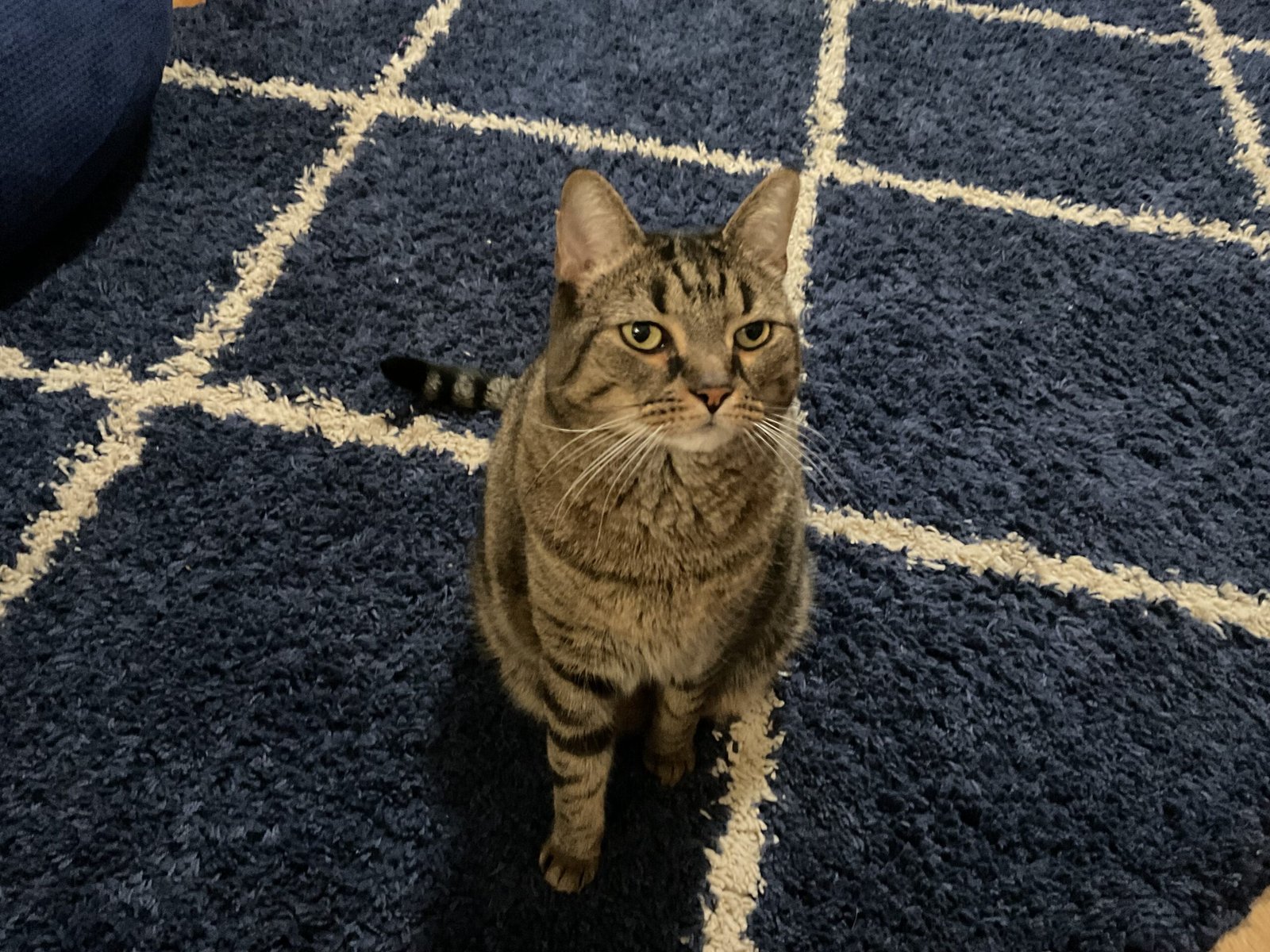
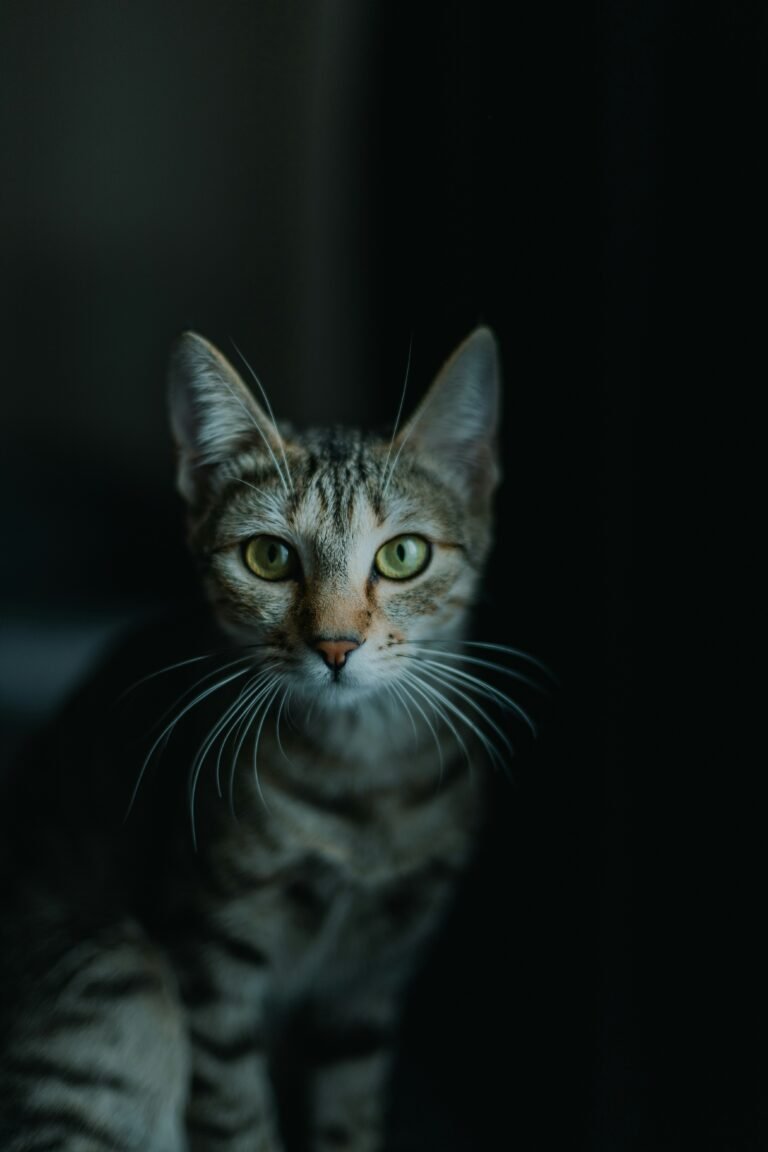
Featured image: “American Shorthair staring at camera” by JasonClark100223, via Wikimedia Commons (CC0 1.0).
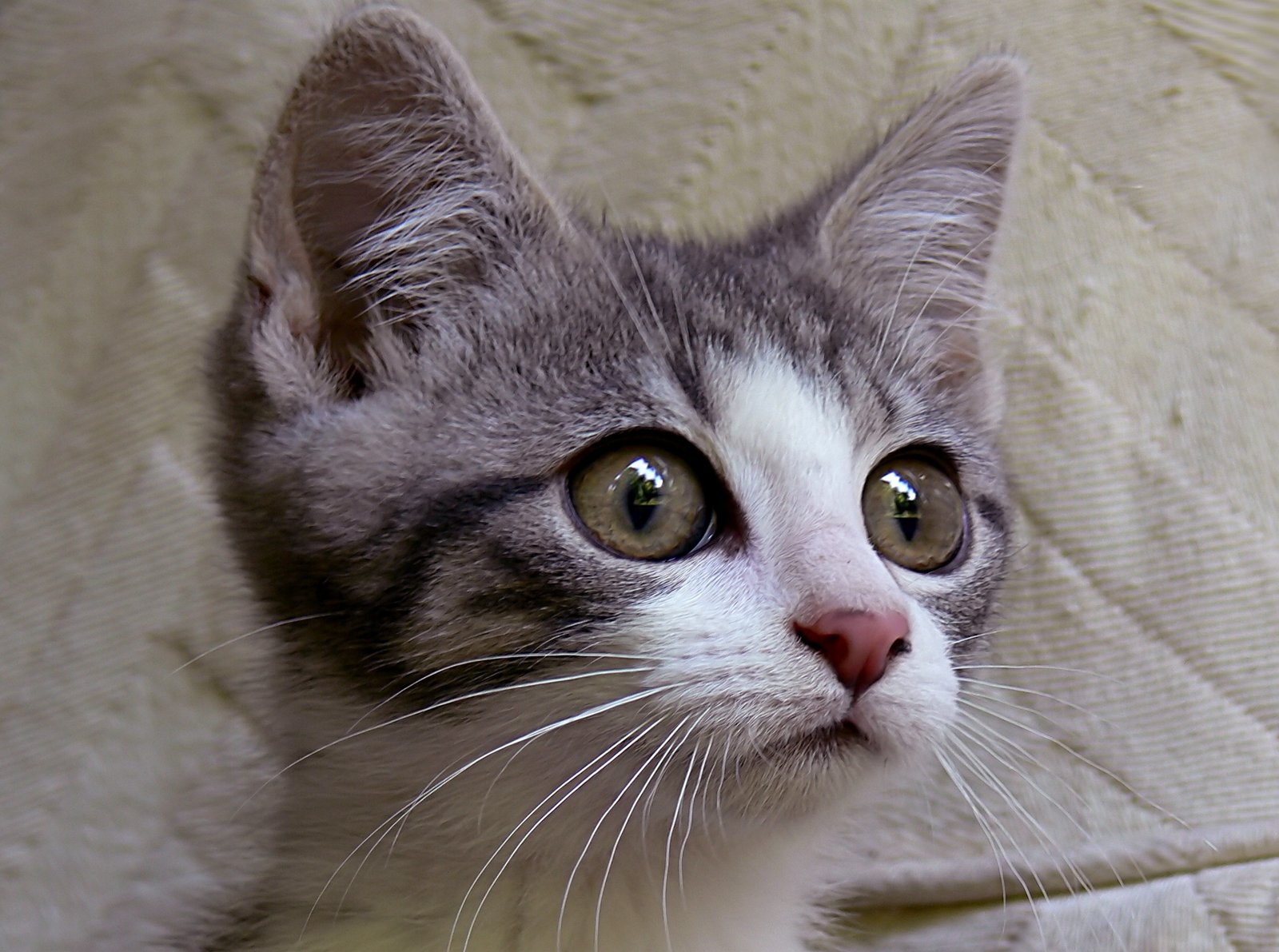
“Bright eyes” (kitten close-up) by Bernard Spragg, via Wikimedia Commons (CC0 1.0).
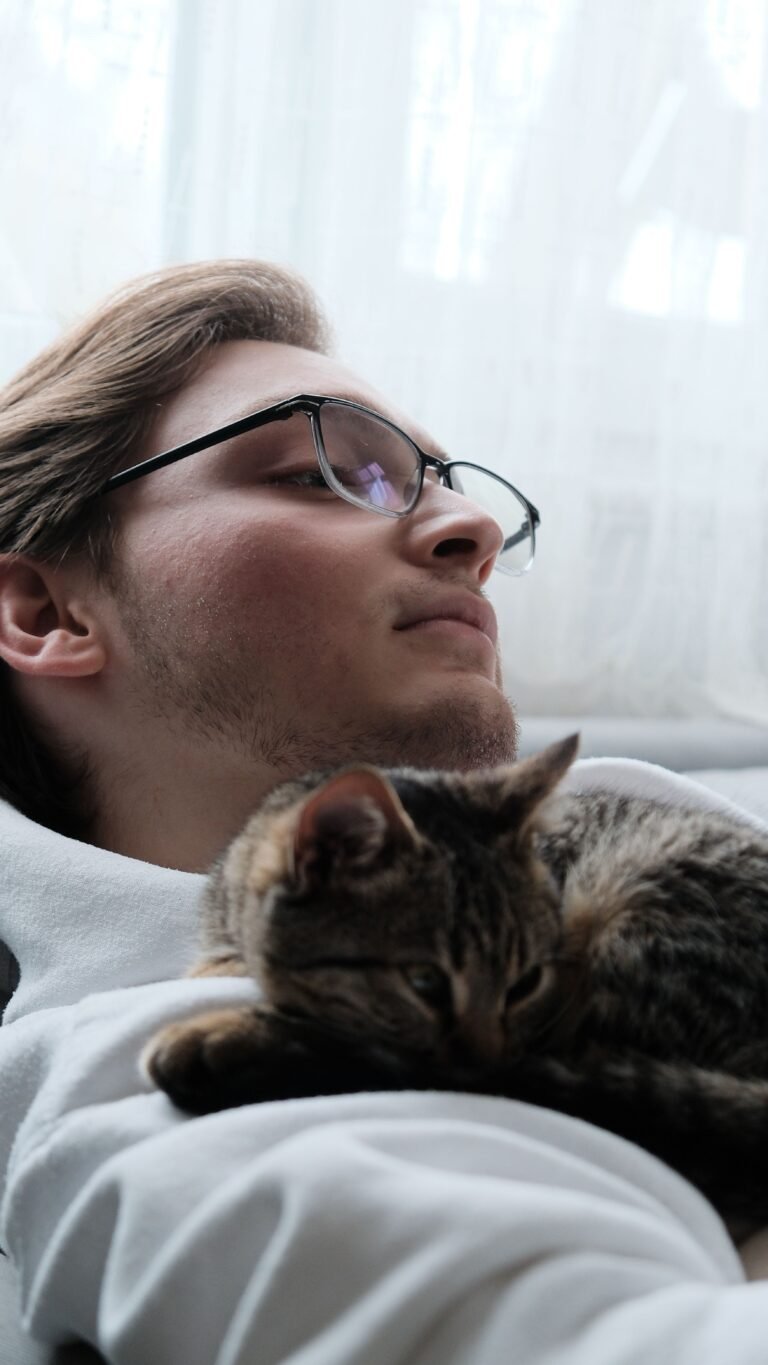
“A Sleepy Golden British Shorthair cat looking at the camera” by Demon cats, via Wikimedia Commons (CC BY 4.0).





4 Comments