How to Leash Train a Puppy: A Step-by-Step Guide
You finally clip on your puppy’s brand-new leash, excited for your first walk together.
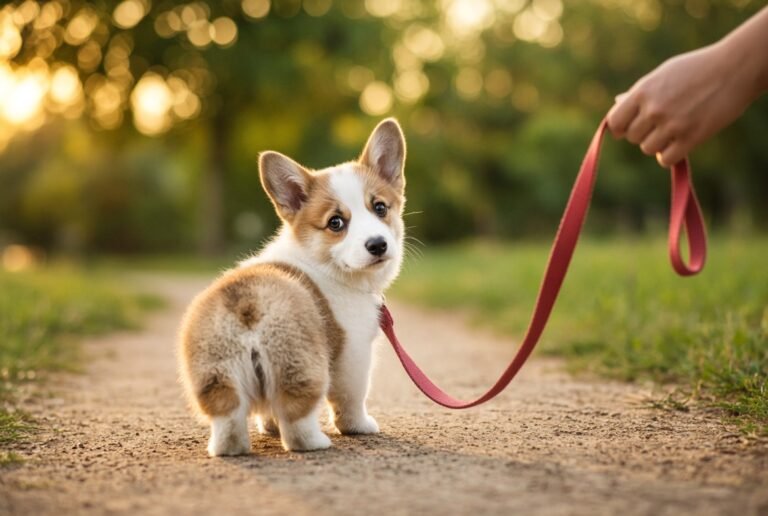
Instead of happily trotting beside you, they sit down, chew the leash, pull in the opposite direction, or refuse to move at all.
Many new owners assume their puppy is being stubborn.
The truth is much simpler.
Your puppy isn’t ignoring you—they simply don’t understand what the leash means yet.
Walking politely is a learned skill, not a natural instinct. Like learning their name or sleeping in a crate, leash manners develop through patience, positive experiences, and short, enjoyable training sessions. Once your puppy understands that staying close leads to praise, treats, and fun adventures, everything starts to click.
Table of Contents
- Quick Answer
- Why Puppies Don’t Naturally Walk on a Leash
- When Should You Start Leash Training?
- What You’ll Need
- Loose-Leash Walking vs. Heel
- How to Leash Train a Puppy in 9 Proven Steps
- Troubleshooting Common Problems
- FAQs
How to Leash Train a Puppy
Quick Answer (Featured Snippet)
To leash train a puppy, introduce a comfortable harness indoors, attach a lightweight leash, reward your puppy for staying near you, and gradually practice in quiet outdoor areas. Keep sessions short, use positive reinforcement, and teach loose-leash walking before expecting longer walks.
Why Puppies Don’t Naturally Walk on a Leash
A leash is a completely new experience.
Unlike people, puppies don’t understand that the leash connects them to you for safety. They may see it as something strange, restrictive, or even a toy.
That’s why many puppies:
- Freeze in place
- Pull backwards
- Bite the leash
- Sit down and refuse to move
These reactions are normal and don’t mean your puppy is stubborn. With positive experiences, most puppies quickly gain confidence and begin walking comfortably.
Trainer Insight: Your goal isn’t to force your puppy to walk. Your first goal is helping them feel safe and relaxed while wearing the leash.
The Science Behind Leash Training
Dogs learn through association.
When every leash session predicts praise, treats, play, or exploration, your puppy begins to associate the leash with positive experiences instead of uncertainty.
Puppies also experience the world primarily through their noses. Allowing appropriate sniffing during walks isn’t a distraction from training—it can reduce stress, build confidence, and make learning more enjoyable. The key is balancing exploration with teaching your puppy to check back in with you.
When Should You Start?
The best time is the day your puppy comes home.
You don’t need to wait until outdoor walks begin.
Many professional trainers recommend introducing the harness and leash inside the house first. By the time your puppy is ready to explore outside safely, the equipment already feels familiar instead of frightening.
Age Guide for Leash Training
| Puppy Age | Training Focus |
|---|---|
| 8–10 weeks | Wear a harness comfortably indoors |
| 10–12 weeks | Walk a few steps inside the house |
| 12–16 weeks | Practice in a quiet yard or driveway |
| 4–6 months | Build loose-leash walking around mild distractions |
| 6+ months | Improve consistency in busier environments |
Every puppy learns at a different pace. Progress matters more than speed.
What You’ll Need
Instead of buying lots of equipment, focus on a few essentials that make learning easier.
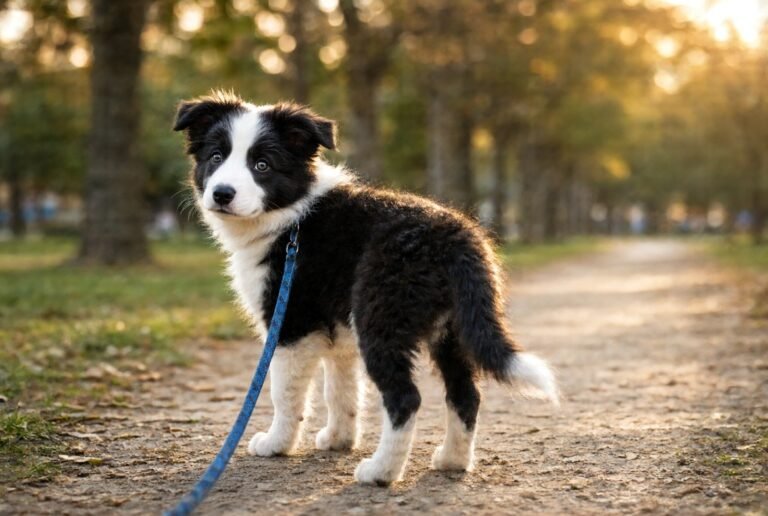
A well-fitted front-clip harness is often recommended because it reduces pressure on your puppy’s neck if they pull. Pair it with a lightweight six-foot leash and plenty of soft treats your puppy loves.
Avoid retractable leashes during early training because they make it harder for puppies to understand the difference between a loose leash and constant tension.
Loose-Leash Walking vs. Heel
Many owners think these are the same thing.
They’re actually different skills.
| Loose-Leash Walking | Formal Heel |
|---|---|
| Puppy may sniff and explore | Puppy stays close to your side |
| Relaxed everyday walks | Precision obedience |
| Encourages natural movement | Requires constant focus |
| Ideal for most families | Useful for competitions or crowded areas |
For most pet owners, loose-leash walking is the goal—not a perfect competition-style heel.
How to Leash Train a Puppy in 9 Proven Steps
Step 1. Help Your Puppy Love the Harness
Don’t begin by asking your puppy to walk.
Instead, let them wear the harness indoors for just a few minutes while they play, explore, or enjoy treats.
The goal is simple:
Your puppy should think,
“Great! The harness means something fun is about to happen.”
Why It Works
Positive first impressions reduce fear and build confidence before walking ever begins.
Step 2. Introduce the Leash Without Going Anywhere
Clip the leash onto the harness.
Then…
Do almost nothing.
Let your puppy walk around the room while you calmly follow behind.
Many puppies glance back at the strange object following them. Others ignore it after a minute or two.
Both reactions are perfectly normal.
Real-Life Scenario
One owner worried because their Labrador puppy refused to move once the leash was attached.
Instead of pulling, they spent three short indoor sessions rewarding calm behavior.
By the fourth day, the puppy walked happily across the living room with almost no hesitation.
Tiny wins like these build the foundation for confident outdoor walks.
Step 3. Reward Every Check-In
Stand next to your puppy.
Take one slow step.
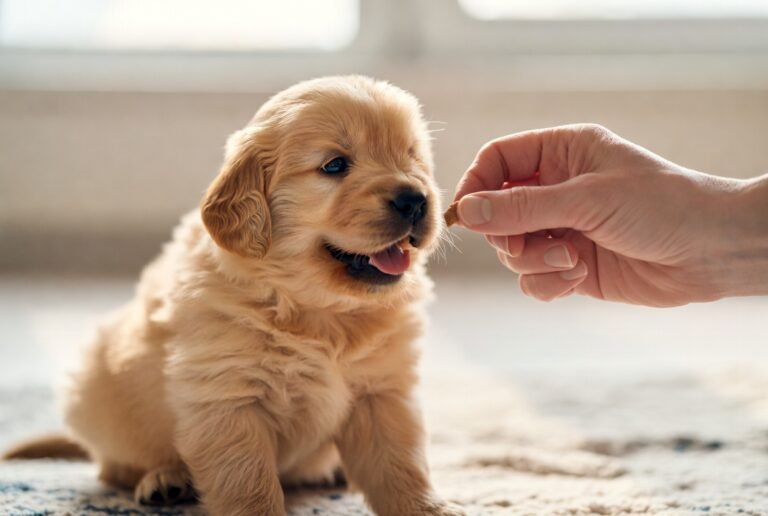
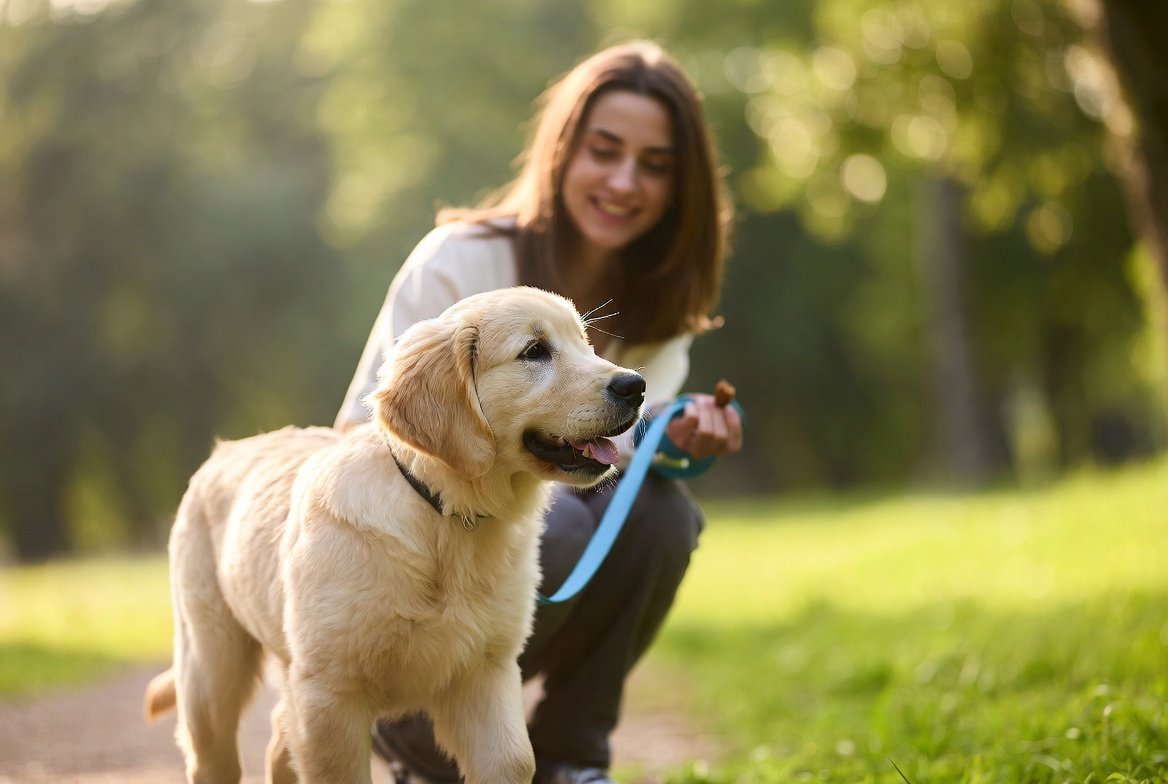
If your puppy follows—or even looks at you—reward immediately.
Don’t worry about perfect walking yet.
At this stage, you’re teaching one important lesson:
Paying attention to you always leads to something good.
As your puppy improves, gradually reward every few steps instead of every single one. This helps build lasting leash manners without relying on treats forever.
Step 4. Teach Your Puppy to Follow Your Movement
Once your puppy happily walks a few steps beside you, begin changing direction.
Walk forward.
Turn left.
Turn right.
Pause for a second.
Then start walking again.
Every time your puppy notices your movement and follows without pulling, reward them.
This simple exercise teaches that paying attention to you is more rewarding than charging ahead.
Trainer Tip
Don’t pull the leash to guide your puppy.
Instead, use your voice, body movement, or a treat to encourage them to choose the correct position. Puppies learn faster when they make good decisions themselves instead of being physically moved.
Step 5. Practice in Quiet Outdoor Spaces
Walking outside changes everything.
Your backyard, driveway, or quiet sidewalk is filled with exciting smells, birds, leaves, and sounds your puppy has never experienced before.
Don’t expect perfect walking immediately.
The first few outdoor sessions are about confidence—not distance.
A Common Situation
Your puppy walks beautifully inside but suddenly stops every few feet outdoors to sniff the grass.
That’s not bad behavior.
It’s how puppies gather information about the world.
Allow short sniff breaks, then happily encourage your puppy to continue walking. Controlled sniffing keeps training enjoyable while teaching your puppy to reconnect with you afterward.
Why Sniffing Is Part of Training
Many owners think every second of a walk should look neat and organized.
In reality, sniffing is an important form of mental enrichment.
When puppies investigate new scents, they:
- Build confidence in unfamiliar places.
- Reduce stress and excitement.
- Learn about their environment.
- Return to training feeling calmer.
The goal isn’t to stop sniffing completely.
Instead, teach your puppy that they can enjoy the environment while still checking back with you regularly.
Step 6. What to Do When Your Puppy Pulls
Sooner or later, every puppy pulls.
They see another dog.
A squirrel runs across the path.
A fascinating smell appears.
The biggest mistake is pulling back harder.
Instead:
Stop walking.
Wait quietly.
The moment the leash becomes loose, praise your puppy and continue moving.
Your puppy gradually learns that pulling makes the adventure pause, while a loose leash keeps the walk going.
Common Mistake
Many owners accidentally reward pulling by continuing to walk.
If pulling always gets your puppy closer to what they want, they’ll keep doing it.
Consistency matters far more than strength.
Step 7. Teach Check-Ins During Walks
One of the easiest ways to improve puppy leash training is rewarding voluntary attention.
Whenever your puppy looks back at you—even for a second—smile, praise them, and offer a small reward.
Over time, these little check-ins become a habit.
Instead of constantly pulling toward distractions, your puppy begins asking,
“Where are we going next?”
Success Sign
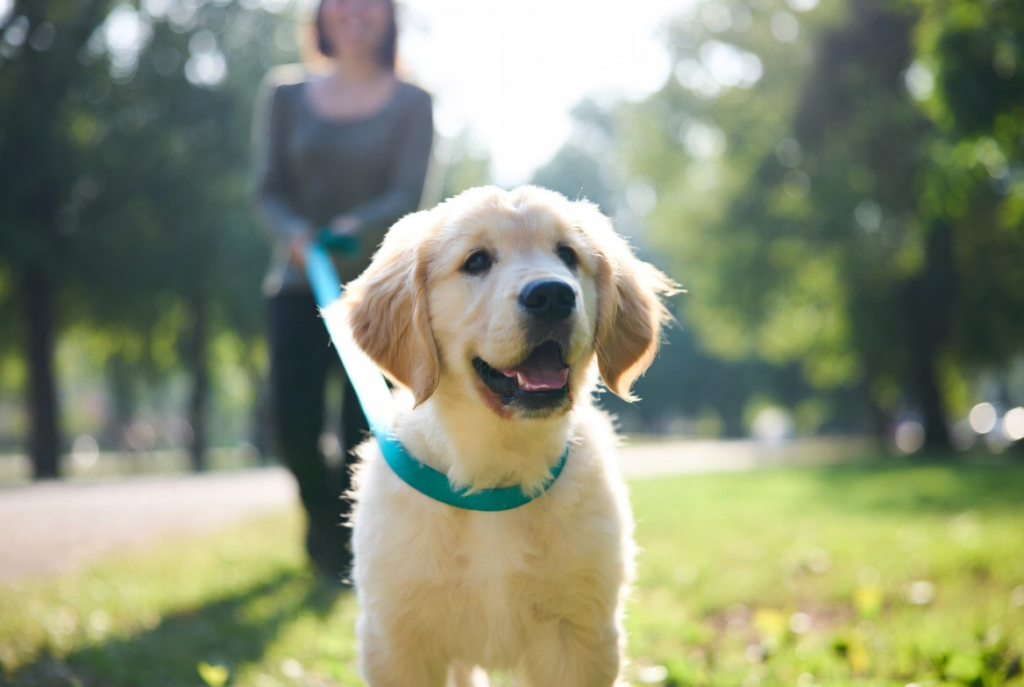
Your puppy is making excellent progress if they:
- Frequently look at you without being asked.
- Recover quickly after seeing distractions.
- Walk with a loose leash more often than before.
- Stay relaxed instead of constantly rushing ahead.
Understanding Your Puppy’s Body Language
Your puppy can’t tell you how they’re feeling with words.
They communicate through body language.
Learning these signals helps you adjust training before your puppy becomes overwhelmed.
| Body Language | What It Usually Means | What You Should Do |
|---|---|---|
| Freezing | Unsure or nervous | Give your puppy time and avoid pulling. |
| Tail tucked | Fear or uncertainty | Move to a quieter area and build confidence. |
| Lip licking | Mild stress | Slow down and reduce distractions. |
| Yawning (when not tired) | Feeling overwhelmed | Take a short break. |
| Sniffing constantly | Processing new surroundings | Allow brief sniffing before continuing. |
| Relaxed body and wagging tail | Comfortable and confident | Continue rewarding calm walking. |
Watching your puppy’s body language is just as important as watching the leash.
My Puppy Won’t Walk — What Should I Do?
Many puppies refuse to walk during their first few outings.
Usually, this isn’t stubbornness.
It’s uncertainty.
Instead of dragging your puppy forward:
- Stay calm.
- Kneel beside them.
- Encourage them with a cheerful voice.
- Reward even one small step forward.
Confidence grows through encouragement—not pressure.
My Puppy Keeps Biting the Leash
Leash biting is another common beginner problem.
Young puppies naturally explore objects with their mouths, especially while teething.
If your puppy grabs the leash:
Pause calmly.
Offer a chew toy or ask for a simple behavior they already know, such as making eye contact.
Once they let go, continue walking as though nothing happened.
Avoid turning leash biting into a tug-of-war game because many puppies find that rewarding.
Week-by-Week Progress Guide
Every puppy learns at a different pace, but many owners notice a pattern like this:
| Week | What You May Notice |
|---|---|
| Week 1 | Puppy accepts the harness and leash indoors. |
| Week 2 | Walks short distances with frequent rewards. |
| Week 3 | Follows your direction more consistently and pulls less often. |
| Week 4 | Begins enjoying short outdoor walks with a loose leash. |
Some puppies progress faster, while others need several extra weeks. Patience and consistency matter much more than reaching milestones on a fixed schedule.
Step 8. Gradually Reduce Treats
Treats are one of the best teaching tools during first leash training, but they shouldn’t be your puppy’s only reason for walking politely forever.
Once your puppy consistently stays near you:
- Reward every few steps instead of every step.
- Mix treats with praise, petting, or a quick game.
- Surprise your puppy with occasional high-value rewards for excellent walking.
This keeps your puppy motivated because they never know when the next reward is coming, while gradually building reliable leash manners.
Pro Tip
Think of treats as a teacher—not a permanent paycheck.
Over time, calm walks, sniffing opportunities, and praise become rewarding on their own.
Step 9. Practice in New Environments
Once your puppy walks confidently in quiet places, slowly increase the challenge.
Try different environments such as:
- A quiet neighborhood street
- A local park during less busy hours
- A pet-friendly walking trail
- A friend’s fenced backyard
Change only one thing at a time.
If the new location feels overwhelming, move farther away from distractions or return to an easier environment before trying again.
Every successful experience builds confidence for future adventures.
Age Differences in Leash Training
Every stage of puppyhood brings different abilities and challenges.
| Puppy Age | What to Expect | Best Training Focus |
|---|---|---|
| 8–10 weeks | Curious but easily distracted | Introduce the harness and leash indoors. |
| 10–12 weeks | Beginning to follow people | Reward short periods of loose-leash walking. |
| 4–5 months | More energetic and confident | Practice around mild distractions. |
| 6+ months | Stronger and more independent | Improve consistency and reduce treat frequency. |
Avoid comparing your puppy with others. Some learn quickly, while others simply need more repetition.
Do Some Breeds Learn Faster?
Breed can influence learning style, but personality, socialization, and consistent practice usually matter more.
For example:
- Border Collies often enjoy learning new tasks quickly.
- Labrador Retrievers are usually highly food-motivated, making reward-based training easier.
- Golden Retrievers generally respond well to positive reinforcement.
- French Bulldogs and Shih Tzus may need shorter, more frequent sessions because they can lose focus sooner.
Regardless of breed, patient and consistent training produces the best long-term results.
Loose-Leash Walking vs. Formal Heel
Many owners think these skills are identical.
They’re actually different goals.
| Loose-Leash Walking | Formal Heel |
|---|---|
| Relaxed everyday walking | Precision obedience |
| Puppy can safely sniff and explore | Puppy stays close to your leg |
| Best for family walks | Best for advanced training or competitions |
| Encourages confidence | Requires constant attention |
For most families, teaching loose-leash walking is more practical than expecting a perfect heel position.
Common Leash Training Mistakes
Even experienced owners sometimes make these mistakes:
- Starting in a busy environment before practicing indoors.
- Pulling the leash instead of encouraging movement.
- Taking walks that are too long for a young puppy.
- Expecting perfect behavior on the first day.
- Rewarding pulling by continuing to walk.
- Giving too many commands at once.
- Ending every walk only when your puppy becomes tired or frustrated.
Avoiding these mistakes often speeds up progress more than buying new equipment.
How Do You Know Training Is Working?
Look for these signs:
- ✅ Your puppy willingly wears the harness.
- ✅ They recover quickly after seeing distractions.
- ✅ The leash stays loose more often.
- ✅ They check in with you during walks.
- ✅ Pulling becomes less frequent each week.
- ✅ Walks feel calmer and more enjoyable.
Small improvements every week are a better measure of success than expecting perfection overnight.
Daily Leash Training Checklist
Before each session, ask yourself:
- ✅ Did I choose a quiet location?
- ✅ Do I have small, tasty treats?
- ✅ Is the harness fitted correctly?
- ✅ Am I keeping the session under 10 minutes?
- ✅ Will I reward calm behavior consistently?
- ✅ Am I ending the session while my puppy is still enjoying it?
Consistency beats long training sessions every time.
Myth vs. Fact
| Myth | Fact |
|---|---|
| Puppies naturally know how to walk on a leash. | Walking politely is a learned behavior. |
| Pulling back harder stops pulling. | Rewarding a loose leash teaches better habits. |
| Every walk should be perfect. | Puppies learn through repetition and mistakes. |
| Sniffing ruins training. | Controlled sniffing supports confidence and mental enrichment. |
| Retractable leashes are best for beginners. | A standard leash is usually easier for teaching loose-leash walking. |
Frequently Asked Questions
Should I let my puppy sniff during walks?
Yes. Controlled sniffing provides mental stimulation and helps many puppies feel more relaxed. Simply encourage your puppy to return their attention to you before continuing the walk.
Can I leash train my puppy indoors only?
Absolutely. Indoor practice is often the best place to begin because there are fewer distractions.
What if my puppy is scared of traffic?
Increase the distance from busy roads and reward calm behavior. Gradually move closer as your puppy becomes more confident.
How many treats should I use?
Use enough to keep your puppy engaged during the early stages, then gradually replace some treats with praise and play as their leash skills improve.
Can I leash train two puppies together?
It’s much easier to train each puppy separately at first. Once both understand the basics, you can begin practicing together.
Why does my puppy lie down during walks?
Many puppies lie down because they’re unsure, tired, or distracted. Encourage them with praise instead of pulling them forward.
Why does my puppy pull only outside?
Outdoor environments are much more exciting than your home. Continue practicing in quieter locations before increasing distractions.
Is a harness better than a collar?
For most young puppies, a properly fitted harness offers better comfort and reduces pressure on the neck during training.
Conclusion
Learning how to leash train a puppy isn’t about creating perfect walks from day one.
It’s about building trust, confidence, and communication one short session at a time.
Some puppies happily walk beside their owners within a few days, while others need several weeks before they feel comfortable outdoors. Both are completely normal.
Celebrate the small victories—a few loose steps, a quick check-in, or a calm response to a new distraction. Those little moments gradually become lasting habits.
With patience, consistency, and positive reinforcement, your puppy won’t just learn to walk on a leash—they’ll learn that every walk with you is a safe, enjoyable adventure.