
What Do Baby Bunnies Eat? Week-by-Week Guide (0–8 Weeks)
What do baby bunnies eat? Milk first, then unlimited alfalfa hay and pellets, with weaning by 8 weeks and greens only from 12 weeks.
Found a baby bunny and wondering what baby bunnies eat? Don’t panic — and if the kit is outdoors in a nest, don’t pick it up: it is almost certainly not abandoned, since rabbit mothers usually return to feed only once, sometimes twice, a day — often at night, dawn or dusk, and almost never while you are watching. Ask any rabbit owner what their bunny eats and you’ll get the same answer: hay, hay and more hay. But a baby bunny — properly called a kit — is a different story. For the first fortnight of life, milk is its essential food, and the steps that follow are where most well-meaning owners go wrong.
This guide walks you through exactly what baby bunnies eat from birth to eight weeks: the milk-only stage, the first nibbles of hay, the weaning transition, and what to feed an orphaned kit or a wild one you’ve found outdoors. Guidance in this update is drawn from the House Rabbit Society and Oxbow Animal Health, checked live in this update.
Quick answer: Milk is the only essential food for the first two weeks. From about two to three weeks, kits nibble unlimited alfalfa hay and alfalfa-based pellets, with water available. Weaning completes by about 8 weeks; do not separate or rehome a kit before then. Orphaned kits need kitten milk replacer or goat’s milk, never cow’s milk.
Baby Bunny Feeding Timeline: 0 to 8 Weeks
Use this as your at-a-glance reference, then read the detail for each stage below.
| Age | What they eat | What’s happening |
|---|---|---|
| 0–1 week | Mother’s milk only | Eyes closed and fully dependent; the doe feeds usually once, sometimes twice, a day — often at night, dawn or dusk, and almost never while you are watching |
| 1–2 weeks | Mother’s milk only | Fur grows in; eyes open at around 10 days |
| 2–3 weeks | Milk, plus first nibbles of unlimited alfalfa hay, alfalfa-based pellets and water | Domestic kits start exploring outside the nest |
| 3–4 weeks | Milk, plus increasing amounts of unlimited alfalfa hay and alfalfa-based pellets | Eating solids with growing confidence |
| 4–6 weeks | Mostly unlimited alfalfa hay and alfalfa-based pellets, less and less milk | Gut matures |
| 6–8 weeks | Unlimited alfalfa hay and alfalfa-based pellets, water — weaning | Weaning completes by around eight weeks |
Weaning completes between about 6 and 8 weeks (orphaned domestics around 6 weeks), but do not separate or rehome a kit before 8 weeks even if it is eating solids confidently.
What Do Newborn Baby Bunnies Eat?
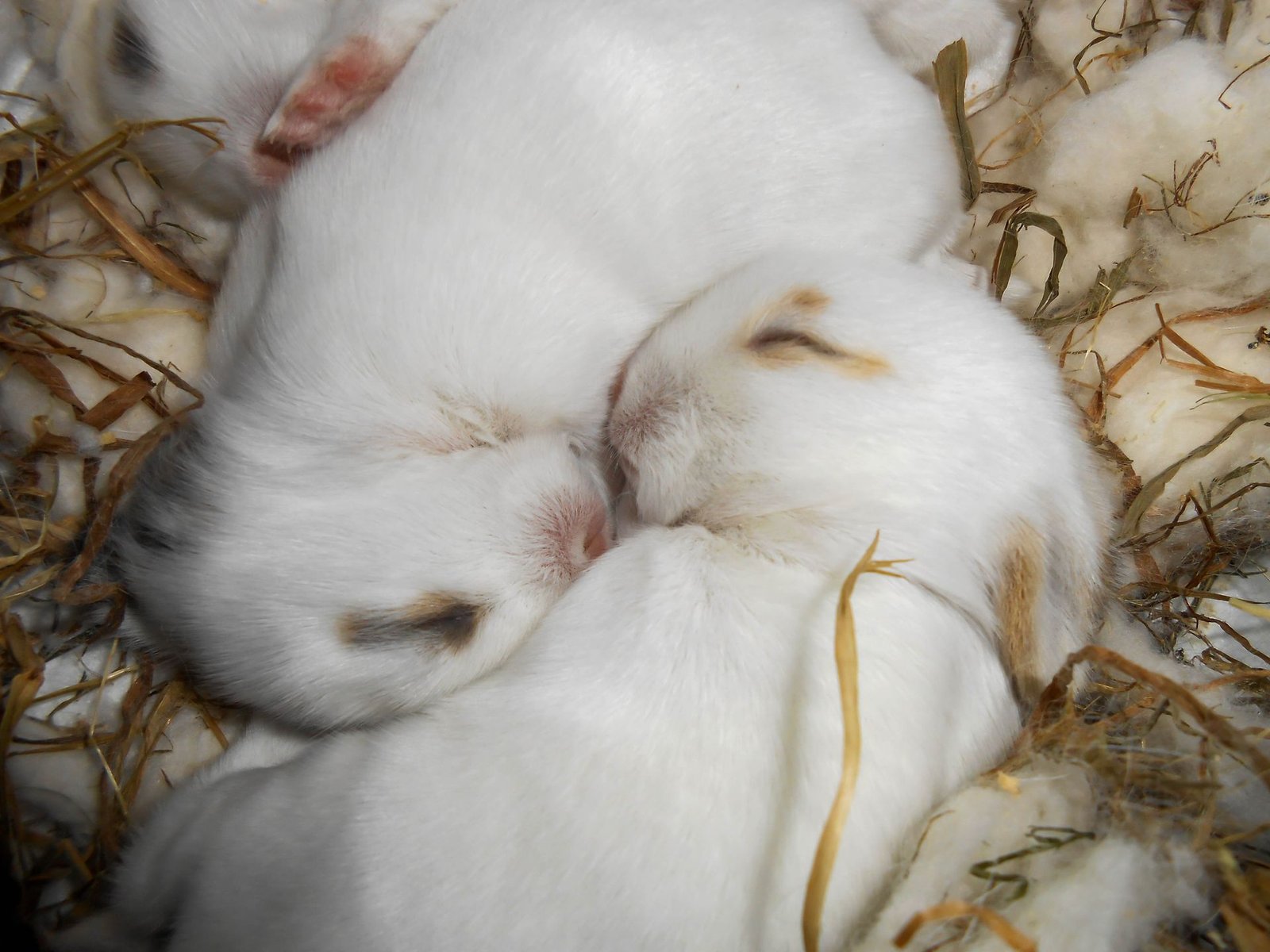
Milk is the only essential food for the first two weeks; tiny nibbles of hay/pellets may begin once the eyes open at about day 10, but milk still does the heavy lifting until weaning. A doe feeds usually once, sometimes twice, a day — often at night, dawn or dusk, and almost never while you are watching — then spends the rest of her time away from the nest. This isn’t neglect; it’s instinct. Hanging around would only draw predators to her babies. Absence from the nest is not evidence of abandonment; check bellies, not the doe.
So if you’ve just discovered a nest, resist the urge to “help”. A kit with a full, round, plump belly has been fed recently. Keep pets away, avoid handling the kits, and let the mother do her job. The House Rabbit Society’s hand-rearing guidance exists for kits with genuinely no mother — not for nests that simply look unattended.
Found a kit? Check in 60 seconds: domestic or wild? Is the nest intact? Is the belly warm and round? If the nest is intact and the belly is warm and round, leave it alone. If the kit is cold, injured, or the mother is known to be dead, call a vet for a domestic kit or a wildlife rehabilitator for a wild kit — do not feed a wild kit yourself.
Doe care while nursing: give the doe unlimited alfalfa hay and alfalfa-based pellets, plus fresh water at all times. Keep greens away from the kits until 12 weeks. Keep the nest quiet, and handle the kits as little as possible.
When Do Baby Bunnies Start Eating Solid Food?
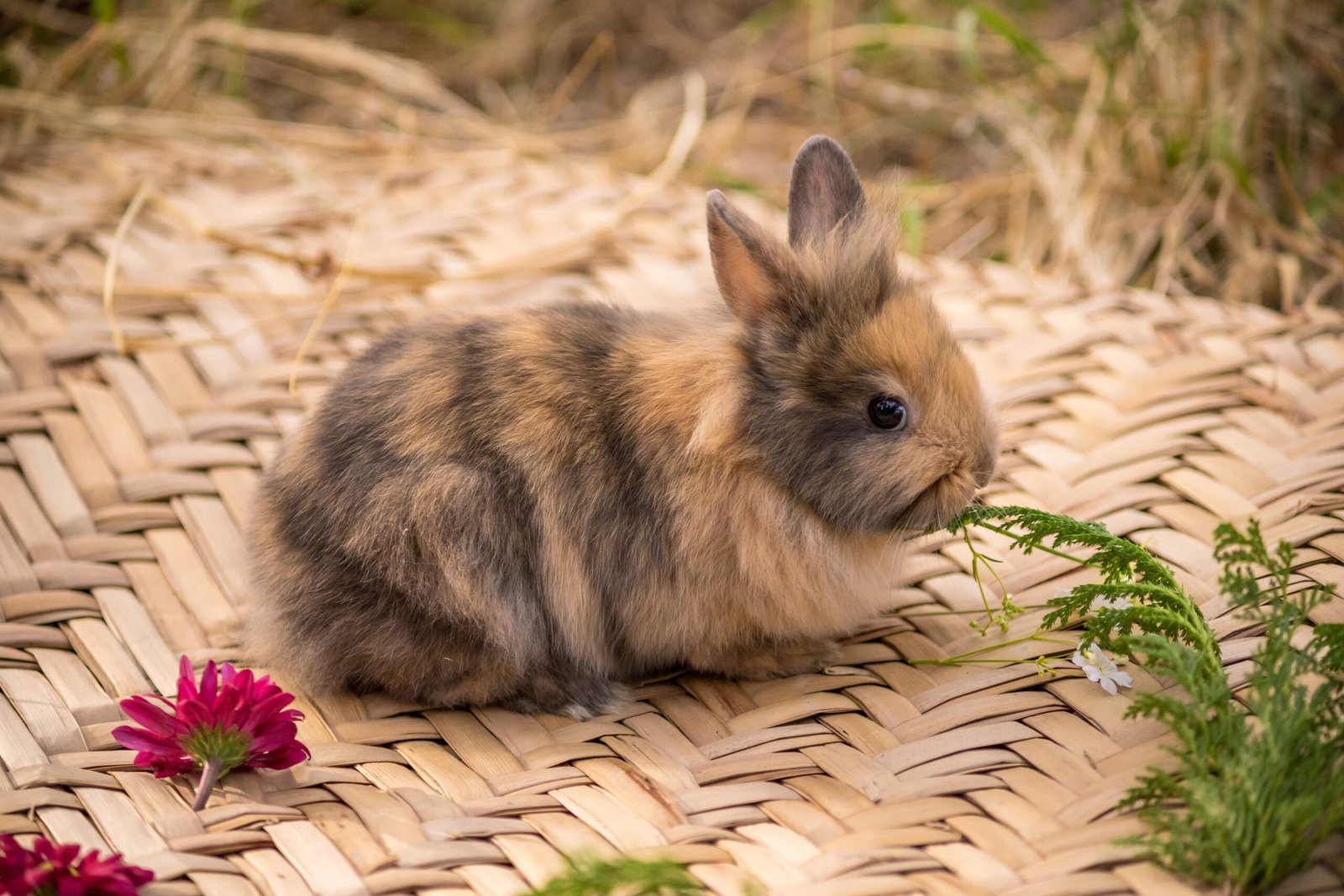
Around two to three weeks old. By now the kits’ eyes have opened (usually at about 10 days) and they’re clambering out of the nest to investigate. The first things they sample are hay and pellets only: strands of alfalfa hay and a few of her alfalfa-based pellets. If the doe is eating greens, kits must not be able to reach them.
Make this easy for them. Offer unlimited alfalfa hay and plain alfalfa-based young-rabbit pellets from the first nibbles. Grass hays (timothy, meadow, orchard) may sit alongside, but they are not the main hay for a kit under 7 months. Offer plain pellets rather than muesli-style mixes, and put down a shallow dish of water. At this stage solids are tasters, not meals: milk is still doing the heavy lifting. Following House Rabbit Society guidance, young-rabbit pellets are unlimited to 7 months. Some sellers advise a measured egg-cupful; do not mix the two systems — if you measure pellets, say so and give the measured amount by body weight.
What Do Baby Bunnies Eat at 3 to 4 Weeks Old?
More of the same, in bigger quantities. Nursing continues, but you’ll notice the kits spending real time at the hay rack and pellet bowl. This is the foundation of their adult diet being laid down, so quality matters: unlimited hay and plain, alfalfa-based pellets. Oxbow’s guidance for growing rabbits under a year old is built on exactly that — an alfalfa-based pelleted diet with loose alfalfa hay, giving young animals the extra protein and calcium they need.
What they don’t need yet: vegetables, fruit or treats of any kind. Their digestive systems are still developing, and rich new foods can trigger dangerous gut upsets. Keep the menu boring for now — your kit’s tummy will thank you. Sweet fruit can wait too — grapes and other fruit are occasional treats for much later, not at 12 weeks.
What Do 4 to 6 Week Old Bunnies Eat?
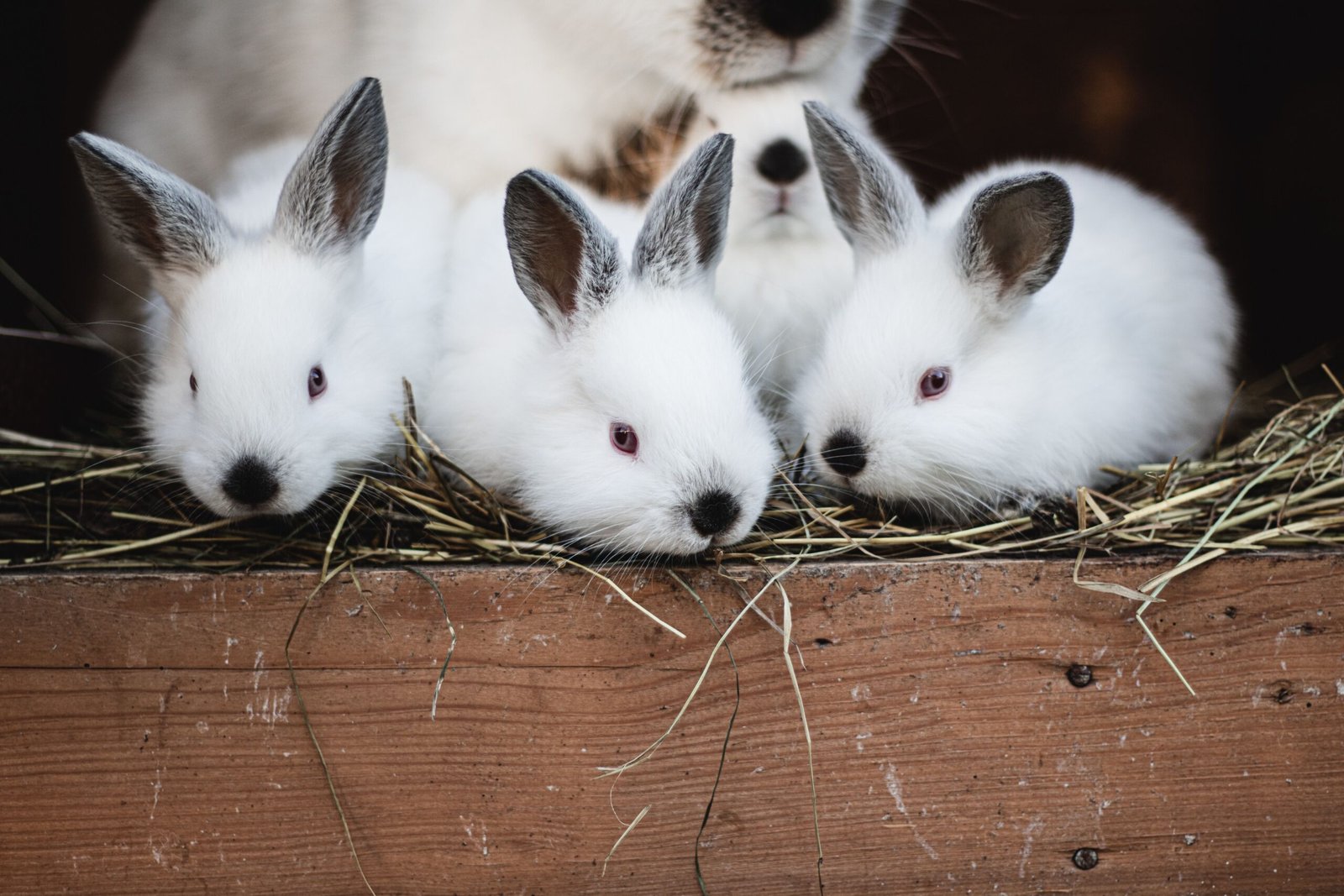
By four to six weeks, solids have taken over as the main event and nursing is tapering off. Still unlimited alfalfa hay and unlimited alfalfa-based pellets. The adult grass-hay switch does not happen at 4–6 weeks; it happens at around 7 months. Fresh water stays available at all times.
You’ll also notice something that looks alarming but is completely healthy: kits eating droppings. These are caecotropes — soft, nutrient-rich pellets that seed the gut with the bacteria rabbits need to digest fibre. Mother-raised kits get them naturally. For an orphan, see the precise caecotrope guidance in the orphan section below. And because rabbits are lagomorphs, not rodents, their hindgut-fermenting digestion depends on a constant supply of fibre — another reason the hay must never run out.
The golden rule at this age is stability. Sudden diet changes can trigger gut stasis in young rabbits, so introduce nothing new and change nothing abruptly.
How Do You Wean Baby Bunnies?
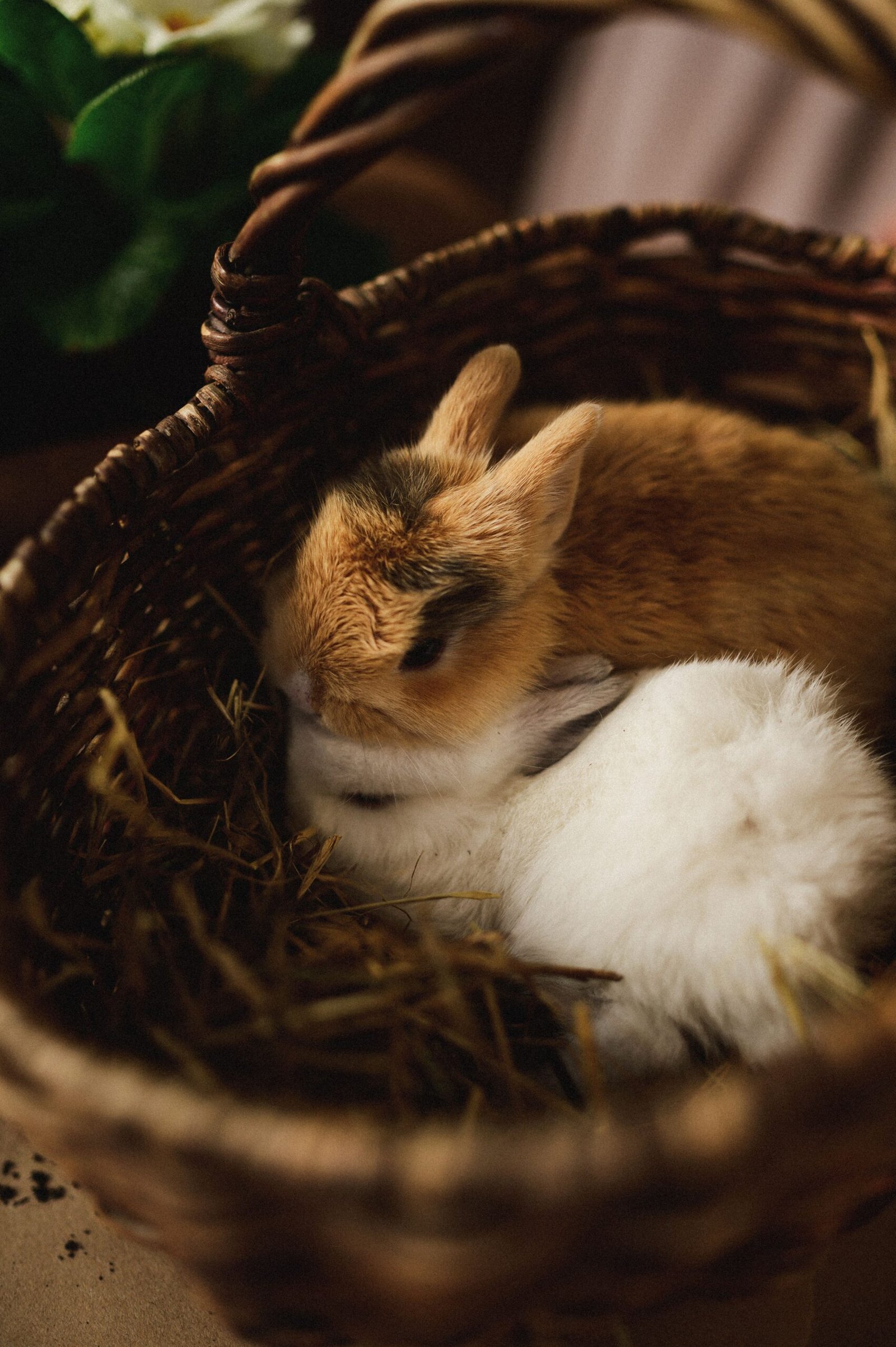
Weaning happens between six and eight weeks, and the best approach is to let the mother lead. She will naturally nurse less and less as the kits show less interest; there’s no need to separate them to force it. A kit is ready when it’s eating hay and pellets confidently and drinking water on its own. Weaning completes between about 6 and 8 weeks (orphaned domestics around 6 weeks), but do not separate or rehome a kit before 8 weeks even if it is eating solids confidently.
This is AFTER this 0–8 week guide ends. Do not start greens inside the 0–8 week window. No fresh leafy greens, vegetables or fruit treats before 12 weeks. At 12 weeks, introduce ONE new leafy green at a time, under ½ oz, and wait 24 hours before the next new food. This 12-week rule applies to leafy greens first; sugary fruit and non-leafy treats are not automatic at 12 weeks — they come later, in small amounts, as occasional treats only. Exception: if the kit was already introduced to those specific vegetables while with its mother, follow your vet’s advice on continuing them. Safe first offerings include romaine lettuce, spring greens and herbs like basil and mint. Watch the droppings for any sign of soft stool.
Two things not to rush: weaning itself, and rehoming. Early weaning stresses the immature gut and can turn fatal quickly, and kits should stay with their mother until at least eight weeks. Getting this right sets up a long, healthy life — eight to twelve years for a well-kept indoor rabbit — that proper feeding makes possible.
After 8 weeks, the diet stays on unlimited alfalfa hay and alfalfa pellets until 7 months — see how long bunnies live for what adult life looks like after weaning.
After 12 weeks, leafy greens come first; sugary foods stay as rare treats — see how much carrot counts as a safe treat and the tomato portion guide for older rabbits.
What Do You Feed an Orphaned Baby Bunny?
If you are certain the mother is gone — injured, dead, or the kits were found somewhere no doe could reach — an orphaned kit needs warmth first and food second. A chilled kit cannot digest anything, so warm it gently against your skin or with a covered warm (not hot) water bottle before offering any milk.
The House Rabbit Society recommends kitten milk replacer (KMR) or goat’s milk — never cow’s milk, which is far too low in fat for kits and can cause fatal digestive upset. Cow’s milk is not a substitute: it is lower in fat/energy than rabbit milk and can cause digestive upset. For wild kits, kitten KMR only — never puppy formula or Esbilac — and only as a bridge to a rehabilitator. Goat’s milk is only a fallback; it is not equal to rabbit milk. Warm formula to body temperature, test on your wrist, feed upright with a 3 ml syringe or eyedropper, a few drops at a time, letting the kit swallow — milk from the nose means stop. Never squeeze a stream into its mouth. Feed twice a day, morning and evening.
Domestic only — rough daily amounts, split across feeds (morning and evening, like a mother rabbit’s rhythm): Never make up a missed feed with one large feed — overfeeding can cause fatal gut disease.
| Age | Amount per day | Feeds |
|---|---|---|
| Newborn | Up to 5 ml | 2–3 small feeds daily; wild kits 2 feeds daily |
| 1–2 weeks | 10–15 ml | 2–3 small feeds daily; wild kits 2 feeds daily |
| 2–3 weeks | Up to 26–30 ml per day, split into 2 feeds (for a kit expected to reach about 5 lb as an adult; smaller breeds need less — weigh daily and follow vet advice) | 2 feeds daily |
| 3–6 weeks | 26–30 ml | 2 feeds daily |
| Kit weight | Amount per feed |
| 35-50 g | 8-11 cc |
| 50-65 g | 10-13 cc |
| 65-80 g | 13-18 cc |
| 80-95 g | 15-20 cc |
| Over 95 g | Max 20 cc |
Smaller kits may need less than these amounts.
Source: rabbit.org orphans guide.
These are guidelines, not gospel — weigh the kit daily and let steady weight gain be your judge. Until the eyes open at around 10 days, you’ll also need to stimulate the kit to urinate and pass droppings after each feed, gently rubbing the genital area with a warm damp cloth, as the mother would do by licking. For an orphan, with vet guidance, one caecotrope from a healthy adult per day for 4–5 days, mixed with formula — especially under one week old. Do not give ‘a few’ at a time.
Once the eyes are open, offer hay, plain pellets and water exactly as you would for mother-raised kits. For caecotropes, see the precise guidance above. Weaning completes between about 6 and 8 weeks (orphaned domestics around 6 weeks), but do not separate or rehome a kit before 8 weeks even if it is eating solids confidently. And be honest with yourself about the odds: hand-rearing is difficult, so involve a vet or experienced rabbit rescue from day one — and if the kit is wild, contact a wildlife rehabilitator rather than attempting it yourself.
Daily orphan routine: warm, feed upright, stimulate, weigh, record. Warning signs — call the vet the same day: no weight gain, wrinkled belly, soft stool, not eating, or no droppings. Emergency now: cold kit, bloat, diarrhoea, or milk from the nose. If the mother will not feed the kits: do not force nursing; keep kits warm together; do not separate the doe without vet advice; contact a vet or rescue on day one; do not start formula until warmth and vet guidance are in place.
What Do Wild Baby Bunnies Eat?
Wild only, rehabilitator only. The same thing domestic kits eat at first: only their mother’s milk. A wild doe feeds usually once, sometimes twice, a day — often at night, dawn or dusk, and almost never while you are watching — and stays away the rest of the time, so a nest of babies sitting alone is almost certainly not abandoned. Absence from the nest is not evidence of abandonment; check bellies, not the doe. Eyes open at about 10 days (domestic; wild cottontails 7–10 days).
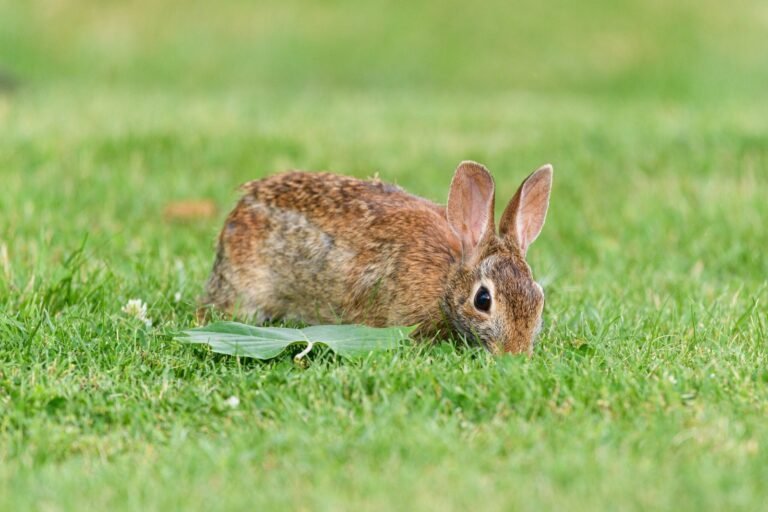
If you find kits outdoors, the kindest action is usually no action: keep dogs and cats away and leave the nest undisturbed. A simple check is to lay thin twigs or string in a grid over the nest and look the next morning — if it’s been disturbed, the mother has returned. Only intervene if a kit is visibly injured, cold, or you know the mother is dead; then contact a wildlife rehabilitator and do not attempt to feed the kit yourself. Very young wild kits rarely survive hand-rearing. For the full picture of the adult wild diet, see our guide to what wild rabbits eat.
Wild only: wild cottontails are weaned at about 3–4 weeks, and jackrabbits at 7–9 weeks. Cottontails are released when they are eating hay and greens and are about 5 inches long, at dusk or dawn. Wild orphans in rehabilitator care may have greens (carrot tops, parsley, dandelion) at eyes open — this is rehabilitator-only care, not home care.
When Can Baby Bunnies Drink Water?
Offer water from eyes-open (about day 10) in a shallow, heavy dish the kits can’t tip over or climb into; expect real drinking from 2–3 weeks. Before eyes open, kits get fluid from milk — never syringe water into a newborn. Very young kits can chill dangerously if soaked. Change it daily; soiled water is a fast route to gut infections.
Before that age, kits get all the fluid they need from their mother’s milk. Never try to syringe water into a newborn — liquid given the wrong way can end up in the lungs. If a hand-reared kit seems dehydrated (skin that stays pinched when tented, sunken eyes), that’s a veterinary emergency, not a cue to offer more water. Do not rely on a water bottle alone for young kits; keep the shallow dish available and check that any bottle drips and can be reached.
What Foods Should Baby Bunnies Never Eat?
Young digestive systems have zero margin for error, so some foods are off the table entirely — for kits and adults alike. Oxbow’s veterinary-reviewed never-feed list includes the toxic group: chocolate, avocado, raw onions, leeks and garlic, rhubarb, raw potatoes, broad beans and kidney beans, fruit seeds and pits, mushrooms, house plants, meat, eggs and dairy products, and processed human foods. Do not feed iceberg lettuce — poor nutrition, high water, and a diarrhoea risk — but do not describe it as poisonous like chocolate or avocado.
Add a few more to the banned list: bread, crackers and cereals; seeds, nuts and corn; and lawnmower clippings, which ferment rapidly and can cause fatal bloat. When in doubt, the rule is simple — if it isn’t hay, plain pellets, water or (from around twelve weeks) a rabbit-safe green, don’t offer it.
How Can You Tell If a Baby Bunny Is Hungry?
Use the belly check in the newborn section above: a fed kit is round and plump; a hungry one is wrinkled, with a sunken, empty tummy. Hungry newborns may also feel cold, seem restless and cry, while older hungry kits turn quiet and lethargic.
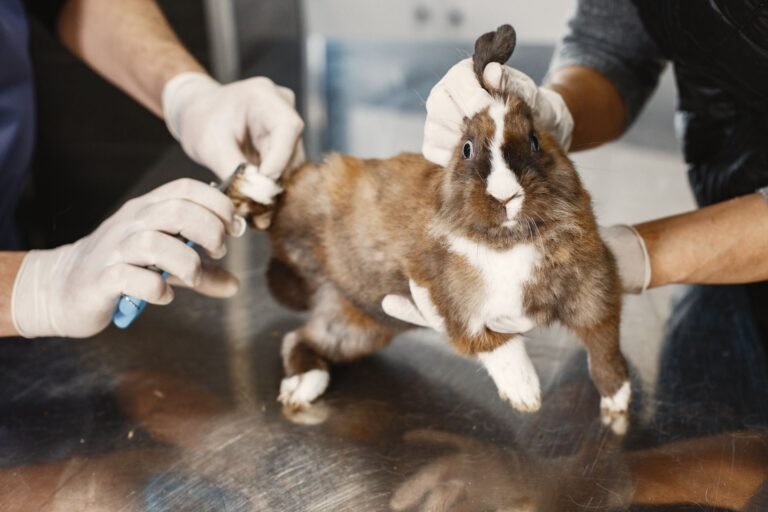
A kit that’s been missing meals for more than a day needs professional help promptly — dehydration and gut stasis kill young rabbits fast. Don’t try to compensate with extra-large feeds; overfeeding a starved kit is dangerous too. A vet or experienced rescue will advise on refeeding safely. If you do not have a vet yet, start with our guide to finding a rabbit-savvy vet.
Key Takeaways
- Milk is the only essential food for the first two weeks. The doe feeds usually once, sometimes twice, a day — often at night, dawn or dusk, and almost never while you are watching.
- Unlimited alfalfa hay and plain alfalfa-based pellets, plus water, from two to three weeks; keep hay unlimited.
- Vegetables wait until around twelve weeks — this is AFTER this 0–8 week guide ends. Do not start greens inside the 0–8 week window; see the 12-week rule in Weaning.
- Orphaned kits need kitten milk replacer or goat’s milk by syringe — never cow’s milk — plus veterinary guidance.
- Wild kits found alone are rarely abandoned; leave the nest be and call a rehabilitator if you’re worried.
- Chocolate, avocado, onion, rhubarb and raw potato are never safe for rabbits. Iceberg lettuce is a poor choice, not a poison.
- Belly check: see the newborn section — a round, plump belly means a fed kit; a wrinkled, sunken one means act fast.
Frequently Asked Questions
How often do baby bunnies feed from their mother?
Usually once, sometimes twice, a day — often at night, dawn or dusk, and almost never while you are watching — and that is completely normal. Rabbit mothers spend most of the day away from the nest — this instinct keeps predators away. Absence from the nest is not evidence of abandonment; check bellies, not the doe. See the belly check in the newborn section.
Can baby bunnies drink cow’s milk?
No — never give baby bunnies cow’s milk. It is too low in the fat and nutrients kits need and can cause fatal digestive upset. If a kit is truly orphaned, use kitten milk replacer or goat’s milk, warmed to body temperature, fed by syringe. Always warm chilled kits first, and contact a vet or wildlife rehabilitator for guidance.
When can baby bunnies eat grass?
Dried hay: yes, from the first nibbles. Fresh grass and fresh leafy greens: no — for domestic kits, hold fresh greens until 12 weeks. Dried hay should be clean, unsprayed and fresh — never lawnmower clippings. At this age solids are only tasters; milk remains their main food until weaning.
How much formula does an orphaned baby bunny need?
Feed amounts grow with the kit. Domestic only — as a rough guide, see the orphan table above: newborns up to about 5 ml a day; one to two weeks around 10–15 ml; two to three weeks up to 26–30 ml per day, split into 2 feeds (for a kit expected to reach about 5 lb as an adult; smaller breeds need less — weigh daily and follow vet advice); three to six weeks around 26–30 ml — split across two feeds a day, morning and evening.
Do baby bunnies need water?
Offer water from eyes-open (about day 10) in a shallow, heavy dish; expect real drinking from 2–3 weeks. Before eyes open, kits get fluid from milk — never syringe water into a newborn, as it can easily go into the lungs. Change the water daily.
What vegetables can baby bunnies eat?
This is AFTER this 0–8 week guide ends. Do not start greens inside the 0–8 week window. Hold off on vegetables until around twelve weeks, then introduce one new leafy green at a time in tiny amounts — see the 12-week rule in Weaning.
How do I know if a baby bunny is starving?
See the belly check in the newborn section: a fed kit is round and plump; a hungry one is wrinkled, with a sunken, empty tummy. Hungry newborns may also be cold, restless and crying, while older kits become lethargic. If a kit’s belly is flat and wrinkled for more than a day, seek veterinary advice promptly — dehydration kills quickly.
When are baby bunnies fully weaned?
Weaning completes between about 6 and 8 weeks (orphaned domestics around 6 weeks), but do not separate or rehome a kit before 8 weeks even if it is eating solids confidently. A kit is ready when it eats hay, pellets and water confidently and no longer nurses. Do not rush it: early weaning stresses the gut and can trigger fatal digestive problems. Kits should stay with their mother until at least eight weeks before moving to a new home.
How can I tell if the mother rabbit is feeding her babies?
Check the kits rather than waiting to see the mother — she feeds usually once, sometimes twice, a day — often at night, dawn or dusk, and almost never while you are watching. Absence from the nest is not evidence of abandonment; check bellies, not the doe. See the belly check in the newborn section. Fed kits are warm with round, full bellies — you may even see a pale patch where the milk-filled stomach shows through the thin skin. Their skin looks dark pink and smooth, and they sleep calmly in the nest. Kits that are cold, wrinkled or bluish, with shrunken bellies, or that crawl around crying instead of nest-sleeping, may not be getting fed — get advice from a vet or rabbit rescue.
Photo Credits
Photography via Pexels (free to use under the Pexels licence): “Newborn white baby bunnies in a nest of straw and fur” by Ana Morais; “Brown Rabbit in Close Up Photography” by Luis Becerra Fotógrafo; “Close Up of Cute Bunnies” by Daniela Bártová; “Adorable Baby Rabbits in Cozy Wicker Basket” by Liana Tril’.





9 Comments