
Can Dogs Have ADHD? Signs, Causes & What to Do
Can dogs have ADHD? Not officially — but up to 20% show ADHD-like traits. Learn the signs, causes, breeds at risk, and what actually helps.
Can dogs have ADHD? If your dog never settles, jumps at everything and cannot focus, you have probably asked. This guide explains what the research says, how to tell puppy energy from ADHD-like behaviour, and what helps.
Quick Answer
No — dogs cannot be officially diagnosed with ADHD, because it is a human diagnosis. But research shows many dogs show ADHD-like traits: hyperactivity, impulsivity and inattention. In a study of over 11,000 dogs, about 19% scored high for inattention and 15% for hyperactivity and impulsivity. A vet should first rule out medical causes, boredom and anxiety.
The behaviour is still real. Vets recognise a pattern of extreme, constant activity in dogs, usually called hyperkinesis. The VCA notes a hyperactivity disorder likely does exist in dogs, but it is rare. PetMD agrees: most “hyper” dogs are young, bored or under-exercised.
PetLab, a supplement company, claims “canine ADHD does exist” — beyond what the research supports. The honest answer is in between: no official diagnosis, but real traits a vet can assess and help with.
What Is Canine ADHD (Hyperkinesis)?
Several names describe the same pattern — not separate conditions, just different labels.
Terminology table:
| Term | What it means |
|---|---|
| ADHD-like behaviour | The broad research term for dogs that show hyperactivity, impulsivity and inattention |
| Hyperkinesis | The clinical term for true canine hyperactivity: extreme, constant motor activity |
| HSH syndrome | Hypersensitivity-hyperactivity syndrome: hyperactivity plus low frustration tolerance |
Signs of ADHD in Dogs
Signs fall into three groups, the same three as human ADHD. A dog with ADHD-like behaviour shows several, from more than one group, over months.
Hyperactivity. Constant movement, pacing and fidgeting, and an inability to settle. The dog may twitch or kick its back legs while lying down.
Impulsivity. Snatching food, jumping up, darting off and poor self-control. The dog acts first and thinks later, and struggles to wait for a reward or a cue.
Inattention. A very short attention span, trouble focusing in training and extreme distractibility. The dog may drop a task seconds after starting it, or ignore its name.
Other behaviours. Fearfulness, noise sensitivity, poor social skills, low frustration tolerance and compulsions such as tail chasing or licking often travel with ADHD-like traits.
How Common Is It? What the Research Says
No study has diagnosed dogs with ADHD: every number below is a share of dogs that scored high on an owner questionnaire.
Prevalence table:
| Study | What it found | Dogs studied |
|---|---|---|
| Sulkama et al. 2021 | 19.1% high inattention; 15% high hyperactivity and impulsivity | About 11,500 |
| Dinwoodie et al. 2019 | 12% high hyperactivity and overactivity | 4,114 dogs |
That is where the “up to 20%” figure comes from: the top of the range across these studies. Different questionnaires and cut-offs mean they cannot be merged into one figure.
Normal Puppy Energy vs ADHD
Puppies are meant to be wild; the difference is what happens after exercise.
The Rest Test. Walk and play with your dog, then settle down at home. A normal high-energy dog burns off steam and crashes into deep rest. A dog with ADHD-like behaviour stays switched on: pacing, fidgeting, unable to settle even when exhausted. Try it on three different days.
The 7-day behaviour log. A short log beats memory. Each evening, note: sleep, exercise minutes, hours left alone, what happened just before the wild behaviour, and how long it lasted. After a week you will see patterns for your vet.
Age table:
| Age | What is normal |
|---|---|
| 8–16 weeks | Short bursts of energy, then long sleeps |
| 3–6 months | Peak chaos: mouthing, jumping, short attention span; settles after play |
| 6–18 months | High energy, especially in working breeds; rests deeply after exercise |
| Adult (2 years and over) | Energy settles; a dog that never rests needs a vet check |
Which Dogs Are Most at Risk?
Breeds. The largest study, Sulkama 2021, found the highest ADHD-like scores in German Shepherds, Border Collies, Cairn Terriers, Jack Russell Terriers and Staffordshire Bull Terriers. Vet clinics also list Golden Retrievers, Labradors, Siberian Huskies and Corgis as high-energy breeds, but that is not study evidence. A working breed is naturally energetic: breed energy, not ADHD.
Breed evidence table:
| Evidence | Breeds |
|---|---|
| Scored higher in studies | German Shepherd, Border Collie, Cairn Terrier, Jack Russell Terrier, Staffordshire Bull Terrier |
| Often listed by vets as high-energy | Golden Retriever, Labrador Retriever, Siberian Husky, Corgi |
Age and sex. Young dogs score higher, and traits fall with age. On sex the studies disagree: Sulkama 2021 and Hoppe et al. found males score higher, Vas et al. and Lit et al. found no difference.
Size. They disagree on size too. Dinwoodie 2019 found smaller dogs scored higher; Sulkama 2021 found medium-sized dogs scored higher for hyperactivity and impulsivity.
Environment. Dogs that got under an hour of exercise a day and spent over eight hours alone scored higher. Inattention was also higher when the dog was its owner’s first dog — though the authors warn it may reflect the owner’s inexperience.
What Causes ADHD-Like Behaviour in Dogs?
No single cause has been proven:
- Genetics. Studies link ADHD-like traits with genes for dopamine and attention, including DRD4, TH, PDE10A and DAT1.
- Brain chemistry. The 2024 review notes differences in dopamine and serotonin, but no blood test can diagnose it in dogs.
- Sleep. Dogs with ADHD-like symptoms slept less than dogs with low scores; an overtired dog cannot settle or focus.
- Physical overstimulation. Too many long walks without rest can worsen ADHD-like behaviour.
If your dog pants or paces at night, our dog panting at night triage guide (dog panting at night triage guide) can help you decide if it needs a vet visit.
How Is ADHD in Dogs Diagnosed?
There is no single test: diagnosis means ruling things out.
- A vet examination: health, weight, behaviour and history.
- Medical rule-outs: blood tests and checks for thyroid problems, pain and other medical causes.
- Behaviour history. The vet asks how long the behaviour has lasted; the research uses six months as a guide, and a shorter pattern is more likely puppy energy or stress.
- Questionnaires: two owner questionnaires exist, and neither can diagnose a dog on its own.
DAFRS. The Dog ADHD and Functionality Rating Scale is a 2024 owner questionnaire. Its final version has 17 symptom items (6 inattention, 4 hyperactivity, 7 impulsivity) plus functionality items. Each item scores 0–3 (ranges 0–18 inattention, 0–12 hyperactivity, 0–21 impulsivity, 0–51 total). Two facts matter most. First, no diagnostic cut-off exists: a high score does not mean a dog has ADHD, and a low score does not mean it does not. Second, repeatability is strong for the same rater (test–retest 0.845–0.904), but only fair to good between different raters (0.485–0.682). A questionnaire score alone means nothing without a vet examination.
ARS. The older ADHD Rating Scale has 12 items (13 originally): 29 or more warrants a vet consultation; 24–29 means one is strongly recommended; 14–24 means lifestyle changes are needed; under 14 means the dog is unlikely to have the condition. The full evidence is in the 2024 review of ADHD-like behaviour in dogs: 2024 review of ADHD-like behaviour in dogs
What Else Could It Be?
Many things look like ADHD; a vet’s first job is to rule them out.
Differential table:
| Possible cause | What it looks like | How to tell it apart |
|---|---|---|
| Thyroid problems | Restlessness, weight change, coat problems | Blood test at the vet |
| Pain | Restlessness, snapping, avoiding touch, poor sleep | Vet examination; pain varies |
| Anxiety or fear | Pacing, panting, hiding, shaking | Follows a trigger, like noise or being left alone |
| Boredom | Chewing, digging, barking, restlessness | Improves with stimulation and routine |
| Too little exercise or sleep | Wild energy in the evening, inability to settle | Improves with proper exercise and rest |
| Canine cognitive dysfunction | Confusion, staring, night waking, house soiling in an old dog | Age and slow change over months |
| Breed energy | A working breed that never seems tired | Rests deeply after work |
Fear and overstimulation can look like hyperactivity. If your puppy freezes on walks, that is fear, not ADHD — see our guide on puppy freezes during walks: puppy freezes during walks
How to Help a Dog With ADHD-Like Behaviour
Start the same day — none of this needs a diagnosis first.
- Keep a steady routine. Set times for meals, walks, rest and training. Dogs with ADHD-like traits cope far better with a predictable day.
- Swap endless fetch for calm brain games. Endless fetch can trigger a dopamine rush that winds a hyperactive dog up. Use scent work, food puzzles, “find it” games and short training instead.
- Give enough exercise, then rest. A good walk plus a sniffy walk beats one long run; then let the dog rest — overtired dogs get wilder, not calmer.
- Protect sleep. Puppies typically need 18–20 hours of sleep each day (AKC); overtired puppies become hyperactive and mouthy. If biting is part of the picture, our guide on how to stop a puppy from biting (how to stop a puppy from biting) covers the sleep link in step 6.
- Teach a settle. Train a “settle on a mat” and reward calm moments the instant they happen, as the AVSAB position statement on humane dog training recommends.
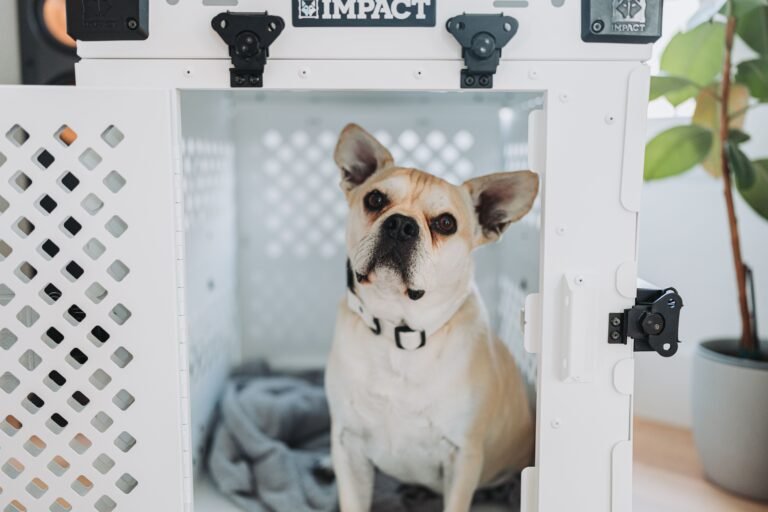
- Use a den. A crate or quiet corner gives an overstimulated dog somewhere to switch off. Our guide on how to crate train a puppy (how to crate train a puppy) shows how, without the nighttime crying.
- What not to do. Do not punish, shout, or use a spray bottle — punishment makes fear and impulsivity worse. Do not give human medicine or CBD: no evidence supports CBD, and human medicine can be dangerous. PetMD’s guide on how to calm a high energy dog (PetMD’s guide on how to calm a high energy dog) says the same: exercise plus mental enrichment, not exercise alone.
Can Dogs Take ADHD Medication?
Yes, but only from a vet, and only in severe cases — medicine never replaces training and routine.
Methylphenidate. The best-known evidence is small: in one small, old study, 3 of 6 dogs improved — Luescher’s 1993 case reports. Another case report found a benefit, and in a further case treatment stopped once the dog settled after adoption. That is the whole evidence base — thin, mixed results.
Fluoxetine. The 2024 review names fluoxetine as the first-line drug. It also lists amitriptyline, clomipramine and selegiline — all prescription medicines that only a vet can decide on. Only a vet can prescribe it.
Never give human ADHD medicine to a dog. The dose, the drug and the risks are different, and human medicine can seriously harm a dog. The VCA notes stimulants can paradoxically calm truly hyperactive dogs — but that is a vet’s decision, not an owner’s experiment. See the VCA page on disobedient, unruly and hyperactive dogs: VCA page on disobedient, unruly and hyperactive dogs
Does Neutering Affect ADHD-Like Behaviour?
The studies disagree and the effect is unresolved: Sulkama 2021 found entire dogs more prone, while others found castrated males scored higher for impulsivity.
Do not neuter or avoid neutering a dog to fix ADHD-like behaviour. Our spay vs neuter guide (spay vs neuter guide) covers the mixed behaviour evidence and the early-neuter debate in full.
When to See the Vet
Same day: a sudden change with vomiting, diarrhoea, collapse, seizures, a swollen belly or signs of pain; or a bad bite that cannot be managed safely.
Book this week: the behaviour has lasted months; the Rest Test shows no real rest; or it is getting worse.
What to take to the vet. Bring your 7-day log, a short video, sleep and exercise notes, and a list of food and medicines.
This article is general information, not veterinary advice. If you are worried about your dog, see a vet.
Key Takeaways
- Dogs cannot be officially diagnosed with ADHD; the correct terms are ADHD-like behaviour or hyperkinesis.
- In the largest study, 19% scored high for inattention and 15% for hyperactivity and impulsivity — owner-reported traits, not diagnoses.
- The Rest Test and a 7-day log are the best home checks.
- The DAFRS questionnaire has 17 symptom items and no diagnostic cut-off, and cannot diagnose a dog on its own.
- Routine, calm brain games, enough sleep and reward-based training help most; endless fetch can make things worse.
- Medication exists — in one small, old study, 3 of 6 dogs improved on methylphenidate, and fluoxetine is first-line — but only a vet can prescribe it.
- Neutering, diet and sex effects are all unresolved. Do not make big decisions on them alone.
Frequently Asked Questions
How do I tell if my dog has ADHD?
Dogs cannot be diagnosed with ADHD, so there is no home test. Look for a pattern: constant movement, an inability to settle, and impulsivity over months. Try the Rest Test, keep a 7-day log, and ask your vet to rule out medical causes.
Can dogs be autistic?
No, dogs cannot be diagnosed with autism either. Vets use the term Canine Dysfunctional Behavior for dogs that show repetitive behaviours and poor social skills. Research has found biological parallels, such as a Shank3 gene mutation in Beagles. If your dog shows these signs, ask your vet.
What breeds are most likely to have ADHD?
In the Sulkama 2021 study of over 11,000 dogs, German Shepherds, Border Collies, Cairn Terriers, Jack Russell Terriers and Staffordshire Bull Terriers scored highest for ADHD-like traits. Golden Retrievers, Labradors, Huskies and Corgis also appear on vet lists as high-energy breeds.
What helps with dog ADHD?
A steady routine helps most: set times for meals, walks, rest and training. Swap endless fetch for calm brain games, scent work and short training, and give your dog enough sleep. If nothing changes after a few weeks, ask your vet or a certified veterinary behaviourist for help.
Can I medicate my dog for ADHD?
Only a vet can decide that, after a full examination. The evidence is thin: in one small, old study, 3 of 6 dogs improved on methylphenidate, and the 2024 review names fluoxetine as first-line. Never give your dog human ADHD medicine: the dose and risks are different, and it can be dangerous.
Will a hyper puppy ever calm down?
Most puppies calm down as they grow, and the research shows ADHD-like traits fall with age. But a hyper puppy still needs help now: a steady routine, enough sleep, calm training and mental games. If the behaviour is extreme or lasts for months, talk to your vet.
How do I calm a dog down with ADHD?
Start with calm, not more running. Give your dog a sniffy walk, a short training session or a food puzzle instead of endless fetch, which can wind them up. Teach a settle on a mat, reward calm moments, and keep the routine steady.
What is dog ADHD called?
Vets call it hyperkinesis, or more broadly ADHD-like behaviour. Another name is HSH syndrome, short for hypersensitivity-hyperactivity syndrome. None is an official diagnosis like human ADHD. They describe extreme, constant activity, impulsivity and inattention that a vet has checked and found no other cause for.
Can dogs have ADHD medication?
Yes, but only from a vet and only in severe cases. The drugs are methylphenidate and fluoxetine, which the 2024 review names as first-line. Only a vet can prescribe them. The evidence is thin: in one small, old study, 3 of 6 dogs improved on methylphenidate. Medicine never replaces training.
Do cocker spaniels, Golden retrievers and dachshunds get ADHD?
No study in the 2024 review singled out cocker spaniels or dachshunds, and Golden retrievers appear only on some vet lists as high-energy breeds. Any dog can show these traits. If your dog cannot settle or focus for months, use the Rest Test and talk to your vet.
Sources
- González-Martínez et al. 2024, “New Advances in Attention-Deficit/Hyperactivity Disorder-like Dogs”, Animals (PMC): https://pmc.ncbi.nlm.nih.gov/articles/PMC11273832/
- Sulkama et al. 2021, “Canine hyperactivity, impulsivity, and inattention share similar demographic risk factors and behavioural comorbidities with human ADHD”, Translational Psychiatry (PMC): https://pmc.ncbi.nlm.nih.gov/articles/PMC8486809/
- Csibra et al. 2024, “Development of a human-analogue, 3-symptom domain Dog ADHD and Functionality Rating Scale (DAFRS)”, Scientific Reports: https://doi.org/10.1038/s41598-024-51924-9
- AKC, “Can Dogs Suffer From ADHD-Like Behavior?” (28 Jan 2022): https://www.akc.org/expert-advice/health/new-research-shows-that-dogs-can-suffer-from-adhd-like-behavior/
- CHADD, “Busy Puppy? Researchers Describe ADHD in Dogs” (11 Aug 2021): https://chadd.org/adhd-news/adhd-news-adults/busy-puppy-researchers-describe-adhd-in-dogs/
- VCA Animal Hospitals, “Disobedient, Unruly and Hyperactive Dogs” (edited 3 Dec 2024): https://vcahospitals.com/know-your-pet/disobedient-unruly-and-excitable-dogs
- PetMD, “How to Calm a High Energy Dog” (edited 14 Nov 2016): https://www.petmd.com/dog/behavior/how-calm-high-energy-dog
- AVSAB, Position Statements: https://avsab.org/resources/position-statements/
Photo Credits
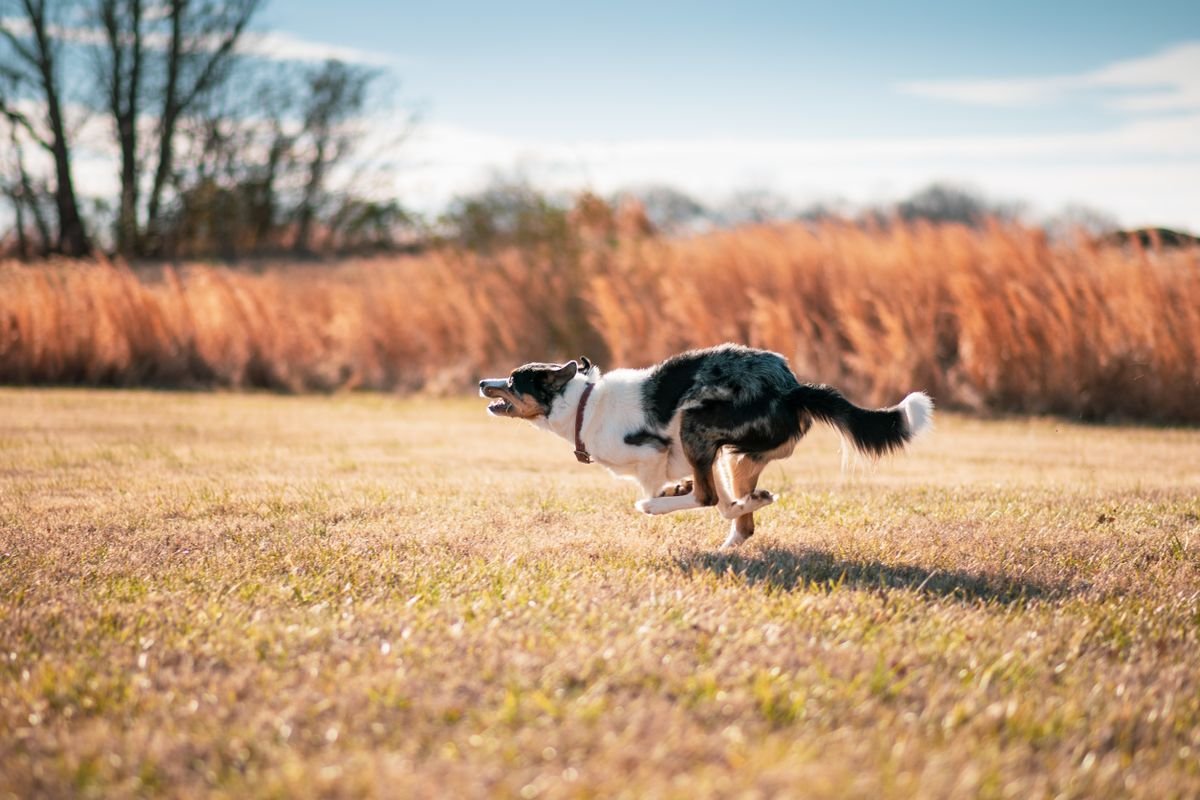
Featured image: Brixiv, via Pexels (Pexels licence). Alt text: Border Collie running across grass, unable to settle — a dog with ADHD-like behaviour.





2 Comments