
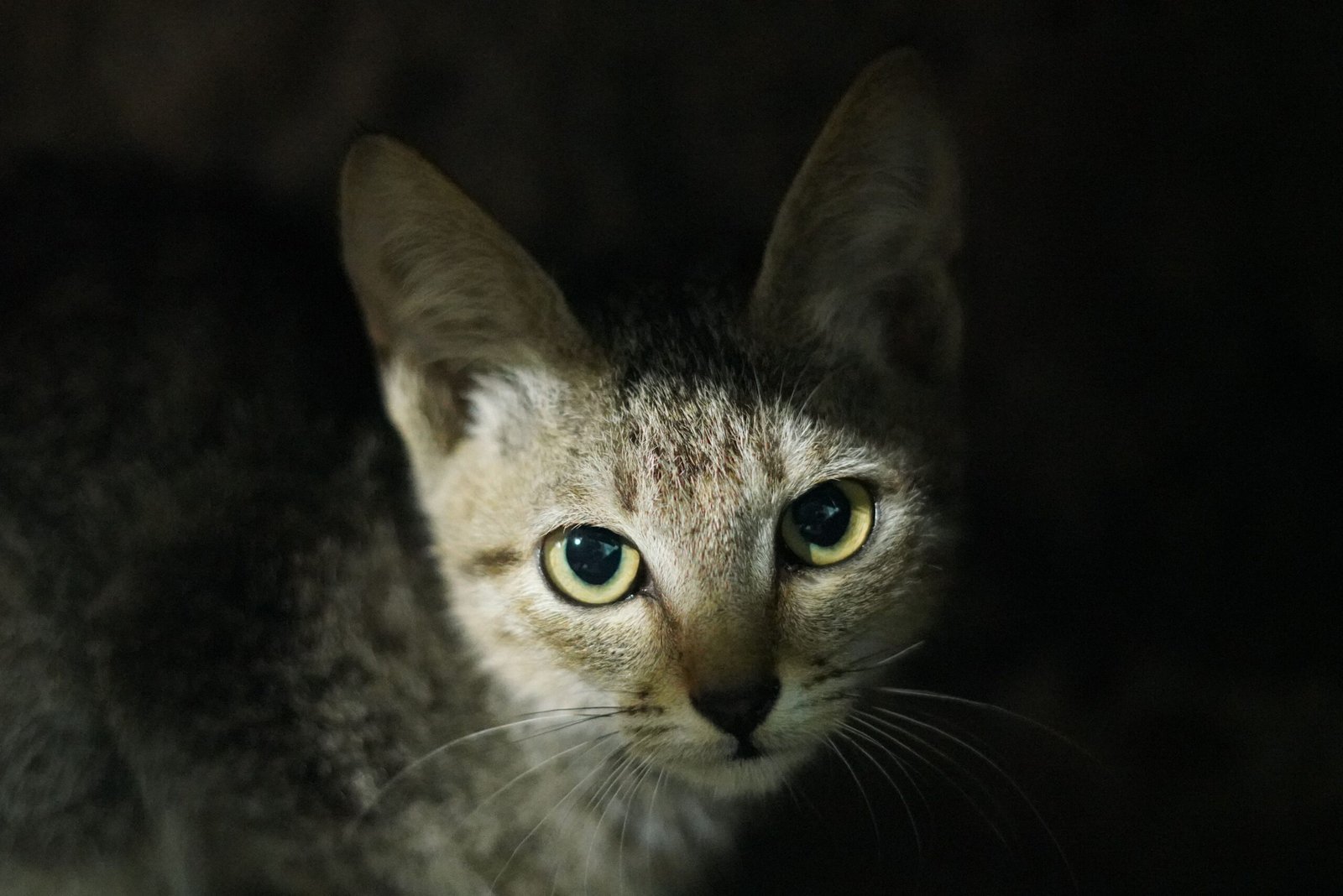
Do Cats Have Night Vision? 6–8× Better in Dim Light
Do cats have night vision? Not quite — cats see 6–8× better than us in dim light, but not in darkness. Learn how their eyes work and when to leave a light on.
Do cats have night vision? It can look that way when your cat crosses a dark room without a sound, jumps onto a chair you can barely see, and stares at you from the shadows. But the answer is not quite what it looks like.
Quick Answer
No. Cats do not have true night vision and cannot see in total darkness. In dim light, their eyes are six times more sensitive than ours, so they see six to eight times better than people. Wide pupils, many rod cells and the reflective tapetum lucidum give them this edge, while whiskers and hearing help them move at night.
Do Cats Have Night Vision?
No — not in the true sense. A cat cannot see in total darkness, and it does not have infrared vision. What it has is far better low-light vision than yours. Its eyes gather the little light that is there and use it well.
Some pages say “yes, cats have night vision”. They mean the same thing in loose words: a cat sees well in dim light. The stricter wording — used by Purina, Cats Protection, PetMD and Chewy — is “no true night vision”. That is the wording this article uses, because it keeps the facts straight.
Myth vs fact table:
| Myth | Fact |
|---|---|
| Cats can see in total darkness. | No. With no light at all, a cat’s eyes cannot work. It finds its way by whiskers, hearing, smell and memory. |
| Cats have infrared vision and see heat. | No. No vet or research source backs this. Their edge comes from wide pupils, rod cells and the tapetum lucidum. |
| Cats are nocturnal. | No. Cats are crepuscular — most active at dawn and dusk, not in deep night. |
| Glowing eyes mean a cat can see in the dark. | Not quite. The glow is light bouncing off the tapetum. It helps the eye use dim light, but it is not night vision. |
| Cats see colour like we do. | No. They see muted blues and yellows, and red is hard for them to see. |
How Cats See in the Dark
Five parts of a cat’s eye work together in dim light. Together, they explain why your cat moves with ease in a room where you are fumbling for the switch.
- Large pupils. A cat’s pupils open far wider than yours. Trinity and Chewy say pupils expand about 135 times. Human pupils expand about 15 times. A cat’s pupil lets in far more light than yours. Wide pupils can also mean excitement or arousal.
- Rod cells. The retina has two kinds of light cells: rods for dim light and cones for colour and detail. Cats have many more rods than humans, so their eyes are built to work when light is low. The trade-off is fewer cones, which is why their colour vision is limited.
- Tapetum lucidum. Behind the retina sits a shiny layer called the tapetum lucidum. Light that misses the retina on the first pass gets a second chance. This is also why a cat’s eyes glow in the dark.
- Large cornea and lens. A cat’s cornea and lens are large for the size of its eye. They gather more light and send it to the retina. Think of it as a wider window letting in more of what little light there is.
- Wide field of view. Cats see about 200 degrees around them, while humans see about 180 degrees. That wider view helps a cat spot movement at the edges of its sight, even in dim light.
How much better is a cat’s low-light vision? Sources give a range, not one figure. Cornell says a cat’s “sensitivity to light is thought to be about six times greater than that of a human’s”. Trinity and Taste of the Wild say six to eight times better in dim light. PetMD cites Miller’s estimate of 5.5 to 7 times better in dim light.
Cat Vision vs Human Vision
Comparison table:
| Cat | Human | |
|---|---|---|
| Light needed | About six times more sensitive to light than ours (Cornell); sees 6–8× better in dim light (Trinity, Taste of the Wild); 5.5–7× by PetMD (Miller) | Needs far more light to see clearly |
| Visual acuity | 20/100 to 20/200 in most studies (Chewy, Beverly Hills Vets); a newer behavioural-testing study found 20/30, and Miller says “I think the 20/30 is closer to correct” (PetMD) | 20/20 |
| Field of view | About 200° (Purina, Chewy, PetMD) | About 180° |
| Colour | Muted blues and yellows; red is hard to see (VCA, PetMD; see also ASPCA Pet Insurance) | Full colour range |
| Near focus | Clear at about 10 inches (25 cm) or more; closer is blurry (PetMD) | Can focus on close objects a cat finds blurry |
| Motion in daylight | Worse — humans are 10 to 12 times better at detecting motion in daylight (PetMD, Miller) | Better |
| Motion in dim light | Better — rods pick up small movements you would miss | Worse |
| Pupils | Expand about 135× (Trinity, Chewy) | Expand about 15× |
| Kittens’ eyes open | 7–10 days (Chewy, Cats Protection); 8–12 days (PetMD); 10–14 days (Taste of the Wild) | — |
Sources disagree on some of these numbers. That is normal — different studies, different methods: the acuity figures differ because newer studies test behaviour — Miller puts a cat’s acuity at about 20/30 (PetMD).
What Cats Actually See at Night
At night, a cat sees a dim, soft version of the room. Colours are muted — mostly blues and yellows. Fine detail is poor. But movement stands out, and the cat can pick out shapes in light far too dim for you.
A cat also sees worse than you up close. It focuses clearly at about 10 inches or more; anything closer turns blurry. That is one reason a cat may sniff or paw at a treat held right under its nose — it cannot see it sharply at that range.
Your cat may also stare at things you cannot see. In dim light it picks up small movements — a moth, a shadow, dust in a beam of light — that your eyes miss. If your cat stares at you while you sleep (stares at you while you sleep), it can probably see you quite well. Staring on its own is normal; it becomes a worry only when it comes with other changes, covered in the vet section below. If staring is a habit, our guide to why cats stare (why cats stare) covers the six most common reasons.
How dark is too dark?
Use your own home as the guide:
- Moonlit room, curtains open: fine. Your cat sees well.
- Hallway with a small night light: fine. This is the level a cat’s eyes are built for.
- Bathroom with the door shut and no window: too dark. Your cat will slow down and feel its way.
- Room in total darkness: too dark. A cat’s eyes stop working, just like yours.
Can Cats See in Complete Darkness?
No. In complete darkness a cat is as blind as you are. Its eyes need light to work, and with zero light there is nothing for the pupils, rods or tapetum to use.
What looks like seeing in the dark is really the other senses taking over:
- Whiskers. Whiskers feel air currents and brush against walls and furniture. They tell the cat where things are and how wide a gap is.
- Hearing. A cat hears far better than you do. It can place a sound in the dark and move toward it or away from it.
- Smell. A cat maps its home by scent. It knows where the food, the litter box and its bed are without seeing them.
- Memory. A cat that knows its home walks a familiar route from memory. That is why moving furniture can confuse a cat at night — its mental map no longer matches the room.
So a cat in a pitch-dark room moves slowly and with care, feeling its way. It is not seeing. It is sensing.
Why Do Cats’ Eyes Glow in the Dark?
The glow comes from the tapetum lucidum, the shiny layer behind the retina. The VCA explains it plainly: the tapetum is a “layer of reflective cells… act like a mirror — light bounces off the tapetum and reflects to the retina”. When light from a lamp, a torch or a camera flash hits the eye, some of it bounces back out — and that is the glow you see.

The glow can be blue, green, orange, red or yellow, according to the VCA. The colour depends on how much pigment is in the retina, what is in the tapetum, and the age of the cat. That is why two cats in the same photo can have different coloured eye shine, and why one cat’s glow can change over its life.
A few notes on the glow:
- It is normal. A glowing eye in a photo or in lamplight is a healthy tapetum doing its job.
- Red eye in photos is the same effect. The camera flash bounces off the tapetum and back into the lens.
- A change in the glow can matter. If one eye stops glowing, or the glow looks cloudy or dull, that can be a sign of an eye problem. See the vet section below.
The VCA gives no number for how much the tapetum boosts light, so this article gives none.
Do Kittens and Senior Cats See Differently at Night?
Yes. Night vision changes with age, and the change starts in the first days of life.
Kittens. Kittens are born with their eyes closed. Sources disagree on when they open: Chewy and Cats Protection say 7–10 days, PetMD says between 8 and 12 days old, and Taste of the Wild says 10–14 days. All three figures are given here because no single source settles it. A newborn kitten sees very little at first. Its sight sharpens over the first weeks as the eyes and brain develop. A young kitten in a dark room needs more help than an adult — a night light and a stable layout matter most for kittens.
Adults. A healthy adult cat has the best night vision of its life. Its pupils open wide, its rods work well, and its tapetum is clear. This is the cat that crosses your dark living room without a sound.
Seniors. An older cat’s eyes change. The lens can cloud, cataracts can form, and the retina can wear down. That is not just “old age” to ignore — it is worth a vet check, and a night light helps in the meantime.
Should I Leave a Light On for My Cat at Night?
For most healthy adult cats, no — you do not need to leave a light on. Cats are happy in dim light. Many cats sleep through the night in a dark room without any trouble.
But a light helps in some cases. Here is a simple night plan:
Leave a soft light on if your cat is:
- A kitten, still learning the house
- A senior, or a cat with cloudy eyes
- New to your home and still learning the layout
- Blind in one eye, or known to have poor vision
What light, and where:
- A small plug-in night light is enough. There is no need for a bright lamp.
- Put one near the litter box and one near the food and water, so your cat can find both in the dark.
- A hallway light left on low works well too.
Night-time safety checklist:
- Keep the litter box, food and water in the same place every night.
- Clear the floor of clutter, bags and shoes.
- Do not move furniture after dark.
- Keep windows and balcony doors shut or screened.
- If your cat goes outside at night, a lit path to the cat flap helps.
If your cat sleeps in your bedroom, it will usually settle near you and sleep. It does not need a light to do that.
When Poor Night Vision Is a Vet Problem
A cat that sees poorly at night is not always sick. But some signs mean you should book a vet visit rather than wait.
See the vet the same day if your cat:
- Suddenly bumps into walls or furniture, or seems blind in a room it knows well
- Has one pupil much wider than the other, or a pupil that stays wide in bright light
- Has a red, swollen or watery eye, or holds one eye shut
- Suddenly stops jumping, or freezes and will not move — a cat that suddenly freezes and stares (suddenly freezes and stares) may be struggling to see
See the vet within a few days if your cat:
- Has cloudy eyes, or eyes that look hazy in photos when they used to glow clearly
- Starts avoiding dark rooms, or hesitates at stairs and doorways at night
- Is hiding more than usual (hiding more than usual) and eating less — hiding plus not eating together is a stronger warning sign than either on its own
- Is a senior whose night vision seems to be getting worse over weeks
What the vet will do: The vet will check the eyes with a light, look at the retina, and may measure eye pressure or run blood tests if the cause is not clear. Bring notes: when the problem started, whether it is one eye or both, and whether your cat also changed how it eats, drinks or moves.
Early checks matter because some causes can be treated if they are caught in time — and because a cat that cannot see well at night is more likely to get hurt.
Key Takeaways
- Cats do not have true night vision. They cannot see in total darkness, and they do not have infrared vision.
- In dim light, a cat’s eyes are about six times more sensitive than ours, and it sees roughly six to eight times better than people.
- The edge comes from wide pupils, many rod cells, the tapetum lucidum, a large cornea and lens, and a 200-degree field of view.
- A cat’s acuity is 20/100 to 20/200 in most studies, with a newer behavioural-testing finding of 20/30.
- Cats see muted blues and yellows. They focus clearly at about 10 inches or more; closer is blurry. Humans are 10 to 12 times better at detecting motion in daylight.
- Kittens open their eyes at 7–10, 8–12 or 10–14 days, depending on the source. Senior cats lose night vision as their eyes age.
- A small night light near the litter box and food helps kittens, seniors and new cats. Most healthy adults do not need one.
- Sudden bumping, unequal pupils, cloudy eyes, or hiding plus not eating are vet signs — same day for sudden changes, within a few days for gradual ones.
FAQs
Can cats see in full darkness?
No. In full darkness cats cannot see at all, because their eyes still need some light to work. With zero light there is nothing to reflect or focus, so cats find their way by whiskers, hearing, smell and memory. But bumping into things in dim light or daylight is not normal — book a vet check.
How dark is too dark for a cat to see?
Cats’ eyes are about six times more sensitive to light than ours, so a moonlit room or a hallway with a small night light is fine for them. Total darkness is too dark — with no light at all, even a cat’s eyes stop working. If you can barely see your hand, your cat can still see well.
When do cats prefer light or dark?
Cats are crepuscular, which means they are most active at dawn and dusk, not in full daylight or deep night. Most cats are happy in dim light and do not need a bright room at night. A soft night light is enough, and many cats sleep through the night in a dark room without any trouble.
Why does my cat stare at me in the dark?
A cat may stare at you in the dark because it can see you — its eyes work in light far too dim for you. Staring can also mean it is watching, waiting for food, or asking for attention. If the staring is new, or comes with wide pupils and a tense body, check our guide to why cats stare.
Do cats see in the dark or do they have infrared vision?
No. Cats do not have infrared vision, and they cannot see heat the way a night-vision camera does. Their night edge comes from wide pupils, many rod cells and the tapetum lucidum, which all help them use very dim light. Claims that cats see infrared are not backed by any vet or research source.
How far can cats see in the dark?
There is no fixed distance, because it depends on how much light there is. In dim light a cat can spot movement across a room, but in near-darkness it sees only shapes close by. What matters most is the light level, not distance — more light means a cat sees further, and in total darkness it sees nothing at all.
What does cat vision look like at night?
At night a cat sees a dim version of the room. Colours are muted, mostly blues and yellows, and fine detail is poor, about 20/100 to 20/200 by most studies. But movement stands out, and the cat can pick out shapes in light far too dim for you. The world looks dim and washed out, not green like a camera.
Is it OK to leave a cat in a dark room?
Yes, for most healthy adult cats in a home they know. A room with moonlight or a small night light is fine. A room in total darkness, with the door shut and no window, is not ideal — leave a small night light on and keep food, water and the litter box in the same place.
Do cats like the light on or off?
Most cats are happy with the light off in dim light, as their eyes work best at dawn and dusk. They do not need a bright lamp. A small night light helps kittens, senior cats and cats that are new to the home.
Can cats see in black and white?
No. Cats do not see in black and white. They see muted colours, mostly blues and yellows, and red and green look like shades of grey to them.
Sources
- Cornell Feline Health Center — “Feline Vision Problems: A Host of Possible Causes” — https://www.vet.cornell.edu/departments-centers-and-institutes/cornell-feline-health-center/health-information/feline-health-topics/feline-vision-problems-host-possible-causes
- VCA Animal Hospitals — “Why does your pet’s eyes glow in the dark?” — https://vcahospitals.com/resources/conditions-dog/eyes-ears-nose/why-do-pet-s-eyes-glow-in-the-dark
- VCA Animal Hospitals — “Do Cats See Color?” — https://vcahospitals.com/know-your-pet/do-cats-see-color
- PetMD — “How Do Cats See the World? What To Know about Cat Vision” — https://www.petmd.com/cat/general-health/cat-vision
- ASPCA Pet Insurance — “What Do Our Pets See?” — https://www.aspcapetinsurance.com/resources/seeing-the-world-through-our-pets-eyes/
- Cats Protection — “Can cats see in the dark?” — https://www.cats.org.uk/cats-blog/cat-eyesight-facts
- Chewy — “Can Cats See in the Dark?” — https://www.chewy.com/education/cat/general/can-cats-see-in-the-dark
- Ollivier et al. 2004, “Comparative morphology of the tapetum lucidum (among selected species)”, Veterinary Ophthalmology — https://pubmed.ncbi.nlm.nih.gov/14738502/
Photo Credits
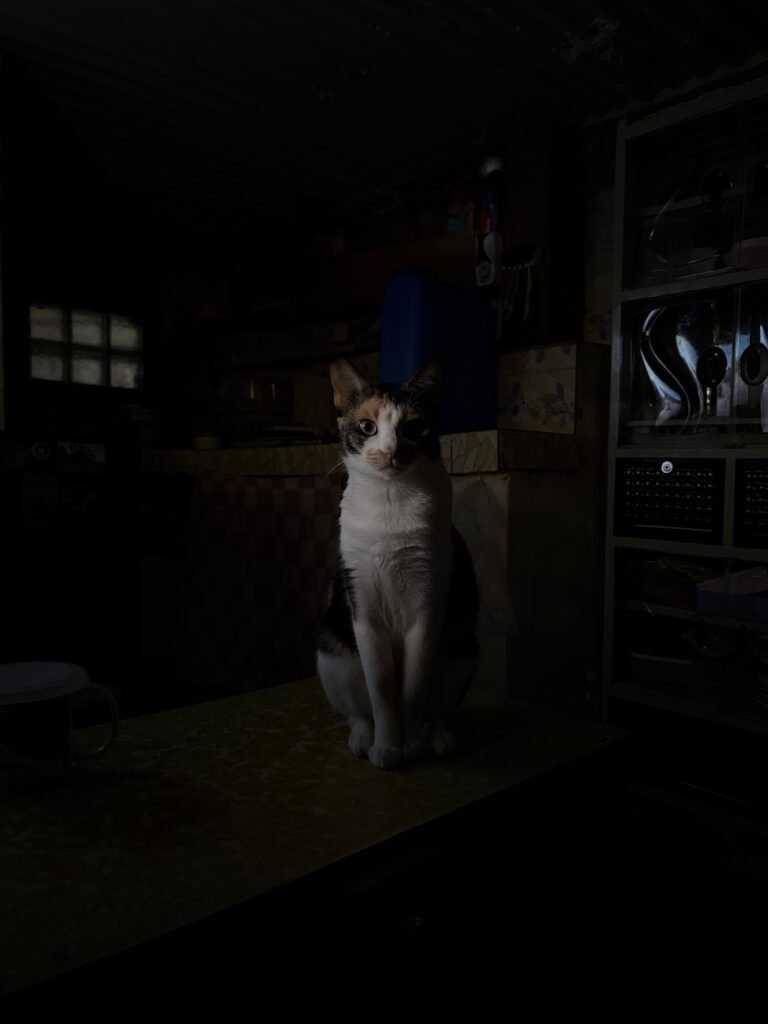
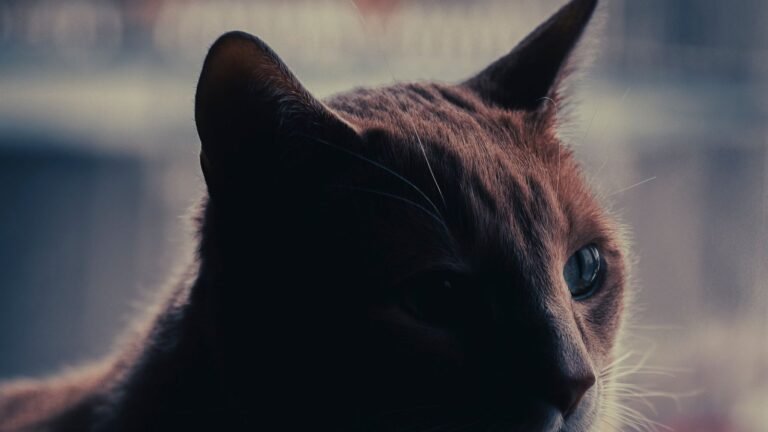
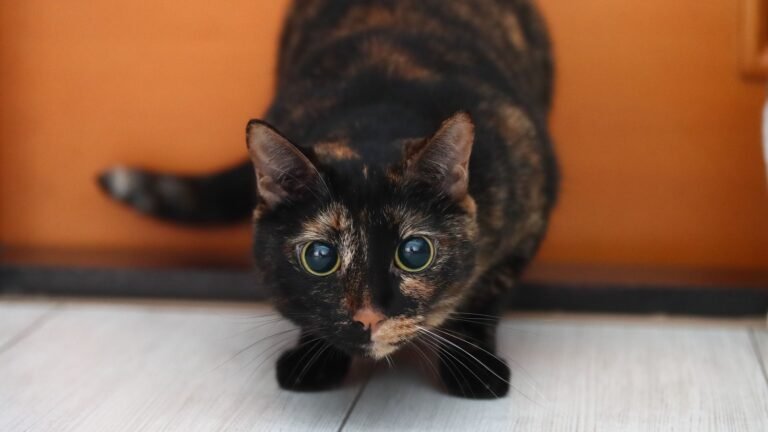
Featured image: Xuân Thống Trần, via Pexels (Pexels licence). Alt text: “Tabby cat with wide, glowing eyes in a dark room at night”. Calico cat in a dimly lit room: GLN DCA, via Pexels (Pexels licence). Alt text: “Calico cat sitting in a dimly lit room at night”. Grey cat with glowing amber eyes: Daniel Cosma, via Pexels (Pexels licence). Alt text: “Close-up of a grey cat with glowing amber eyes in the dark”.



2 Comments