
Cat Cafe Guide: What to Expect on Your First Visit
Planning your first cat cafe visit? This guide covers how cat cafes work, what they cost, the rules that matter, and how to tell a responsible cafe from a bad one.
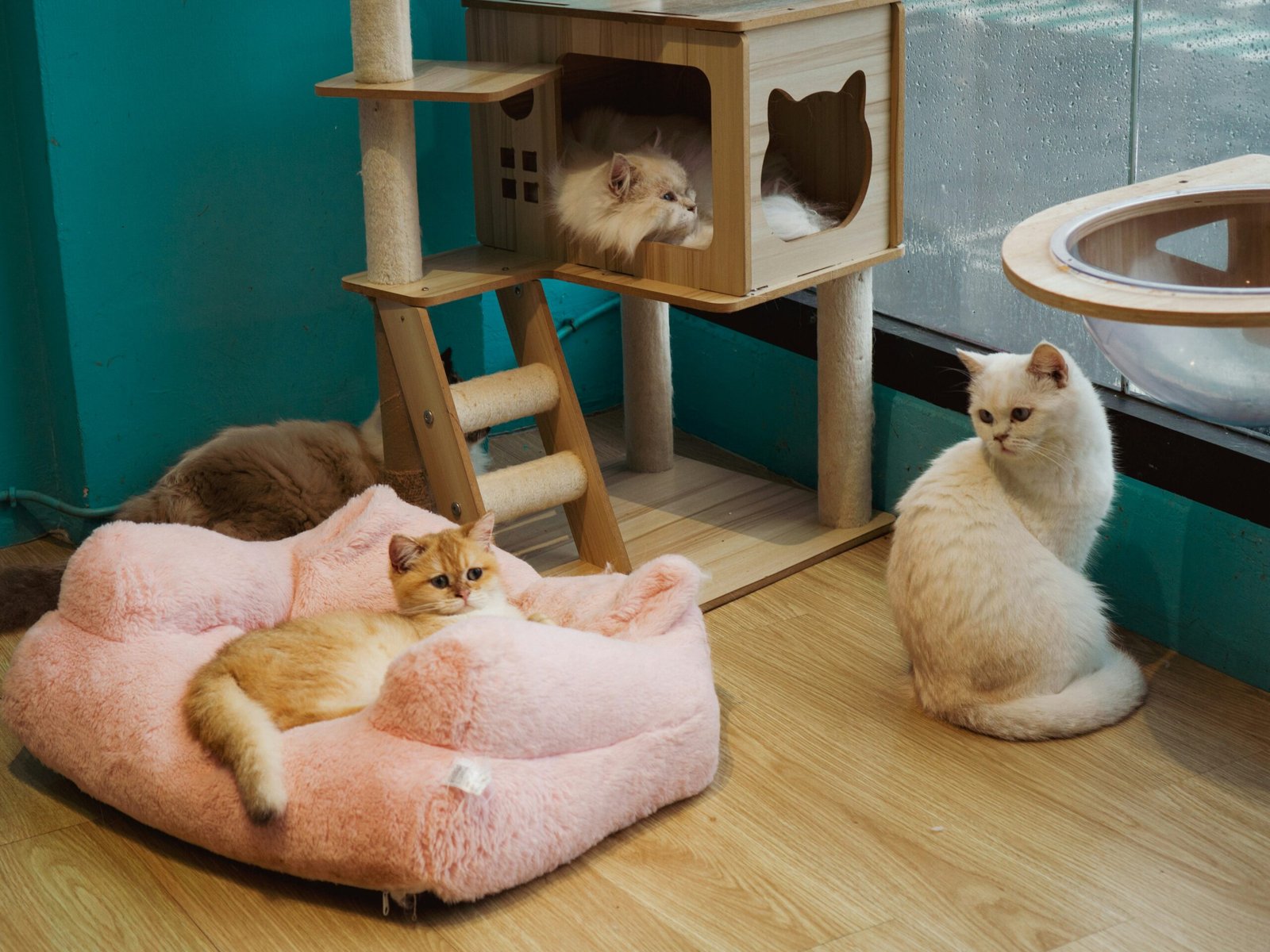
A cat cafe is a coffee shop where you pay a small cover charge to spend 30–60 minutes relaxing with cats — no experience needed. Picture it: a warm coffee in hand while a sleepy cat curls up nearby, another explores a climbing tower, and a third watches visitors from a quiet corner.
Most visitors come for a simple reason: to enjoy time with cats, relax, take photos, or see what living with a cat might feel like before adopting one.
Below you’ll find everything worth knowing before your first visit: how it works, what it costs, the rules that matter, and how to spot a cafe that genuinely looks after its cats.
Quick Answer: Book a short session, arrive calm, and let the cats come to you. Follow the cafe’s rules, wash your hands, and give shy cats space. Check the cafe’s own website for prices and age limits, and look for rest areas, clean facilities and clear welfare rules before you book.
What Is a Cat Cafe?

A cat cafe is a cafe or lounge where people can spend time with cats while enjoying drinks, snacks, or a relaxing environment.
Unlike a regular coffee shop, the main attraction is the cats. Visitors can watch cats play, interact with them, read a book, work on a laptop, or simply enjoy their company.
Some cat cafes have permanent resident cats, while others operate as rescue cat cafes where adoptable cats stay temporarily until they find homes.
A cat cafe is especially popular among:
- People who cannot keep pets at home
- Apartment residents with pet restrictions
- Travelers looking for unique experiences
- Families wanting a cat-friendly activity
- Future cat owners who want to understand cat behaviour
For example, someone living in a small apartment may enjoy visiting a cat cafe every few weeks instead of taking on the responsibility of owning a pet.
The History of Cat Cafes
The first known cat cafe, Cat Flower Garden, opened in Taipei, Taiwan, in 1998. The concept later became hugely popular in Japan, where many people living in smaller apartments or buildings with pet restrictions wanted a way to spend time with cats.
Japan helped transform cat cafes into a worldwide trend. Over time, the idea spread to North America, Europe, Australia, and other regions. Japanese cafes tend to be smaller and quieter with stricter rules, while cafes in the US and Europe often put more emphasis on adoptions and a livelier coffee-shop atmosphere.
Modern cat cafes are not all the same. Some focus mainly on entertainment, while many newer cafes combine the cafe experience with animal adoption programs.
How Does a Cat Cafe Work?
Most visits follow the same easy rhythm.
1. Booking Your Visit
Many popular cat cafes use reservations, especially on weekends.
Before visiting, check:
- Opening hours
- Reservation requirements
- Entry fees
- Age restrictions
- Food and drink rules
A common mistake is arriving without checking availability and discovering the cafe is fully booked.
2. Entering the Cat Area
Many cafes keep food preparation and cat interaction in separate spaces, which keeps things hygienic and gives the cats their own environment.
Visitors may be asked to:
- Wash hands
- Remove shoes
- Keep voices low
- Avoid disturbing resting cats
3. Spending Time With Cats
During your session, you might:
- Pet friendly cats
- Play using approved toys
- Take photos
- Watch cat behaviour
- Relax with a drink
However, every cat has a different personality.
Some cats may immediately approach visitors.
Others may:
- Sleep most of the time
- Hide in comfortable spaces
- Observe people from a distance
That is normal cat behaviour.
What Happens During a Cat Cafe Visit?
A first visit is usually calmer than people expect.
Many visitors imagine entering a room full of cats waiting to play. In reality, cats decide when they want interaction.
The best experiences often happen when visitors stop trying to force attention.
A cat sleeping beside you can be just as enjoyable as an active play session.
Rules and Etiquette
Good cat cafes have rules because cats are living animals, not entertainment objects.
Do:
- Let cats approach you
- Pet gently
- Use toys provided by staff
- Respect sleeping cats
- Follow staff instructions
- Keep noise levels reasonable
Avoid:
- Picking up cats without permission
- Following cats that walk away
- Feeding cats human food
- Using flash photography if prohibited
- Chasing cats for photos

A responsible visitor understands that a cat’s comfort comes first.
Are Cat Cafes Ethical?
It depends on the cafe — a well-run one can be a genuinely good life for cats, while a badly run one raises real welfare concerns.
A responsible cat cafe should prioritise:
- Clean living spaces
- Veterinary care
- Proper nutrition
- Quiet areas where cats can rest
- Limited visitor numbers
- Rules that protect cats from stress
Some rescue cat cafes partner with shelters and help cats find adoptive families.
However, not every cat cafe follows the same standards. Animal welfare organisations have raised concerns about cafes where cats cannot escape constant human interaction or lack suitable resting areas.
The debate sharpened in March 2025, when the RSPCA and Cats Protection called for cat cafes to be phased out in the UK, arguing that a busy cafe environment makes it ‘almost impossible’ to fully meet cats’ welfare needs.
Signs of a Responsible Cat Cafe
Look for:
- Cats having private spaces
- Staff who understand cat behaviour
- Clear visitor rules
- Clean facilities
- Healthy-looking cats
- Transparent adoption policies
A beautiful cafe design does not automatically mean good animal care.
Do the Cats Live at the Cafe?
In most cases, yes — the cats live at the cafe. After closing time they usually get the run of the place, or settle into a dedicated sleeping area with beds, food, water, and litter trays, while staff come in for evening and morning feeding and welfare checks. Well-run cafes treat the premises as the cats’ home first and a visitor attraction second.
It helps to remember this during your visit: you are a guest in the cats’ living room, not the other way round. If a cat retreats to a high shelf or a hideaway, it is simply enjoying its own home — let it be.
Cat Cafe vs Cat Lounge
Many people use these terms interchangeably, but there can be differences.
| Feature | Cat Cafe | Cat Lounge |
|---|---|---|
| Main Focus | Cafe experience with cats | Cat interaction experience |
| Food & Drinks | Usually included | Sometimes limited |
| Atmosphere | Coffee shop style | Relaxation space |
| Cat Interaction | Available | Usually the main purpose |
A cat lounge may be better for someone who mainly wants cat interaction, while a cat cafe may suit someone looking for a mix of drinks, relaxation, and cats.
Why Visit a Cat Cafe?
1. Enjoy Cat Companionship
Sometimes the simplest pleasure is the biggest one: sitting with a warm drink while a cat dozes beside you or weaves between the tables.
2. Learn Cat Behaviour
Visitors can observe:
- How cats communicate
- What makes cats comfortable
- Different personalities
This can help future cat owners make better decisions.
3. Support Rescue Efforts
Some adoption-focused cafes provide rescue cats with more social exposure and opportunities to meet potential adopters.

Things to Keep in Mind
- Cats may not want interaction
- Busy times can reduce the experience
- Quality varies between cafes
- Not every cafe supports adoption

Common Mistakes First-Time Visitors Make
Expecting Every Cat to Be Friendly
Some cats are social. Others are naturally shy.
Better approach: sit quietly and allow cats to decide.
Visiting Only for Photos
Many people focus so much on pictures that they forget to enjoy the experience.
Cats respond better to calm visitors.
Ignoring Cafe Rules
Rules exist to prevent stress and protect both cats and visitors.
Myths vs Facts
| Myth | Fact |
|---|---|
| Every cat wants attention | Cats have different personalities |
| Cats are there only for customers | Responsible cafes prioritise welfare |
| Sleeping cats are unhappy | Cats sleep 12–16 hours a day, so daytime naps are normal |
| You can always adopt cafe cats | Adoption depends on the cafe |
How to Get Cats to Come to You
Cats approach calm, patient visitors — not the people chasing them. If you want the cats at a cat cafe to come to you, sit down, lower your voice, and let the cat make the first move.
The slow blink is your best trick — and there is science behind it. In a 2020 study published in Scientific Reports, University of Portsmouth researchers found that cats respond positively to slow blinking and are more likely to approach someone who slow-blinks at them. Catch a cat’s eye from a few metres away, then slowly close and open your eyes. In cat body language this signals friendliness, and many cats will slow-blink back — some will walk over within a minute or two.
Next, offer a finger to sniff. Crouch or sit, hold out one relaxed finger at the cat’s nose level, and wait. A cheek rub against your hand means ‘you may pet me’; a turned head means ‘not now’. Cats also approach people at their level, so grab a floor cushion if the cafe has them — visitors who sit quietly on the floor for ten minutes often end up with a cat in their lap. If a cat settles on your lap and starts kneading, take it as a compliment — it is a sign of deep contentment.
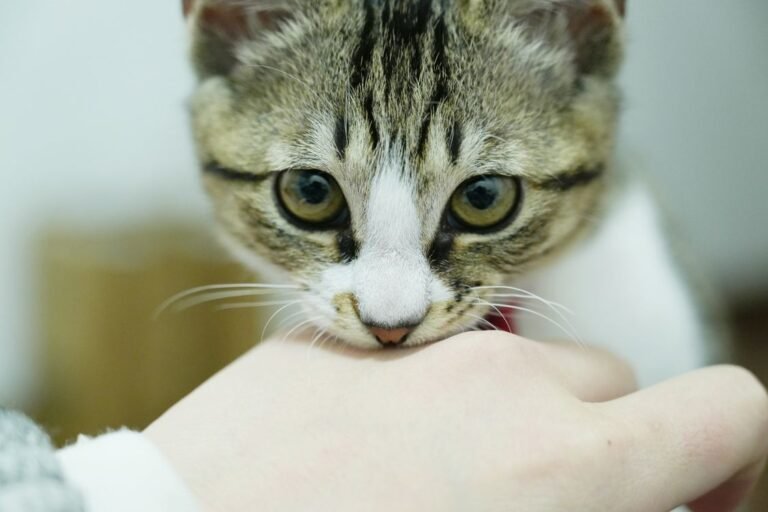
If the cafe provides wand toys, drag the toy slowly along the floor away from the cat, like prey trying to escape — fast, jerky movements can overstimulate nervous cats. An overstimulated cat may deliver a gentle nip as a signal to pause — it is communication, not true aggression. Understanding these small signals makes the whole visit better.
You can practise reading these signals at home, too — here is why your cat stares at you and what each look means.
The Best Time to Visit a Cat Cafe
Book a morning session shortly after opening, or an early-evening slot. Cats sleep 12–16 hours a day, so a midday visit to a cat cafe often means a room full of napping cats.
If you arrive at 2pm and every cat is curled up asleep, that is normal — not a sign of a bad cat cafe. Shift your visit to 10am or 5pm and you are more likely to meet playful, social cats instead.
Weekday mornings are the sweet spot: fewer visitors means calmer cats and more one-on-one time. Saturday afternoons are the busiest — book several days ahead or you may be turned away at the door.
Cat Cafe Prices: What You Will Actually Pay
Sessions usually last 30 to 60 minutes, and a drink is often included in the session fee.
Most cat cafes use one of three models: a flat entry fee for the cat lounge, time-based pricing in 30- or 50-minute blocks, or a minimum drink purchase. Regulars can often buy monthly memberships that work out cheaper — worth it if you visit twice a month or more.
Watch for extras: some cafes charge a small surcharge for the kitten room, and special events such as ‘yoga with cats’ cost more. Prices vary a lot by city — see our guide to cat cafes in Boston for a worked city example.
Always check the cafe’s own website before you go. Third-party listings go out of date quickly, and prices can change without warning.
Visiting a Cat Cafe With Allergies: A Practical Plan
Mild allergy sufferers can usually enjoy a cat cafe with a simple plan: ask a doctor or pharmacist about an antihistamine before your session, wash your hands after touching cats, and keep your hands away from your face. The ASPCA’s guide to living with pet allergies has more tips for managing symptoms around animals.
Book 30 minutes rather than an hour, and sit near ventilation if the layout allows. When you leave, change your top or shake it out outside — cat dander clings to fabric and will follow you home otherwise.
Be honest about severity: if you get wheezing, hives, or swollen eyes around cats, skip the cat cafe. No visit is worth an asthma flare-up.
How Adoption Works at Cat Cafes
At rescue-partnered cafes, adoption is usually straightforward. You will fill in an application, the partner rescue reviews it, and if you are a good match you pay an adoption fee — which often varies with the cat’s age — and take your new companion home. Some rescues also run a home check first, so ask what the process involves before you fall in love.
Adoptable cats are generally spayed or neutered, vaccinated, and health-checked before they meet the public. If you are seriously considering adoption, visit more than once: a cat’s true personality shows once the excitement of a first meeting wears off.
Visiting a Cat Cafe While Pregnant
Yes, you can usually visit a cat cafe while pregnant. Simply stroking cats is not considered a toxoplasmosis risk — the concern is contact with cat faeces, which is why doctors advise pregnant women to avoid changing litter trays. At a cafe, that means enjoying the cats while steering clear of litter areas, washing your hands thoroughly afterwards, and keeping your hands away from your mouth during the visit.
As with any health question in pregnancy, mention your plans to your doctor or midwife if you have concerns — but for most expectant mothers, a careful cat cafe visit is perfectly fine.
Key Takeaways
- Book ahead, arrive calm, and let cats approach you first.
- Follow the rules: no picking up, no chasing, no flash photos.
- Morning or early evening is best. Midday often means napping cats.
- Check rest areas, clean facilities and adoption links before you book.
Frequently Asked Questions
What is a cat cafe?
A cat cafe is a cafe where visitors can spend time with cats while enjoying drinks, snacks, or a relaxing environment.
Are cat cafes good for cats?
It depends on the cafe’s standards. Responsible cafes provide proper care, rest areas, and controlled interaction.
Can you adopt a cat from a cat cafe?
Some rescue cat cafes offer adoption — see ‘How Adoption Works at Cat Cafes’ above for the typical process — while others are home to permanent resident cats only.
Do cat cafes smell?
A well-maintained cat cafe should not smell. Good cafes clean litter areas frequently and ventilate the space — if a cafe smells strongly, take it as a warning sign.
Can people with allergies visit cat cafes?
It depends on severity. Mild symptoms can often be managed with the plan in ‘Visiting a Cat Cafe With Allergies’ above, but if you get wheezing, hives, or swollen eyes around cats, sit this one out.
Do cat cafes allow children?
Many do, but age policies differ — some cafes set a minimum age and require close supervision, while a few are adults-only. Check the specific cafe’s policy before promising the trip to an excited child. Brief your kids on the rules beforehand (gentle hands, quiet voices, never chase), and keep sessions short: 30 minutes is plenty for younger children.
What should I wear to a cat cafe?
Wear comfortable, casual clothes you don’t mind getting furry — cats will sit on you, knead you, and shed on you. Skip black or very dark tops unless you enjoy wearing the evidence home; mid-tones and patterns hide fur best. Avoid dangling jewellery, loose scarves, and anything with feathers or tassels, which cats find irresistible to bat at (and claw). Closed-toe shoes are sensible around climbing cats and the odd dropped toy.
Can you work at a cat cafe?
Some cafes hire staff for customer service, cleaning, animal care support, and management roles.
Why are cats sleeping during my visit?
Cats sleep 12–16 hours a day, so a room of napping cats is completely normal — not a sign of a bad cafe. For livelier company, book a morning or early-evening session.
Should I make a reservation for a cat cafe?
For popular locations, reservations are often recommended, especially during busy periods.
How long should I stay at a cat cafe?
Thirty to fifty minutes is the sweet spot for a first visit. That is enough time for shy cats to warm up to you without overstaying — cats can get overstimulated by a constant stream of new visitors, so shorter, calmer sessions are better for them and more enjoyable for you.
Can I bring my own cat to a cat cafe?
As a rule, no — cat cafes don’t allow visitors to bring their own pets. Resident cats are carefully introduced to each other, and an unfamiliar cat would cause stress and territorial conflicts. Leave your cat at home.
What happens if a cat scratches or bites me?
Wash the scratch with soap and water straight away, then tell a staff member so they can document the incident. Minor scratches are rare when you follow the rules — never wake a sleeping cat, do not force interaction, and keep your fingers away from a cat’s mouth during play.
Do I have to buy food or drinks at a cat cafe?
It depends on the pricing model. Some cafes include a drink in the session fee, others require a minimum purchase, and lounge-style venues may charge entry only. Check the cafe’s website before you go so you know what to expect.
Can I pick up the cats?
Usually not without permission — most cafes ask you to let cats come to you instead. Picking cats up stresses them and can lead to scratches. If you want a lap cat, sit quietly and let one choose you.
Can I feed the cats treats?
Only if the cafe provides them. Many cafes sell approved treats you can offer, but don’t bring your own or share human food — it can upset their stomachs and disrupts their feeding routines. Ask staff first.
Final Thoughts
A cat cafe offers a unique way to relax, connect with cats, and enjoy a different type of social experience. The best visits are not about forcing cats to interact—they are about creating a calm environment where humans and cats can enjoy each other’s company.
Whether you are planning your first visit, considering adoption, or simply curious about cats, choosing a responsible cafe will make the experience better for everyone.
Photo Credits
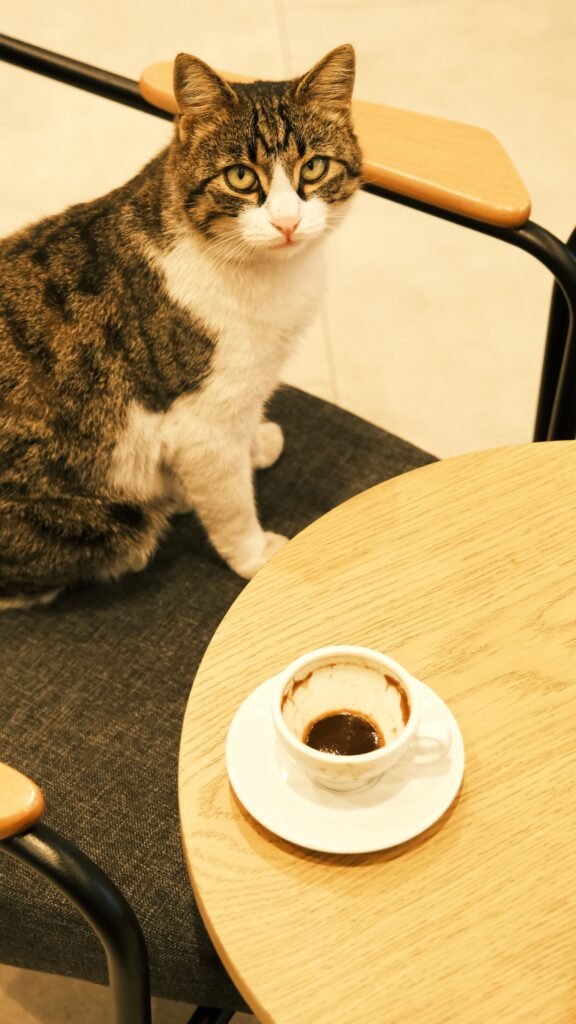
Featured image: ‘Several cats relaxing together inside a cosy cat cafe’ — photograph by Raymond Yeung, via Unsplash. In-article images: cat sitting on a bench inside a cat cafe in Tokyo (犬 の口 via Pexels, free licence); tabby cat beside an espresso cup on a cafe table (Rahime Gül via Pexels, free licence); person gently stroking a cat (Teresa Jang via Pexels, free licence); woman relaxing at a cafe with a cat beside her (Amine İspir via Pexels, free licence); cozy cat cafe interior with indoor plants (fewmiracles via Pexels, free licence).


One Comment