
Cat Tongue Anatomy: Facts, Health & Care Guide
Cat tongue anatomy explained: why it feels rough, how papillae groom and help cats drink, what cats can taste, and which tongue changes need a vet.
Cat tongue anatomy is one of nature’s most remarkable designs. What looks like a simple pink organ is actually a highly specialised tool used for grooming, eating, drinking, and survival. In short: the roughness comes from tiny keratin hooks called papillae — and changes in your cat’s tongue can signal health problems. This guide explains how a cat tongue works and what to watch for.
If you have ever felt your cat lick your hand, you probably noticed something unusual. Instead of feeling soft like a human tongue, it feels rough, almost like sandpaper.
That rough texture is not because your cat’s tongue is dirty. It comes from hundreds of tiny structures that help cats maintain their coats and perform behaviors inherited from their wild ancestors.
Quick Answer
A cat’s tongue is a muscular organ covered in tiny, backward-facing keratin hooks called papillae. They make it feel rough, comb fur, remove loose hair, and help the cat lap water. Cats have about 473 taste buds and cannot taste sweetness. A healthy tongue is pink and moist; pale, blue, yellow, or sore tongues need a vet check.
Why Is a Cat Tongue Rough?
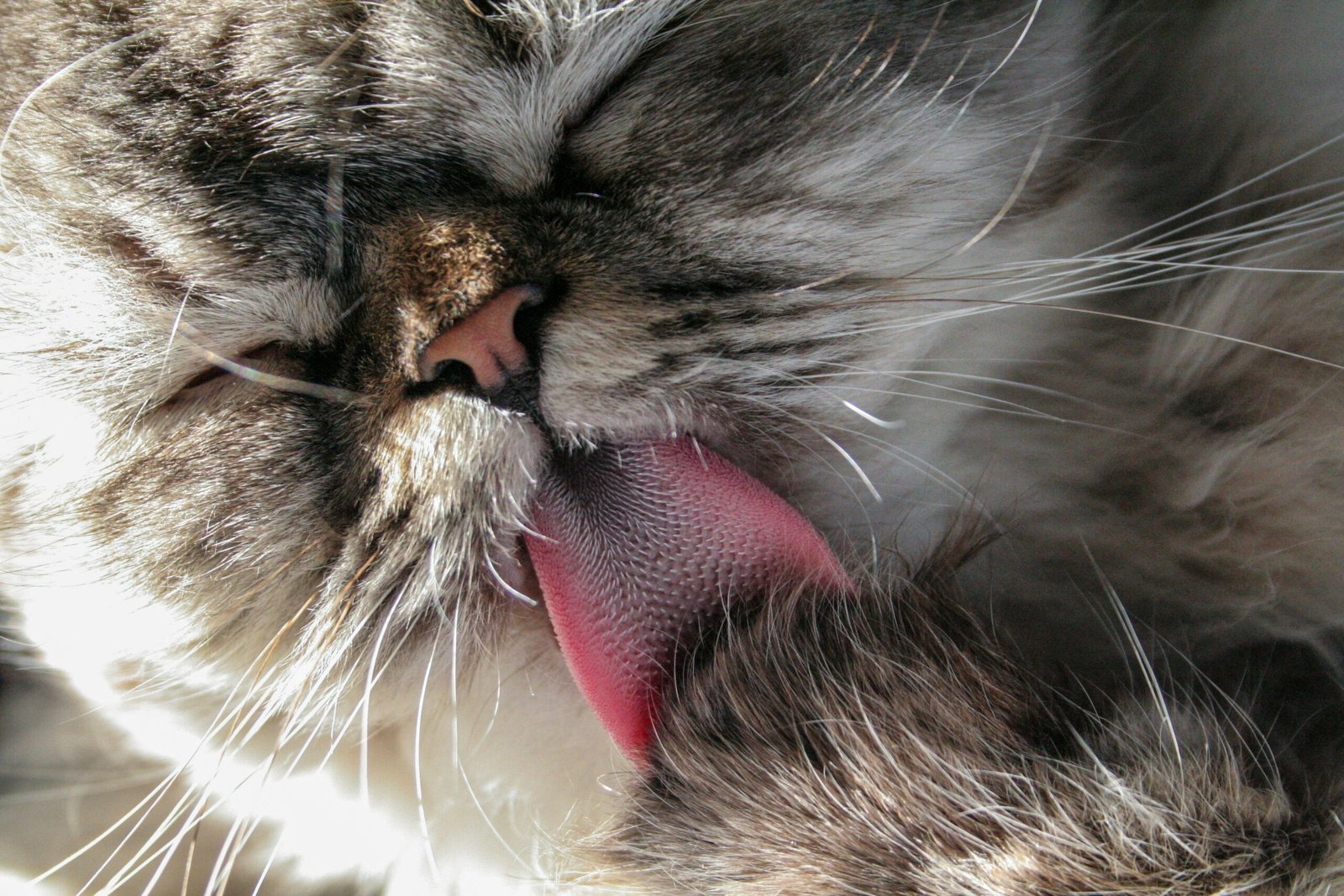
A cat’s tongue feels rough because it contains hundreds of tiny backward-facing structures called filiform papillae.
These small, hook-like structures cover the surface of the tongue and are made from keratin, the same tough protein found in claws, fur, and the outer layer of human nails.
When a cat licks its fur, these papillae act like a natural comb. They grab loose hair, remove dirt, and help spread natural oils throughout the coat.
What Do Filiform Papillae Do?
Filiform papillae are the main reason cats have such unique tongues.
Their functions include:
- Removing loose fur
- Cleaning debris from the coat
- Helping separate tangled hair
- Assisting with eating meat
- Distributing saliva through fur
The papillae point backward toward the throat, which allows them to pull material inward during licking. They can also move: they lie flat when the tongue is at rest and stand up to comb through fur.
Under a microscope, each papilla is hollow, with a U-shaped groove that soaks up saliva. The groove carries saliva deep into the coat, so the tongue works like a sponge as well as a comb. The papillae also vary in size: larger, stiffer ones sit on the front half of the tongue, with smaller, softer ones towards the back.
What Is Cat Tongue Anatomy?
A cat tongue is made up of several important parts that work together: the tip (apex), which scoops water; the body, where most papillae sit; the root (base), where taste buds sit and swallowing begins; the smooth underside, held by a fold of tissue called the frenulum; and the muscles that move it in every direction.
| Part | Function |
|---|---|
| Filiform papillae | Remove loose fur and clean the coat |
| Taste buds | Detect certain flavours |
| Muscle tissue | Allows flexible movement |
| Saliva (from nearby glands) | Help with moisture and grooming |
Unlike humans, cats have fewer taste abilities — a reflection of their meat-based diet as obligate carnivores.
Fungiform papillae are small, mushroom-shaped bumps scattered across the front and sides of the tongue. They carry taste buds and help your cat detect different flavours. In cats, these papillae are particularly important for distinguishing the flavours of different types of meat, which helps them choose their food. The other types are filiform (grooming; no taste buds), foliate (on the sides, near the back; taste buds), circumvallate (at the back, in a V shape; taste buds), and conical papillae at the back, which help move food.
How Flexible Is a Cat Tongue?
A cat’s tongue is extremely flexible.
It can move in different directions, allowing cats to clean difficult areas such as:
- Legs
- Chest
- Back
- Around the shoulders
How Do Cat Tongue Spikes Help With Grooming?
Many people call the structures on a cat tongue “spikes,” but they are actually modified papillae.
When a cat licks:
- The tongue extends outward.
- The papillae spread through the fur.
- Loose hair and dirt get trapped.
- The cat pulls the tongue back into the mouth.
- The material is swallowed or removed.
Why Do Cats Get Hairballs?
Because these papillae collect loose fur, cats naturally swallow some hair during grooming.
Most swallowed hair passes through the digestive system, but some may collect in the stomach and form hairballs.
Frequent hairballs may indicate:
- Excessive shedding
- Skin irritation
- Over-grooming
- Lack of brushing
Long-haired cats often need more grooming support because they remove more fur during licking.
Why Do Cats Spend So Much Time Grooming?
Grooming is not only about cleanliness. Mother cats also lick newborn kittens to clean them and help them pass urine and stools.
Cats groom for several reasons:
How Does Grooming Keep the Coat Healthy?
Licking helps spread natural oils that keep fur smooth and protected.
How Does Grooming Cool a Cat Down?
A cat’s saliva can help provide a cooling effect as it evaporates from the fur.
Can Grooming Relieve Stress?
Some cats groom themselves when they feel relaxed.
However, excessive grooming can sometimes be a sign of stress or discomfort.
Do Cats Groom Each Other to Bond?
Cats may lick each other as a way of building social relationships.
This behaviour is called allogrooming.
How Do Cats Drink Water With Their Tongues?
Cats have a unique drinking technique.
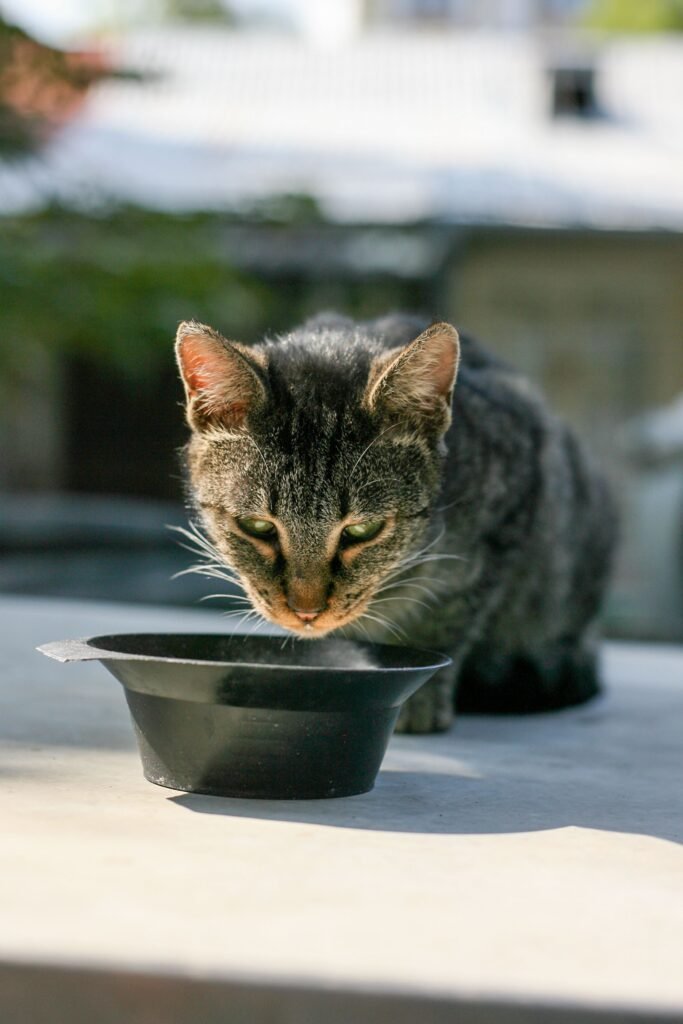
Unlike humans who scoop water into their mouths, cats use their tongue tip to create a water column.
The process happens quickly:
- The cat touches the water surface with the tongue.
- The tongue pulls water upward.
- The cat closes its mouth before gravity pulls the water down.
This method allows cats to drink efficiently while avoiding unnecessary splashing.
Why Do Cats Drink Differently From Dogs?
Dogs often curl their tongues backward like a scoop.
Cats use a tidier, more controlled technique, while a dog’s backward-curling tongue flings more water — one reason dogs tend to be messier drinkers.
How Is a Cat’s Tongue Different From a Human Tongue?

| Feature | Cat Tongue | Human Tongue |
|---|---|---|
| Surface | Rough with papillae hooks | Soft and flexible |
| Main purpose | Grooming, feeding, drinking | Taste, speech, swallowing |
| Keratin structures | Present | Not present in the same way |
| Grooming ability | Removes fur and debris | Cannot perform grooming |
A cat tongue acts almost like a grooming tool.
How Does a Cat’s Tongue Help It Eat and Taste?
It grips meat with its papillae, moves food to the back of the mouth, and starts swallowing. Cats have about 473 taste buds — far fewer than people, who have about 9,000 — and cannot taste sweetness. They can taste salty, sour, bitter, and savoury flavours, and can also taste ATP, a molecule in meat, which helps explain why meat tastes so good to them.
Do Lions and Tigers Have the Same Tongue as Cats?
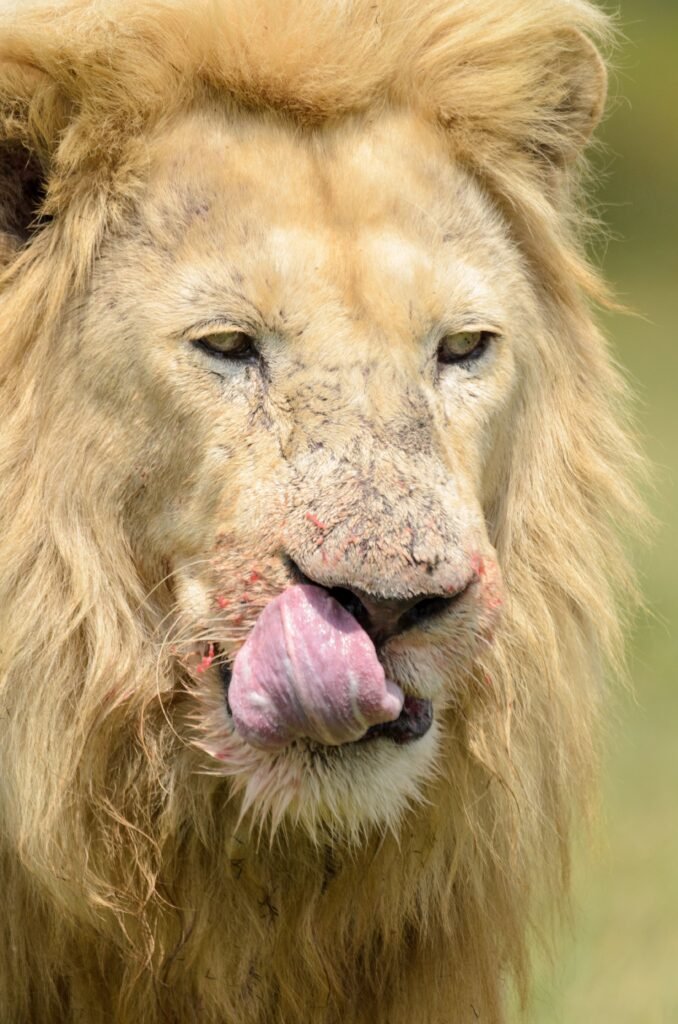
Domestic cats share many tongue features with larger wild cats.
| Animal | Tongue Characteristics |
|---|---|
| House cat | Rough tongue used for grooming |
| Lion | Strong papillae used for grooming and feeding |
| Tiger | Similar rough structure for removing meat and cleaning fur |
A tiger’s tongue is the same basic design at a larger scale, letting those keratin hooks scrape meat from much bigger prey.
What Does a Healthy Cat Tongue Look Like?
A healthy cat tongue usually has:
- Pink colour
- Moist surface
- Normal movement
- No unusual swelling
Changes may indicate a health issue. Pale can mean anaemia or poor blood flow, yellow can mean liver problems, and red, sore, or swollen can mean inflammation or infection — all need a vet check.

Warning Signs to Watch For
Contact a veterinarian if you notice:
What Does a Blue or Grey Tongue Mean?
This can indicate oxygen-related problems and needs urgent veterinary care.
What Causes Excessive Drooling?
Possible causes include:
- Dental disease
- Mouth irritation
- Foreign objects
- Certain illnesses
What Causes Difficulty Eating?
Watch for:
- Dropping food
- Chewing differently
- Avoiding meals
- Pawing at the mouth
What Do Unusual Spots or Growths Mean?
Dark spots can sometimes be harmless pigmentation, but new or changing marks should be checked.
Why Does My Cat Lick Me?
Common reasons include:
Is Licking a Sign of Affection?
Cats often groom members of their social group.
When your cat licks you, it may be treating you like part of its family.
Is My Cat Licking Me for Attention?
Some cats learn that licking gets a reaction from their owners.
Does Licking Show Comfort?
A relaxed cat may lick as part of a friendly interaction.
Should You Let Your Cat Lick You?
Occasional licking is usually harmless, but avoid letting cats lick:
- Open wounds
- Sensitive skin areas
- Areas with creams or medications
Why Does My Cat Keep Licking Itself?
Normal grooming is healthy.
However, excessive licking can signal a problem.
Possible reasons include:
- Fleas
- Allergies
- Skin irritation
- Anxiety
- Pain
If a cat repeatedly licks one specific leg, it may be trying to soothe discomfort in that area.
Which Cat Tongue Myths Are Wrong?
| Myth | Fact |
|---|---|
| A cat tongue is rough because it is dirty | The roughness comes from specialised papillae |
| Cats never need grooming help | Some cats need regular brushing |
| Cat saliva heals wounds | Saliva does not replace medical treatment |
| All licking is normal | Excessive licking may indicate a problem |
| Black spots always mean disease | Some pigmentation can be normal, but changes should be checked |
What Tongue Mistakes Do Cat Owners Make?
What Happens If Dental Care Is Ignored?
A cat’s grooming ability does not protect it from dental problems.
Cats can still develop:
- Plaque
- Gum inflammation
- Tooth discomfort
What Happens If You Brush Too Rarely?
Even clean cats benefit from brushing because it reduces swallowed fur.
Is Excessive Licking Really Normal?
Frequent licking should be observed carefully, especially if it focuses on one area.
How Can You Keep Your Cat’s Tongue Healthy?
Follow these simple habits:
✅ Brush your cat regularly
✅ Check the mouth during routine handling
✅ Provide fresh water daily
✅ Schedule veterinary checkups
✅ Pay attention to eating changes
✅ Never use human toothpaste on cats
Getting your cat comfortable with gentle mouth checks while it is young can make future veterinary visits easier.
How to Check Your Cat’s Tongue at Home: A 60-Second Exam
Make tongue checks part of your routine — it takes under a minute and can catch problems early. Wait until your cat is calm and sleepy (after a nap is ideal). Gently lift one side of the upper lip and look at the tongue’s colour and surface. A healthy cat tongue is pink, moist, and moves freely.
Note three things: colour (pale, white, or blue-grey is abnormal), moisture (a dry or sticky tongue can signal dehydration), and anything new (sores, lumps, or dark spots that were not there before). If your cat resists, do not force the mouth open — try again later or ask your vet to check during the next visit. For a veterinary overview of what mouth changes can mean, see Cornell’s guide to feline dental disease.
Hairball or Cough? How to Tell the Difference
Many owners confuse hairball retching with coughing because the body movements look similar. Here is the key difference: hairball episodes involve strong abdominal contractions and usually end with a tubular clump of fur, while a true cough comes from the chest with the neck stretched forward and little or nothing produced.
If your cat makes hacking sounds repeatedly but never produces a hairball, do not assume it is “just hairballs” — it may be coughing from airway irritation or asthma. Our guide to why your cat might be coughing explains the different sounds, when to worry, and what to do next.
Key Takeaways
- Keratin papillae make the tongue rough, groom the coat and spread saliva into fur.
- Cats lap water in a column with the tongue tip, and cannot taste sweet flavours.
- Pink, moist and moving freely is healthy. Blue-grey, pale or dry needs a vet.
- Never use human toothpaste. Brush with cat toothpaste and check the mouth often.
Frequently Asked Questions About Cat Tongues
Why does a cat’s tongue feel like sandpaper?
A cat tongue feels like sandpaper because of tiny keratin-covered papillae that help with grooming and eating.
What are the spikes on a cat tongue called?
They are called filiform papillae. These backward-facing structures help remove loose fur and clean the coat.
Why does my cat lick me?
Cats may lick people as a sign of affection, social bonding, comfort, or attention seeking.
Do cats clean themselves with their tongues?
Yes. Grooming is one of the main functions of a cat tongue.
Why does my cat lick itself constantly?
Excessive licking may be caused by stress, allergies, skin problems, fleas, or pain.
Why does my cat have black spots on its tongue?
Some cats naturally develop pigmentation spots. However, new, raised, or changing spots should be checked by a veterinarian.
Do lions have the same type of tongue as cats?
Yes. Lions, tigers, and domestic cats share similar tongue structures, although wild cats have larger papillae.
Can cats taste sweet flavours?
Most cats cannot taste sweetness the way humans do because their taste system is adapted for a meat-based diet.
How can I check my cat’s tongue at home?
Gently lift your cat’s lip while they are calm and look at the tongue’s colour and surface. A healthy tongue is pink and moist. Note any sores, swelling, or unusual spots and mention changes to your vet. Never force your cat’s mouth open if they resist.
Is it normal for my cat’s tongue to stick out?
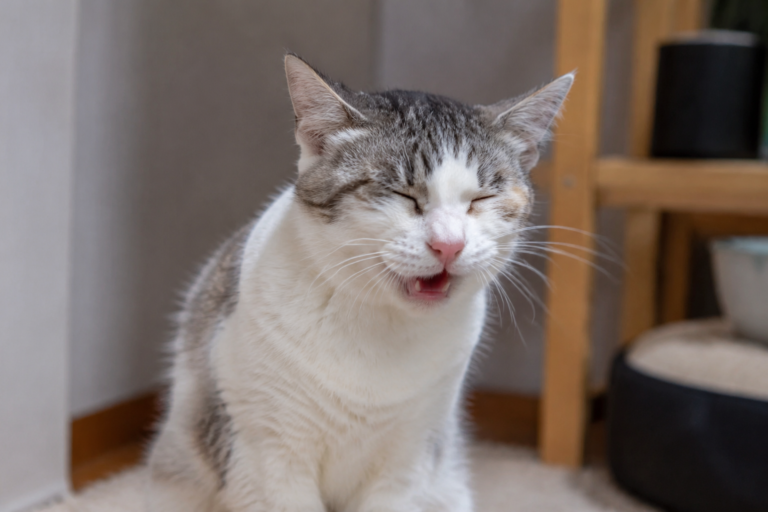
Occasional tongue-out moments (blepping) are normal, especially when your cat is relaxed or focused. But a tongue that hangs out constantly, or appears with drooling or breathing changes, warrants a veterinary check. A cat that holds its mouth open after sniffing may be using its vomeronasal organ to ‘taste’ a scent — the Flehmen response.
Why does my cat drool when I pet them?
Some cats drool when deeply relaxed and happy — it is a sign of contentment, not a problem. However, sudden drooling, or drool combined with bad breath or pawing at the mouth, can indicate dental issues that need a vet’s attention.
Can a cat’s tongue get injured?
Yes — the rough papillae can trap string, thread, or plant material. If your cat paws at its mouth, drools, or gags, check for foreign material and call your vet. Never pull string from a cat’s mouth, as it may be wrapped around something internally.
Conclusion
Cat tongue anatomy shows this small organ is much more than a grooming tool. Its rough surface, tiny papillae, and unique movement show how perfectly cats have adapted to their environment.
For cat owners, paying attention to changes in tongue appearance, grooming habits, and eating behaviour can provide valuable clues about their pet’s health.
Sources
- Cornell Feline Health Center — feline dental disease
- PetMD — Five Facts About Cat Tongues
- Hill’s Pet — Cat Tongues Explained
- Cats.com — Facts About a Cat’s Tongue
- Noel and Hu, PNAS (2018) — hollow papillae wick saliva
Photo Credits
Featured image: photograph by Volodymyr Kobozov, via Unsplash.
Cat drinking: photo by Shota Photographer via Pexels (free licence).
Yawning cat: photo by Giulia Caico via Pexels (free licence).
Lion’s tongue: photo by Steward Masweneng via Pexels (free licence).
Vet inspecting teeth: photo by Ermelinda Maglione via Pexels (free licence).


3 Comments