
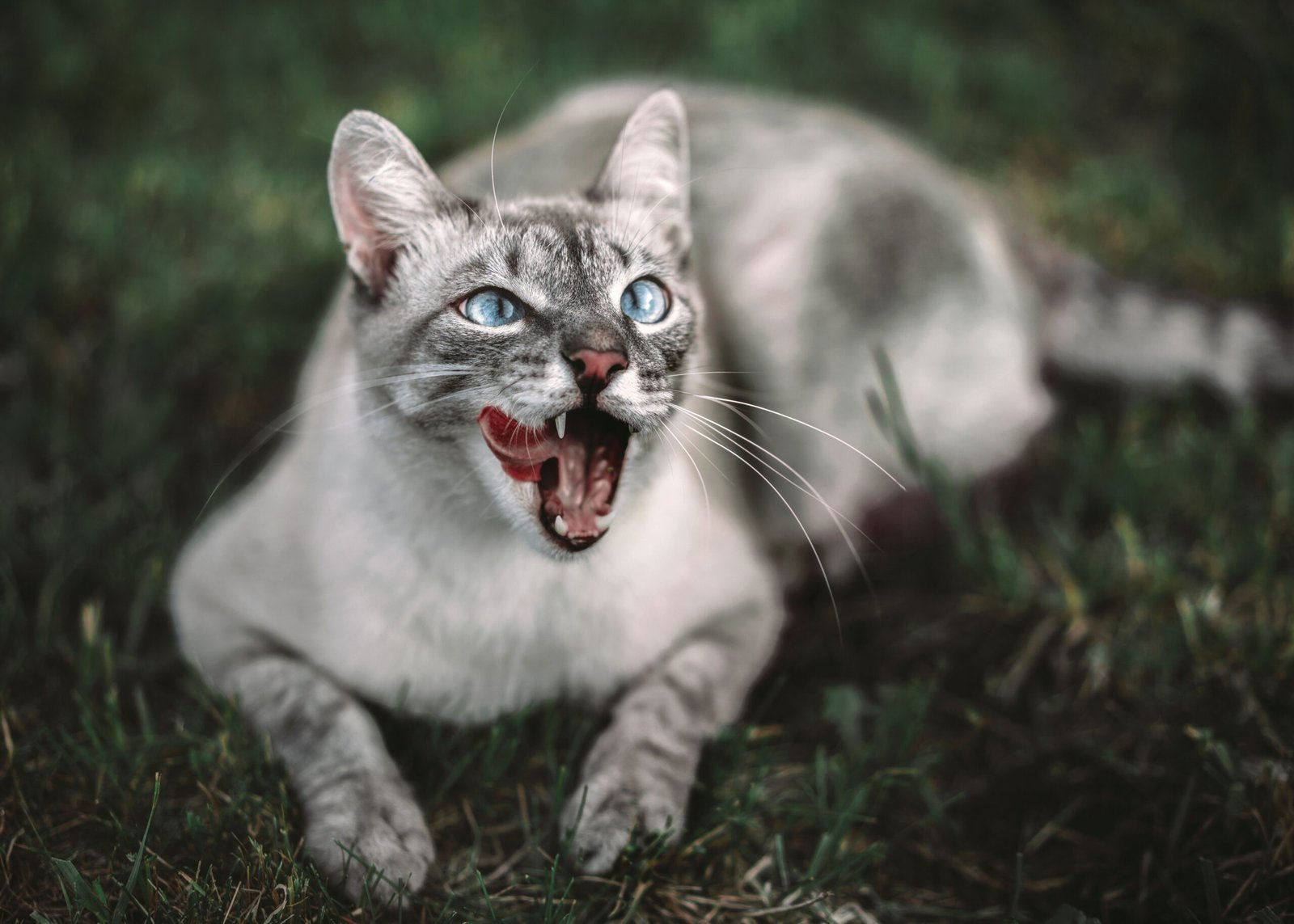
Coughing Cat: Why Is My Cat Coughing? Causes & Vet Advice
Is your coughing cat OK? Learn what a cough looks like, the causes, red flags, and what to do now — plus when to call the vet.
A coughing cat suddenly crouching down, stretching its neck forward, and making a strange hacking sound can be alarming. Many owners immediately think their cat is trying to get rid of a hairball, but coughing and hairball episodes are not the same thing. In short: if your cat keeps coughing, note the sound, frequency, and triggers — then see a vet. This guide explains what different coughs mean, when it is an emergency, and what you can do at home.
PetCavo is not a vet. This is general information, not a diagnosis. If you are worried about your pet, see a vet promptly.
Quick Answer
A coughing cat crouches low, stretches its neck and makes dry hacking sounds. Common causes are asthma, bronchitis, infections, allergies, parasites and inhaled objects. Film the episode, note how often it happens, and call your vet if it keeps coming back. Open-mouth breathing, blue or pale gums, or coughing up blood is an emergency — get help now.
What Does a Coughing Cat Look Like?
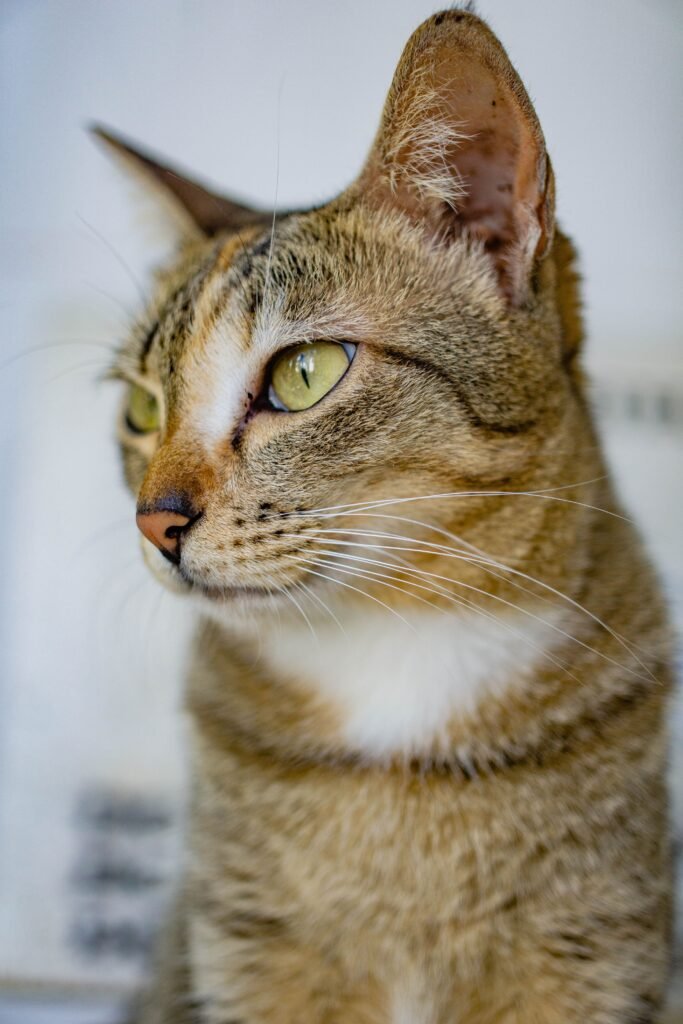
A true cat cough usually comes from the respiratory system. During a coughing episode, many cats lower their body, extend their neck, and forcefully push air out of their lungs.
Common signs of coughing include:
- Dry hacking sounds
- Neck stretched forward
- Crouched posture
- Repeated coughing movements
- Little or no material coming out afterward
A common example is a coughing cat sitting on the floor and making several hacking sounds without producing a hairball. Many owners mistake this for vomiting, but the movement comes from the airways rather than the stomach.
Recording your coughing cat on your phone can be extremely helpful. A veterinarian can often learn more from seeing the actual movement than from a verbal description.
Is My Cat Coughing or Trying To Bring Up a Hairball?
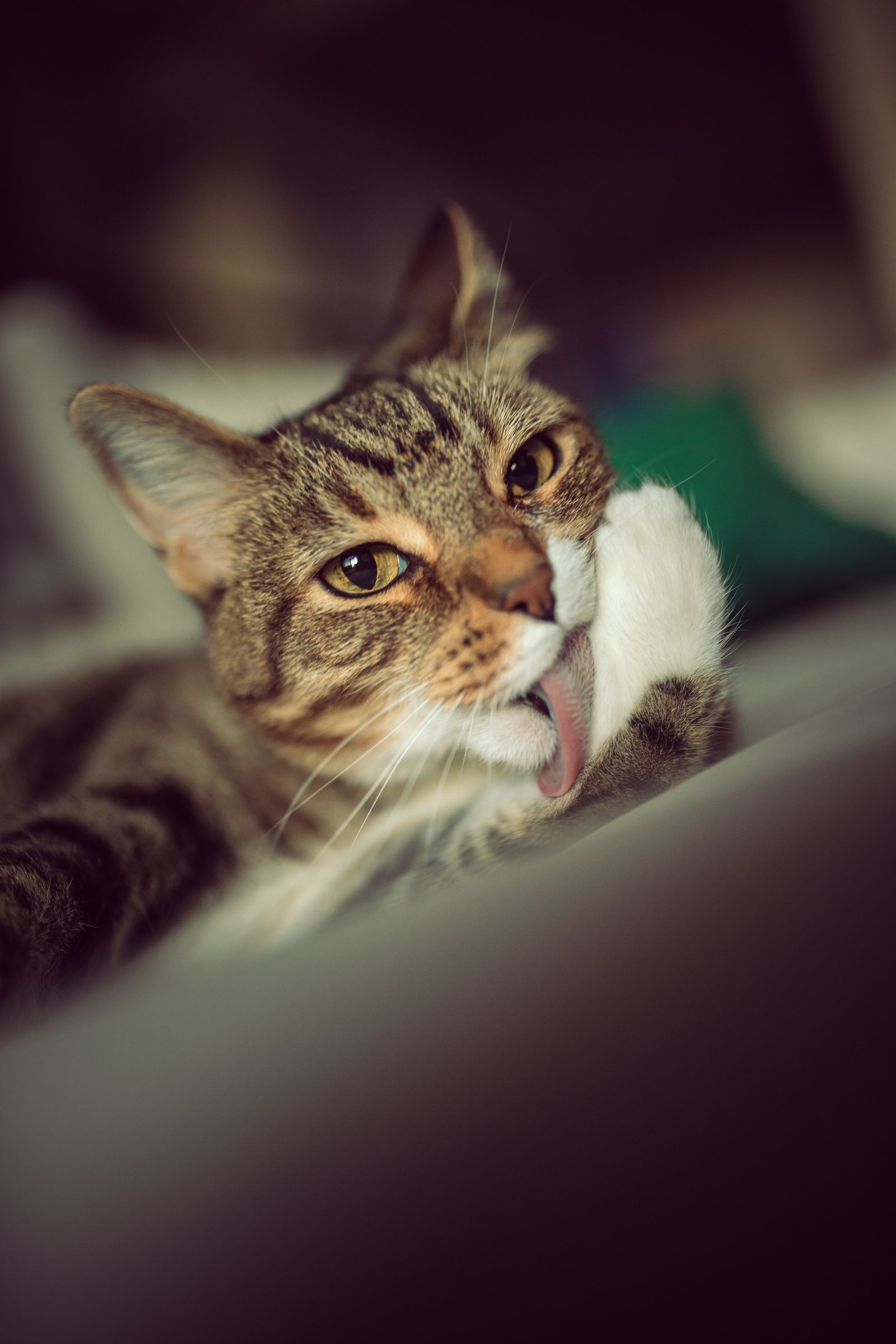
This is one of the biggest sources of confusion among cat owners.
Hairballs involve the digestive system, while coughing involves the throat, windpipe, and lungs.
| Coughing | Hairball |
|---|---|
| Comes from the airways | Comes from the stomach |
| Dry hacking sound | Retching or vomiting motion |
| Neck often extends forward | Strong abdominal movement |
| Usually nothing comes out | Hairball may appear afterward |
| May suggest respiratory irritation | Usually related to grooming |
A cat repeatedly coughing without producing a hairball should not automatically be treated for hairballs. The cause may be related to the lungs or airways.
Hairballs form when loose fur swallowed during grooming builds up — learn how your cat’s tongue works to understand the grooming behind them.
What Does a Cat Cough Sound Like?
Cat coughs can sound different depending on the underlying problem.
| Type of Cough | What It May Suggest |
|---|---|
| Dry hacking cough | Asthma, airway irritation, bronchitis |
| Wheezing cough | Narrowed or inflamed airways |
| Wet cough | Mucus or respiratory infection |
| Honking sound | Collapsing trachea |
The sound alone cannot confirm a diagnosis, but it can help your veterinarian understand what may be happening.
A useful tip is to note:
- When the coughing happens
- How long each episode lasts
- Whether exercise triggers it
- Whether it happens after exposure to dust, sprays, or smoke
Cat Wheezing vs Coughing: How to Tell the Difference
Owners often use the words “wheezing” and “coughing” interchangeably, but they describe different sounds — and they can point to different problems. A cough is a sudden, forceful burst of air from the lungs, usually with a hacking motion and the neck stretched forward. A wheeze is a high-pitched whistling sound your cat makes while breathing in or out, caused by air squeezing through narrowed airways.
In practice, the two often appear together: a cat with inflamed airways may wheeze between coughs, or start wheezing and then break into a coughing fit. This pattern can happen with several lower-airway conditions, including feline asthma and bronchitis, but the pattern alone does not confirm asthma. Only a vet can confirm asthma, after examining the cat and ruling out other causes.
A quick way to tell them apart:
- Coughing: repeated hacking bursts, usually in short episodes, with the neck stretched forward
- Wheezing: a continuous whistling sound with each breath, sometimes audible even at rest
- Wheezing cough: whistling breathing that turns into hacking fits — mention this pattern to your vet
If you notice a new whistling sound when your cat breathes, or the wheezing is getting louder or more frequent, book a vet visit. A phone recording of the sound is far more useful to a vet than a verbal description.
When Is Cat Coughing an Emergency?
Most coughs are not emergencies, but some signs mean your cat needs a vet now. Do not wait to see if it improves — call your vet or an emergency clinic straight away if you see any of these signs:
- Open-mouth breathing, panting, or fast, shallow or noisy breathing
- Blue, grey, pale, white or bright red gums
- Crouching low with the elbows out, or struggling to breathe
- Coughing up blood is an emergency, whatever else looks fine
- Collapse, extreme weakness, or getting rapidly worse
What to Do Right Now If Your Cat Is Coughing
- Stay calm and keep the room quiet. Stress makes breathing harder.
- Film the coughing on your phone if you safely can.
- Check the breathing and gum colour, and note how long the cough lasts.
- Keep your cat indoors, warm and calm.
- Call your vet and tell them what you saw. Follow their advice.
Call your vet the same day if the cough has lasted more than 24 hours and is getting worse, or if it has gone on for more than a few days. Kittens, older cats and cats with other health problems should be seen sooner.
Common Causes of Cat Coughing
A coughing cat can have several possible causes. Some are temporary, while others require medical treatment.
Feline Asthma
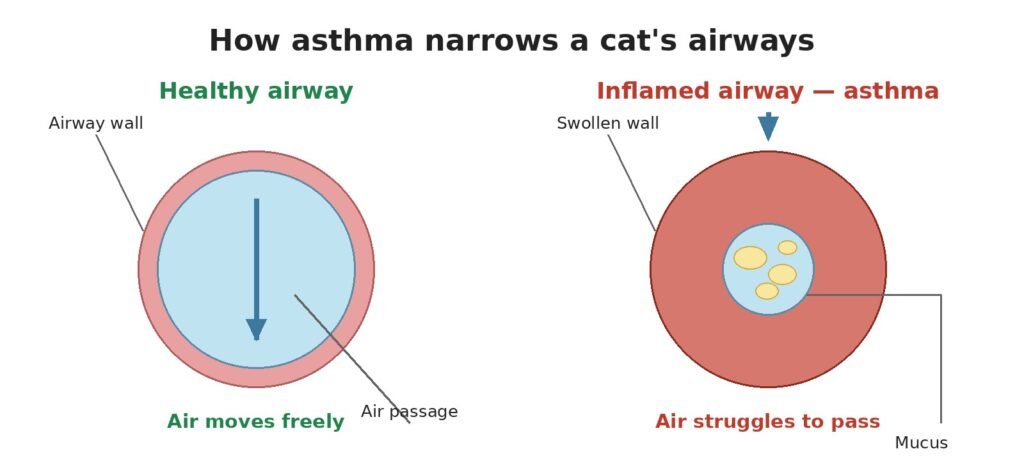
Asthma is one of the most common causes of repeated coughing in cats. During an episode, the airways become inflamed and narrowed — Cornell’s feline health centre explains the process in detail.
Possible signs include:
- Repeated dry coughing
- Wheezing
- Breathing difficulty
- Crouching low during episodes
- Neck stretched forward
Environmental triggers may include dust, smoke, perfumes, and other airborne irritants.
Bronchitis
Bronchitis occurs when the bronchial tubes become inflamed. This inflammation can lead to persistent coughing.
Cats with bronchitis may show:
- Frequent dry cough
- Breathing changes
- Reduced activity
- Increased sensitivity to irritants
Respiratory Infections
Upper respiratory infections can irritate the airways and cause coughing. The usual causes are feline herpesvirus and feline calicivirus, and sometimes the bacterium Bordetella bronchiseptica.
Other symptoms may include:
- Sneezing
- Nasal discharge
- Low appetite
- Tiredness
- Fever
Young cats and cats exposed to other animals may have a higher chance of developing respiratory infections. Some of these infections, like feline calicivirus, also cause mouth ulcers and drooling — see our guide on why cats drool.
Allergies and Environmental Irritants
Some cats react to substances in their surroundings.
Possible triggers include:
- Dusty litter
- Cigarette smoke
- Air fresheners
- Cleaning chemicals
- Strong perfumes
- Mold
Example:
A cat that starts coughing every time the litter box is cleaned may be reacting to dust particles rather than having a contagious illness.
Parasites
Certain parasites can affect the respiratory system. Heartworm inflames the heart and lungs, roundworms can travel through the lungs as they grow, and lungworm lives in the airways.
Possible causes include:
- Heartworm disease
- Lungworm
- Roundworm
Parasite-related coughing can sometimes look similar to asthma, which is why testing may be needed. Lungworm is picked up by eating slugs or snails.
Foreign Objects
Cats can occasionally inhale small particles that irritate their airways.
Examples include:
- Grass pieces
- Dust particles
- Small plant materials
Sudden coughing after outdoor activity may need closer evaluation.
Heart Disease
Heart disease does not often cause coughing in cats. Unlike in dogs, coughing is not a common sign of heart disease in cats, but fluid can build up around the lungs in some cases. Signs include fast breathing, tiredness and a poor appetite. Your vet may take chest X-rays and use ultrasound to look at the heart.
Tumours
Tumours in the chest or airways are rare in cats, but they can cause a cough that does not go away. The cough is often dry and comes with weight loss, tiredness or laboured breathing. Your vet may use chest X-rays and ultrasound, and a biopsy may be needed to confirm the cause.
Collapsing Trachea
Collapsing trachea is when the windpipe narrows and limits airflow. It is more common in dogs, but cats can have it too. The cough often sounds like a goose honk and may get worse with excitement or pressure on the neck. Your vet will check the airway with X-rays.
Pneumonia
Pneumonia is infection and swelling in the lungs. It can follow a respiratory infection that spreads to the lower airways. Signs include a wet cough, fast or laboured breathing, tiredness and a poor appetite. Your vet will use chest X-rays and blood tests, and treatment often includes antibiotics and oxygen if breathing is hard.
Why Is My Cat Coughing and Sneezing at the Same Time?
Coughing with sneezing usually points to an upper respiratory infection, which irritates both the nose and the airways. Watch for nasal discharge, a low appetite or tiredness, and call your vet if the signs last more than a few days or breathing becomes laboured.
Why Is My Cat Coughing After Eating or Drinking?
Food or water going down the wrong way can trigger a brief cough. If it happens once and your cat recovers quickly, note it and watch. If coughing after eating keeps happening, or your cat chokes, gags or struggles to breathe, call your vet the same day.
Coughing Patterns and What They Mean
Coughs follow patterns, and the pattern helps your vet. Some cats look normal between coughs. Some cough once a day, some more at night, and some coughs keep coming back. Once a day, a brief cough or two, then done, with normal eating and breathing, still needs noting — book a vet check if it repeats. Coughing several times a day may indicate a persistent issue, especially if it is getting worse or comes with other symptoms. Coughing at night or in the early morning may indicate asthma or sensitivity to allergens and other irritants. Coughing after exercise may suggest airway issues — note the trigger and tell your vet. Sudden coughing fits are different too. Each pattern points to something different.
Occasional coughing after a brief irritation may not always indicate a serious problem.
However, repeated coughing should not be ignored even if your cat seems fine.
A helpful approach is keeping a simple cough diary.
Write down:
- Date and time
- Duration of coughing
- Possible triggers
- Other symptoms
This information can help your veterinarian identify patterns.
Cat Asthma: Signs of an Attack
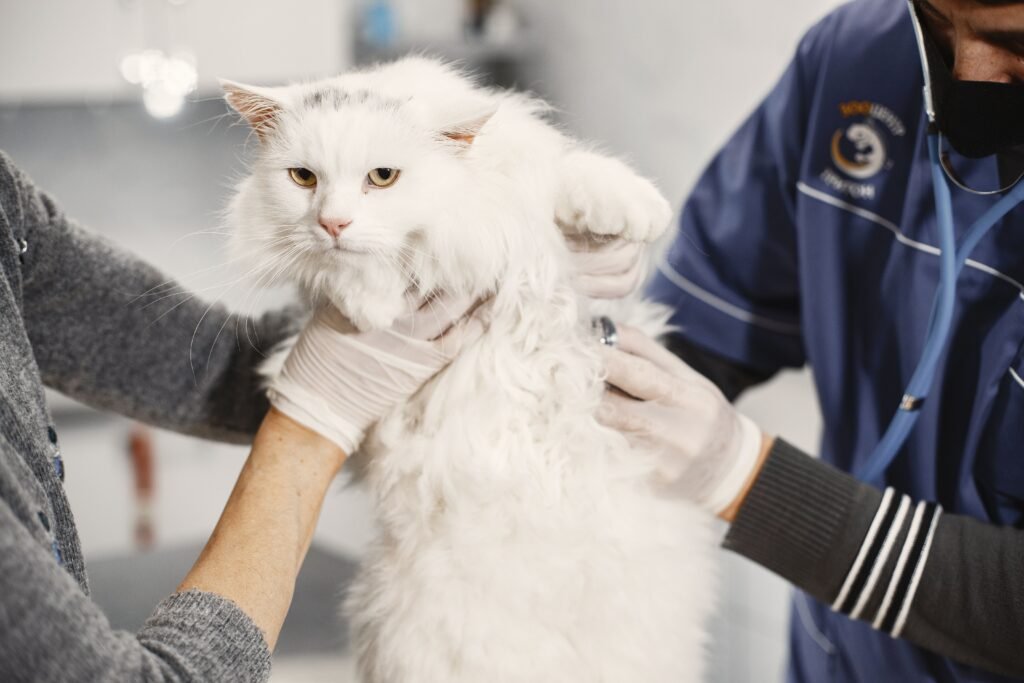
Asthma deserves special attention because some episodes can become serious.
Possible asthma signs include:
- Sudden coughing attacks
- Wheezing
- Difficulty breathing
- Open-mouth breathing
- Blue or grey gums
An asthma attack involving breathing difficulty is an emergency and requires immediate veterinary care.
Never use human inhalers or medications for your cat unless specifically prescribed by a veterinarian.
How Veterinarians Diagnose a Coughing Cat
A veterinarian will first look at your cat’s history and perform a physical examination. During the exam, the vet listens to the heart and lungs and may do a tracheal rub — gently rubbing the windpipe to see if it brings on a cough.
They may ask:
- When did coughing begin?
- How often does it happen?
- Is it getting worse?
- Are there environmental triggers?
- Is your cat indoor-only or outdoor?
Possible tests include:
- Chest X-rays — show the lungs, airways and heart size
- Blood tests, including a heartworm test
- Stool screening for worm eggs
- Chest ultrasound — looks for fluid or tumours
- Tracheal wash or BAL — fluid is flushed through the lower airways and tested
- Bronchoscopy — a thin camera looks inside the airways
- Thoracocentesis — fluid is drawn from the chest with a needle
The goal is not just stopping the cough but finding the reason behind it. Some tests need sedation or a short anaesthetic so your cat stays still and safe. There is no single test that confirms asthma on its own. Only a vet can confirm it, after looking at the history, examination and test results together and ruling out other causes.

Treatment Options for a Coughing Cat
Treatment depends on the underlying cause.
| Cause | Possible Treatment Approach |
|---|---|
| Asthma | Vet-prescribed medicine to reduce airway inflammation. Your vet chooses the medicine and dose. |
| Infection | Vet-prescribed antibiotics, only if your vet finds a bacterial infection. |
| Parasites | Vet-prescribed parasite treatment, only if your vet finds parasites. |
| Irritation | Removing triggers |
| Foreign object | Removal by the vet, sometimes by surgery |
There is no universal cough medicine for a coughing cat because coughing is a symptom, not a single disease. If your vet prescribes an inhaler, use it with an AeroKat spacer and mask: shake the inhaler, fit it to the chamber, hold the mask over the nose and mouth, press once, and let your cat breathe through the mask. Always finish the full course of medicine, even if the cough stops.
Very sick cats may need oxygen and a stay in hospital. A foreign object or tumour may need surgery. Asthma is long-term: keep triggers low, weigh your cat regularly and follow your vet’s plan for flare-ups.
Kittens, Older Cats and Cat Colds
Kittens up to 1 year old, cats aged 7 years or older, and cats with other health problems should see a vet sooner when they cough. Their bodies cope less well with breathing problems, and a small change can become serious fast. Stress can also trigger asthma, so keep changes at home gentle and routine steady.
A cat cold is not a human cold. It is an upper respiratory infection, often caused by feline herpesvirus or calicivirus. Signs include sneezing, a runny nose, sore eyes and a cough. Keep your cat warm, offer food and water, and call your vet if breathing gets hard or your cat stops eating.
What You Can Do at Home
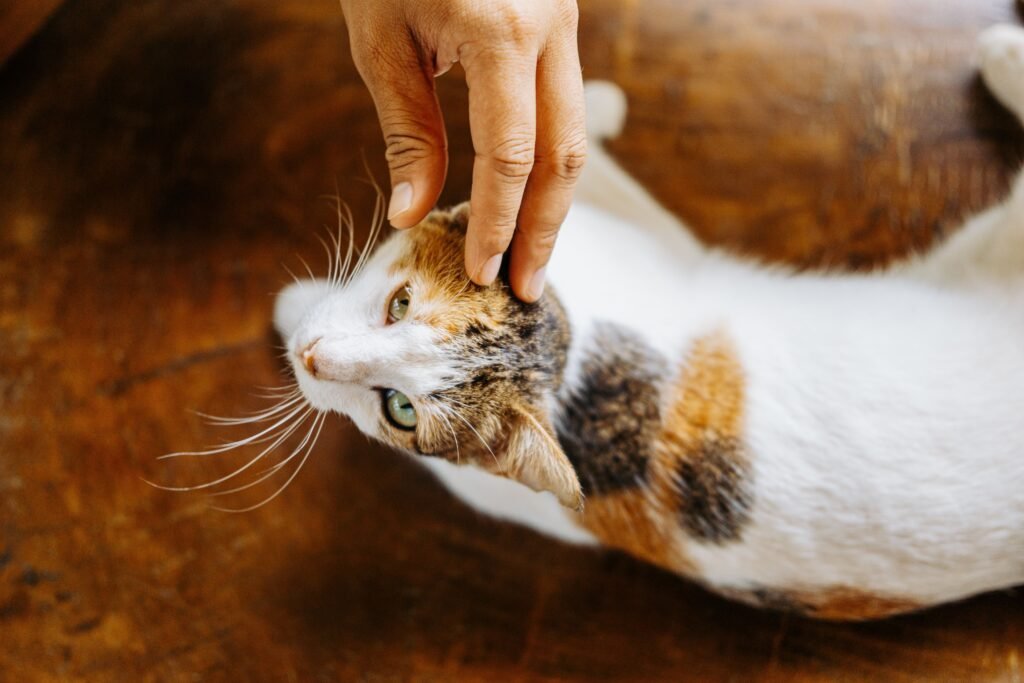
While waiting for veterinary advice, you can support your coughing cat by:
- Do: keep a symptom log and film episodes for your vet
- Do: use dust-free litter and unscented cleaners
- Do: run an air purifier and a humidifier
- Do: groom your cat and keep them indoors
- Do: offer fresh water and keep your cat calm
- Don’t: give human cough medicine or painkillers
- Don’t: use human inhalers or steam or salt inhalation without vet advice
- Don’t: wrap your cat in blankets or smoke near them
A humidifier may help a coughing cat with airway irritation, but it should not replace veterinary care when coughing continues. Stop and get help if breathing gets worse.
Preventing Coughing in Cats
Keep your cat at a healthy weight, use regular parasite control, choose low-dust litter, keep the air smoke-free and take your cat for regular vet visits. Small habits like these lower the chance of coughs and help your vet spot problems early.
Common Mistakes Cat Owners Make
Assuming Every Cough Is a Hairball
Many cats cough without producing a hairball. Treating every episode as a grooming problem can delay proper care.
Giving Human Medicine
Human cough medicines may be unsafe for cats.
Ignoring Repeated Coughing
A cat that coughs regularly should be evaluated rather than simply monitored forever.
Using Strong Household Fragrances
Perfumes, sprays, and smoke can irritate sensitive airways.
Myth vs Fact
| Myth | Fact |
|---|---|
| Cats only cough because of hairballs | Cats can cough because of airway and lung problems |
| A normal-looking cat cannot be sick | Cats often hide symptoms |
| All coughs need the same treatment | Treatment depends on the cause |
| Indoor cats cannot develop asthma | Indoor cats can still have respiratory issues |
Key Takeaways
- Repeated coughing, wheezing or laboured breathing needs a vet visit.
- Asthma narrows the airways. Dust, smoke and sprays can trigger it.
- Open-mouth breathing, blue gums or collapse is an emergency.
- Note the sound, frequency and triggers.
Frequently Asked Questions
Will a cat’s cough heal itself?
A cough from brief dust or smoke can settle on its own once the trigger is gone. A cough that keeps coming back, gets worse, or comes with breathing trouble will not heal by itself and needs a vet. Never wait more than a few days to book a check.
What is a red flag in coughing?
Red flags are open-mouth breathing, blue or pale gums, coughing up blood, collapse, or a cough that gets rapidly worse. A cough lasting more than 24 hours and worsening, or more than a few days, also needs a vet. Call your vet straight away if you see any of these.
Can I give my cat cough medicine?
No — never give your cat human cough medicine or painkillers, as many are toxic to cats. Only use medicine your vet prescribes, such as antibiotics for infection or inhaled steroids for asthma. If your vet prescribes an inhaler, use it with a spacer and mask made for cats.
How much does a vet visit cost?
Vet costs vary widely by clinic and region. Call your clinic for an estimate before you go, and bring notes on frequency and triggers to avoid repeat visits. Ask what the visit covers, whether tests such as X-rays cost extra, and if payment plans are available, so there are no surprises.
What home remedy can I give my cat for respiratory issues?
Keep the air clean with dust-free litter, unscented cleaners and an air purifier, and run a cool-mist humidifier in your cat’s favourite room. Keep your cat indoors, calm and hydrated, and film any coughing for your vet. Home care helps mild irritation, but it never replaces a vet visit for a cough that keeps coming back.
My cat coughs once a day — should I be worried?
A single brief cough once a day can follow a minor irritation, but if it repeats, book a vet check promptly. Do not wait for it to become daily or severe. A vet can check the airways, listen to the chest and rule out asthma or infection before it worsens.
Why is my cat coughing and gagging?
Coughing and gagging together often mean something is irritating the throat or airways, such as asthma, an infection, a hairball, or a swallowed object. Film the episode and note whether anything comes up. See your vet promptly if it keeps happening, or straight away if your cat struggles to breathe or swallow.
Why does my cat cough like something is stuck in its throat?
That ‘stuck’ feeling can sometimes be reverse sneezing — a loud snorting sound cats make to clear irritants from the nose or throat. It usually passes in under a minute, while a wet, congested cough can sound similar. See your vet promptly if episodes repeat, or if your cat gags, paws at its mouth, drools, or struggles to swallow.
Final Thoughts
A coughing cat should not automatically cause panic, but repeated coughing deserves attention. The biggest challenge for owners is identifying whether they are seeing a true cough, a hairball attempt, or another type of breathing problem.
Pay attention to the sound, frequency, triggers, and any changes in your coughing cat’s behaviour. Recording episodes, reducing irritants, and seeking veterinary advice when needed can help your cat receive the right care sooner.
A cough is a symptom, not a diagnosis. Finding the reason behind it is the key to helping your cat breathe comfortably again.
Sources
- Cornell Feline Health Center — Feline Asthma: What You Need to Know
- VCA Hospitals — Coughing in Cats
- PetMD — Cat Coughing: Why It Happens and When to Call Your Vet
- International Cat Care — Asthma and Chronic Bronchitis in Cats
- Cats Protection — Feline Asthma
- PDSA — Breathing Problems in Cats
- Vets Now — First Aid for Breathing Problems in Pets
- Royal Veterinary College — Respiratory Distress in Cats and Dogs
- PetMD — Reverse Sneezing in Cats: What Causes It and When to Worry
Photo Credits
Featured image: grey and white cat crouched low on grass — photo by Viktor Mogilat on Pexels. Body images: tabby cat portrait by FOX via Pexels (free licence); grooming tabby cat by Benjamin Farren via Pexels (free licence).
Vet with white cat: photo by Gustavo Fring via Pexels (free licence).
Vet with stethoscope: photo by Sueda Guzeldere via Pexels (free licence).
Hand petting calico: photo by Nothing Ahead via Pexels (free licence).
Airway diagram: PetCavo original illustration.




9 Comments