
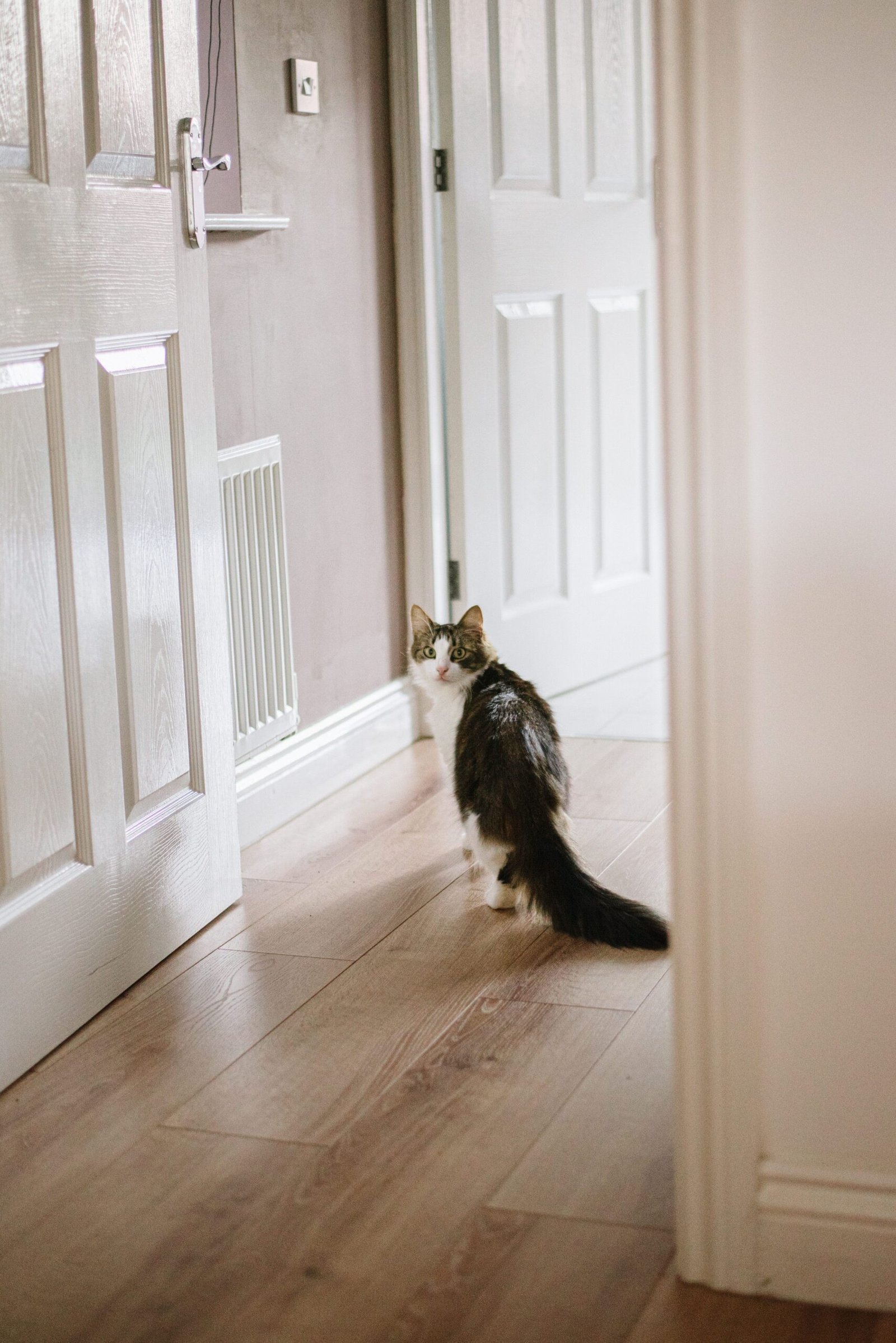
Why Does My Cat Follow Me to the Bathroom? 9 Reasons
Why does my cat follow me to the bathroom? Learn the real reasons cats follow you, watch you, and wait outside the bathroom door.
You head to the bathroom for a little privacy, and your cat follows right behind you. Close the door, and there may be scratching or meowing outside. Leave it open, and your cat might sit beside the sink, stare at you, or settle down as though they were invited.
If you have ever locked the bathroom door only to hear an indignant yowl from the other side — as though you had committed some great betrayal — you are in good company. A feline bathroom escort is one of the most universal, and most laughed-about, parts of sharing a home with a cat.
So, why does my cat follow me to the bathroom? Usually, the explanation is much less mysterious than it seems. Your cat may want attention, enjoy being near you, feel curious about the room, expect food afterward, or simply find the bathroom interesting. Cats can also learn household routines and associations surprisingly well.
The most useful clue is what your cat does after entering the bathroom. A cat that comes straight to you is showing a different pattern from one that ignores you and immediately investigates the sink.
The Short Answer
There isn’t one universal reason. Cats follow their owners for several reasons, and bathroom-following can be a combination of ordinary curiosity, social attachment, learned routine, and interest in the room itself. Veterinary guidance from PetMD lists hunger, attention, curiosity, bonding, stress, and illness among possible reasons a cat may follow a person around the home.
Here are nine explanations worth considering.
1. Your Cat Wants Attention or Companionship
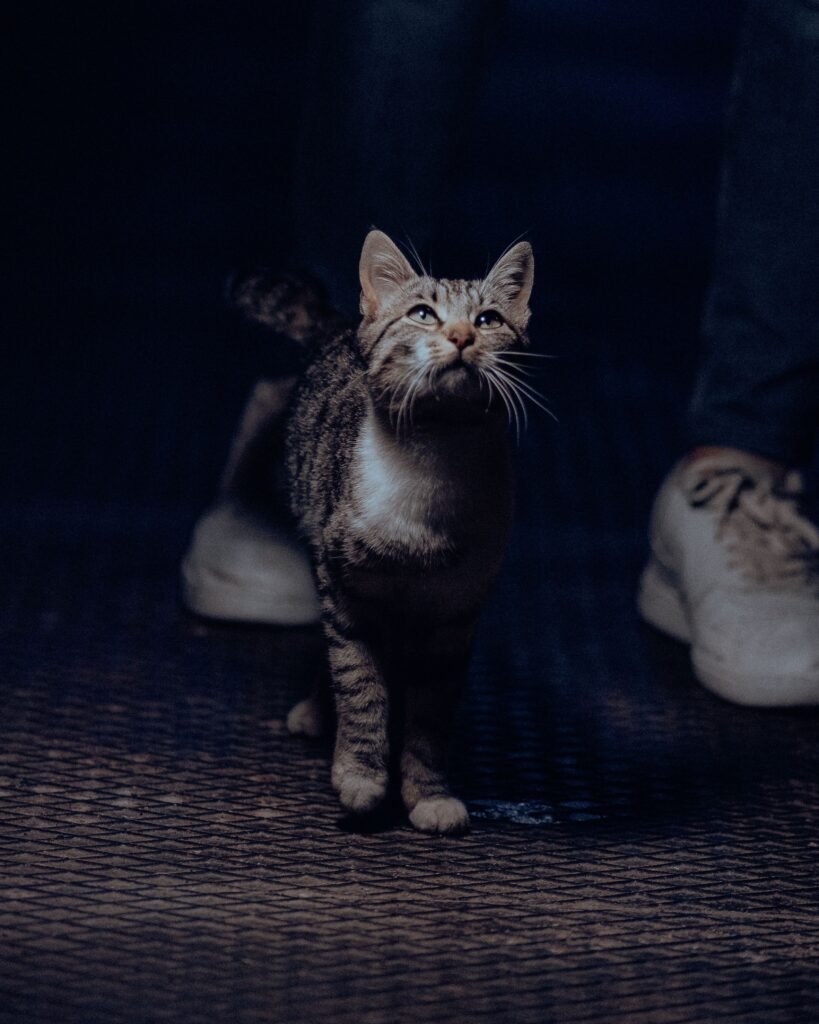
Sometimes your cat simply wants to be with you. Cats can form strong bonds with their human companions, and following you from room to room is one of the ways they seek social contact — especially when it comes with rubbing against your legs, purring, meowing, or settling beside you.
The bathroom is an ideal spot for an attention-seeking cat because you are finally sitting still. You’re also a captive audience — you can’t get up and walk away, so your cat knows it has your undivided attention for a few minutes. After a busy day, those quiet minutes together might be the most focused companionship your cat gets. You can read more about why cats demand attention when you are on the phone.
For example: If your cat follows you inside, immediately rubs against your legs, and waits for you to pet them, the person may be more interesting than the room.
2. Your Cat Is Curious
Curiosity is another simple explanation — and the bathroom is full of novelties. The room may contain objects, sounds, and spaces your cat doesn’t encounter elsewhere: dripping taps, echoing tiles, and cabinets full of interesting smells. A closed bathroom door can make that curiosity even stronger because your cat can’t see what’s happening inside.
Cats Protection explains that cats may follow their owners into the bathroom because they want to investigate this “mystery” room. Sinks, taps, shelves, bathtubs, and other surfaces can provide plenty to explore.
Your cat may not be fascinated by what you’re doing at all. They may simply be thinking, “What’s in there?”
3. Your Cat Has Learned Your Routine
Cats are remarkably good at recognising predictable patterns. If your morning usually goes wake up → bathroom → kitchen → breakfast, your cat can learn that entire sequence — and the bathroom trip becomes a signal that something rewarding is about to happen, so your cat shows up early for the opening act.
The same principle can apply if you usually play with your cat, give them treats, or interact with them after using the bathroom.
Routine and learned associations are common reasons cats follow their people around the home — a bathroom trip can become one step in a familiar sequence.
4. Your Cat Expects Food
Sometimes the bathroom is simply the first step toward breakfast. If your cat follows you to the bathroom and then immediately heads toward the kitchen, food anticipation deserves serious consideration.
Cats can learn that their human is the source of meals and treats. A cat that regularly receives breakfast after your morning bathroom routine may begin following you earlier in the sequence.
If the following becomes especially intense around mealtimes, hunger or food anticipation may be part of the explanation.
5. Your Cat Likes the Bathroom
Sometimes the cat isn’t particularly interested in you — the bathroom itself is the attraction. Some cats enjoy:
- Sinks
- Running taps
- Cool surfaces
- Bathtubs
- Shelves
- Bath mats
- Interesting smells
- Water sounds
- Quiet corners
Cats Protection specifically notes that bathroom sinks, taps, shelves, and bathtubs can provide interesting places for cats to explore or rest.
Running water can be particularly attractive to some cats. Cats Protection notes that many cats show interest in drinking from running taps.
If your cat follows you in but immediately ignores you and heads for the sink, the bathroom itself may be more rewarding than your company.
6. Your Cat Is Bored
Following you can also be a way to find something interesting to do. A cat with limited opportunities for play, exploration, climbing, scratching, or food-based enrichment may decide that supervising your bathroom routine is the day’s entertainment.
PetMD notes that attention-seeking can occur when cats are mentally understimulated and recommends interactive play and enrichment as ways to provide appropriate outlets.
If your cat follows you everywhere while also demanding play, vocalising frequently, or repeatedly trying to initiate interactions, look at the bigger picture rather than focusing only on the bathroom.
7. Your Cat Feels Safer Near You
Some cats prefer staying close to people they trust, using familiar people as a source of security — especially when they feel uncertain or stressed. PetMD notes that cats may seek human company when they feel vulnerable, stressed, or unwell.
That doesn’t mean every bathroom follower is anxious. A relaxed cat that has always followed you is very different from one that suddenly becomes unusually attached.
8. Something Changed at Home
A change in your cat’s environment can affect how closely they follow you.
Think about whether anything recently changed:
- You moved
- Someone moved into or out of the home
- A new pet arrived
- Your work schedule changed
- Your cat’s routine changed
- Household activity increased
- You were away for a period of time
Cats can respond to changes in routine and environment with behavioural changes. If following becomes much more intense after a major change, stress is worth considering.
9. Your Cat May Be Unwell
A sudden change in attachment deserves more attention than a behaviour your cat has displayed for years.
Cats can sometimes become more clingy when they don’t feel well. PetMD advises seeking veterinary attention when increased following occurs alongside changes such as appetite, water intake, vomiting, diarrhoea, breathing problems, or difficulty walking.
This doesn’t mean following you is a sign of illness by itself.
The important distinction is normal pattern versus sudden behavioural change.
Does Your Cat’s Age Make a Difference?
Yes — the same bathroom-following behaviour can mean different things at different life stages.
Kittens: the Velcro phase
Kittens often follow closely. A young kitten is still learning that the world is safe, and you are their safe place. If your new kitten cries outside the bathroom door as though the closed door were the end of the world, that is normal baby behaviour, not a problem to fix. Many kittens grow more independent as they get older, though some keep the escort habit for life.
What helps: keep departures and reunions low-key, give your kitten a cosy spot with a warm blanket near the bathroom, and resist the urge to open the door mid-cry — wait for a quiet moment instead, so patience rather than volume gets rewarded.
Adult cats: habit and affection
In healthy adult cats, bathroom-following is usually just an established routine mixed with affection. If your three-year-old has escorted you to the bathroom every morning since kittenhood and is otherwise happy and healthy, there is nothing to decode — it is simply your life now.
Senior cats: worth a closer look
A senior cat who suddenly starts shadowing you more closely — including to the bathroom — deserves a vet check rather than just a laugh. Increased clinginess in older cats can be linked to cognitive decline or conditions such as hyperthyroidism that cause restlessness and vocalisation.
What helps: keep routines predictable, add nightlights along hallways if your cat seems uncertain in the dark, and mention the behaviour change at your cat’s next veterinary visit — or sooner if it came on quickly.
The Copycat Effect: Why It Spreads in Multi-Cat Homes
If you share your home with more than one cat, you may have noticed the habit is contagious. One cat discovers the joy of the bathroom audience, and soon there is a small queue forming at the door. Cats learn a great deal by watching each other, so don’t be surprised if your aloof, independent cat suddenly develops strong opinions about bathroom access after observing a more social housemate. In multi-cat homes, the behaviour is often less about any single cat’s needs and more about “this is just what we do in this family.”
How to Figure Out Why Your Cat Follows You
Instead of guessing what your cat is thinking, watch what happens before, during, and after the bathroom trip.
Before
Ask:
- Is it close to mealtime?
- Did I just come home?
- Did something unusual happen?
- Did I start moving toward the bathroom after another familiar activity?
During
Notice:
- Does your cat seek petting?
- Does your cat watch you?
- Does your cat investigate the sink?
- Does your cat drink water?
- Does your cat simply sit nearby?
- Does your cat vocalise?
After
This is often the most revealing part.
If your cat follows you out and heads toward the kitchen, food may be involved.
If your cat stays in the bathroom exploring, the room may be the attraction.
If your cat follows you to the next room without doing anything else, companionship or habit may be more likely.
A simple behaviour guide
| What your cat does | What it may suggest |
|---|---|
| Follows you and seeks petting | Attention or companionship |
| Goes straight to the sink | Bathroom or water is interesting |
| Follows before meals | Food anticipation |
| Waits outside a closed door | Curiosity or wanting access |
| Follows you everywhere | Bonding, routine, attention, or enrichment needs |
| Suddenly becomes very clingy | Possible stress or health concern |
These are clues, not diagnoses. Your cat’s overall behaviour matters more than one action.
Why Does My Cat Follow Me Everywhere?
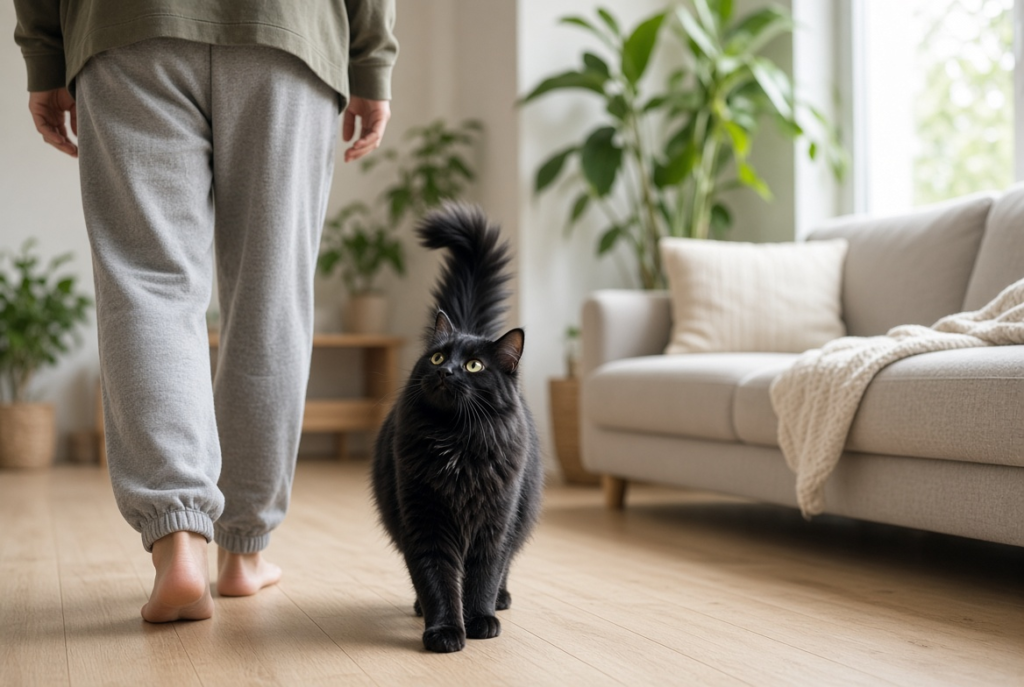
If you’re wondering why your cat follows you to the bathroom and everywhere else too — from the bedroom to the kitchen, office, and living room — the bathroom probably isn’t the main story.
Your cat may simply prefer staying close to you.
Following can also be associated with affection, attention, curiosity, food, and learned routines.
The pattern can help narrow it down:
Follows everyone: curiosity or general sociability may be involved.
Follows mainly you: a stronger bond or preference for your company may be involved.
Follows you before meals: food anticipation is a strong possibility.
Only follows you into the bathroom: the room itself, access, water, or the unusual routine may be more relevant.
Suddenly follows you everywhere: consider recent stressors and possible health changes.
That distinction gives you more useful information than simply labelling the cat “clingy.”
Why Does My Cat Watch Me in the Bathroom?
Your cat isn’t necessarily fascinated by your bathroom habits. They may simply be watching because you’re nearby, stationary, and doing something unusual from their perspective — a large, mostly hairless creature sitting motionless and staring at a glowing rectangle is objectively worth monitoring.
Cats use visual attention to monitor their environment and communicate. A staring cat can be asking for attention, food, play, or showing affection, while body posture and other signals help reveal the emotional context. If the staring is intense, fixed, or paired with freezing in place, our guide to why cats freeze and stare breaks down what that body language usually means.
Look at the rest of your cat’s body: a relaxed posture, normal ears, and calm behaviour are very different from flattened ears, tense posture, attempts to retreat, or other signs of distress.
Why Does My Cat Sit Outside the Bathroom Door?
Sometimes the closed door is the most interesting part.
Your cat knows you’re on the other side but suddenly can’t access you. If the bathroom is normally accessible, that change can create curiosity.
Your cat might sit there waiting for the door to open, listen to what’s happening inside, or simply wait for you to come back out.
If you routinely open the door when your cat scratches or cries, the behaviour can also become reinforced because your cat learns that vocalising or scratching gets a response.
That doesn’t necessarily mean your cat is anxious. Some cats are simply persistent about access to their favourite people. If the scratching and yowling at the door are the real problem, damage control beats confrontation: set up a cat perch near the bathroom and offer a puzzle feeder just before you go in, so your cat has a comfortable lookout and something engaging to do while the door stays shut.
Why Does My Cat Follow Me When I Poop?
Your cat probably doesn’t understand the human concept of bathroom privacy.
From your cat’s perspective, you’re entering an interesting room and remaining there for several minutes.
Your cat may be:
- Following your routine
- Seeking attention
- Investigating the bathroom
- Expecting food afterward
- Enjoying your company
- Interested in the room
There is also a more unusual possibility. PetMD notes that because urination and defecation can leave an animal vulnerable, some experts suggest a protective component could play a role in a cat following their person into the bathroom. However, this shouldn’t be treated as the universal explanation. Curiosity and companionship are also plausible reasons.
So yes, your cat might be keeping an eye on you.
Some cats are particularly insistent about escorting you at night. The house is dark and quiet, and your cat may feel the need to accompany you through the dim hallway — part routine, part companionship in the small hours.
But they might also just be nosy. And then there’s the theory many owners swear by: you supervise their litter box visits without being asked, so they’ve decided turnabout is fair play.
Why Does My Cat Follow Me When I Shower?
The shower creates a completely different environment. Some cats are interested in:
- Running water
- The sound of the shower
- Steam
- Warmth
- Your movement
- The shower curtain
- Water collecting in the tub
- Watching you from a dry spot
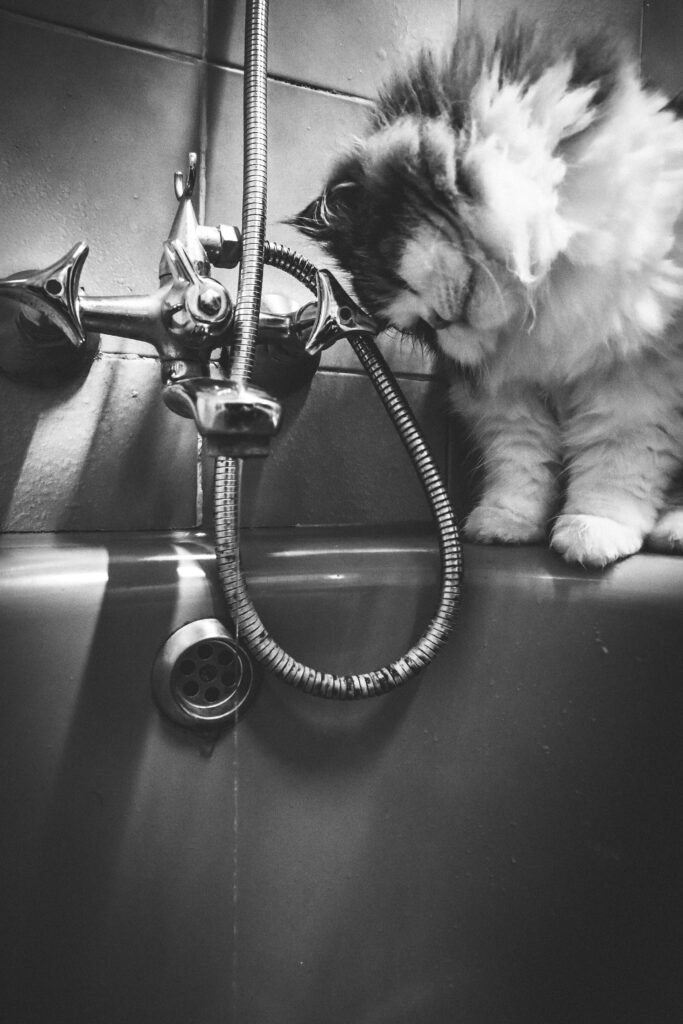
Not every cat likes getting wet. Some cats are naturally curious about water and may investigate running taps or a full bathtub. Many cats like drinking from running water.
So if your cat follows you when you shower but stays safely outside the water, they may simply be observing something unusual.
Is My Cat Protecting Me in the Bathroom?
It’s possible to interpret bathroom-following as a protective behaviour, and current veterinary commentary does discuss the idea because bathroom activities can leave a person stationary and potentially vulnerable.
But that doesn’t mean every cat sitting beside the toilet has consciously decided to become your bodyguard.
Curiosity, companionship, routine, attention, food anticipation, and interest in the bathroom itself are all reasonable explanations.
The safest interpretation is to look at the complete behaviour rather than assigning one human intention to your cat.
Should You Let Your Cat Follow You Into the Bathroom?
If your cat is relaxed, healthy, and the bathroom is safe, there’s usually no behavioural reason you must prevent them from coming in. Many owners find the company genuinely comforting — there’s something oddly sweet about a small guardian who takes the job of supervising your shower so seriously.
However, bathrooms contain potential hazards. Before granting unlimited access, run through this quick safety checklist:
- Medications and toiletries: keep everything in closed cabinets. Even a single dropped pill can be dangerous for a cat.
- String-like objects: dental floss, hair ties, and rubber bands are especially dangerous if swallowed and can cause serious intestinal damage.
- Cleaning products and essential oils: store them securely. Some essential oil diffusers and liquid potpourri products can be toxic to cats.
- The toilet: keep the lid closed, particularly if you use automatic toilet-bowl cleaner tablets, which make the water unsafe to drink.
- Hot water and slippery surfaces: a cat leaping onto a wet tub edge or a hot tap can get hurt, so be careful right after a hot shower or bath.
- Razors, cotton swabs, and small objects: keep them off counters and out of paw’s reach.
Also consider where your cat’s food and water bowls are located. Keeping them away from the toilet is a sensible hygiene precaution.
How to Stop Your Cat From Following You
If you enjoy your feline bathroom companion, there may be nothing to change — plenty of owners do. If you want some privacy, don’t punish your cat for following you. Instead, make other parts of the home more rewarding.
Try these steps
- Give your cat attention at other times.
Regular interactive play and affection can reduce the need to seek you out whenever you move. - Provide enrichment.
Puzzle feeders, appropriate toys, scratching areas, and climbing opportunities can give your cat something else to investigate. - Close the door consistently.
If you need the bathroom to remain cat-free, calmly closing the door is more effective than repeatedly opening it after scratching. - Don’t turn the door into a game. Repeatedly responding to meowing or scratching can teach your cat that the behaviour gets your attention.
- Make sure the cat has a comfortable alternative.
A nearby bed, perch, or engaging toy gives your cat somewhere else to settle.
The goal isn’t to punish normal attachment. It’s to teach your cat that they can relax elsewhere too. A short interactive play session right before your usual bathroom routine can also help — a cat that has just burned off energy is far more likely to settle on the sofa than trail you down the hallway.
Common Mistakes
Assuming every following behaviour needs to be stopped
If your cat is relaxed and healthy, following you is often perfectly normal.
You only need to redirect the behaviour when it becomes disruptive, unsafe, or represents a noticeable change from your cat’s normal behaviour.
Assuming the cat is definitely protecting you
The protective explanation is possible, but it isn’t the only explanation. Don’t overlook simpler reasons such as curiosity, attention, routine, food, or interest in water.
Rewarding unwanted door behaviour
Opening the bathroom door every time your cat scratches can teach the cat that scratching works.
Ignoring sudden behavioural changes
A cat that has always followed you is different from one that suddenly becomes intensely attached.
Assuming the bathroom is always the attraction
Watch what your cat actually does. If they ignore the sink and stay beside you, your company may be the main reason.
Normal Behaviour vs. Separation Anxiety: A Quick Decision Aid
First, the reassurance: following you to the bathroom is normal behaviour for most cats. As the reasons above show, curiosity, routine, affection, and a comfortable room explain the vast majority of bathroom escorts. It only becomes something to look into when the clinginess is new, intense, or part of a wider pattern.
Separation anxiety is real in cats, but it isn’t the explanation for every clingy cat. Run through this checklist — if several of these show up alongside the bathroom-following, talk to your vet or a feline behaviourist:
- Excessive vocalisation — meowing, yowling, or crying when left alone
- Destructive behaviour, especially around doors and windows
- Over-grooming to the point of bald patches or sore skin
- Changes in litter-box habits, such as urinating outside the tray
- Clinginess that goes far beyond the bathroom — shadowing you from room to room all day and distress when separated
One or two mild signs on their own usually point to habit or boredom rather than anxiety. A cluster of them, especially after a household change, is worth a professional opinion.
When Should Bathroom-Following Concern You?
Bathroom-following alone usually isn’t a medical warning sign.
The concern comes when the behaviour is new, unusually intense, or accompanied by other changes.
Contact your veterinarian if increased clinginess occurs alongside:
- Changes in appetite
- Changes in drinking
- Vomiting or diarrhoea
- Changes in litter-box habits
- Unusual vocalisation
- Hiding
- Weight changes
- Trouble walking
- Unusual restlessness
- Other noticeable changes in normal behaviour
PetMD advises veterinary evaluation when increased following occurs alongside physical or behavioural changes.
A sudden increase in drinking or repeatedly seeking unusual water sources should also be treated as a possible health change rather than automatically dismissed as a quirky bathroom habit.
Myth vs. Fact
Myth: My cat follows me to the bathroom because it knows I need protection.
Fact: A protective component is possible, but there isn’t one explanation for bathroom-following. Curiosity, companionship, attention, food anticipation, and interest in the bathroom are also well-supported possibilities.
Myth: My cat follows me only because it wants food.
Fact: Food can motivate following, but cats also follow people for attention, companionship, curiosity, routine, and security.
Myth: A cat that follows you everywhere is automatically anxious.
Fact: Many cats naturally stay close to people they trust. Concern is more appropriate when the behaviour suddenly changes or appears with other signs of stress or illness.
Myth: Cats don’t form strong bonds with people.
Fact: Cats can form strong social bonds with their human companions, and following can be one way they show attachment.
Frequently Asked Questions
Why does my cat follow me to the bathroom but not other people?
It usually comes down to bond and routine. You may be your cat’s primary feeder, the person who plays with them most, or simply the one with the most predictable daily routine — cats notice who does what. Some cats also pick one favourite person the way people pick a favourite chair: no offence to anyone else in the house, it is just preference. If your cat only follows you, take it as the compliment it is.
Why does my cat suddenly follow me everywhere?
A sudden change is worth paying attention to. It can result from a disrupted routine, a stressful event such as a move, a new pet, or a change in your schedule, or an underlying health issue — especially in senior cats. Watch for other changes in appetite, drinking, litter-box habits, or energy levels, and contact your veterinarian if anything else seems off. If life has simply been hectic lately, things often settle once the routine does.
Why does my cat wait outside the bathroom?
Usually it is a mix of curiosity and wanting access to you. A closed door is interesting precisely because it is closed — your cat knows you are on the other side and cannot verify what you are doing in there. One honest warning: if you consistently open the door after scratching or meowing, your cat learns that persistence works, and the waiting becomes a permanent fixture of your routine.
Why does my cat follow me before breakfast?
Your cat has learned that your morning routine predicts feeding time — the bathroom trip is just the opening act. Food anticipation is one of the strongest motivators for following behaviour. If the pre-breakfast escort comes with 5 a.m. wake-up calls, an automatic feeder can help by breaking the association between you and the arrival of food.
Is following me a sign that my cat trusts me?
It can be. Choosing to stay near you — especially in a small room where escape routes are limited — is a genuine sign of comfort and attachment. That said, it is not proof of trust by itself. Read it alongside the rest of your cat’s body language: slow blinks, a relaxed posture, headbutts, and choosing your lap when other options exist all point the same way.
Can boredom make my cat follow me around?
Yes. A cat with too little to do will outsource their entertainment to you. If the following comes with restlessness, frequent vocalising, or ambushing your ankles, try two 10–15 minute interactive play sessions a day (a wand toy works wonders), plus a puzzle feeder and a window perch. Many owners are surprised how quickly the shadowing eases once the cat has better options.
Should I stop my cat from following me?
Not necessarily. If your cat is relaxed, healthy, and the bathroom is cat-proofed, following you is generally normal behaviour — some cats simply like company. Redirect it only if you need privacy, the behaviour becomes disruptive (such as scratching at the door at 3 a.m.), or your cat is getting into unsafe areas. Never punish the behaviour; redirect it by making the rest of the house more rewarding.
When does clinginess become a health concern?
Clinginess becomes more concerning when it is sudden, unusually intense, or appears alongside other changes: appetite or weight changes, increased drinking, vomiting, diarrhoea, litter-box changes, unusual vocalisation, hiding, or mobility problems. Senior cats who suddenly become much more attached deserve a veterinary check, since conditions like hyperthyroidism or cognitive decline can drive the change.
Why does my cat follow me to the bathroom at night?
Some cats escort you more at night. The house is dark and quiet, and your cat may want to accompany you through the dim hallway — part routine, part companionship in the small hours. It is usually harmless. If it starts suddenly, or comes with crying, restlessness or other changes, speak to your vet.
Conclusion
So, why does my cat follow me to the bathroom?
Your cat may be looking for attention, following a familiar routine, expecting breakfast, investigating the bathroom, enjoying running water, or simply choosing to stay close to you.
The best clue to your cat’s reason is what happens once they get there.
If they come straight to you and ask for affection, you may be the attraction. If they ignore you and head for the sink, the bathroom may be the attraction. If they follow you every morning and then wait for breakfast, routine and food are probably part of the pattern.
And if your cat has always been your bathroom companion and otherwise behaves normally, there’s probably no mystery that needs solving — just a small, furry supervisor who takes the job very seriously.
Your cat may simply have decided that personal privacy is one human rule worth ignoring.
Photo Credits
Featured image: Photo by Anete Lusina via Pexels (free licence).
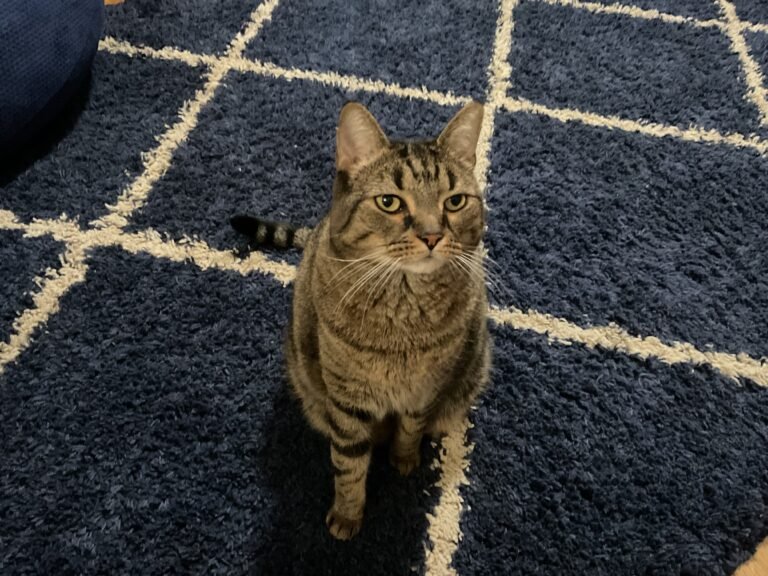
Tabby cat looking up beside a person’s trainers: Photo via Pexels (free licence).
Cat following its owner through a hallway at home: Photo via Pexels (free licence).
Fluffy cat examining a bathtub tap: Photo via Pexels (free licence).
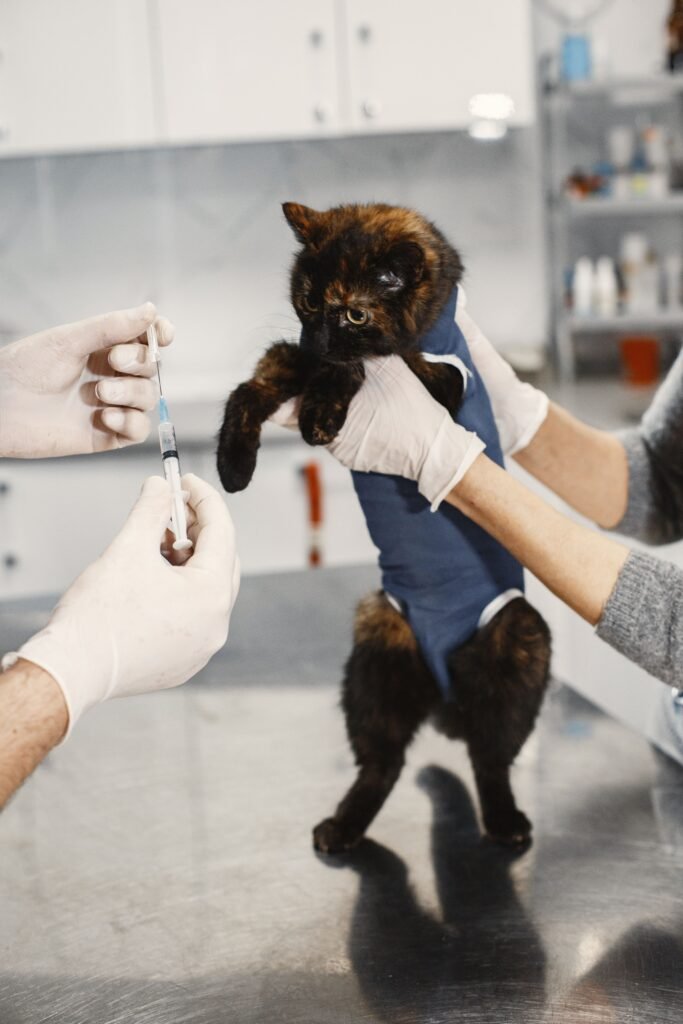
Tortoiseshell cat being prepared for vaccination: Photo via Pexels (free licence).


3 Comments