Why Does My Cat Sit on My Chest at Night? 9 Reasons
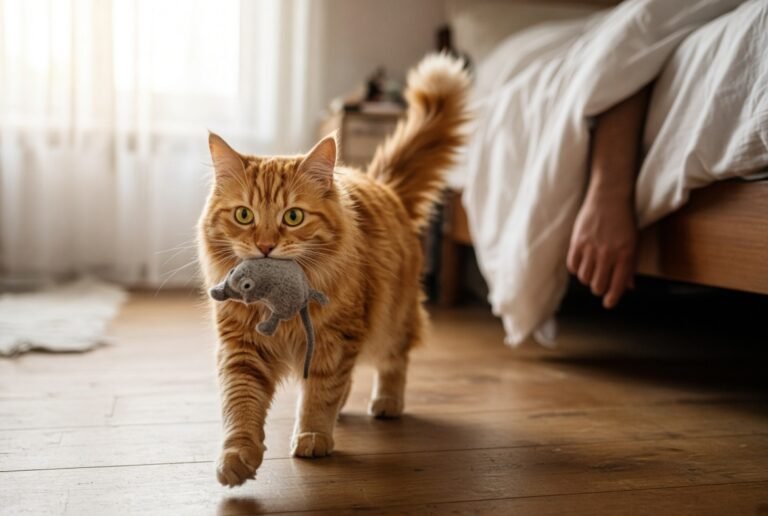
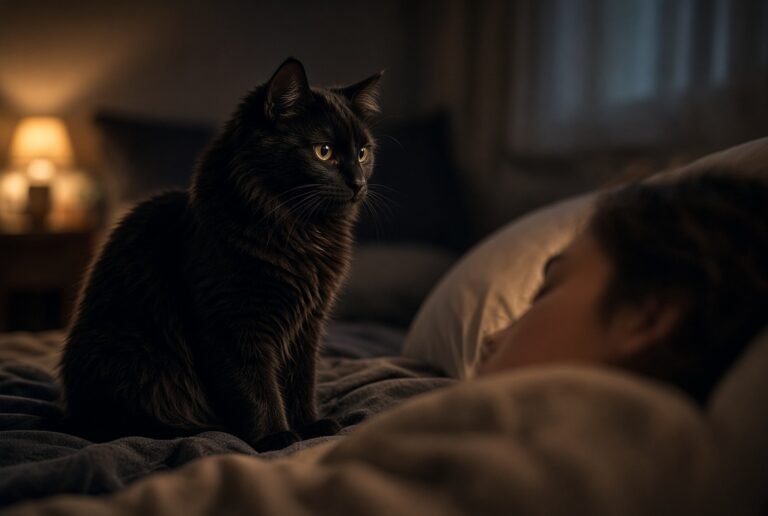
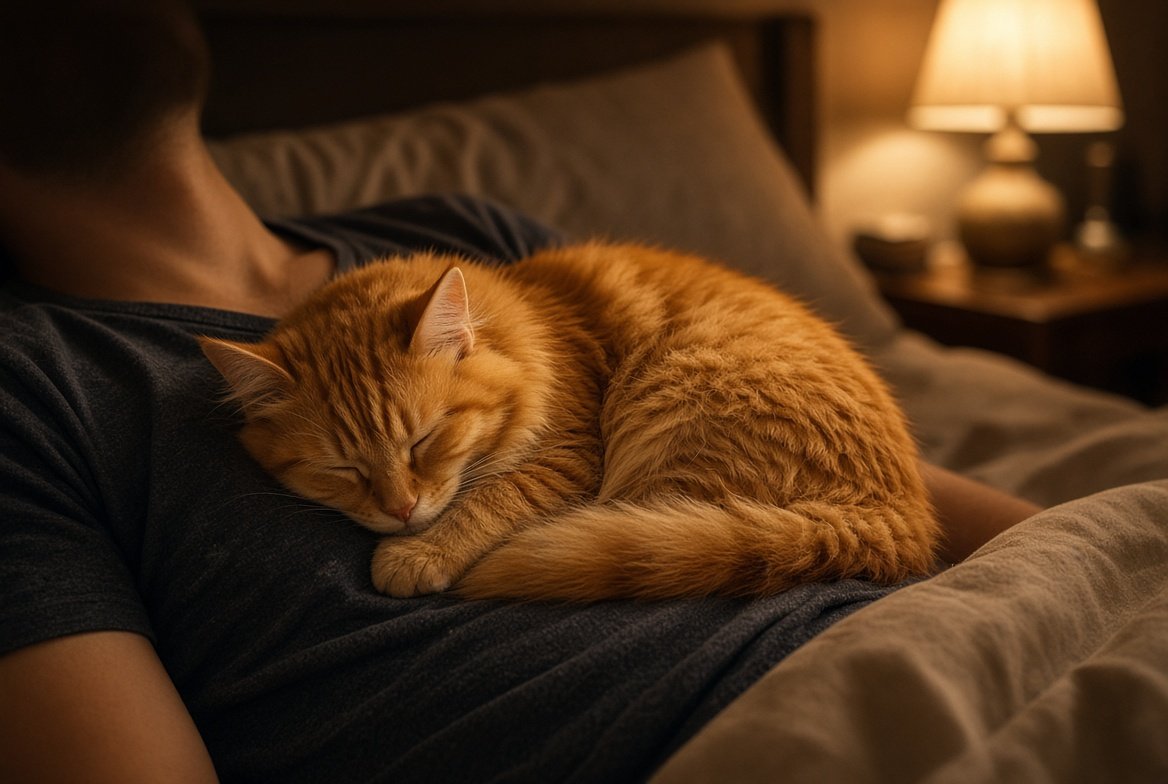
You wake up in the middle of the night and find your cat comfortably settled across your chest. You move slightly, but instead of getting down, your cat stretches out, purrs, or settles in even more.
So, why does my cat sit on my chest at night?
For many cats, the answer is a combination of warmth, comfort, security, familiarity, and closeness. Your chest is also a large, stable place to rest, and your breathing and heartbeat may provide familiar rhythms while your cat sleeps.
The more useful question, though, is what your cat’s behavior looks like around bedtime. A cat that calmly curls up and falls asleep is showing a different pattern from one that suddenly becomes clingy, restless, or vocal.
Table of Contents
- Why does my cat sit on my chest at night?
- Why does my cat sleep on my chest every night?
- Why does my cat like my chest specifically?
- Does sleeping on my chest mean my cat trusts me?
- Why does my cat purr and knead on my chest?
- Is it safe for my cat to sleep on my chest?
- How to stop your cat from sleeping on your chest
- How to figure out why your cat chooses your chest
- Common mistakes to avoid
- Expert tips
- When should you worry?
- Myth vs. fact
- Frequently asked questions
- Conclusion
Why Does My Cat Sit on My Chest at Night?
There isn’t one explanation that applies to every cat. A cat may choose your chest because it is warm and comfortable, because they feel secure beside you, or simply because they enjoy close contact.
Current veterinary guidance identifies safety, affection, warmth, heartbeat and breathing, scent, attention, curiosity, trust, and changes in health or environment among the possible reasons cats may choose to lie on a person’s chest.
Here are nine possibilities to consider.
1. Your Cat Feels Safe With You
Sleep leaves a cat less alert to its surroundings, so a trusted person can make an appealing resting place.
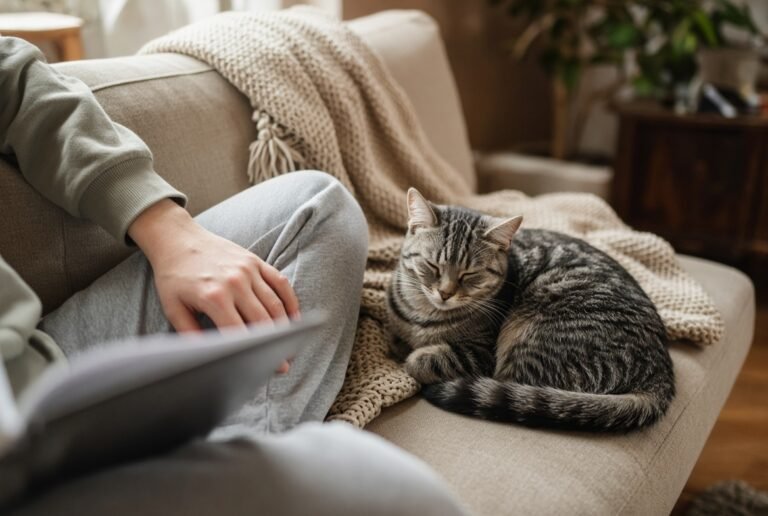
If your cat regularly relaxes on your chest, they may associate your presence with safety and familiarity. This is particularly noticeable when your cat settles down completely instead of remaining alert to every sound.
For example, your cat may climb onto your chest after you turn off the lights, tuck their paws underneath themselves, and fall asleep while purring. That pattern is more consistent with comfortable resting than with a cat that is unsettled.
Pro tip: Look at the whole relationship. A cat that willingly sleeps against you, relaxes around you, and seeks you out at other times may simply regard you as a trusted resting companion.
2. Your Chest Is Warm
Your body produces steady warmth, making your chest an attractive place for a cat to sleep.
Cats often seek warm resting locations, and your body can provide heat without requiring them to move around or find another warm surface. Cats Protection also identifies warmth as one of the main reasons cats may choose to sleep on people.
You may notice this more during colder nights or when your cat has access to several sleeping spots but repeatedly chooses the warmest one.
If your cat moves between you, a blanket, a sunny patch, and another warm surface, temperature may be part of the explanation.
3. Your Heartbeat and Breathing May Be Comforting
Your chest is different from a normal cat bed because it moves gently as you breathe and is close to your heartbeat.
Veterinary guidance from PetMD identifies a person’s breathing and heartbeat as possible reasons a cat may find the chest a comfortable place to rest.
That does not mean every cat consciously chooses your chest because it wants to listen to your heart. The rhythm may simply be one familiar part of being close to you.
Example: If your cat settles down more quickly once they’re lying directly on your chest than when they’re beside you, the physical contact and rhythmic movement may be part of what they enjoy.
4. Your Cat Wants Physical Closeness
Sometimes the simplest explanation is that your cat likes being close to you.
Cats can form strong social bonds with their caregivers, and physical contact can be part of those relationships. Cats Protection notes that bonded cats may sleep touching or close to one another, and some cats similarly choose to sleep directly on their humans.
Your cat may choose your chest because it gives them direct contact rather than simply being near you on the same bed.
This can be especially obvious if your cat also follows you around the house, greets you when you return, or seeks petting during the day.
5. Your Cat Likes Your Familiar Scent
Your cat’s sense of smell is an important part of how they experience their environment.
Your skin, clothing, bedding, and other familiar items all carry scents your cat knows. Close physical contact may therefore make your chest feel familiar and reassuring.
Cats also have scent glands on several parts of their bodies, including their paws, cheeks, and head. PetMD notes that close contact can transfer scent and may contribute to social scent-sharing between cats and their people.
The safest interpretation is not that your cat is deliberately “claiming” you every time they sleep on your chest. Familiar scent is simply one possible reason your body may feel like a comfortable place to rest.
6. Your Cat Has Learned That Chest-Sleeping Gets Attention
Your cat may have discovered that sleeping on your chest is an effective way to get something they enjoy.
Perhaps you pet them when they climb up. Maybe you talk to them, scratch their chin, or give them attention before falling asleep.
Over time, that interaction can become part of the bedtime routine.
For example:
Cat climbs onto chest → you pet the cat → cat settles down → bedtime continues.
If the pattern happens every night, your cat may simply have learned that your chest is where pleasant interaction happens.
7. Your Chest Is a Comfortable Sleeping Position
Your chest is a broad, relatively stable surface, and your cat may simply find the position comfortable.
The bed itself also gives your cat several advantages. It is soft, elevated from the floor, familiar, and close to you. Cats Protection notes that beds can be attractive sleeping places because they offer warmth, comfort, elevation, and a good view of the surroundings.
So your cat may not be choosing your chest because it is specifically fascinated by the chest. They may be choosing you as the most comfortable part of an already appealing bed.
8. Your Cat Likes Being Close During Quiet Hours
Nighttime is different from the rest of the day.
The house is quieter, you’re lying still, and there are fewer distractions. That can create an unusually good opportunity for a cat that enjoys calm physical contact.
Your cat may spend the daytime exploring, playing, eating, or moving around the house and then choose your chest when everything becomes quiet.
If the behavior happens mainly at bedtime rather than throughout the day, the timing itself may be part of the explanation.
9. Your Cat Prefers Your Chest to the Other Sleeping Spots
Cats can be surprisingly selective about where they rest.
Your cat may have several beds available and still choose your chest because it combines qualities that no other spot offers at the same time:
- Warmth
- Familiar scent
- Soft surroundings
- Physical contact
- A stable surface
- Proximity to you
- A quiet nighttime environment
This doesn’t necessarily mean the other beds are uncomfortable. Your chest may simply offer a combination your cat prefers.
Why Does My Cat Sleep on My Chest Every Night?
If your cat sleeps on your chest every night, consistency is an important clue.
A behavior that has been part of your cat’s routine for months or years is generally less concerning than a behavior that appears suddenly and intensely.
Your cat may have created a predictable bedtime sequence:
You get into bed → your cat joins you → your cat climbs onto your chest → you settle down together.
Cats can learn routines and associations, so the repeated pattern itself may help explain why the behavior continues.
The exact reason can still vary from night to night. On a cold evening, warmth may matter more. After a stressful day, closeness may be more appealing. On another night, your cat may simply want a comfortable place to sleep.
Why Does My Cat Like My Chest Specifically?
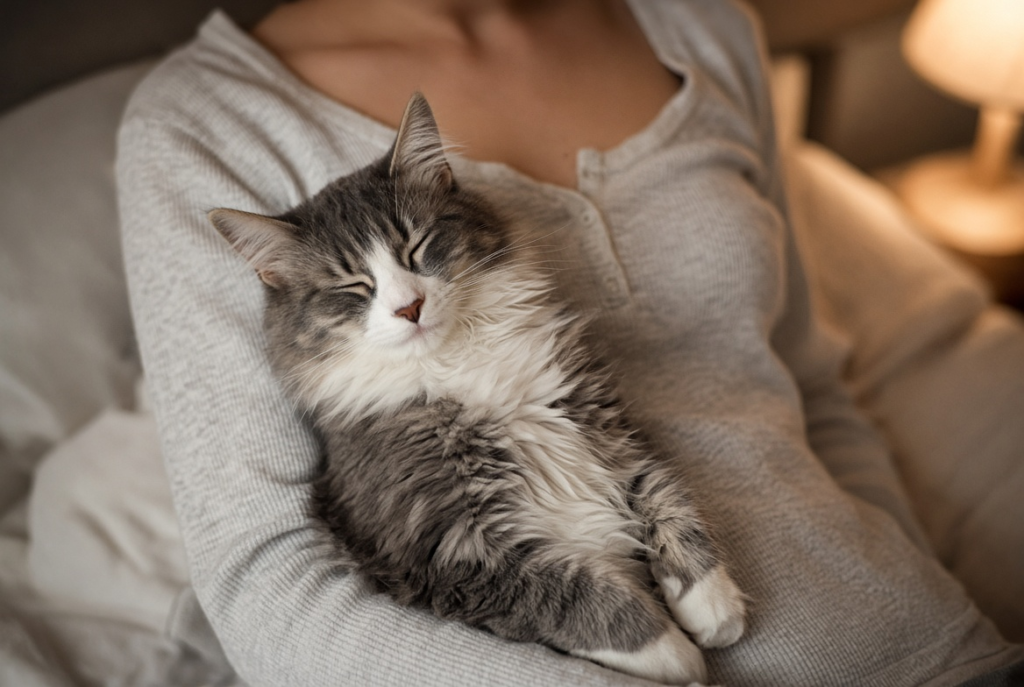
You may wonder why your cat doesn’t simply sleep beside you.
The chest offers several things at once:
| What your chest provides | Why your cat may prefer it |
|---|---|
| Body warmth | A naturally warm sleeping surface |
| Familiar scent | A smell your cat knows well |
| Gentle movement | Breathing creates a subtle rhythm |
| Heartbeat | A familiar sound and sensation |
| Physical contact | Keeps your cat close to you |
| Stable position | Less likely to shift than moving limbs |
| Bed elevation | Keeps your cat off the floor |
| Human interaction | Easy access to petting and attention |
There is no need to assume that one feature explains everything. Cats often choose resting locations based on several environmental and social qualities at once.
Does Sleeping on My Chest Mean My Cat Trusts Me?
It can be a sign that your cat feels comfortable and secure with you, but sleeping on your chest is not a scientific test of trust.
A cat that chooses to sleep directly against you is voluntarily putting itself in close physical contact while resting. That can fit with a strong social bond and a feeling of safety.
Still, avoid assigning one specific emotion to the behavior.
Look at your cat’s broader body language. A relaxed posture, normal appetite, regular activity, and comfortable interaction with you provide much more context than sleeping position alone.
Why Does My Cat Purr and Knead on My Chest?
Some cats purr when they settle down on their favorite sleeping spot.
Purring is often associated with relaxation, but it is not a guaranteed sign that a cat is happy. Context matters, particularly if the purring is accompanied by other unusual behavior.
Kneading is also common when cats settle onto soft surfaces. VCA explains that cats may knead to make a resting area comfortable, show affection, or mark an area because scent glands are present around their paws.
If your cat kneads your chest before falling asleep, they may simply be performing a familiar settling behavior.
If the claws hurt
You don’t have to tolerate painful kneading just because your cat is comfortable.
Place a soft blanket between your cat and your skin, gently move them to your lap, or redirect the kneading to another comfortable surface.
Is It Safe for My Cat to Sleep on My Chest?
For most healthy people, allowing a cat to lie on the chest is generally fine if it is comfortable for both of you. PetMD recommends considering alternatives if the cat causes significant sleep disruption or if a person has allergies, breathing difficulties, or a compromised immune system.
You should also move your cat if their position makes it difficult for you to breathe comfortably or sleep normally.
If you have a medical condition that makes chest pressure, allergies, or disrupted sleep a particular concern, follow advice from your healthcare professional.
For your cat, make sure the sleeping environment is safe and that they can easily move away whenever they want.
How to Stop Your Cat From Sleeping on Your Chest
You don’t have to stop the behavior if you enjoy it.
But if your cat is waking you repeatedly, making it difficult to sleep, or simply taking over your preferred sleeping position, you can teach them to settle somewhere else.
1. Create a better alternative
Choose a quiet, comfortable place close to the bed.
A soft cat bed, blanket, or secure elevated perch can be more appealing if it provides some of the same qualities your cat gets from your chest.
2. Add your familiar scent
A piece of clothing you’ve already worn can make an alternative resting spot smell familiar.
PetMD specifically recommends used clothing with your scent as one possible way to encourage a cat toward another resting location.
3. Reward the alternative
When your cat voluntarily settles in the new spot, reward the behavior calmly.
You can use gentle praise, quiet attention, or a suitable treat.
The goal is to make the alternative location worthwhile rather than making your cat afraid to approach you.
4. Be consistent
If you move your cat off your chest on some nights but encourage them to stay there on others, the boundary may be harder to establish.
Choose the rule that works for you and apply it consistently.
Veterinary behavior guidance emphasizes environmental management and rewarding desirable behavior rather than relying on punishment.
How to Figure Out Why Your Cat Chooses Your Chest
Instead of guessing, look for patterns over several nights.
Compare warm and cool nights
If your cat chooses your chest much more often when the room is cold, warmth may be a major factor.
Watch where your cat sleeps when you’re not in bed
This is one of the easiest clues.
If your cat spends the day sleeping on blankets, cushions, sunny spots, or other warm surfaces, comfort and temperature may be important.
If they consistently choose places close to you even when other comfortable options are available, social contact may matter more.
Notice what happens before bedtime
Ask yourself:
- Did you just finish playing with your cat?
- Is it close to dinner time?
- Does your cat normally receive attention before bed?
- Has anything changed in the household?
- Does your cat climb onto you immediately or only after you settle down?
Watch what your cat does after getting on your chest
A cat that immediately falls asleep is behaving differently from one that repeatedly paws at you, meows, or tries to get you moving.
The behavior before and after chest-sleeping can help reveal what your cat is actually seeking.
Common Mistakes to Avoid
Assuming it always means affection
Your cat may enjoy being close to you, but warmth, comfort, scent, routine, and the sleeping environment can also contribute.
Treating one behavior as a diagnosis
A cat sleeping on your chest is not enough to determine whether they are stressed, anxious, or unwell.
Look for changes in the overall pattern.
Forcing your cat to stay elsewhere
If you want your cat off your chest, redirect them gently rather than punishing them.
Fear or punishment does not address why the cat chose your chest in the first place.
Ignoring a sudden change
A cat that has slept on your chest every night for years is different from one that suddenly becomes intensely clingy.
Merck Veterinary Manual recommends looking at the timing, frequency, intensity, duration, environment, and other changes when evaluating new behavior.
Sacrificing your sleep
You can love your cat and still need uninterrupted sleep.
If your cat repeatedly wakes you, redirecting them to another comfortable sleeping area is reasonable.
Expert Tips
Pay attention to your cat’s preferred surface
If your cat chooses your chest only when you’re wearing a particular fleece top or using a certain blanket, texture may be part of the attraction.
Notice whether the behavior changes with the weather
A cat that becomes more interested in your chest on colder nights may be responding to warmth rather than suddenly becoming more affectionate.
Look for a pattern with your schedule
If your cat climbs onto your chest at nearly the same time every night, your bedtime routine may have become a learned signal.
Watch for changes rather than isolated nights
A single unusual night usually tells you very little.
A consistent pattern over several days or weeks gives you much better information.
When Should You Worry?
Sleeping on your chest is usually not a problem by itself.
The more important concern is a sudden or significant change in your cat’s normal behavior, especially if other physical or behavioral changes appear at the same time.
Merck Veterinary Manual notes that veterinarians consider changes in behavior alongside factors such as when the behavior began, how often it occurs, its intensity and duration, the cat’s daily schedule, environment, and other relevant changes.
Contact your veterinarian if your cat suddenly becomes much more clingy and you also notice signs such as:
- Reduced appetite
- Noticeable weight change
- Changes in drinking
- Vomiting or diarrhea
- Unusual or persistent vocalization
- Increased hiding
- Changes in activity
- Trouble walking or jumping
- Changes in litter-box habits
- Signs of pain
- Difficulty settling or sleeping normally
A behavioral change does not automatically mean illness, but unexpected changes deserve more attention than a long-standing habit.
Myth vs. Fact
Myth: My cat sleeps on my chest only because it loves me.
Fact: Affection and bonding may play a role, but warmth, comfort, scent, routine, and the physical qualities of your chest can also influence the choice.
Myth: My cat sleeping on my chest proves that it trusts me.
Fact: It can be consistent with comfort and trust, but one sleeping position cannot tell you exactly what your cat feels.
Myth: My cat sleeps on my chest because it is protecting me.
Fact: There is no need to assume a protective role. Comfort, warmth, closeness, and familiarity are simpler explanations for many cats.
Myth: I have to let my cat sleep on my chest if they want to.
Fact: You can gently redirect your cat to another comfortable sleeping location if the behavior interferes with your sleep or comfort.
Myth: A sudden increase in chest-sleeping is always harmless.
Fact: A sudden behavioral change is worth paying attention to, especially when it occurs alongside changes in appetite, activity, litter-box habits, vocalization, or other normal behaviors.
Frequently Asked Questions
Why does my cat sleep on my chest but not my partner?
Your cat may have a stronger social bond with you, prefer your scent or body warmth, or associate you with particular routines such as feeding or bedtime attention. Cats can develop individual preferences for different people.
Why does my cat sleep on my chest only at night?
Nighttime provides a quiet, predictable period when you’re lying still. Your cat may also find your body warmer under the blankets or associate bedtime with calm physical contact.
Why does my cat sit on my chest while sleeping?
Your chest offers warmth, a stable surface, familiar scent, and close contact. Your breathing and heartbeat may also contribute to why your cat finds the position comfortable.
Why does my cat suddenly want to sleep on my chest?
A change in routine, household environment, stress, or your cat’s health can sometimes affect behavior. If the change is sudden and accompanied by other unusual signs, contact your veterinarian.
Can I train my cat to sleep beside me instead?
Yes. Give your cat a comfortable alternative near you, make the spot appealing with familiar scent, and calmly reward them when they choose it. Consistency is more useful than punishment.
Why does my cat knead my chest before falling asleep?
Kneading can be a normal settling behavior. Cats may knead soft surfaces for comfort, as a social behavior, or as a form of scent marking through glands around their paws.
Is it okay if my cat sleeps on my chest every night?
For most healthy people, it is generally fine if you are comfortable and your sleep is not being disrupted. People with allergies, breathing difficulties, or certain immune-system conditions may need to avoid close contact.
Why does my cat purr while sleeping on my chest?
Purring commonly occurs when cats are relaxed, but purring alone doesn’t prove a particular emotional state. Look at your cat’s posture and overall behavior for context.
Conclusion
So, why does my cat sit on my chest at night?
Your cat may choose your chest because it is warm, comfortable, familiar, and close to someone they trust. Your scent, physical contact, breathing, heartbeat, and predictable bedtime routine may all contribute.
The best clue is not the chest itself but your cat’s overall pattern.
If your cat climbs onto you, purrs, kneads briefly, settles down, and sleeps peacefully, they have probably found a resting spot that works for them. If the behavior suddenly becomes intense or appears alongside changes in appetite, activity, litter-box habits, vocalization, or other normal behavior, pay closer attention and speak with your veterinarian when appropriate.
You don’t have to interpret every nighttime cuddle as having one hidden meaning. Sometimes your cat has simply found a warm, secure, familiar place to sleep—and decided you are it.