Why Does My Cat Sit Next to Me but Not on Me?
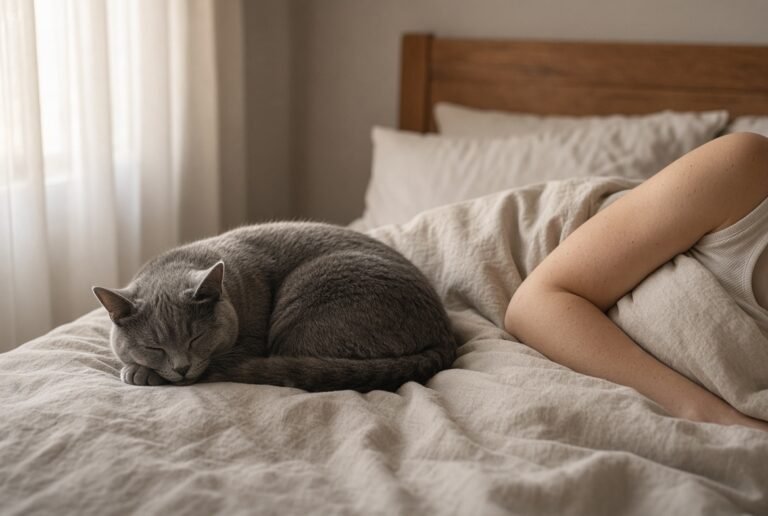
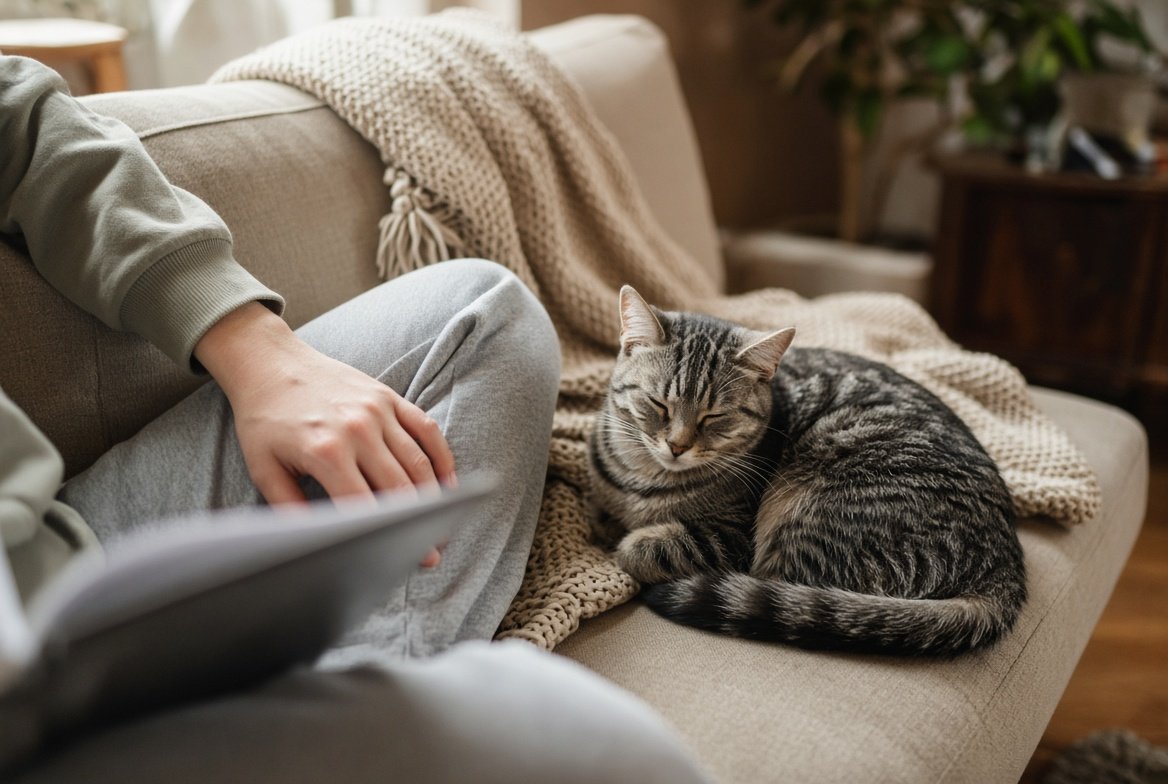
Have you ever sat down on the sofa expecting your cat to climb onto your lap, only for them to settle beside your leg instead?
Your cat may follow you around the house, sleep next to you, or curl up close enough to touch—but still refuse to sit directly on you.
If you’ve wondered why does my cat sit next to me but not on me, the simplest explanation is that your cat may enjoy your company without wanting the physical contact of lap sitting.
Cats have individual preferences for human interaction. Some enjoy being picked up and sitting on laps, while others prefer shorter or less intense contact and may choose when interaction starts and ends.
So a cat that chooses the cushion beside you isn’t necessarily rejecting you. It may simply prefer being close without being on top of you.
Table of Contents
- Why Does My Cat Sit Next to Me but Not on Me?
- Your Cat Enjoys Your Company Without Needing a Lap
- Your Cat Wants Control Over Physical Contact
- Your Cat Dislikes Being Restrained
- Your Cat May Prefer Certain Types of Touch
- Your Cat May Prefer a Different Resting Spot
- Your Cat Has an Independent Personality
- Past Experiences May Affect Lap Sitting
- Why Won’t My Cat Sit on My Lap?
- Why Does My Cat Sit Next to Me but Move Away When I Touch It?
- Does My Cat Still Like Me If It Won’t Cuddle?
- How to Encourage Your Cat to Sit on Your Lap
- What If My Cat Used to Sit on Me but Stopped?
- Common Mistakes to Avoid
- Practical Ways to Build Comfortable Interactions
- Cat Affection: Lap Cat vs. Side-by-Side Cat
- Myth vs. Fact
- When Should You Be Concerned?
- Frequently Asked Questions
- Conclusion
Why Does My Cat Sit Next to Me but Not on Me?
Your cat may sit next to you because it enjoys being around you while preferring not to have its movement or body position restricted.
Cats don’t all have the same preferences for human contact. One cat may actively seek a lap, while another may prefer sitting beside a person’s legs, sleeping nearby, or approaching only for brief periods of petting. Feline behavior guidelines specifically recognize individual differences in preferences for petting, being picked up, and sitting or lying on a person’s lap.
The important part is to look at the whole pattern of behavior, rather than treating lap sitting as the measure of affection.
If your cat voluntarily comes over, relaxes beside you, and stays there, it is choosing to share your space. That doesn’t tell you exactly what your cat feels, but it does show that being near you is compatible with its current comfort level.
1. Your Cat Enjoys Your Company Without Needing a Lap
Some cats simply prefer being close to their person without sitting directly on them.
Your cat might choose the sofa beside you, lie against your leg, or sleep at your feet. It may even follow you from one room to another and then settle nearby once you sit down.
For example, imagine you’re working at your desk. Your cat jumps onto the chair beside you rather than onto your lap and settles down for a nap.
Your cat has chosen proximity, but not direct physical contact.
Signs your cat may enjoy staying near you
You may notice that your cat:
- Follows you around the house
- Sleeps near you
- Sits beside your legs
- Rests in the same room
- Approaches you voluntarily
- Rubs against you
- Greets you
- Plays with you
- Comes over for brief periods of petting
- Returns after wandering away
These behaviors don’t have one universal translation. But they can help you understand your cat’s preferred style of social interaction.
The goal isn’t to turn every nearby cat into a lap cat. It’s to recognize the type of contact your individual cat actually chooses.
2. Your Cat Wants Control Over Physical Contact
Some cats may prefer having more control over when physical contact begins and ends.
Sitting beside you gives your cat an easy way to move closer, reposition itself, or leave. A lap can involve more direct physical contact, particularly if you pick the cat up or try to keep it there.
AAFP and ISFM feline guidelines recommend allowing cats to initiate, choose, and control human contact whenever possible. They also note that individual cats differ in how much they enjoy being petted, picked up, or sitting on a person’s lap.
A simple example
Your cat jumps onto the sofa and settles beside you.
You pick it up and place it on your lap.
It immediately jumps down.
Rather than interpreting that as rejection, consider what the behavior is telling you: your cat may have preferred choosing the location and amount of contact itself.
If your cat repeatedly chooses the space beside you, let that choice stand.
3. Your Cat Dislikes Being Restrained
A cat can enjoy human company while disliking being held in place.
This is particularly relevant when an owner picks up a cat and places it on their lap. Some cats tolerate this briefly, while others immediately try to get down.
The issue may not be affection. The cat may simply dislike the physical restriction.
Feline handling guidelines emphasize giving cats opportunities to sit, stand, lie down, and move during interactions rather than unnecessarily restraining them. This approach is associated with more positive interactions.
Watch for signs that your cat has had enough
During petting or handling, pay attention to several signals together, such as:
- Body tension
- Ears moving back
- Tail flicking
- Attempts to move away
- Sudden changes in posture
- Increased agitation
VCA recommends stopping the interaction when signs such as body tension, ears moving back, or tail flicking appear during petting.
A common mistake is waiting until the cat actually swats, bites, or jumps away before stopping.
It’s better to respond to the earlier signals.
4. Your Cat May Prefer Certain Types of Touch
Your cat may not dislike affection. It may simply prefer where, when, and how it is touched.
Many cats respond more positively to touch around the head and neck than to handling other areas of the body. AAFP/ISFM handling guidance identifies the head and neck as preferred areas for many cats and notes that allowing the cat to choose its position and move freely can make interactions more positive.
That means your cat might happily sit beside you while you gently stroke its cheeks but refuse to settle on your lap for extended cuddling.
Try this simple approach
- Let your cat approach you.
- Offer a hand for the cat to investigate.
- If the cat appears relaxed, give one or two gentle strokes around the head or cheeks.
- Pause.
- See whether the cat moves closer or leaves.
If your cat walks away, don’t follow it with your hands.
That gives you useful information about what type of contact your cat currently prefers.
5. Your Cat May Prefer a Different Resting Spot
Your lap isn’t automatically the most comfortable place for a cat.
Your sitting position, clothing, blankets, body movement, and the surface beside you can all affect where your cat chooses to settle.
For example, your cat might prefer the firm sofa cushion next to your thigh because it provides a stable surface while still keeping you nearby.
Temperature can also be one possible environmental factor, particularly if you’re under a thick blanket or the room is warm. But there is no need to assume that heat is the reason unless the behavior fits the situation.
Look at the pattern
If your cat:
- Sits beside you on warm days
- Chooses cooler surfaces
- Moves away when you shift around
- Prefers a particular cushion
- Returns when you settle down
then comfort and location may be influencing the choice.
The simplest explanation may sometimes be that the seat beside you is just a better resting spot.
6. Your Cat Has an Independent Personality
Not every cat is a lap cat.
Some cats actively seek physical contact. Others prefer limited interaction and may approach people on their own terms. Genetics, early experiences, and life history can all influence individual social preferences.
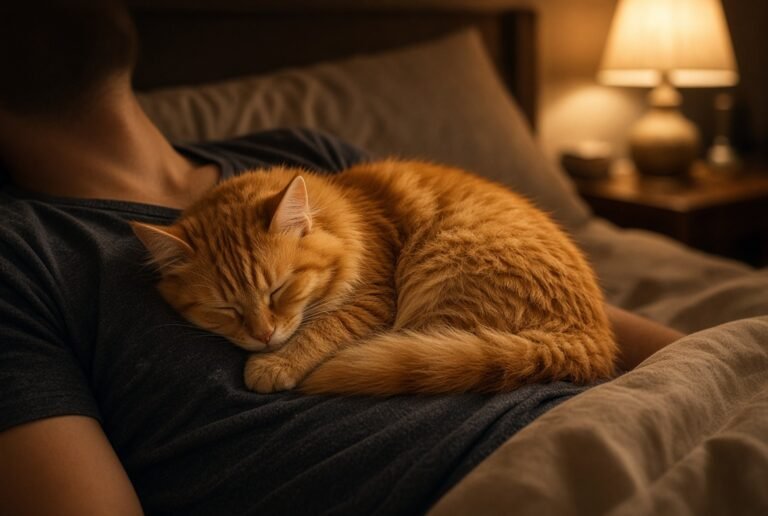
One cat may sleep on its owner’s chest every night. Another may spend the same evening curled up six inches away.
Neither behavior automatically tells you which cat has a better relationship with its owner.
Your cat may prefer:
- Sitting beside you
- Sleeping near your feet
- Following you
- Sitting nearby while you work
- Rubbing against your legs
- Playing with you
- Greeting you
- Asking for brief petting
- Sharing the sofa without touching
Some cats simply prefer side-by-side companionship.
They want to share your space without constant physical contact.
7. Past Experiences May Affect Lap Sitting
A cat’s early handling and life experiences can influence how comfortable it is with human interaction.
Positive, gentle handling during the important early socialization period can have lasting effects on a cat’s relationship with people. At the same time, individual preferences remain important throughout life.
This doesn’t mean that every cat that avoids laps had a negative past.
A cat can have been well socialized and still prefer sitting beside you rather than on you.
Past experiences are simply one possible influence among personality, handling preferences, age, environment, and the cat’s current comfort level.
Why Won’t My Cat Sit on My Lap?
If your cat has never enjoyed lap sitting, there may be nothing wrong with it.
Your cat may:
- Prefer stable surfaces
- Dislike being restrained
- Prefer brief petting
- Enjoy proximity without body contact
- Have a naturally independent temperament
- Prefer a different resting location
- Have individual preferences shaped by past experiences
The key question isn’t, “How do I make my cat sit on me?”
A better question is:
“What type of contact does my cat voluntarily enjoy?”
Once you start watching that pattern, your cat’s behavior becomes much easier to understand.
Why Does My Cat Sit Next to Me but Move Away When I Touch It?
This can happen when a cat enjoys your presence but doesn’t want physical contact at that particular moment.
Your cat may choose to sit beside you because it wants companionship, warmth, a familiar resting place, or simply the comfort of your presence. That doesn’t automatically mean it is asking to be petted.
Some cats also have a limited tolerance for stroking. VCA notes that a cat may initially enjoy petting and then become uncomfortable as the physical sensation continues.
What should you do?
If your cat moves away when you touch it:
- Stop petting.
- Don’t follow the cat.
- Give it space.
- Notice where and when it tolerates touch.
- Allow it to approach again if it chooses.
If your cat returns and settles beside you again, that’s useful information. It may have wanted your company without wanting additional physical contact.
Does My Cat Still Like Me If It Won’t Cuddle?
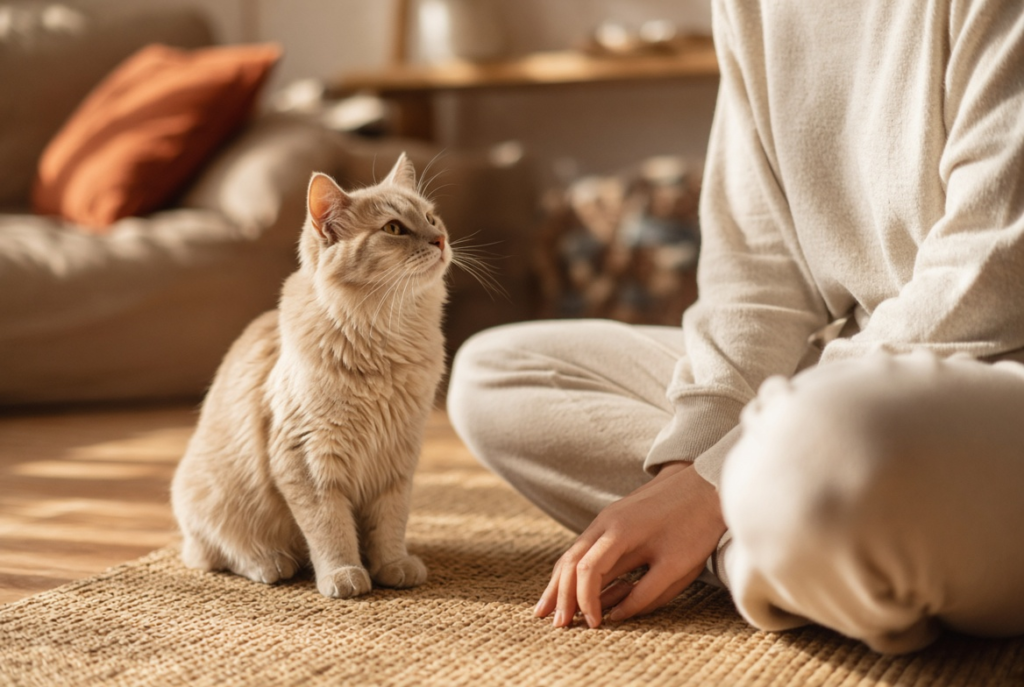
A cat can have a comfortable relationship with you without enjoying lap cuddling.
Cats have individual preferences for how they interact with people. Some prefer frequent but low-intensity contact, while others enjoy longer periods of physical interaction.
So don’t use lap sitting as a simple test of whether your cat likes you.
Instead, look at the overall pattern.
Does your cat voluntarily spend time around you?
Does it relax when you’re nearby?
Does it approach you?
Does it interact with you during play or feeding?
Does it return to your space after leaving?
Those behaviors give you more information than whether your cat chooses your lap.
Not cuddly does not automatically mean not affectionate.
How to Encourage Your Cat to Sit on Your Lap
You can make lap contact more inviting, but you cannot guarantee that your cat will become a lap cat.
The safest approach is to make the choice voluntary.
1. Pick a quiet time
Choose a period when your cat is already relaxed rather than when it is playing, eating, or exploring.
2. Sit comfortably
Stay still and give your cat enough space to approach without being grabbed.
3. Make your lap comfortable
A soft blanket may make the area more appealing if your cat already likes soft resting surfaces.
4. Let your cat approach
Don’t repeatedly pick the cat up and place it on your lap.
Allow the cat to investigate and choose its position.
5. Make voluntary contact positive
If your cat approaches, use calm interaction that it already enjoys.
That might mean gentle head or cheek strokes, quiet talking, or simply allowing the cat to settle without touching it.
6. Stop when your cat wants to leave
If the cat gets up, let it go.
AAFP/ISFM guidance specifically recommends allowing cats to initiate and end human interaction rather than forcing continued contact.
What If My Cat Used to Sit on Me but Stopped?
This situation is different from a cat that has never liked laps.
If your cat has always preferred sitting beside you, there may be no reason for concern.
But if a cat that regularly slept on your lap suddenly stops, look for other changes.
Ask yourself:
- Is your cat less active?
- Has it stopped jumping onto furniture?
- Is it hiding more?
- Has its appetite changed?
- Does it react differently when touched?
- Has its grooming changed?
- Does it seem uncomfortable moving?
- Has its overall behavior changed?
AAFP/ISFM guidance notes that a cat’s interaction preferences can change with age, reduced mobility, or sensory changes. It also warns that changes in behavior or human interaction can sometimes be associated with an underlying medical problem.
A sudden change doesn’t automatically mean your cat is ill, but it deserves more attention than a lifelong preference for sitting beside you.
Common Mistakes to Avoid
Forcing your cat onto your lap
If your cat repeatedly jumps down after you place it on your lap, stop doing it.
The behavior is giving you useful information.
Assuming proximity means permission to pet
A cat can choose to sit near you without asking to be touched.
Give the cat the opportunity to decide.
Petting for too long
Even a cat that enjoys petting may eventually become uncomfortable.
Watch for changes in body language and stop before the interaction escalates.
Comparing your cat with another cat
Your friend’s cat may sleep on their lap every evening.
Your cat may prefer the opposite side of the sofa.
Neither is automatically more affectionate.
Trying to make your cat become a lap cat
You can encourage comfortable contact.
You cannot guarantee a particular personality or preference.
Practical Ways to Build Comfortable Interactions
| If your cat… | Try this |
|---|---|
| Sits beside you | Let it stay there |
| Moves closer | Offer brief, gentle interaction if it appears receptive |
| Walks away when touched | Stop and give it space |
| Seems tense | End the interaction |
| Approaches your lap voluntarily | Stay still and let the cat choose its position |
| Never wants lap contact | Respect the preference |
| Returns after leaving | Allow it to decide whether interaction starts again |
The goal isn’t to maximize physical contact.
The goal is to make interactions predictable, comfortable, and voluntary.
Cat Affection: Lap Cat vs. Side-by-Side Cat
| Behavior | What it may indicate |
|---|---|
| Sits directly on your lap | Comfortable with close physical contact |
| Sits beside your leg | Comfortable being near you while preferring more space |
| Sleeps near your feet | Chooses to rest in your vicinity |
| Follows you around | May be interested in staying near you |
| Rubs against you | May involve social contact and scent exchange |
| Leaves when picked up | May dislike restraint or that type of handling |
| Returns after leaving | May still want proximity or interaction |
| Sleeps somewhere else | May simply prefer that resting location |
These are possible interpretations, not fixed translations.
A cat’s behavior needs to be understood in context, because individual preferences vary widely.
Myth vs. Fact
| Myth | Fact |
|---|---|
| A cat that won’t sit on your lap doesn’t like you. | Cats have different preferences for human contact. |
| Every affectionate cat should be cuddly. | Some cats prefer being near people without sitting on them. |
| If my cat sits beside me, I should put it on my lap. | Your cat may prefer choosing when and how physical contact happens. |
| A cat that walks away is rejecting its owner. | It may simply want to end the interaction or have more space. |
| You can make any cat become a lap cat. | You can encourage comfortable contact, but you cannot guarantee lap sitting. |
| A sudden refusal to sit on your lap is always normal. | A sudden change from normal behavior deserves more attention, particularly if other changes occur. |
When Should You Be Concerned?
A cat that has never liked sitting on laps is not automatically a concern.
The more important issue is a sudden change from your cat’s normal behavior.
For example, if your cat used to jump onto your lap every evening but suddenly avoids being touched, stops jumping onto furniture, hides more, becomes unusually irritable, or shows other changes, speak with your veterinarian.
Pain and other medical problems can sometimes affect how a cat moves, tolerates touch, or interacts with people. AAFP/ISFM guidance specifically recommends veterinary assessment when changes in interaction or behavior may be associated with an underlying medical problem.
The fact that your cat isn’t a lap cat isn’t the warning sign.
A significant change in what is normal for that individual cat is what matters.
Frequently Asked Questions
Why does my cat sit next to me but not on me?
Your cat may enjoy your company while preferring less physical contact. Some cats like sitting beside their owners but don’t enjoy being held or sitting on laps.
Why won’t my cat sit on my lap?
Your cat may dislike restraint, prefer a stable surface, prefer brief physical contact, or simply have an independent personality. Not every cat enjoys lap sitting.
Does my cat still like me if it won’t cuddle?
Yes, a cat can have a positive relationship with you without enjoying cuddling. Look at its overall behavior rather than using lap sitting as the only measure of your relationship.
Why does my cat like being near me but not cuddling?
Cats have individual preferences for human interaction. Your cat may enjoy your presence while preferring to maintain more physical space.
Can I teach my cat to sit on my lap?
You can make lap contact more comfortable and inviting, but you cannot guarantee that your cat will eventually want to sit on your lap.
Should I pick up my cat and put it on my lap?
If your cat consistently leaves when you do this, it’s better to stop forcing the interaction. Feline handling guidance recommends allowing cats to choose and control physical contact whenever possible.
Why does my cat sit next to me but move away when I touch it?
Your cat may want your company without wanting to be petted. It may also have reached its tolerance for physical contact. Stop petting when your cat shows signs of discomfort or moves away.
Why does my cat sit next to me but not anyone else?
Your cat may have developed a particular preference for your company or the way you interact with it. Look at the overall pattern rather than assuming that one behavior proves a specific emotion.
Why did my cat suddenly stop sitting on my lap?
If the change is sudden, look for other changes in movement, appetite, grooming, activity, hiding, or sensitivity to touch. A noticeable change from normal behavior may warrant veterinary advice.
How can I make my cat more comfortable around me?
Allow your cat to approach voluntarily, keep interactions calm and predictable, use touch your cat already appears to enjoy, and stop when the cat wants to leave. Positive, consistent interaction is a key part of a cat-friendly relationship.
Conclusion
If you’ve been wondering why does my cat sit next to me but not on me, your cat may simply prefer being close without the physical contact of sitting on your lap.
Cats have individual preferences. Some love laps, some prefer sitting beside their owners, and others enjoy only short periods of physical contact. Veterinary feline guidelines specifically recognize these differences and recommend giving cats control over how human interaction happens.
So if your cat settles beside you rather than on you, you don’t need to force the issue.
Let your cat approach. Pay attention to its body language. Offer the type of contact it appears to enjoy, and give it space when it chooses to leave.
Your cat may never become a traditional lap cat—and that’s okay.
Sometimes the clearest sign that your cat wants your company is simply that it chooses to sit right beside you.