
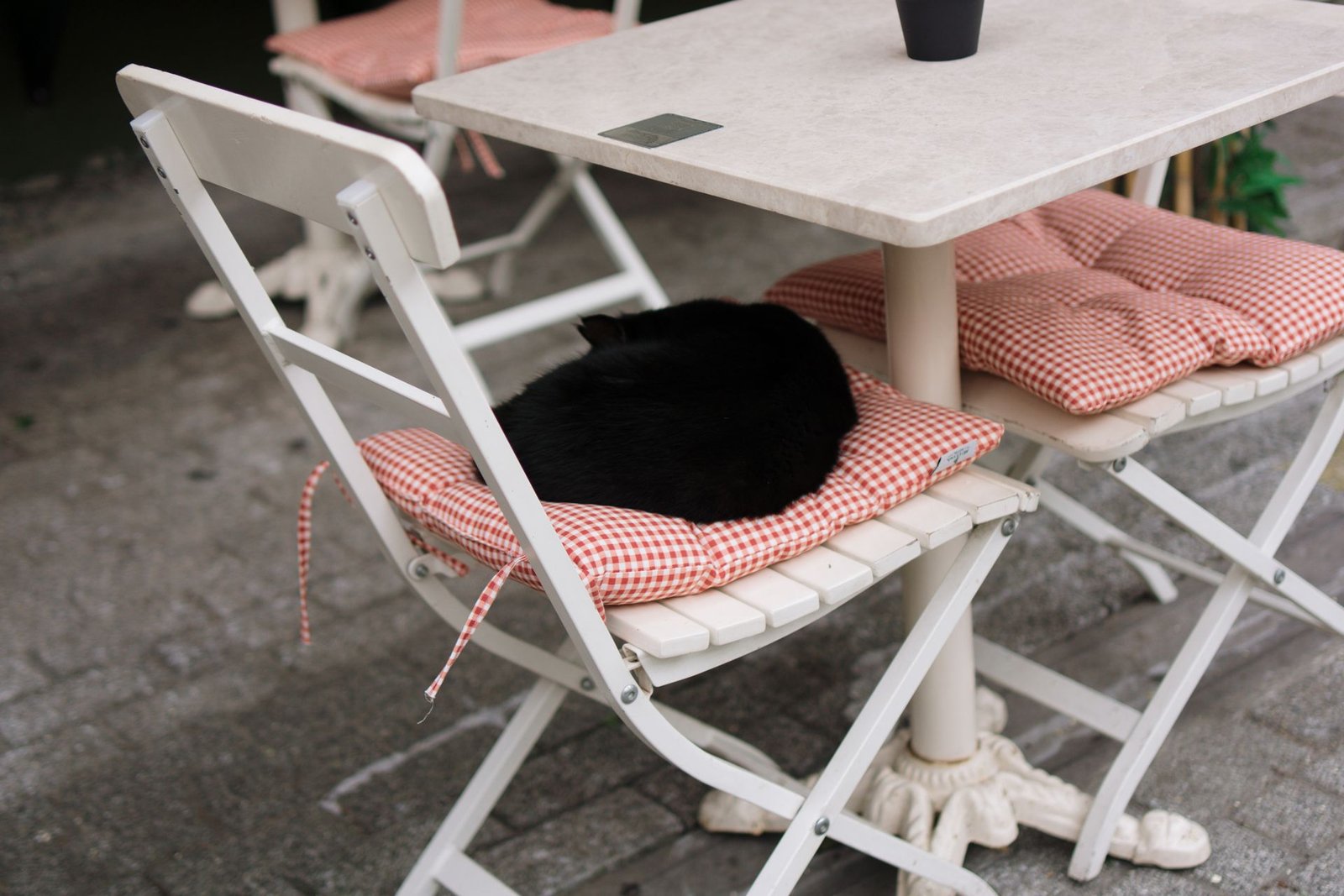
Cat Care Tips for Baristas: Full Cat Cafe Shift Checklist
Cat care tips for baristas, from opening to closing: feeding and litter checks, reading body language, what to say to guests, and the warning signs to act on fast.
Working in a cat cafe is two jobs at once. You make coffee and serve guests — and you look after the cats who live there. The cats are not decoration. They need food, water, clean litter and quiet rest, all while the cafe stays clean and safe for people.
Quick Answer
Cat care for baristas means keeping cafe cats fed, watered, clean and calm, while keeping drinks and food preparation apart from the cats. Wash your hands between cat jobs and food jobs, follow the cafe’s feeding plan, and watch each cat’s body language.
If a cat stops eating, hides more than usual or acts out of character, tell your manager the same day. Do not give cafe cats milk, leftovers or extra treats unless the plan allows it.
Who this guide is for
If you work in a cat cafe, this guide is for you. Your job has two halves: the barista work (drinks, orders, payments, a clean counter) and the cat work (measured food, fresh water, litter trays, watching for stress or illness). If you have never visited a cat cafe yourself, our first-visit cat cafe guide explains how a visit works. Every cafe sets its own house rules, so follow your own cafe’s rules first.
The golden rule: cats and coffee stay separate
Keep cats and coffee apart. Drinks and food preparation are for people. The lounge is for cats. Keeping the two apart prevents most problems on shift.
Wash your hands after handling a cat and before you touch food, cups or the coffee machine. Soap and water, every time. If you stroked a cat and then need to make a drink, wash first.
Cats stay off all food-preparation surfaces, cups, plates and the coffee machine. No exceptions, even for the friendliest cat. Keep separate cloths and tools for cat areas and food areas, and never mix them up.
Keep a lint roller near the counter. Cat hair on your apron is normal in a cat cafe, but hair in a drink is not. A quick roll before you serve keeps things clean.
If a cat jumps on the counter, stay calm. Lift the cat gently with one hand behind the front legs and one under the hindquarters, and set it down in the lounge. Never pick a cat up by the scruff of the neck or by the front legs. Then clean the surface, wash your hands and re-make the drink. Tell the manager if it keeps happening — the cafe may need a new perch or a quieter spot for that cat.
Your cat cafe shift, step by step
Use the same order of checks each shift. It is the simplest way to make sure nothing is missed.
Opening
- Count the cats. Every cat should be present and in the lounge or a known rest spot. A missing cat is a red flag — check quiet corners first, then tell the manager.
- Feed the morning meal — only the cafe’s measured food, in the right bowl for the right cat.
- Give fresh water in clean bowls. Wash and refill water bowls daily.
- Scoop all litter trays and check they are clean and usable.
- Do a quick health glance at each cat: eating normally, moving normally, eyes clear, coat tidy.
- Make sure quiet zones are ready: hiding spots open, perches clear.
Mid-shift
- Top up food and water as needed. Do not leave empty bowls sitting out.
- Check litter trays again after busy periods.
- Rotate play and enrichment. A short wand-toy session with one cat, then a puzzle feeder for another. Short and calm beats long and wild.
- Watch for tired cats. If a cat has had enough attention, give it space and stop guests from waking it.
- Keep the counter and food areas clean all day, not just at close.
Closing
- Serve the final feed and refresh the water.
- Scoop the litter trays one last time and check the floor around them.
- Write the log. Who ate, who did not, anything odd, anything the next shift should know.
- Leave handover notes for the next shift or the manager.
Feeding on shift
Feed only the cafe’s measured food. Each cat has its own amount, set by the manager or the vet. Do not guess, and do not add extra because a cat looks hungry. If you are not sure of the amount, ask before you feed.
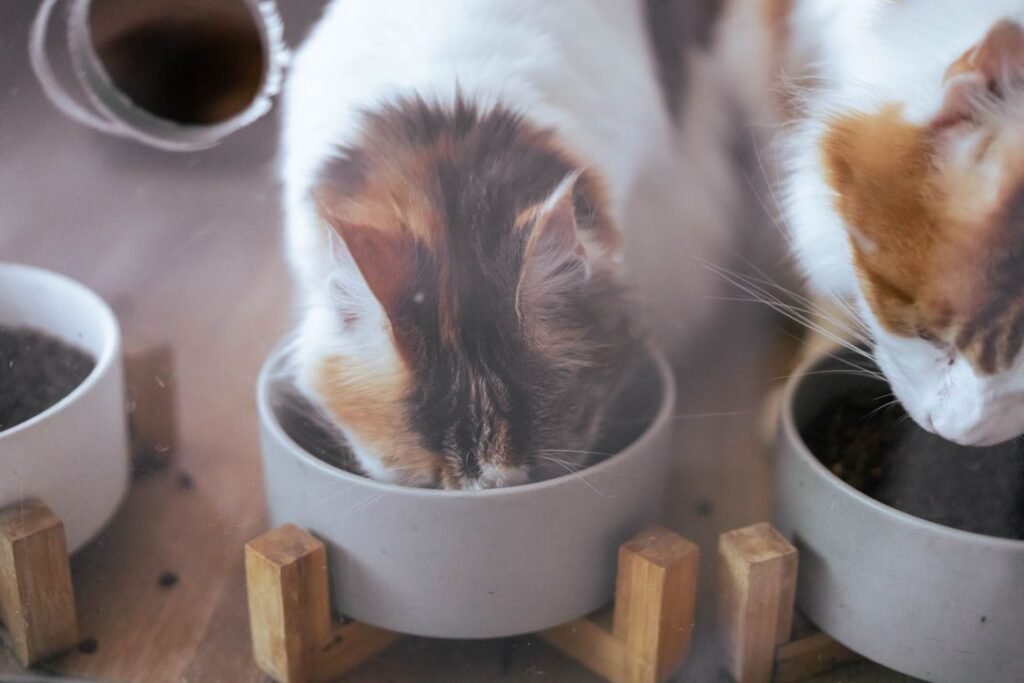
Do not feed cats from customer plates. Guest food can upset a cat’s stomach, and some human foods are unsafe for cats. If a guest offers food, take it away politely and explain the rule.
Do not give cats milk. Most kittens lose the ability to digest milk sugar (lactose) by about 12 weeks of age, and too much milk can upset the stomach and cause diarrhoea, so water is the only drink a cat needs. VCA Animal Hospitals explains this in its feeding guidelines. The ASPCA’s general cat care guide also says treats should be no more than 5–10% of the diet, so keep treats small and only use treats the cafe provides.
Fresh water matters as much as food, so keep clean water out all day.
Reading cat body language at work
You do not need to be a cat expert to work in a cat cafe. Learn the basics in the table below: relaxed or stressed, and what to do about each.
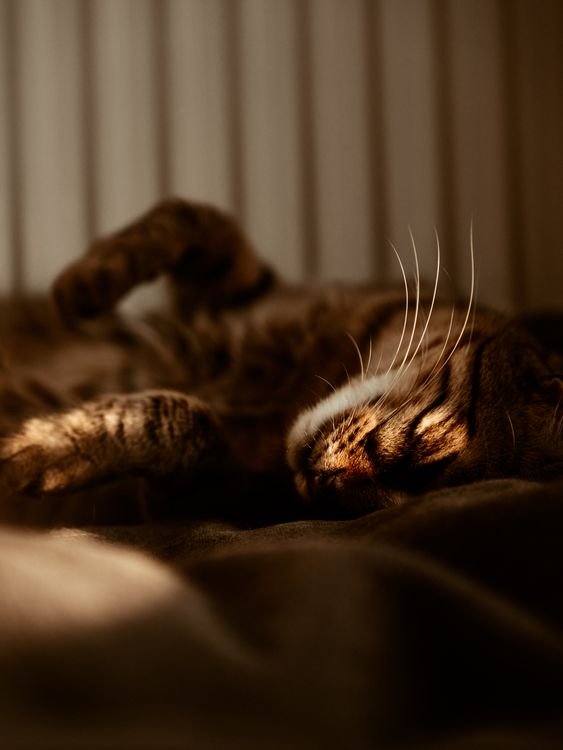
Relaxed vs stressed signals
| Relaxed | Stressed |
|---|---|
| Ears forward, loose body | Ears flat, turned back or sideways |
| Tail up or resting softly | Tail tucked tight, or lashing fast |
| Slow blinks, half-closed eyes | Wide eyes, big pupils, hard stare |
| Lying stretched out or curled up calmly | Crouched low, tense, ready to bolt |
| Comes to you, rubs, kneads | Hiding, frozen still, hissing or swatting |
Wide pupils can also mean low light or play, so check the rest of the body too. A cat that is purring is not always happy — cats also purr when they are scared or in pain — so trust the body, not the sound. For more on what a stare means, see our guide to reading a cat’s stare and body language.
When to leave a cat alone
Leave a cat alone when it is hiding, sleeping, eating or using the litter tray. Do not wake a sleeping cat for a guest, and do not pull a cat out of its hiding spot. A hiding cat is coping, not being rude — read more on why a cafe cat hides before you decide it needs help.
Let the cat choose. Sit nearby, stay calm and let it come to you. That is also the rule to give guests: the cat decides when to be stroked.
Bites and scratches
Prevention comes first. Hands are not toys. Play with a wand toy or a feather toy, never with your fingers, or the cat learns that hands are for biting. Stop play before the cat gets wound up — watch for a lashing tail, flat ears or sudden stillness — and let the cat walk away. For the gentle side of this, see our guide to gentle bites and overstimulation.
If a cat bites or scratches you, stay calm and do not pull away fast. Wash the wound with soap and running water for at least five minutes. Do not scrub. Cover it with a clean dressing and tell the manager straight away.
For a bite on the hand or face, get urgent medical advice the same day — in the UK, contact NHS 111. Go to A&E or emergency care if the wound is large or deep, or if bleeding will not stop. Also get advice if you see more redness, swelling or pain, feel feverish, or have not had a tetanus vaccination in the last 10 years. The NHS guide to animal and human bites lists the warning signs to watch for. Cat bites can infect easily, especially on the hands, so do not shrug them off.
When a cat seems unwell
Cats often hide pain and illness, so a sick cat may simply go quiet and withdrawn. VCA Animal Hospitals notes that hiding weakness helped wild cats avoid predators, and the Cornell Feline Health Center says cats are experts at hiding illness. That is why your daily checks matter. You know what is normal for each cat. A change from normal is the signal.
Keep a daily health log for every cat: eating, drinking, litter use, energy, breathing and coat. One line per cat per shift is enough. Write what you saw, not what you guessed. “Ate half her food, drank little, slept all afternoon” helps the vet. “Seems sad” does not.
The 24-hour rule is the one to remember. VCA Animal Hospitals advises seeking veterinary attention at once if a cat has not eaten properly for 24 hours. Going without food for too long can lead to fatty liver disease, which can become serious fast. Tell the manager the same day — do not wait for the next shift. Kittens, seniors and cats that are already ill need a call sooner than 24 hours.
Red flags — tell the manager and call the vet the same day:
- Not eating for 24 hours, or eating far less than usual
- Breathing trouble, panting, open-mouth breathing, or repeated coughing, wheezing and breathing changes
- Straining in the litter tray, going in and out without passing urine, or no urine at all — this can be an emergency
- Repeated vomiting, or vomiting clear foamy fluid
- Hiding much more than usual, or sudden clinginess
- A messy or greasy coat, mats, or grooming far more or far less than usual
- Discharge from the eyes or nose, squinting, or a visible third eyelid
- Yellow or pale gums, or a swollen or painful belly
If you need to show the vet something, film it. A short video of the breathing, the limp or the litter-tray straining is worth more than a long description. Note the time it started and what changed just before.
Do not give a cat human medicine, or any medicine that a vet has not prescribed for that cat. If you think a cat needs medicine, tell the manager and let the vet decide. VCA’s guide to the signs of illness in cats is a useful check for what counts as a warning sign.
Keeping many cats calm together
A cat cafe is a shared home, and cats are territorial. The fix is space and spares, not discipline.
Use the one-per-cat-plus-one rule for cats that do not share well. Give each cat its own food bowl, water station, litter tray and rest spot, plus one spare of each. Three cats need four of everything. Spread them out in different spots — a row of trays side by side counts as one resource, not four. Trays go in quiet spots, away from food and water. International Cat Care’s guide to multi-cat households explains how cats use space and why spares matter.

Give every cat a way out. Hiding spots, boxes and high perches let a shy cat escape without a fight. A cat that can get up high or slip away rarely needs to hiss or swipe.
Watch for blocking. One cat sitting in a doorway, staring at another cat, or chasing is not playing — it is guarding. Do not pick up a tense cat. Distract it calmly with a toy or a sound, open another route for the blocked cat, and tell the manager if it keeps happening. The same cat guarding the same spot every day is a layout problem, not a naughty cat.
Keep the lounge calm. Low voices, no sudden moves, no chasing. If the room gets loud or crowded, close the door to new guests for a bit and let the cats settle.
When guests break the rules
Guests break rules because they do not know them, not because they are unkind. Your job is to correct them gently, before the cat gets stressed. Keep your voice low and warm, keep the sentence short, and never argue. If a guest will not listen, step back and get the manager.
Use short scripts. They are easier to say under pressure:
- Feeding: “Please don’t feed the cats — they have their own measured food, and guest food can make them ill.”
- Waking: “He’s resting — please let him sleep. He’ll come to you when he’s ready.”
- Picking up: “Please don’t pick her up — she likes to choose when to be stroked. You can sit near her and she may come to you.”
- Chasing: “Please don’t follow him — a cat that feels cornered may scratch.”
Allergies: keep the lounge aired, offer a seat away from the cats, and suggest hand washing before and after stroking. If a guest is struggling to breathe, get them fresh air and the manager straight away.
Children: ask the adult to stay close. Show the child how to stroke gently, one hand, along the back. No chasing, no grabbing, no lifting. If a child will not stop, speak to the adult, not the child.
Training, hygiene and the law
Food-safety and hygiene rules vary by place. Some areas have strict rules about animals near food service, and some require specific training records. Keep your training records up to date, follow your manager’s word, and follow your local food-safety requirements. Do not take this guide as a substitute for them.
This guide is general information, not veterinary or legal advice. It cannot replace your cafe’s rules, your local requirements, or a vet’s judgement.
Stay safe on shift
Toxoplasmosis is an infection from a tiny parasite in cat poo. Change litter trays daily and wash your hands well after litter or cat contact. If you are pregnant or have a weak immune system, talk to your manager and your healthcare provider about litter duty and any extra precautions (CDC).
Cat-scratch disease is a bacterial infection that can spread through a scratch or bite, and fleas play a part. Keep cats on year-round flea control, keep play calm, keep claws trimmed, and wash any scratch at once with soap and water (VCA Animal Hospitals).
Wash your hands with soap and water after handling cats or litter.
Key Takeaways
- Cats and coffee stay separate: wash your hands after handling cats, and keep cats off food-preparation surfaces, cups and machines.
- Feed only the cafe’s measured food. Do not feed cats from customer plates, and do not give milk.
- Learn the stress signs: flat ears, wide pupils, a crouched body, a tucked or lashing tail, and hiding mean leave the cat alone.
- Keep a daily log: who ate, who didn’t, litter use, energy and breathing. One line per cat per shift is enough.
- If a cat has not eaten properly for 24 hours, tell the manager and call the vet the same day.
- Give one food bowl, water station, litter tray and rest spot per cat, plus one spare — spread out, not in a row.
- Hands are not toys. Play with a wand toy, stop before the cat gets wound up, and wash any bite or scratch with soap and water.
How do you get a job at a cat cafe?
Check each cafe’s own website and local job listings, because requirements vary. Recent cat cafe listings asked for customer service and drinks skills, cleaning and food-safety basics, and comfort working around cats. Some asked for cat-care experience. Others said they would train the right person.
Food-handler training came up in listings too, as did weekend availability and explaining house rules to guests. If you love cats but have no cafe experience, say so honestly and show what you have done. Volunteering with cats helps.
Our guide to whether you can work at a cat cafe explains the roles cafes hire for.
FAQs
What cat care tasks do baristas do at opening?
At opening, check every cat is present and well, refresh water, scoop litter trays, and feed to the plan before guests arrive. Note any cat that skips food or hides more than usual, and tell your manager.
What do cat cafe workers do?
Cat cafe workers make and serve drinks, look after guests, clean tables and litter areas, feed cats to a set plan, and watch the cats’ health and mood. The day mixes cafe work with basic cat care.
How do baristas keep food safe around cafe cats?
Wash hands between cat jobs and food jobs, keep cats out of food preparation areas, and clean tables and litter areas with separate tools. Serve drinks in covered cups where your cafe requires it, and follow your cafe’s food-safety rules.
What should baristas say when a guest wants to pick up a cat?
Try saying: Please let the cats come to you. They are happier that way. Offer a wand toy instead, and step in kindly if a guest chases or grabs a cat. Most guests accept the rule when staff explain it early.
Can baristas feed cats treats?
Only if your cafe’s feeding plan allows it. Treats should stay a small part of the day’s food, and guests should not feed cats without staff approval. Do not give cats milk. Most adult cats cannot digest milk sugar well, and too much can upset the stomach.
Do I need experience with cats to work in a cat cafe?
It helps, but it depends on the cafe. Some listings ask for cat-care experience, while others will train staff who are reliable and calm around cats. Food-safety basics and weekend availability often matter as much as cat experience.
Sources
- ASPCA — General Cat Care
- International Cat Care — Multi-cat households
- Cornell Feline Health Center — The Special Needs of the Senior Cat
- VCA Animal Hospitals — Recognizing the Signs of Illness in Cats
- VCA Animal Hospitals — Nutrition: General Feeding Guidelines for Cats
- VCA Animal Hospitals — Cat Scratch Disease
- NHS — Animal and human bites
- CDC — About Toxoplasmosis
Photo Credits
All photos via Pexels (free licence). Featured image: Berna. Cats eating from separate bowls: .M.Q Huang. Cat on a bench in a cat cafe lounge: 犬 の口. Relaxed tabby cat resting indoors: Alper Kagan AVCI.




2 Comments