
Why Do Cats Make Biscuits on You? 6 Amazing Reasons
Why does your cat knead your lap — and why you, not your partner? We rate the six leading theories by scientific evidence, decode bedtime and ‘air’ kneading, and share a claw-free cuddle toolkit.
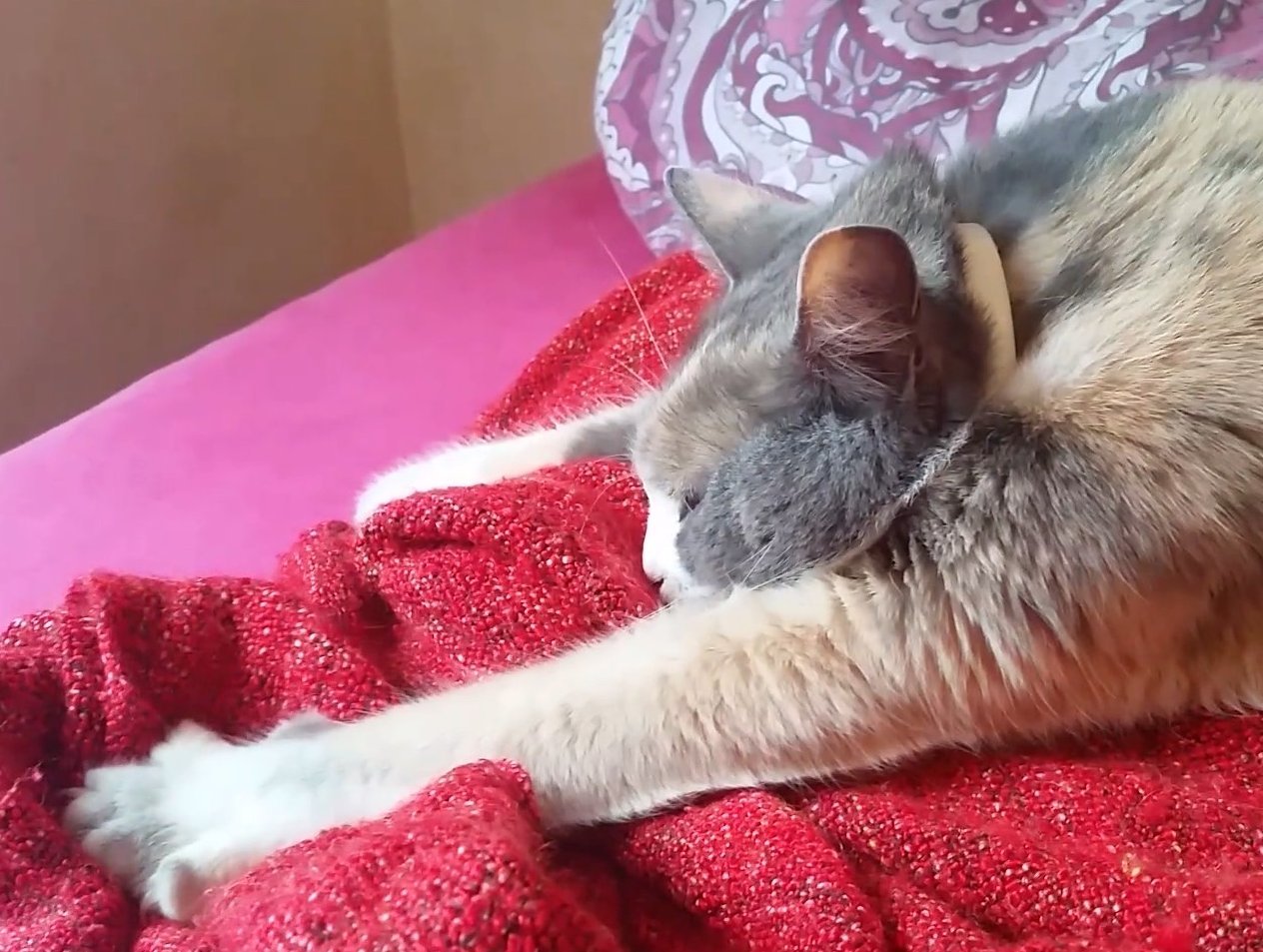
Why do cats make biscuits? “Making biscuits” is the internet’s cosiest nickname for kneading: that rhythmic pushing in and pulling out cats do with their front paws, claws flickering out and back in with every stroke. When your cat performs this little bakery routine on your lap, it is almost always a compliment. Kneading is tied to nursing, comfort and contentment — the only real downside is the claws, and those are entirely manageable.
Why does my cat make biscuits on me and not my partner?
No laboratory has ever staged a lap-preference trial, so honesty first: nobody can prove exactly why your cat chose you. But feline behaviourists see a consistent pattern, and it comes down to four things: warmth, stillness, scent and reward. In short, the honest answer to “why do cats make biscuits on me and not my partner?” is usually circumstance, not an affection ranking.
You are warm and, crucially, available. Cats gravitate towards laps that stay put — if your partner gets up often, fidgets, or gently relocates the cat, the cat learns whose legs are the reliable bakery. Your scent is also deeply familiar, and kneading itself deepens that bond: cats carry scent glands in their paws — PetMD notes they sit between the toes — so every kneading session quietly marks you as safe, claimed territory.
Then there is reinforcement history. Cats repeat what works. If past biscuit sessions earned your cat gentle attention, a warm lap and zero eviction, your lap became the proven venue. Routine seals the deal: cats are creatures of habit, and a cat who kneads during your evening sofa hour or bedtime will keep returning to that exact slot. Being the chosen lap is less about being the “favourite human” in some ranked sense and more about being the warmest, stillest, most rewarding surface in the house.
Why does my cat knead my stomach, chest or face?
Once a cat has chosen its person, it often has a favourite spot too. The stomach, chest and neck are simply the warmest and softest surfaces a human offers — the same warmth, stillness and familiar-scent logic that explains lap preference, aimed more precisely. There is no separate ‘stomach-kneading’ theory; it is the nursing reflex, the comfort-seeking and the scent-marking all converging on the cosiest available real estate.
Why do cats make biscuits? 6 reasons, rated by scientific support
Kneading is one of the most widely observed cat behaviours — and one of the least settled scientifically. So why do cats make biscuits? Below are the six leading explanations, each rated for how much evidence actually backs it. Many articles present these theories as proven fact; the honest picture is more interesting.
1. The nursing reflex (strong support)
This is the best-supported theory, because it is directly observable. Newborn kittens knead their mother’s belly while nursing, and the pressing motion is thought to stimulate milk flow; animal behaviourist Leticia Fanucchi adds that it may also release oxytocin, the bonding hormone, in the nursing mother (Scientific American). The behaviour is hardwired during the first weeks of life, which is why adult cats still reach for it on soft, warm surfaces that echo those early days — VCA Hospitals describes kneading as an important kitten behaviour that carries over into adulthood. If you are raising a very young kitten, our kitten age chart walks through the nursing weeks when this reflex is laid down.
2. Marking you with scent (strong support)
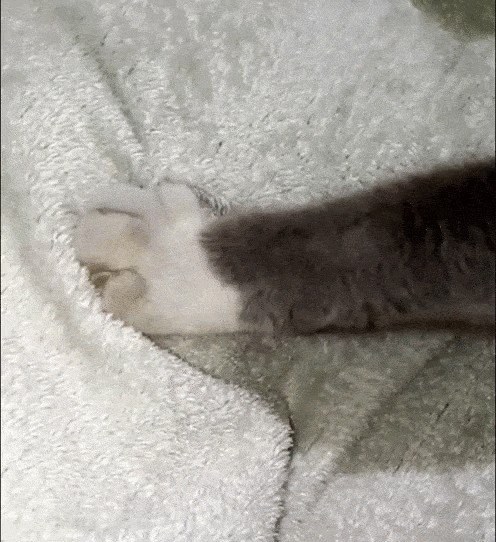
Cats are walking scent diffusers, and their paws are part of the kit. Scent glands in the paw pads release pheromones as the cat presses down, so kneading you is, in part, a labelling exercise: this human is mine, and this human is safe. PetMD notes that cats knead to mark you with the pheromone glands in their paws — the same logic as cheek-rubbing, just performed with the feet.
3. The nesting instinct (plausible hypothesis)
The idea: wild cats once trampled grass and foliage into a soft sleeping hollow, and the treading motion survived domestication. PetMD suggests the bedtime version of kneading may trace back to wild cats tamping down a resting spot. Rating it honestly: this is inference from wild-cat behaviour, not something proven in pet cats — plausible, widely repeated, but still a hypothesis.
4. Affection and contentment (strong correlation, softer causation)
Cats overwhelmingly knead when relaxed — on a favourite human, mid-purr, eyes half-closed. PetMD links the behaviour to the release of feel-good chemicals such as dopamine. The correlation is undeniable; what is less settled is the direction of travel — whether kneading creates the contentment or simply expresses it. Either way, a kneading cat is a comfortable cat, and contented kneaders often drool a little too — a leftover of kittenhood bliss we explore in our guide to why cats drool.
5. Stretching (plausible)
The push-pull of kneading extends the forelegs, flexes the toes and works the shoulder muscles — it looks, frankly, like a warm-up routine. Cats frequently knead right after waking, which fits. Evidence level: modest but sensible. Nobody has measured feline flexibility mid-biscuit, yet the mechanics speak for themselves.
6. Self-soothing when uneasy (hypothesis)
Some cats knead more in anxious contexts — new homes, vet waiting rooms, thunderstorms. Scientific American’s explainer mentions kneading-as-self-soothing in injured cats as a less common use of the behaviour, and PetMD lists unease among the contexts. The comforting-oneself reading is reasonable but unproven: we see the behaviour in stressful moments without knowing whether it actually calms the cat. If your cat’s kneading suddenly spikes alongside hiding, appetite changes or aggression, treat the pattern — not the kneading itself — as worth a vet conversation.
Why do cats make biscuits before sleeping?
Bedtime kneading deserves its own section, because “why do cats make biscuits before sleeping” is a question readers often ask — and it has a satisfying answer. Sleep is when a cat is drowsiest, warmest and most comfort-seeking, which stacks two theories at once: the nesting instinct (tamping the “nest” before settling) and the nursing reflex (the drowsy, safe feeling of kittenhood). A warm human lap under a soft blanket recreates that early-life sequence almost exactly, so your cat’s pre-sleep bakery shift on your legs at 11pm is the behaviour working as designed.
Air biscuits and other odd kneading habits
Air biscuits. Some cats knead thin air — paws cycling with no surface beneath them, usually while being held or stroked. If you have ever searched “why do cats make biscuits” while watching this head-scratcher, rest assured: it is the same motor pattern with the surface removed, and it tends to appear in deeply relaxed cats who started kneading before quite finding a landing spot. Strange to watch; completely normal.
Kneading in front of you. A cat that marches up, sits facing you and starts working a blanket (or the sofa) is often performing for its chosen human — the social, scent-marking side of kneading on display.
Kneading other pets. Cats sometimes knead canine or feline housemates. It reads as social bonding — the same comfort behaviour, redirected at a living pillow.
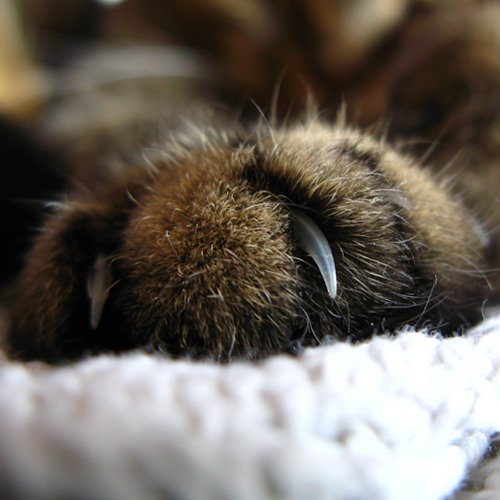
Claws out versus claws in. The mechanics are rhythmic: claws extend on the push stroke and retract as the paw lifts (Wikipedia’s kneading entry describes the cycle precisely). Some cats keep the claws out longer when they are extra enthusiastic or working a slippery fabric. It never hurts the cat — only, occasionally, the furniture beneath them.
How to enjoy the biscuits without the claws
You do not have to choose between your cat’s happiness and your thighs. A small toolkit makes biscuit sessions painless, so there is no reason to shoo your cat away the next time it makes biscuits on you:
- Keep a designated kneading blanket. A thick folded blanket or quilt on your lap gives claws somewhere harmless to land. When paws stray onto bare skin, calmly slide the blanket under them — PetMD recommends placing a barrier rather than pushing the cat away.
- Trim the tips. Regular nail trims blunt the needles. Trim only the sharp tip, never the quick — and never declaw, which PetMD describes as a painful procedure that removes the tips of the toes.
- Try soft claw caps. Vinyl nail caps, applied at home or by your vet, cover the claws for weeks at a time — a good option for dedicated lap-kneaders.
- Build a calm redirect routine. If claws dig in, gently lift the paws onto the blanket and praise the cat for staying. Consistency teaches the cat that blanket means bakery and bare skin is closed.
- Never punish the kneading. Scolding, pushing or startling a kneading cat punishes a comfort behaviour and damages trust — PetMD advises rewarding and praising the cat each time it uses a designated kneading spot instead.
- Read the body language. Kneading plus purring and slow blinks means bliss; kneading plus a lashing tail or rippling back skin means overstimulation is approaching. Learning the difference — the same skill behind decoding gentle love bites — keeps cuddle time sweet.
Petting a kneading cat: let body language decide
Usually, yes — many cats adore gentle strokes during a kneading session, and petting a relaxed cat deepens the bond for both of you. But it is genuinely cat-dependent: PetMD notes some cats welcome it while others prefer to knead undisturbed. Let body language decide. If your cat leans into your hand, slow-blinks or purrs louder, carry on. If the tail starts thrashing, the ears flatten or the back skin ripples, pause and give space — those are the early signs of overstimulation, the same ones that precede a surprise nip. When in doubt, rest a still, warm hand nearby rather than actively stroking; proximity without pressure suits most kneaders.
Where does the term “making biscuits” come from?
Briefly and factually: the paw motion looks like a baker kneading dough, and “making biscuits” is the folk nickname that stuck — popularised by internet cat culture over the last two decades. The search-friendly phrasing is part of its charm: “why do cats make biscuits” reads like a question you would actually ask, while the older, behaviourist term is simply “kneading” (or “treading”), and you will still see both used interchangeably by vets and shelters. No single person coined it; like all good slang, it emerged because it fits.
Frequently asked questions
Still wondering why cats make biscuits? Here are the answers to the questions readers ask most.
Is it a good thing when cats make biscuits on you?
Yes — when cats make biscuits on you, it is widely read as a sign of comfort, trust and contentment, and it is not a medical concern in itself. The one caveat: if an older cat suddenly starts kneading far more (or stops entirely) alongside other behaviour changes, mention it at the next vet visit, since sudden shifts in any long-standing habit deserve a professional eye.
Do cats knead their favourite person?
Cats knead people they feel safe and comfortable with — which often looks like having a favourite. But there is no evidence of a formal ranking; lap choice is better explained by warmth, stillness, familiar scent, routine and past rewards. You are not their favourite in a contest sense — you are their warmest, most reliable bakery.
Should I pet my cat while he’s kneading?
Most cats enjoy gentle petting while kneading, but some prefer to knead undisturbed — watch the body language. Lean-in, purring and slow blinks mean continue; tail thrashing, flat ears or rippling back skin mean pause. A still, warm hand resting nearby is the safe middle ground.
Does my cat think I’m its mum?
No — your cat does not mistake you for its mother. The kneading motor pattern is laid down during nursing and persists into adulthood, and some cats do treat a trusted owner as a maternal figure (kneading and even suckling hands or ears). Think of it as your cat filing you under “safe like mum”, not confusing you with her.
Why does my cat make biscuits with claws out?
Claws naturally extend on the push stroke of each knead and retract as the paw lifts — it is part of the mechanics, not aggression. Enthusiasm and slippery fabrics keep them out longer. A thick lap blanket and regular nail trims solve the human side of the equation.
Why does my cat make biscuits and drool at the same time?
Both behaviours trace back to kittenhood comfort — nursing kittens knead and salivate, and the paired pattern can persist for life. Drooling during kneading is common and usually harmless “happy drool”; our guide to why cats drool covers when it is and isn’t worth a vet visit.
So, why do cats make biscuits on you? Because you are warm, still, familiar-smelling and rewarding — a living echo of the safest place they have ever known. The six theories differ in how much evidence backs them, but they agree on what matters: kneading is a compliment, the claws are manageable, and the bakery stays open whenever your lap does.
Photo credits
Featured image: cat kneading blanket — Tilman Piesk, CC BY-SA 4.0, via Wikimedia Commons. Paws close-up: Couch-scratching-cats, CC BY 2.5, via Wikimedia Commons. Claws close-up: Kevin Dooley, CC BY 2.0, via Wikimedia Commons.



3 Comments